
Kirjailija
Ian Green
Kirjat ja teokset yhdessä paikassa: 20 kirjaa, julkaisuja vuosilta 1995-2025, suosituimpien joukossa ???? ????? (?????). Vertaile teosten hintoja ja tarkista saatavuus suomalaisista kirjakaupoista.
20 kirjaa
Kirjojen julkaisuhaarukka 1995-2025.

Meet Charlie and Parker. Hard-thrashing punks by night, not-entirely-ethical biohackers by day.Give them your DNA and they’ll map the epigenetic topology of your genome to the grand procession of the stars. Zodiac Code: it’s a good distraction from the end of the world, if you don’t care whether it’s true. But nihilism can only get you so far. Especially when criminals and corporations are hacking humanity for notoriety, immortality and, most importantly, profit.Charlie and Parker have just the right kind of reputation – and know just the wrong sort of people – to be offered a job that might save the world. Or, more likely, get them killed in the process.
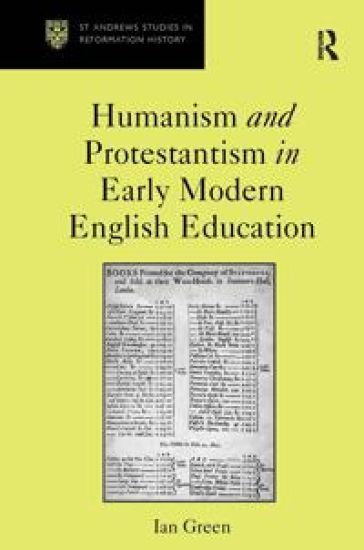
Humanism and Protestantism in Early Modern English Education
Ian Green
TAYLOR FRANCIS LTD
2024
nidottu
This volume is the first attempt to assess the impact of both humanism and Protestantism on the education offered to a wide range of adolescents in the hundreds of grammar schools operating in England between the Reformation and the Enlightenment. By placing that education in the context of Lutheran, Calvinist and Jesuit education abroad, it offers an overview of the uses to which Latin and Greek were put in English schools, and identifies the strategies devised by clergy and laity in England for coping with the tensions between classical studies and Protestant doctrine. It also offers a reassessment of the role of the 'godly' in English education, and demonstrates the many ways in which a classical education came to be combined with close support for the English Crown and established church. One of the major sources used is the school textbooks which were incorporated into the 'English Stock' set up by leading members of the Stationers' Company of London and reproduced in hundreds of thousands of copies during the seventeenth and eighteenth centuries. Although the core of classical education remained essentially the same for two centuries, there was a growing gulf between the methods by which classics were taught in elite institutions such as Winchester and Westminster and in the many town and country grammar schools in which translations or bilingual versions of many classical texts were given to weaker students. The success of these new translations probably encouraged editors and publishers to offer those adults who had received little or no classical education new versions of works by Aesop, Cicero, Ovid, Virgil, Seneca and Caesar. This fascination with ancient Greece and Rome left its mark not only on the lifestyle and literary tastes of the educated elite, but also reinforced the strongly moralistic outlook of many of the English laity who equated virtue and good works with pleasing God and meriting salvation.

Charlie and Parker are punks by night, biohackers by day, living in the stuttering decay of near-future climate-collapse London.They pay for the beer they don't steal with money from their sketchy astronomy site Zodiac Code, while Charlie's bio-bespoke augments equip the criminals, punks, and eco-warriors of London. They have to deal with disgruntled clients, scene kids who don’t dig their band, and a city that's run by corporates and criminals. Their world is split into three factions: Green – who are still trying to save the world; Blue – who try to profit while they can, and Black – who see no hope left. When a group of extremist Green activists hire them for a series of jobs ranging from robbery to murder, Charlie – who struggles to feel anything except Black – wants to walk away. But Parker still believes they can make a difference, and urges her to accept. As they enter an escalating biological arms race against faceless corporations, amoral biohackers, and criminal cyberpunks, Charlie will have to choose what she believes in. Is there still hope, and does she have a right to grab it?

FINANCIAL TIMES' BEST SCIENCE FICTION BOOKS OF 2024. In the hothouse of climate-collapse London, punk biohackers are hired by eco-terrorists to rob, murder, and save the world- and hopefully they can play some tight shows on the way. A near-future biopunk thriller, EXTREMOPHILE is the mutant lovechild of Neuromancer and The Water Knife, armed with an A to Z and a mixtape.
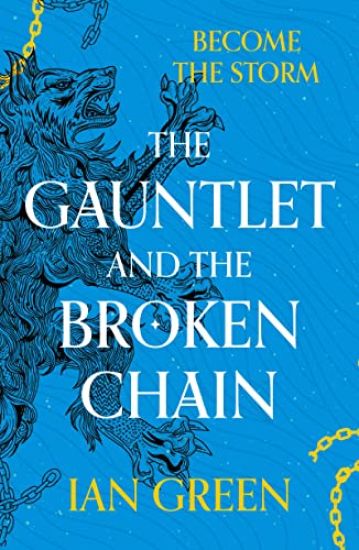
For 312 years the rotstorm has blighted the ruins of the Ferron Empire.Born of an unholy war between gods themselves, it scours the land with acid mists and deadly lightning, spawning twisted monstrosities from its nightmarish depths.On the Stormwall, the men and women of the Stormguard maintain their vigil — eyes sharp, blades sharper — defending the Undal Protectorate from the worst of the rotstorm’s corruption.But behind the storm front, something is stirring, kindling the embers of an ancient conflict and a plan to kill a god.Will Stormguard steel be enough to meet the coming tempest?---Floré returns to the Undal Protectorate to find it blighted by the deadly ice and bitter winds of a Claw Winter. Her people are dying, and she is sworn to save them... but she can think only of her daughter Marta, slowly succumbing to her skein-sickness, trapped somewhere in the far, far north.Now Tullen One-Eye – the man they call the ‘Deathless’ – has been freed and roams the land once more. There are rumours that the great god-wolf Lothal hunts again. And, deep in Orubor’s Wood, the god-bear Anshuka stirs from her slumber...Floré must raise her gauntlet one final time if she is to save her daughter and her people. But will steel alone be enough to take down the gods?
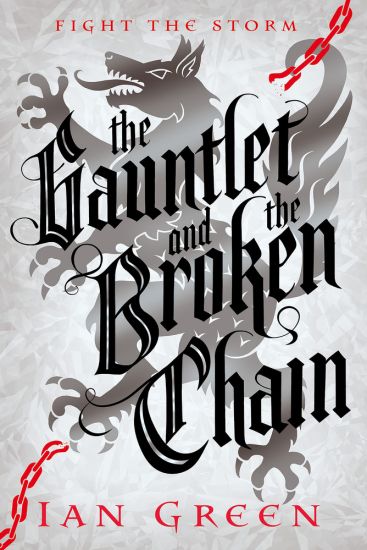
For 312 years the rotstorm has blighted the ruins of the Ferron Empire.Born of an unholy war between gods themselves, it scours the land with acid mists and deadly lightning, spawning twisted monstrosities from its nightmarish depths. On the Stormwall, the men and women of the Stormguard maintain their vigil - eyes sharp, blades sharper - defending the Undal Protectorate from the worst of the rotstorm's corruption. But behind the storm front, something is stirring, kindling the embers of an ancient conflict and a plan to kill a god. Will Stormguard steel be enough to meet the coming tempest? ---The land is gripped in a claw winter. The rotstorm has breached the walls of Undal City. The children of the storm have claimed the Northern Marches. The deathless mage has been unchained. The dead god hunts again. And Flor will raise her gauntlets against them all.
For 312 years the rotstorm has blighted the ruins of the Ferron Empire. Born of an unholy war between gods themselves, it scours the land with acid mists and deadly lightning, spawning twisted monstrosities from its nightmarish depths. On the Stormwall, the men and women of the Stormguard maintain their vigil — eyes sharp, blades sharper — defending the Undal Protectorate from the worst of the rotstorm’s corruption. But behind the storm front, something is stirring, kindling the embers of an ancient conflict and a plan to kill a god. Will Stormguard steel be enough to meet the coming tempest? --- Floré returns to the Undal Protectorate to find it blighted by the deadly ice and bitter winds of a Claw Winter. Her people are dying, and she is sworn to save them... but she can think only of her daughter Marta, slowly succumbing to her skein-sickness, trapped somewhere in the far, far north. Now Tullen One-Eye – the man they call the ‘Deathless’ – has been freed and roams the land once more. There are rumours that the great god-wolf Lothal hunts again. And, deep in Orubor’s Wood, the god-bear Anshuka stirs from her slumber... Floré must raise her gauntlet one final time if she is to save her daughter and her people. But will steel alone be enough to take down the gods?

For 312 years the rotstorm has blighted the ruins of the Ferron Empire. Born of an unholy war between gods themselves, it scours the land with acid mists and deadly lightning, spawning twisted monstrosities from its nightmarish depths.On the Stormwall, the men and women of the Stormguard maintain their vigil — eyes sharp, blades sharper — defending the Undal Protectorate from the worst of the rotstorm’s corruption.But behind the stormfront, something is stirring, kindling the embers of an ancient conflict and a plan to kill a god.Will Stormguard steel be enough to meet the coming tempest?***As the children of the storm carve a bloody swathe across the Northern Marches, the whitestaffs — the Protectorate’s healers and sages — have fled, retreating to their island citadel of Riven. Their withdrawal has weakened the realm, and worse, their absence is a death sentence for Floré’s daughter Marta. Skein-sick, Marta wastes away from the terrible magic she has inherited from her father and only the whitestaffs have the knowledge that might save her. When Flore is dispatched to reason with the whitestaffs, to bring them back into the fold, she seizes the chance. Her mission could save both the protectorate and her child. But on the island of Iskander, caged and chained, she will only discover the worst betrayal.
For 312 years the rotstorm has blighted the ruins of the Ferron Empire. Born of an unholy war between gods themselves, it scours the land with acid mists and deadly lightning, spawning twisted monstrosities from its nightmarish depths.On the Stormwall, the men and women of the Stormguard maintain their vigil — eyes sharp, blade sharper — defending the Undal Protectorate from the worst of the rotstorm’s corruption.But behind the stormfront, something is stirring, kindling the embers of an ancient conflict and a plan to kill a god.Will Stormguard steel be enough to meet the coming tempest?***Sergeant Floré Artollen patrols the wind-gnarled pines of Hookstone Forest for the Watch. But it wasn’t always so. She spent years on the wall with the Stormguard, face to face with the bloodshed and horror of the rotstorm.With the storm now far beyond her western horizon, here she has a new life, a home, a husband and a daughter.But when roving lights descend from night skies, bright orbs of silver fire in the night, Floré’s village is devastated, her husband mortally wounded and her daughter abducted.To get her back, Floré will have to take up her longsword and silvered dagger, don the guard’s heavy metal plate gauntlets and step back into the storm.
For 312 years the rotstorm has blighted the ruins of the Ferron Empire. Born of an unholy war between gods themselves, it scours the land with acid mists and deadly lightning, spawning twisted monstrosities from its nightmarish depths. On the Stormwall, the men and women of the Stormguard maintain their vigil — eyes sharp, blade sharper — defending the Undal Protectorate from the worst of the rotstorm’s corruption. But behind the stormfront, something is stirring, kindling the embers of an ancient conflict and a plan to kill a god. Will Stormguard steel be enough to meet the coming tempest? *** Sergeant Floré Artollen patrols the wind-gnarled pines of Hookstone Forest for the Watch. But it wasn’t always so. She spent years on the wall with the Stormguard, face to face with the bloodshed and horror of the rotstorm. With the storm now far beyond her western horizon, here she has a new life, a home, a husband and a daughter. But when roving lights descend from night skies, bright orbs of silver fire in the night, Floré’s village is devastated, her husband mortally wounded and her daughter abducted. To get her back, Floré will have to take up her longsword and silvered dagger, don the guard’s heavy metal plate gauntlets and step back into the storm.


'El Asesor Financiero - C mo ser un Profesional Exitoso' es la culminaci n de cuatro a os de teor a de servicios financieros aplicados en menos de un a o con incre bles resultados. Ian Green duplic su producci n y aun as encontr tiempo para su matrimonio, vio el nacimiento de su primer hijo, se mud de casa y comenz su propia empresa. El comenz su carrera en seguros de vida en 1996. Despu s de cinco meses de ser un asesor contratado se volvi un IFA. Elaborado dirige una exitosa pr ctica independiente en Londres, Inglaterra trabajando mayormente en el mercado de propietarios de empresas. Ian aparece regularmente como experto financiero en radio y televisi n y escribe para la prensa financiera. l es un orador renombrado en seminarios por todo el mundo. "Ian Green es uno de los m s exitosos asesores financieros del Reino Unido. En unos cuantos a os, l ha desarrollado un negocio el cual le permite tener un envidiable estilo de vida, tener tiempo para disfrutar con su familia, y el respeto de sus colegas.No es frecuente en un mundo competitivo que el verdaderamente exitoso est dispuesto a compartir sus pr cticas de negocios con aquellos que buscan tener xito. Ian es la excepci n. Es la de s mismo en sus muchos papeles como l der voluntario en MDRT y l ha dado de s mismo para este libro. De hecho, es m s que un libro, es la f rmula para el xito. Sigue las ideas f cilmente transferibles de Ian hito estar siguiendo el camino para alcanzar tus objetivos. El xito no es un asunto de suerte, el xito es un asunto de elecci n. Lee el libro de Ian, sigue sus ideas y t estar s seleccionando el xito" Tony Gordon Anterior Presidente, MDRT

'The Financial Adviser - How to be a Successful Practitioner' is the culmination of four years of financial services theory applied in less than one year with incredible results.Ian Green doubled his production and still found time to get married, witness the birth of his first son, move house and start his own company.He began his life insurance career in 1996. After 5 months as a tied adviser he became an IFA. He now runs a successful independent practice in London, England working primarily in the owner/entrepreneur marketplace.Ian regularly appears as a financial expert on television and radio and writes for the financial press. He is a sought-after speaker at seminarsacross the globe."Ian Green is one of the UK's most successful financial advisers. In a few short years he has developed a business which allows him to enjoy an enviable lifestyle, time to enjoy his family and the respect of his peers. It isn't often in a competitive world the truly successful are willing to share their business practices with those looking for success. Ian is the exception. He gives of himself in his many volunteer leadership roles with MDRT and he gives of himself with this book. In fact, it is more than a book, it is the formula for success. Follow Ian's easily transferable ideas and you will be following a pathway to reaching your goals.Success is not a matter of chance; success is a matter of choice. Read Ian's book, follow his ideas and you will be choosing success"Tony GordonPast President, MDRT

Checking into Faith removes the vagueness of faith. It takes you on a journey real life stories, biblical narratives and fundamental mindsets and actions to see faith's objectives realised. You will discover: 'Faith is the currency of heaven.' This is not an optional extra. 'Without it no one can please God' 'Faith gives you the ability to live beyond the natural and to move into the supernatural. It the door way into a much larger life. 'Faith has a definition: 'It is the inner conviction, God will do it.' It's the title deed for what your are believing for.' 'Faith breaks open brand new worlds, that you can explore and enjoy.' It lets you experience the 'God's dimension.' Life and revelation emanate from this book. You will experience the infusion of faith into your inner world. Checking into Faith is for those who want to live in the supernatural dimension they were created for.
Humanism and Protestantism in Early Modern English Education
Ian Green
Ashgate Publishing Limited
2016
sidottu
This volume is the first attempt to assess the impact of both humanism and Protestantism on the education offered to a wide range of adolescents in the hundreds of grammar schools operating in England between the Reformation and the Enlightenment. By placing that education in the context of Lutheran, Calvinist and Jesuit education abroad, it offers an overview of the uses to which Latin and Greek were put in English schools, and identifies the strategies devised by clergy and laity in England for coping with the tensions between classical studies and Protestant doctrine. It also offers a reassessment of the role of the 'godly' in English education, and demonstrates the many ways in which a classical education came to be combined with close support for the English Crown and established church. One of the major sources used is the school textbooks which were incorporated into the 'English Stock' set up by leading members of the Stationers' Company of London and reproduced in hundreds of thousands of copies during the seventeenth and eighteenth centuries. Although the core of classical education remained essentially the same for two centuries, there was a growing gulf between the methods by which classics were taught in elite institutions such as Winchester and Westminster and in the many town and country grammar schools in which translations or bilingual versions of many classical texts were given to weaker students. The success of these new translations probably encouraged editors and publishers to offer those adults who had received little or no classical education new versions of works by Aesop, Cicero, Ovid, Virgil, Seneca and Caesar. This fascination with ancient Greece and Rome left its mark not only on the lifestyle and literary tastes of the educated elite, but also reinforced the strongly moralistic outlook of many of the English laity who equated virtue and good works with pleasing God and meriting salvation.

In Fuzz to Folk Ian Green chronicles his life so far; from Nation Service call-up to regular Army Service, to 30 years as a policeman and finally to founder of Greentrax, Scotland's leading traditional music label. Green has played a significant role in the resurgence and vitality of traditional and folk music in Scotland. His inspirational autobiography includes details of his involvement in the careers of Brian McNeill, Dick Gaughan, the McCalmans, Eric Bogle and many others. With Green's unique insight, Fuzz to Folk is an authority on the Scottish folk scene, and a fascinating glimpse into the life of the policeman on the street.

In this highly innovative study, Ian Green examines the complete array of Protestant titles published in England from the 1530s to the 1720s. These range from the large specialist volumes at the top to cheap tracts at the bottom, from radical on one wing to conservative on the other, and from instructive and devotional manuals to edifying-cum-entertaining works such as religious verse and cautionary tales. Wherever possible the author adopts a statistical approach to permit a focus on those works which sold most copies over a number of years, and in an annotated Appendix provides a brief description of over seven hundred best selling or steady selling religious titles of the period. A close study of these texts and the forms in which they were offered to the public suggests a rapid diversification of both the types of work published and of the readerships at which they were targeted. It also demonstrates shrewd publishers' frequent attempts to plug gaps in a rapidly expanding market. Where previous studies of print have tended to focus on the polemical and the sensational, this one highlights the didactic, devotional, and consensual elements found in most steady selling works. It is also suggested that in these works there were at least three Protestantisms on offer an orthodox, clerical version, a moralistic, rational version favoured by the educated laity, and a popular version that was barely Protestant at all and that the impact of these probably varied both within and between different readerships. These conclusions shed much light not only on the means by which English Protestantism was disseminated, but also on the doctrinally and culturally diffused nature of English Protestantism by the end of the Stuart period. Both the text and the appendix should prove invaluable to anyone interested in the history of the Reformation or in printing as a medium of education and communication in early modern England.
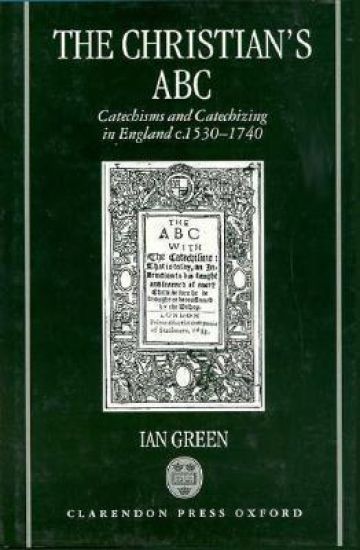
This is really three books in one: a study in church history; an essay in theology; and a bibliographical source for scholars working in various disciplines, and for librarians with catechisms of unsure provenance. Ian Green has written the first major study of the catechisms and techniques of catechizing used in early modern England, from the Reformation through to the Evangelical Revival. He begins by demonstrating the existence of several hundred different catechisms, with literally millions of copies circulating throughout the country, in parish churches, homes, schools and colleges. He then describes the techniques by which children, adolescents, and less well-educated adults were encouraged to master a specially simplified version of the core doctrines contained in the best-selling catechisms of the day, Ian Green goes on to indicate the high level of consensus and continuity in catechetical teaching, and suggests that such differences as there were consisted in either the disparity between the simpler message of many elementary works and the more demanding content of more sophisticated catechisms, or in the less predictable contrast between, on the one hand, the teaching of non-Calvinists and first generation Calvinists, and on the other, that of later Calvinists from Perkins to Westminster theologians. Catechetical teaching, especially on the Ten Commandments, covered all aspects of contemporary life and the book ends with an annotated list of catechisms which enables those with an interest in educational, literary, or linguistic history, or in political and social as well as religious history, to track down quickly works that could be of particular value to them.
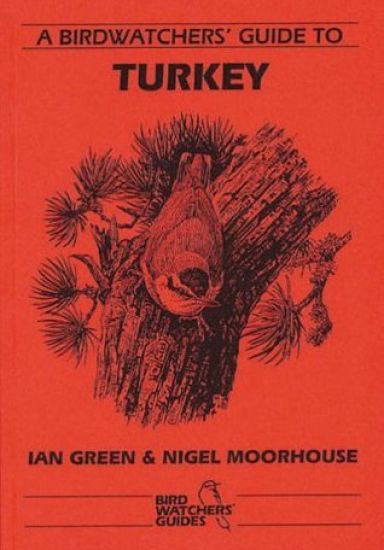
A birding site guide with lists of species to be seen in Turkey, best visiting times and seasonal variations, plus concise information needed to make your trip a success.