

Kirjailija
Ian Heath
Kirjat ja teokset yhdessä paikassa: 13 kirjaa, julkaisuja vuosilta 1979-2023, suosituimpien joukossa The North-East Frontier 1837–1901. Vertaile teosten hintoja ja tarkista saatavuus suomalaisista kirjakaupoista.
13 kirjaa
Kirjojen julkaisuhaarukka 1979-2023.

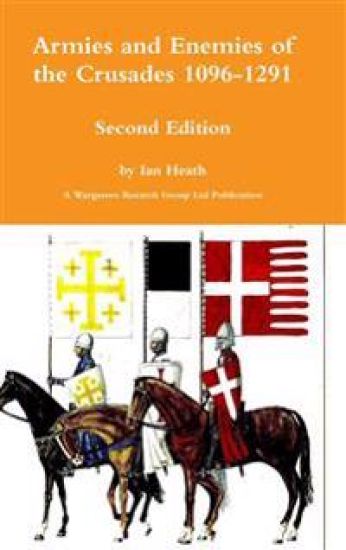
The first edition of this book was published in 1978 and proved a valuable addition to our collection of Army books. Sadly it has been out-of-print for many years. Now WRG is happy to produce this revised second edition and make it available to wargamers once again. As usual it contains information on the organisation of the various armies, descriptions of the major battles of the period and information on the dress and equipment of the armies illustrated by the usual line drawings. It contains information about the Franks, Hospitallers, Templars, Armenians, Syrians, Seljuks, Fatamids, Ayyubids, Mamluks, Assassins, Byzantines, Georgians, Mongols and Ilkhanids.

This is a reprint of the 1989 second edition of this book in our "Armies and Enemies" series. It includes details of armies from Andalusia, Bulgaria, England, Estonia, France, the Holy Roman Empire, Hungary, Ireland, Italy, Morocco, the Ordensstaat of the Teutonic Knights, the Earldom of Orkney, the Papal State, Poland, Prussia, Lithuania, the Low Countries, Kievan Russia, Scandinavia, Scotland, Serbia, Sicily, Spain, Venice, Wales and Wendland.
The history of the Vikings is bloody and eventful, and Viking warriors capture the popular imagination to this day. They made history, establishing the dukedom of Normandy, providing the Byzantine Emperors’ bodyguard and landing on the shores of America 500 years before Columbus. Beautifully illustrated with colour photographs and original Osprey artwork, this book presents a new window into their way of life including detailed studies of the Hersir, the raiding warrior of the Viking world, and the legendary Viking longship.
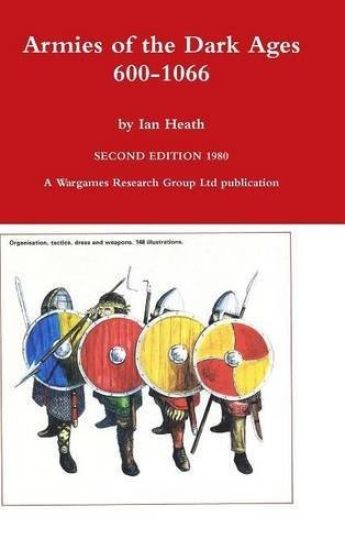
Armies of the Dark Ages spans the period from 600 AD to 1066 and describes Byzantine, Sub-Roman, Pictish, Irish, Visigothic, Lombard, Merovingian, Carolingian, Ottonian, Viking, Russian, Slav, Avar, Khazar, Magyar, Bulgar, Pecheneg, Ghuzz, Alan, Armenian, Sassanid, Arab, Andalusian, Near Eastern, Saxon, Norman, Italian and Spanish armies. It examines tactics and strategy, organisation and formations as well as providing a detailed guide to the dress and equipment of the armies of the period. Comprehensive illustrations complement the text and the result is a wealth of information for anyone interested in the warfare of the time. Long out of print, the book has been a source of inspiration to wargamers and academic historians alike. It is reprinted here in its complete 1980 second edition with an updated bibliography.
In addressing the subject of the representation of Islam in museums, this work undertakes to examine both its production and consumption. The production of representation and the creation of identity are achieved in museums through the medium of the display of material, whilst consumption occurs through the medium of visiting and the meaning made by visitors. In order to evaluate such production displays of Islamic material in museums are the subject of critical analysis. This research has a qualitative element and seeks to tap into the perceptions of museum visitors of current museum displays. Given the role played by museums in the construction of identity the questions underpinning this are firstly, what are the messages they receive about the world of Islam and secondly, what do these displays say about the Islamic world past and present?

The Sikh Wars in 1845-46 and 1848-49 saw the British Army pitted against its most formidable enemy in the whole history of British India, and perhaps of the whole expansionist phase of the 19th century British Empire. The Sikh Army created by Maharaja Ranjit Singh from the 1820s was inspired by its warrior faith, but organised, drilled, uniformed, and armed in Western style. Its artillery was unrivalled in Asia, and by the 1840s the Sikhs had 50,000-70,000 regular troops and similar numbers of irregulars. Although the British were ultimately victorious, they suffered huge casualties, and the major pitched battles of the wars more closely resembled Waterioo than the actions typically fought in this theatre.

Despite the fact that it was events on the North-West Frontier which perennially awed and captivated Victorian audiences, British India's North-East Frontier saw at least as much military activity. Even the heroid 11-day defence of the isolated outpost of Kohima against overwhelming odds – fewer than 200 British-officered troops against perhaps 6,000 Nagas – failed to capture the public imagination. Today, after the passage of another century, Britain's numerous campaigns and conquests in Assam and the surrounding hills have faded even further into the mists of obscurity. This fascinating text by Ian Heath examines the peoples and places of the North-East Frontier.
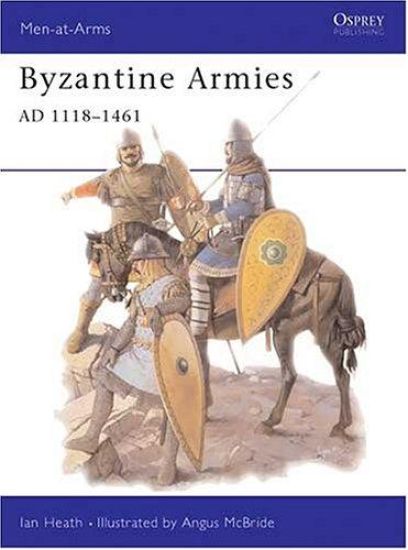
The Byzantine Empire's disastrous defeat by the Seljuk Turks at Manzikert in 1071 effectively marked the end of what is often described as the 'middle' period of Byzantine history. Thereafter, surrounded on all sides by younger, more vigorous nations, the once all-powerful Empire slipped into a steady decline which, ultimately, was to prove terminal. However, the Empire's demise was anything but peaceful, and, one way or another, for much of the last four centuries of its existence it was to find itself in a state of virtually constant war. This book examines the fascinating history of the Byzantine Empire and its armies from 1118-1461 AD.

The Reformation in England further distanced the Irish, as the majority of Irishmen adhered stubbornly to their Catholicism. Eventually, in Elizabeth's reign, both sides resorted to the use of force on a large scale in a series of bloody wars and rebellions that were to culminate in the Earl of Tyrone's 'Great Rebellion' of 1595-1603. This text by Ian Heath looks at the history, organisation and tactics of the armies of the Irish Wars 1485-1603, armies which included such troops as the fearsome Irish Galloglasses, who bore a deadly axe six feet long with a blade one foot broad!
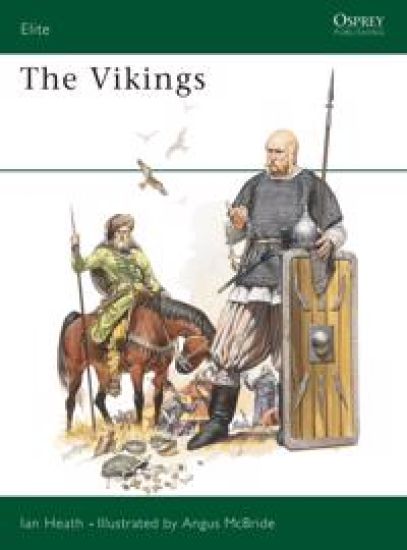
In this worthy addition to the Elite series, Ian Heath transports us to the time of the Vikings examining their epic journeys and the ships they made them in, their methods of warfare - the organisation of their armies and tactics employed, their appearance and equipment and the general history of these fascinating warrior-explorers. His authoritative text is backed by many fine illustrations and photographs including 12 stunning full colour plates by Angus McBride, one of the world's most respected military artists.
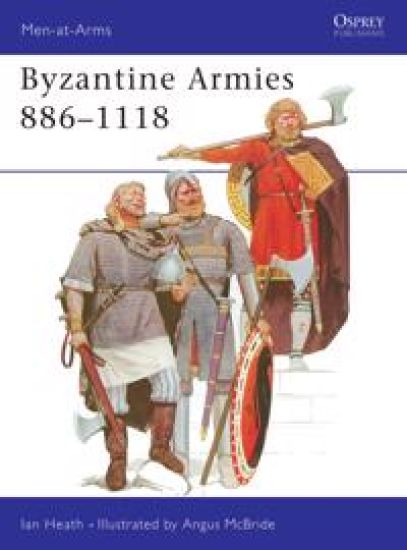
The Byzantines had a remarkably sophisticated approach to politics and military strategy. Unlike most of their contemporaries, they learnt very early in their history that winning a battle did not necessarily win a war, and they frequently bought off their enemies with treaties and bribes rather than squander men and matériel in potentially fruitless campaigns. The Byzantine army of the 10th and early 11th centuries, at the height of its power and efficiency, was the best-organised, best-trained, best-equipped and highest-paid in the known world. This splendid book by Ian Heath examines the Byzantine Armies from 886-1118, including the lusty, hard-fighting, hard-drinking 'barbarian' Varangian guard.