

Kirjailija
Ian Hunter
Kirjat ja teokset yhdessä paikassa: 37 kirjaa, julkaisuja vuosilta 1988-2026, suosituimpien joukossa The Kantian Religion. Vertaile teosten hintoja ja tarkista saatavuus suomalaisista kirjakaupoista.
37 kirjaa
Kirjojen julkaisuhaarukka 1988-2026.

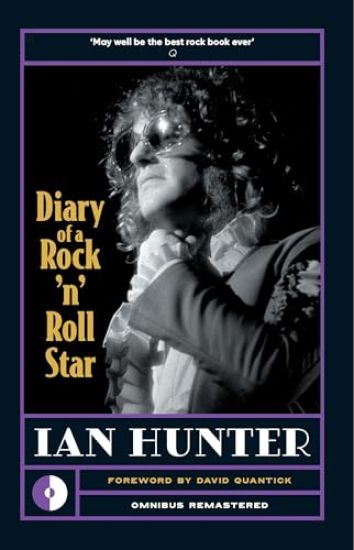
Ian Hunter's Diary of a Rock n' Roll Star, first published in 1974, is a fascinating diary of Mott the Hoople's 1972 US tour. It has received a litany of plaudits and been described as what "may well be the best rock book ever" and "an enduring crystallization of the rock musician's lot, and a quietly glorious period piece" from Q and The Guardian. A brutally honest chronicle of touring life in the Seventies, and a classic of the rock writing genre, Diary of a Rock n' Roll Star remains the gold standard for rock writing. This edition includes new content from Hunter. Ian Hunter is the lead singer in Mott the Hoople and a successful solo artist in his own right. He continues to record and perform across the world after more than fifty years in rock'n'roll.
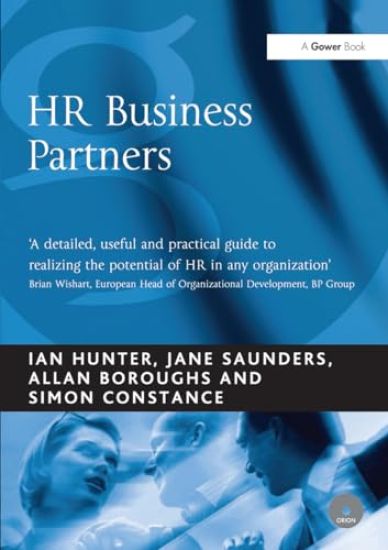
This book highlights the changes and challenges to the role of the HR Business Partner, overviewing the emerging service delivery models for the HR function (in particular the development of shared services and outsourcing options) and what this means for the HR Business Partner (HRBP) in the modern enterprise. The purpose of this book is to provide a conceptual framework and practical advice, based on real life case studies and recent research, into how HR Business Partners best add value to the organization. The authors have extensive experience of working in the area of HR restructuring (having been HR Directors in blue chip organizations and senior advisers in leading consultancies) and have consistently come up against confusion and contradiction about what is the new role of the HR Manager/Business Partner in supporting business managers in the delivery of strategic and tactical objectives. Theory and conceptual models are used to underpin this book but it has been written as a pragmatic, hands-on guide that will help its readers think through how best they might fulfil the role of the HRBP. The book contains checklists, case study examples and self-assessment tools. It is supported by supplementary material (updates, further case studies, templates and tools) which are available via the authors' website.

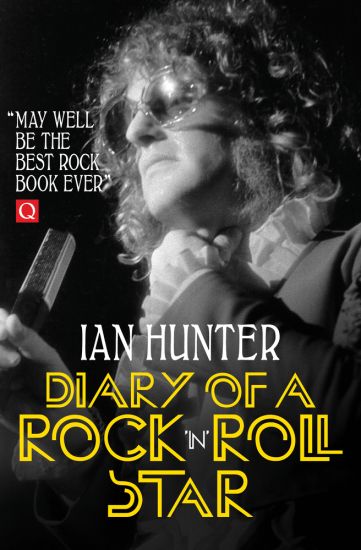
Ian Hunter's Diary of a Rock `n' Roll Star, first published in 1974, is a fascinating diary of Mott the Hoople's 1972 US tour. It has received a litany of plaudits and been described as what "may well be the best rock book ever" and "an enduring crystallization of the rock musician's lot, and a quietly glorious period piece" from Q and The Guardian. A brutally honest chronicle of touring life in the Seventies, and a classic of the rock writing genre, Diary of a Rock `n' Roll Star remains the gold standard for rock writing. This new edition includes new content from Hunter. Ian Hunter is the lead singer in Mott the Hoople and a successful solo artist in his own right. He continues to record and perform across the world after more than fifty years in rock'n'roll.
In the business world, especially in manufacturing or quality management, the term Six Sigma usually refers to a set of tools and methodologies developed by Motorola to improve processes by eliminating defects. So why should the HR professional care what Six Sigma is or how it can be applied in the HR function? According to the specialists at Orion Partners, there are ten key reasons: to create excellence in process delivery; to reduce defects; to increase efficiency; to create a quality focused mindset; to benefit from best practice; to bring clarity to the processes of HR; to use a structured scientific approach; to speak the same language and improve communication; to gain control over your processes; and to strengthen your business case. Mircea Albeanu and Ian Hunter explain some of the basic concepts to show how applying Six Sigma tools and methodologies can be used to manage the practical challenges of improving HR operations to meet your organization's expectations at a lower cost and with greater efficiency. To help illustrate some of the key messages examples are drawn from Orion Partners' work using Six Sigma tools with international organizations over the last seven years. This concise guide is ideal for project and programme managers involved in business transformation, and for HR managers as well as Six Sigma specialists seeking to understand its applications within human resources. About The Gower HR Transformation Series: The Human Resources function faces a continuing challenge to its role and purpose, in many organizations it has suffered from serious under-representation at strategic, board level. Yet, faced with the challenges of globalism, the need to innovate, manage knowledge, attract and retain the very best employees, organizations need an HR function that can lead from the front. The process of transforming the function is complex and rarely linear. It includes the practical challenges of improving HR opera
For many years now, both private and public sector organizations have been dealing with the challenge of how best to improve corporate performance. HR has not escaped this scrutiny. The very same businesses that have spent recent years cost cutting, restructuring and streamlining, are putting the pressure on the HR 'overhead' to prove that it is not just a cost centre but a function that provides added value through alignment to business needs and aspirations. The traditional, transaction-based HR service must, however, still be delivered. Understanding how to combine a renewed strategic focus with effective delivery of transactional and administrative services is the key to HR's next generation of service delivery models. The authors' work with HR functions includes an established set of service design criteria and an approach that differentiates between a successful implementation and what can be a costly backward step that only serves to alienate the business. They show how any prospective HR transformation should consider five fundamental issues in the service design phase to align the HR approach to the business strategy. These issues are critical to ensuring a fit for purpose HR function that can measure and demonstrate the value it adds. About The Gower HR Transformation Series: The Human Resources function faces a continuing challenge to its role and purpose, in many organizations it has suffered from serious under-representation at strategic, board level. Yet, faced with the challenges of globalism, the need to innovate, manage knowledge, attract and retain the very best employees, organizations need an HR function that can lead from the front. The process of transforming the function is complex and rarely linear. It involves designing a function that can manage its generalist and specialist roles with equal skills. The Gower HR Transformation Series will help; it uses a blend of conceptual frameworks, practical advice and global case study examples to

BRITISH TRASH CINEMA is the first overview of the wilder shores of British exploitation and cult paracinema from the 1950s onwards. From obscure horror, science fiction and sexploitation, to art-house camp, Hammer's prehistoric fantasies and the worst British films ever made, author I.Q. Hunter draws on rare archival material and new primary research to take us through the weird and wonderful world of British trash cinema.Beginning by outlining the definitions of trash films and their place in British film history, Hunter explores topics including: Hammer's overlooked fantasy films, the emergence of the sexploitation film in the 1950s and 60s, the sex industry in the 1970s, Ken Russell's high camp Gothic and erotic adaptations since the 1980s, gross-out comedies, revenge films, and contemporary straight-to-DVD horror and erotica.

BRITISH TRASH CINEMA is the first overview of the wilder shores of British exploitation and cult paracinema from the 1950s onwards. From obscure horror, science fiction and sexploitation, to art-house camp, Hammer's prehistoric fantasies and the worst British films ever made, author I.Q. Hunter draws on rare archival material and new primary research to take us through the weird and wonderful world of British trash cinema.Beginning by outlining the definitions of trash films and their place in British film history, Hunter explores topics including: Hammer's overlooked fantasy films, the emergence of the sexploitation film in the 1950s and 60s, the sex industry in the 1970s, Ken Russell's high camp Gothic and erotic adaptations since the 1980s, gross-out comedies, revenge films, and contemporary straight-to-DVD horror and erotica.

The book provides guidance on improving individual and team performance in five key areas: managing your health, tapping into your energy levels, conscious authenticity, resilience, and developing the team. The ideas are developed based on the authors' experience of mountain-biking through the Himalayas, which means the book divides naturally into two parts: the first being a travelogue of the strenuous biking journey, and the second a reflection on the elements that made the feat successful, backed up with management theory, personal experience, and the thoughts of modern business leaders, and concluding with advice and guidance for the reader.
In the business world, especially in manufacturing or quality management, the term Six Sigma usually refers to a set of tools and methodologies developed by Motorola to improve processes by eliminating defects. So why should the HR professional care what Six Sigma is or how it can be applied in the HR function? According to the specialists at Orion Partners, there are ten key reasons: * to create excellence in process delivery; * to reduce defects; * to increase efficiency; * to create a quality focused mindset; * to benefit from best practice; * to bring clarity to the processes of HR; * to use a structured scientific approach; * to speak the same language and improve communication; * to gain control over your processes; * and to strengthen your business case. Mircea Albeanu and Ian Hunter explain some of the basic concepts to show how applying Six Sigma tools and methodologies can be used to manage the practical challenges of improving HR operations to meet your organization's expectations at a lower cost and with greater efficiency. To help illustrate some of the key messages examples are drawn from Orion Partners' work using Six Sigma tools with international organizations over the last seven years. This concise guide is ideal for project and programme managers involved in business transformation, and for HR managers as well as Six Sigma specialists seeking to understand its applications within human resources. About The Gower HR Transformation Series: The Human Resources function faces a continuing challenge to its role and purpose, in many organizations it has suffered from serious under-representation at strategic, board level. Yet, faced with the challenges of globalism, the need to innovate, manage knowledge, attract and retain the very best employees, organizations need an HR function that can lead from the front. The process of transforming the function is complex and rarely linear. It includes the practical challenges of improving HR operations to meet customer expectations at lower cost and with greater efficiency. The Gower HR Transformation Series will help; it uses a blend of conceptual frameworks, practical advice and global case study examples to cover each of the main elements of the HR transformation process. The books in the series follow a standard format to make them easy to read and reference. Together, the titles create a definitive guide from one of the leading specialist HR transformation consultancies; an organization that has been involved in HR transformation for clients as diverse as Bombardier Transportation, Marks & Spencer, Barnardo's, Oxfam, Schroders, UnitedHealth Group, Nestlé, BP, HM Prison Service, Transport for London and Vodafone.
For many years now, both private and public sector organizations have been dealing with the challenge of how best to improve corporate performance. HR has not escaped this scrutiny. The very same businesses that have spent recent years cost cutting, restructuring and streamlining, are putting the pressure on the HR 'overhead' to prove that it is not just a cost centre but a function that provides added value through alignment to business needs and aspirations. The traditional, transaction-based HR service must, however, still be delivered. Understanding how to combine a renewed strategic focus with effective delivery of transactional and administrative services is the key to HR's next generation of service delivery models. The authors' work with HR functions includes an established set of service design criteria and an approach that differentiates between a successful implementation and what can be a costly backward step that only serves to alienate the business. They show how any prospective HR transformation should consider five fundamental issues in the service design phase to align the HR approach to the business strategy. These issues are critical to ensuring a fit for purpose HR function that can measure and demonstrate the value it adds. About The Gower HR Transformation Series: The Human Resources function faces a continuing challenge to its role and purpose, in many organizations it has suffered from serious under-representation at strategic, board level. Yet, faced with the challenges of globalism, the need to innovate, manage knowledge, attract and retain the very best employees, organizations need an HR function that can lead from the front. The process of transforming the function is complex and rarely linear. It involves designing a function that can manage its generalist and specialist roles with equal skills. The Gower HR Transformation Series will help; it uses a blend of conceptual frameworks, practical advice and global case study examples to cover each of the main elements of the HR transformation process. The books in the series follow a standard format to make them easy to read and reference. Together, the titles create a definitive guide from one of the leading specialist HR transformation consultancies; an organization that has been involved in HR transformation for clients as diverse as Bombardier Transportation, Marks & Spencer, Barnardo's, Oxfam, Schroders, UnitedHealth Group, Nestlé, BP, HM Prison Service, Transport for London and Vodafone.
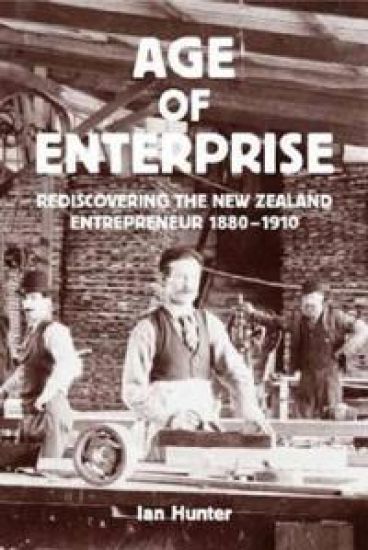
The Age of Enterprise is an important book, written for a broad audience, which covers an area little touched by traditional historians such as Keith Sinclair, Jamie Belich or Michael King. It shows how entrepreneurship and innovation transformed the New Zealand economy in the late 19th century and sets our experience in context with other similar developments in settler colonies such as Australia and Latin America. In particular, The Age of Enterprise draws on case studies and historical evidence to reveal that the small, organic, rapidly expanding firm was the potent force in New Zealand's growth - the local, smalltime entrepreneur is the hero of this story. By focusing on the shape of our economic history Ian Hunter here fills a major gap in our knowledge of the colonial period which has so far derived largely from the work of social and political historians.
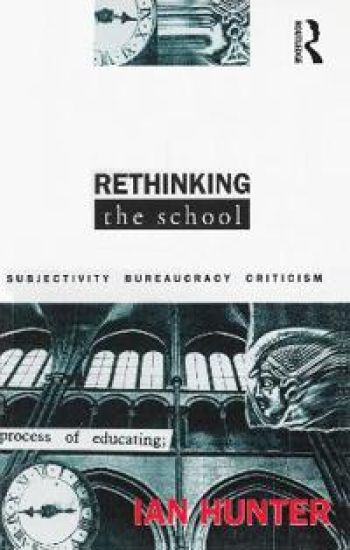
Educationalists have long worked to democratise our school system and purge traces of its religious origins. Rethinking the School shows that these efforts have been in vain. The bureaucratic organisation of schooling is here to stay, and Christian moral discipline is an integral part of the school as we know it.Hunter argues that both liberal and Marxian theory ignore the historical reality of the school. He does not see the school as the failed attempt to realise principles of social equality, complete personal development and intellectual enlightenment. Rather, he sees the modern school as an improvised apparatus for the training of good citizens and the guidance of souls.Rethinking the School is one of the first major applications of Foucault's genealogical method to the school system, and will be widely debated by educationalists, policy-makers and those interested in the interaction of government and subjectivity.'This is a serious piece of scholarship which breaks with much orthodoxy in educational theory and research. It brings new insights to old dilemmas and as such is a major contribution to a field which has in some respects lost its nerve. This is a book that must be read.' - Professor Richard Smith, Australian Journal of Education'Hunter. offers a detailed and fascinating account of the popular school. in a manner which reinvigorates modern debates regarding the relations between government and education. He makes us look and see differently, the hallmark of a powerful and original thinker.' - Professor Tony Bennett, Institute for Cultural Policy Studies