Kirjojen hintavertailu. Mukana 12 390 323 kirjaa ja 12 kauppaa.

Kirjailija

Ian Ker

Kirjat ja teokset yhdessä paikassa: 12 kirjaa, julkaisuja vuosilta 1990-2024, suosituimpien joukossa G. K. Chesterton. Vertaile teosten hintoja ja tarkista saatavuus suomalaisista kirjakaupoista.

12 kirjaa

Kirjojen julkaisuhaarukka 1990-2024.

G. K. Chesterton

G. K. Chesterton

Ian Ker

Oxford University Press
2012
nidottu
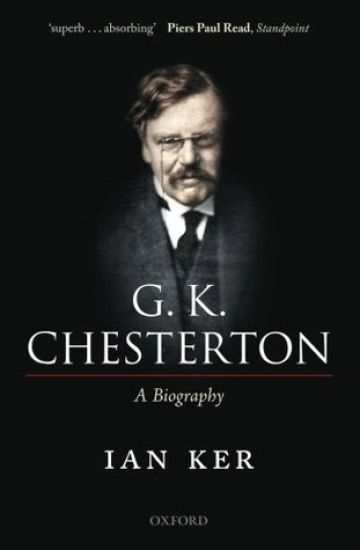
G. K. Chesterton is remembered as a brilliant creator of nonsense and satirical verse, author of the Father Brown stories and the innovative novel, The Man who was Thursday, and yet today he is not counted among the major English novelists and poets. However, this major new biography argues that Chesterton should be seen as the successor of the great Victorian prose writers, Carlyle, Arnold, Ruskin, and above all Newman. Chesterton's achievement as one of the great English literary critics has not hitherto been fully recognized, perhaps because his best literary criticism is of prose rather than poetry. Ian Ker remedies this neglect, paying particular attention to Chesterton's writings on the Victorians, especially Dickens. As a social and political thinker, Chesterton is contrasted here with contemporary intellectuals like Bernard Shaw and H. G. Wells in his championing of democracy and the masses. Pre-eminently a controversialist, as revealed in his prolific journalistic output, he became a formidable apologist for Christianity and Catholicism, as well as a powerful satirist of anti-Catholicism. This full-length life of G. K. Chesterton is the first comprehensive biography of both the man and the writer. It draws on many unpublished letters and papers to evoke Chesterton's joyful humour, his humility and affinity to the common man, and his love of the ordinary things of life.
G. K. Chesterton

G. K. Chesterton

Ian Ker

Oxford University Press
2011
sidottu
G. K. Chesterton is remembered as a brilliant creator of nonsense and satirical verse, author of the Father Brown stories and the innovative novel, The Man who was Thursday, and yet today he is not counted among the major English novelists and poets. However, this major new biography argues that Chesterton should be seen as the successor of the great Victorian prose writers, Carlyle, Arnold, Ruskin, and above all Newman. Chesterton's achievement as one of the great English literary critics has not hitherto been fully recognized, perhaps because his best literary criticism is of prose rather than poetry. Ian Ker remedies this neglect, paying particular attention to Chesterton's writings on the Victorians, especially Dickens. As a social and political thinker, Chesterton is contrasted here with contemporary intellectuals like Bernard Shaw and H. G. Wells in his championing of democracy and the masses. Pre-eminently a controversialist, as revealed in his prolific journalistic output, he became a formidable apologist for Christianity and Catholicism, as well as a powerful satirist of anti-Catholicism. This full-length life of G. K. Chesterton is the first comprehensive biography of both the man and the writer. It draws on many unpublished letters and papers to evoke Chesterton's joyful humour, his humility and affinity to the common man, and his love of the ordinary things of life.
John Henry Newman

John Henry Newman

Ian Ker

Oxford University Press
2019
nidottu
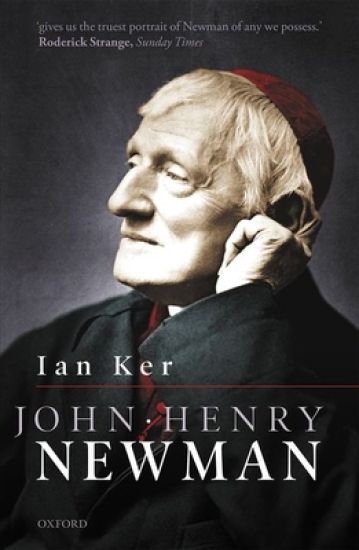
This full-length life of John Henry Newman is the first comprehensive biography of both the man and the thinker and writer. It draws extensively on material from Newman's letters and papers. Newman's character is revealed in its complexity and contrasts: the legendary sadness and sensitivity are placed in their proper perspective by being set against his no less striking qualities of exuberance, humour, and toughness. This book attempts to do justice to the fullness of Newman's achievement and genius: the Victorian 'prophet' or 'sage', who ranks among the major English prose writers; the dominating religious figure of the nineteenth century, who can now be recognised as the forerunner of the Second Vatican Council and the modern ecumenical movement; and finally, the universal Christian thinker, whose significance transcends his culture and time.
Newman on Vatican II

Newman on Vatican II

Ian Ker

Oxford University Press
2016
nidottu
John Henry Newman is often described as 'the Father of the Second Vatican Council'. He anticipated most of the Council's major documents, as well as being an inspiration to the theologians who were behind them. His writings offer an illuminating commentary both on the teachings of the Council and the way these have been implemented and interpreted in the post-conciliar period. This book is the first sustained attempt to consider what Newman's reaction to Vatican II would have been. As a theologian who on his own admission fought throughout his life against theological liberalism, yet who pioneered many of the themes of the Council in his own day, Newman is best described as a conservative radical who cannot be classed simply as either a conservative or liberal Catholic. At the time of the First Vatican Council, Newman adumbrated in his private letters a mini-theology of Councils, which casts much light on Vatican II and its aftermath. The leading Newman scholar, Ian Ker, argues that Newman would have greatly welcomed the reforms of the Council, but would have seen them in the light of his theory of doctrinal development, insisting that they must certainly be understood as changes but changes in continuity rather than discontinuity with the Church's tradition and past teachings. He would therefore have endorsed the so-called 'hermeneutic of reform in continuity' in regard to Vatican II, a hermeneutic first formulated by Pope Benedict XVI and subsequently confirmed by his successor, Pope Francis, and rejected both 'progressive' and ultra-conservative interpretations of the Council as a revolutionary event. Newman believed that what Councils fail to speak of is of great importance, and so a final chapter considers the kind of evangelization--a topic notably absent from the documents of Vatican II--Newman thought appropriate in the face of secularization.
Newman on Vatican II

Newman on Vatican II

Ian Ker

Oxford University Press
2014
sidottu
John Henry Newman is often described as 'the Father of the Second Vatican Council'. He anticipated most of the Council's major documents, as well as being an inspiration to the theologians who were behind them. His writings offer an illuminating commentary both on the teachings of the Council and the way these have been implemented and interpreted in the post-conciliar period. This book is the first sustained attempt to consider what Newman's reaction to Vatican II would have been. As a theologian who on his own admission fought throughout his life against theological liberalism, yet who pioneered many of the themes of the Council in his own day, Newman is best described as a conservative radical who cannot be classed simply as either a conservative or liberal Catholic. At the time of the First Vatican Council, Newman adumbrated in his private letters a mini-theology of Councils, which casts much light on Vatican II and its aftermath. Noted Newman scholar, Ian Ker, argues that Newman would have greatly welcomed the reforms of the Council, but would have seen them in the light of his theory of doctrinal development, insisting that they must certainly be understood as changes but changes in continuity rather than discontinuity with the Church's tradition and past teachings. He would therefore have endorsed the so-called 'hermeneutic of reform in continuity' in regard to Vatican II, a hermeneutic first formulated by Pope Benedict XVI and subsequently confirmed by his successor, Pope Francis, and rejected both 'progressive' and ultra-conservative interpretations of the Council as a revolutionary event. Newman believed that what Councils fail to speak of is of great importance, and so a final chapter considers the kind of evangelization -- a topic notably absent from the documents of Vatican II -- Newman thought appropriate in the face of secularization.
The Catholic Revival in English Literature, 1845–1961

The Catholic Revival in English Literature, 1845–1961

Ian Ker

University of Notre Dame Press
2003
nidottu
The Catholic Revival in English Literature, 1845-1961 presents a thorough discussion of the six principal writers of the Catholic revival in English literature—Newman, Hopkins, Belloc, Chesterton, Greene, and Waugh. Beginning with Newman's conversion in 1845 and ending with Waugh's completion of the triology The Sword of Honor in 1961, this book explores how Catholicism shaped the work of these six prominent writers. John Henry Newman claimed in The Idea of a University that post-Reformation English literature was overwhelmingly Protestant and that there was no prospect of a Catholic body of literature. Describing this claim as "happily lacking in prescience," Ian Ker persuasively argues that Newman, Hopkins, Belloc, Chesterton, Greene, and Waugh succeeded in producing a substantial body of literature written by Catholics who wrote as Catholics. These revivalists were not so much influenced by traditional themes of guilt, sin, and ceremony, as they were attracted to unexpected facets of Catholicism. The idea of a Catholic priest as a craftsman is a recurring motif, as is the celebration of the ordinariness and objectivity of Catholicism. Ker's compelling and intelligent reading of these six major writers will appeal to anyone with an interest in nineteenth- and twentieth-century English literature, or the relation between literature and theology.
The Catholic Revival in English Literature, 1845–1961

The Catholic Revival in English Literature, 1845–1961

Ian Ker

University of Notre Dame Press
2003
sidottu
The Catholic Revival in English Literature, 1845-1961 presents a thorough discussion of the six principal writers of the Catholic revival in English literature—Newman, Hopkins, Belloc, Chesterton, Greene, and Waugh. Beginning with Newman's conversion in 1845 and ending with Waugh's completion of the triology The Sword of Honor in 1961, this book explores how Catholicism shaped the work of these six prominent writers. John Henry Newman claimed in The Idea of a University that post-Reformation English literature was overwhelmingly Protestant and that there was no prospect of a Catholic body of literature. Describing this claim as "happily lacking in prescience," Ian Ker persuasively argues that Newman, Hopkins, Belloc, Chesterton, Greene, and Waugh succeeded in producing a substantial body of literature written by Catholics who wrote as Catholics. These revivalists were not so much influenced by traditional themes of guilt, sin, and ceremony, as they were attracted to unexpected facets of Catholicism. The idea of a Catholic priest as a craftsman is a recurring motif, as is the celebration of the ordinariness and objectivity of Catholicism. Ker's compelling and intelligent reading of these six major writers will appeal to anyone with an interest in nineteenth- and twentieth-century English literature, or the relation between literature and theology.
Achievement of John Henry Newman

Achievement of John Henry Newman

Ian Ker

University of Notre Dame Press
1998
nidottu
The centennial of John Henry Newman's death in 1890 marks an appropriate time for a critical reevaluation of his work. Here Ian Ker, noted Newman scholar and author of the definitive John Henry Newman: A Biography, considers Newman's achievement as a whole but in a focused and selective way. Ker deliberately concentrates on five aspects of Newman's intellectual and literary achievement that constitute his essential genius. Newman's role as an educator is examined first through an interpretation of his theory of a liberal education found in The Idea of a University, which Ker claims has often been misunderstood in certain crucial respects. Newman's philosophical writings, including An Essay in Aid of a Grammar of Assent, are looked at next while Ker argues that Newman is not simply an important apologist for Christianity but also a significant philosopher in his own right, whose originality is only beginning to be appreciated. Ker also presents Newman the preacher, providing a critique of the Anglican sermons that have long been recognized for their spirituality but that have received surprisingly little attention with regard to their homiletic and literary art. Newman's theological themes are explored as Ker offers a reassessment and overall view of the theological writings of both the Anglican and Catholic periods. And, lastly, Ker considers Newman's literary achievement, which has been generally underrated and to a considerable extent even unperceived. Throughout this provocative book, Ker mediates Newman's theological understanding to the believer of today, to the inquiring general reader, and to all scholars interested in embracing both post-Vatican II thinking and traditional Catholic thought.
Achievement of John Henry Newman

Achievement of John Henry Newman

Ian Ker

T. T.Clark Ltd
1991
nidottu
An excellent, very readable summary of Cardinal Newman's intellectual achievement - Ker's most original contribution lies in his attempt to credit Newman with an original theory of knowledge and enduring significance as a philosopher. Library Journal
Achievement of John Henry Newman

Achievement of John Henry Newman

Ian Ker

UNIVERSITY OF NOTRE DAME PRESS
1990
sidottu
The centennial of John Henry Newman's death in 1890 marks an appropriate time for a critical reevaluation of his work. Here Ian Ker, noted Newman scholar and author of the definitive John Henry Newman: A Biography, considers Newman's achievement as a whole but in a focused and selective way. Ker deliberately concentrates on five aspects of Newman's intellectual and literary achievement that constitute his essential genius. Newman's role as an educator is examined first through an interpretation of his theory of a liberal education found in The Idea of a University, which Ker claims has often been misunderstood in certain crucial respects. Newman's philosophical writings, including An Essay in Aid of a Grammar of Assent, are looked at next while Ker argues that Newman is not simply an important apologist for Christianity but also a significant philosopher in his own right, whose originality is only beginning to be appreciated. Ker also presents Newman the preacher, providing a critique of the Anglican sermons that have long been recognized for their spirituality but that have received surprisingly little attention with regard to their homiletic and literary art. Newman's theological themes are explored as Ker offers a reassessment and overall view of the theological writings of both the Anglican and Catholic periods. And, lastly, Ker considers Newman's literary achievement, which has been generally underrated and to a considerable extent even unperceived. Throughout this provocative book, Ker mediates Newman's theological understanding to the believer of today, to the inquiring general reader, and to all scholars interested in embracing both post-Vatican II thinking and traditional Catholic thought.
An Essay on the Development of Christian Doctrine

An Essay on the Development of Christian Doctrine

John Henry Cardinal Newman; Ian Ker

UNIVERSITY OF NOTRE DAME PRESS
2024
sidottu
An Essay on the Development of Christian Doctrine, reprinted from the 1878 edition, "is rightly regarded as one of the most seminal theological works ever to be written," states Ian Ker in his foreword to this sixth edition. "It remains," Ker continues, "the classic text for the theology of the development of doctrine, a branch of theology which has become especially important in the ecumenical era." John Henry Cardinal Newman begins the Essay by defining how true developments in doctrine occur. He then delivers a sweeping consideration of the growth of doctrine in the Catholic Church from the time of the Apostles to his own era. He demonstrates that the basic "rule" under which Christianity proceeded through the centuries is to be found in the principle of development, and he emphasizes that throughout the entire life of the Church this principle has been in effect and safeguards the faith from any corruption.
An Essay on the Development of Christian Doctrine

An Essay on the Development of Christian Doctrine

John Henry Cardinal Newman; Ian Ker

University of Notre Dame Press
1994
nidottu
An Essay on the Development of Christian Doctrine, reprinted from the 1878 edition, "is rightly regarded as one of the most seminal theological works ever to be written," states Ian Ker in his foreword to this sixth edition. "It remains," Ker continues, "the classic text for the theology of the development of doctrine, a branch of theology which has become especially important in the ecumenical era." John Henry Cardinal Newman begins the Essay by defining how true developments in doctrine occur. He then delivers a sweeping consideration of the growth of doctrine in the Catholic Church from the time of the Apostles to his own era. He demonstrates that the basic "rule" under which Christianity proceeded through the centuries is to be found in the principle of development, and he emphasizes that throughout the entire life of the Church this principle has been in effect and safeguards the faith from any corruption.