Kirjojen hintavertailu. Mukana 12 390 323 kirjaa ja 12 kauppaa.

Kirjailija

Ian Knight

Kirjat ja teokset yhdessä paikassa: 36 kirjaa, julkaisuja vuosilta 1989-2025, suosituimpien joukossa Warriors in Scarlet. Vertaile teosten hintoja ja tarkista saatavuus suomalaisista kirjakaupoista.

36 kirjaa

Kirjojen julkaisuhaarukka 1989-2025.

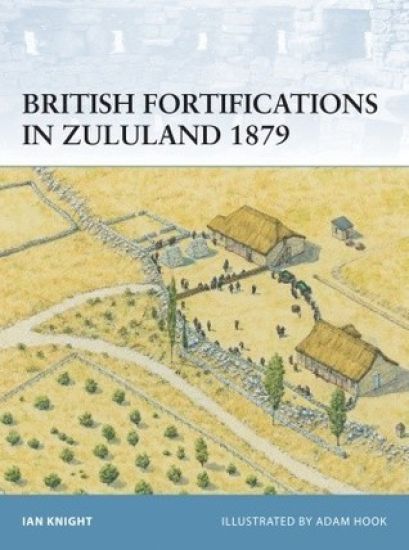
British Fortifications in Zululand 1879

British Fortifications in Zululand 1879

Ian Knight

Osprey Publishing
2005
nidottu
Throughout the Anglo-Zulu wars, the British fortified almost every position they occupied in Zululand, from permanent column depots to temporary halts on the lines of communication. This book explores the extensive fortifications constructed around posts such as Eshowe, Fort Pearson and Fort Chelmsford, as well as the lives of the garrisons who manned these sites. These forts were built to defend against infantry attacks of overwhelming numbers, as opposed to artillery bombardment or mining, and the text, illustrations and photographs describe their distinctive style and construction. Field and temporary fortifications are also covered, making this a packed and informative reference work, and bringing new life to this popular subject.
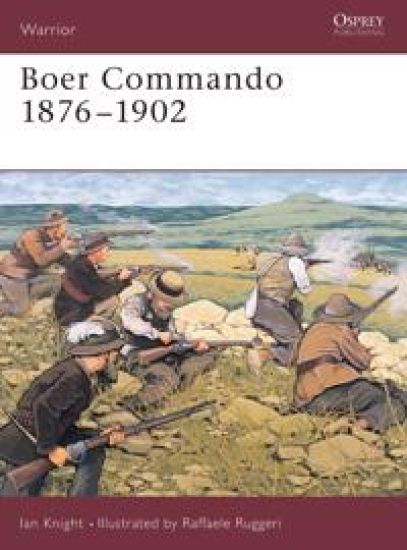
Boer Commando 1876–1902

Boer Commando 1876–1902

Ian Knight

Osprey Publishing
2004
nidottu
The Boer lifestyle of hunting for sport and profit honed the skills of field-craft, horsemanship and marksmanship, making them a formidable force in the field and well suited to guerrilla operations. This book describes the life and combat experiences of a typical Boer in this key period. Using meticulously researched analysis and comment, and the experiences of a composite character, Johannes de Bruyn, a revealing portrait of Boer life and military operations is drawn. The action at Laing's Neck, Majuba, the Zulu Civil War (where Boers fought for adventure and financial reward above all and the Second Anglo-Boer War are covered in this packed and informative treatment.
The Zulu War 1879

The Zulu War 1879

Ian Knight

Osprey Publishing
2003
nidottu
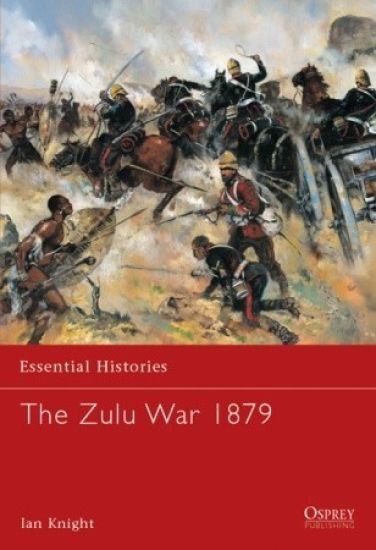
The Zulu War of 1879 remains one of the best known British colonial wars and included two battles whose names reverberate through history. At Isandlwana the Zulus inflicted a crushing defeat on the British; the gallant British defence at Rorke's Drift followed and re-established British prestige. Yet as this book shows, there was more to the war than this. Six months of brutal fighting followed, until the Zulu kingdom was broken up, its king imprisoned and the whole structure of the Zulu state destroyed. Years of intemecine strife followed, until the British finally annexed Zululand as a colonial possession.
Isandlwana 1879

Isandlwana 1879

Ian Knight

Osprey Publishing
2002
nidottu
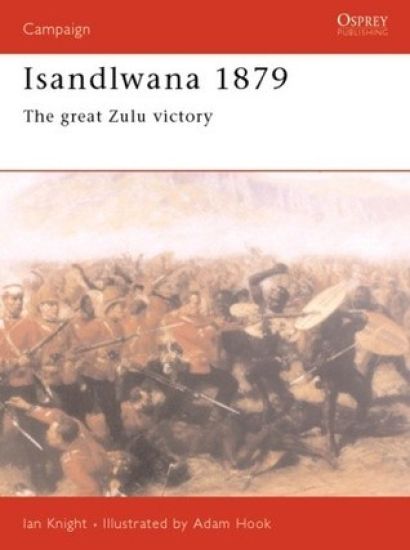
On 20 January 1879, the Centre Column of the British invasion force under the British Commander in Chief Lord Chelmsford, reached Isandlwana. Chelmsford's spies suggested a Zulu army was on its way to attack, so on 21 January he took a strong force of auxiliaries into the hills to scout them, leaving some 1700 white and native troops at camp. This action was futile as the main Zulu army of 24,000 men had moved across his front and was marching towards Isandlwana. This title employs new research to describe the formidable battle in greater detail, providing a brand new interpretation of the course of the action.
The Boer Wars (2)

The Boer Wars (2)

Ian Knight

Osprey Publishing
1996
nidottu
On 11 October 1899 the Second Boer War between the British and the Boers began. The war saw the most powerful professional army in the world pitted against the unconventional tactics of the undisciplined Boers. Although the Boers were finally forced to surrender in May 1902 the war had taken its toll on their opponents who lost some 8,000 troops killed in action with a further 13,000 dying from disease. This book covers the organisation, uniforms and very different tactics involved in the conflict, from guerrilla warfare to a final war of attrition that the Boers could not hope to win.
Rorke's Drift 1879

Rorke's Drift 1879

Ian Knight

Osprey Publishing
1996
nidottu
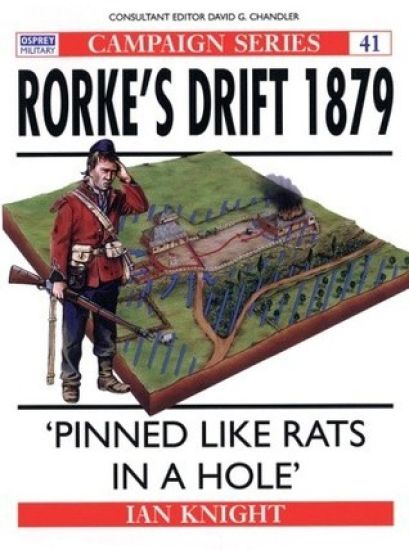
A compact volume about the famous battle that sums up some of the best traditions of the British self-image: steadfastness against the odds, victory in adversity and the thin red line.The British stand deserves to go down in history as one of the most heroic actions of all time. The story of a mere 150 British and Imperial soldiers defending an isolated outpost against over 3,000 Zulu warriors summed up the experience of the colonial adventure for the Victorians and remains part of our heritage even today.Ian Knight recounts the course of this famous conflict in which no less than 11 Victoria crosses were won.
Zulu 1816–1906

Zulu 1816–1906

Ian Knight

Osprey Publishing
1995
nidottu
Zulu military organisation was extremely sophisticated. Warriors were organised into regiments with some form of basic uniform and shields were state-manufactured and owned. Yet, in spite of this sophistication, much of the Zulu's military outlook was extremely primitive: firearms were ill understood, and between 1816 and 1906 the Zulu's maintained their primary reliance on hand-to-hand fighting. In this book Ian Knight investigates Zulu weaponry in detail, and also their society, beliefs and rituals, particularly with regard to ceremonies conducted before and after battles. Tactics, costume and customs are also carefully examined, making this a thorough account of the Zulu warrior.
Colenso 1899

Colenso 1899

Ian Knight

Osprey Publishing
1995
nidottu
A highly-illustrated account of this significant British defeat during the Second Boer War.In 1899 Great Britain was at the height of its Imperial power. The Queen Empress had been on the throne for more than 50 years, and her domain touched upon every continent. Yet, as this book describes, the the British army suffered a heavy defeat at the hands of a citizen militia whom the British professionals despised as back-wood farmers.Alongside battle maps and illustrations, Ian Knight explores two key battles and their origins, including the missteps that led to the extensive British casualties in one week in December 1899.
Zulu War: Then and Now

Zulu War: Then and Now

Ian Knight; Ian Castle

After The Battle
1993
sidottu
This work is one of the most widley known military campaigns of the Victorian era. It contains graphic eyewitness accounts from both sides and additional chapters cover what remains to be seen today, in museums, the battlefields, and the lonely graves of the fallen.
Zulu War 1879

Zulu War 1879

Ian Castle; Ian Knight

Osprey Publishing
1992
nidottu
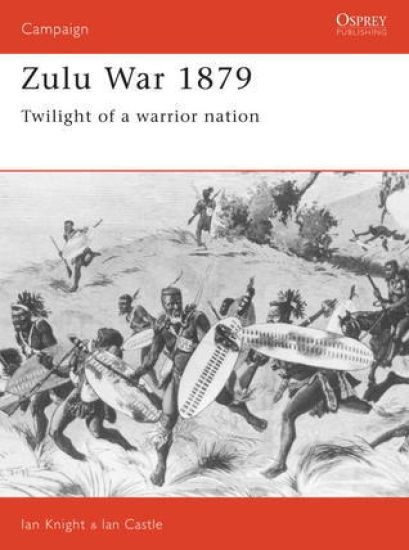
A compact, detailed volume on one of the Victorian British Empire's key wars and the battles it comprised.In the late 1870s the British Imperial administration in the Cape colony in southern Africa began to view the Zulu kingdom as a challenge to its authority. To contain this perceived threat, the British engineered a war. The early campaigns went terribly wrong, with the decisive Zulu victory at Isandlwana. Ultimately however, the British won the war. The Zulus, primarily reliant on their skill with the stabbing spear, had no real defence or retaliation against the massed firepower of professional British soldiers.Ian Castle examines the British-Zulu war and its two key battles, Isandlwana and Khambula, with excellent black and white photographs accompanying the clear and detailed text.
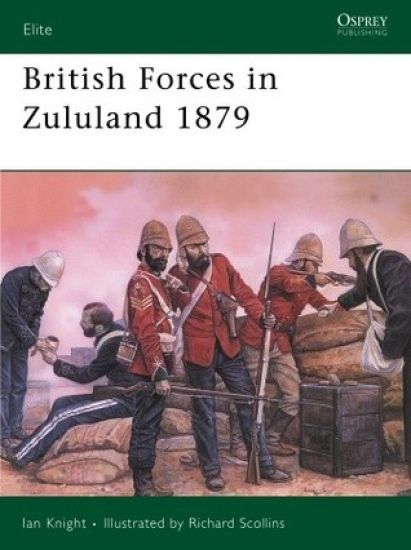
British Forces in Zululand 1879

British Forces in Zululand 1879

Ian Knight

Osprey Publishing
1991
nidottu
On 4 March, 1878 at King William's Town, British Kaffraria, Gen. Sir Arthur Cunnynghame handed over supreme command of the British forces in southern Africa to his successor, Lt. Gen. Sir Frederic Thesiger. The High Commissioner, Sir Henry Bartle Frere, was convinced that one solution to the complex problems which beset the region was to overthrow the last powerful independent black kingdom bordering British possessions – the Zulu kingdom of King Cetshwayo KaMapande. However Cetshwayo had remained on the political defensive. This book descirbes the uniforms and equipment of the forces that Thesiger led across the border to wage war in Zululand.
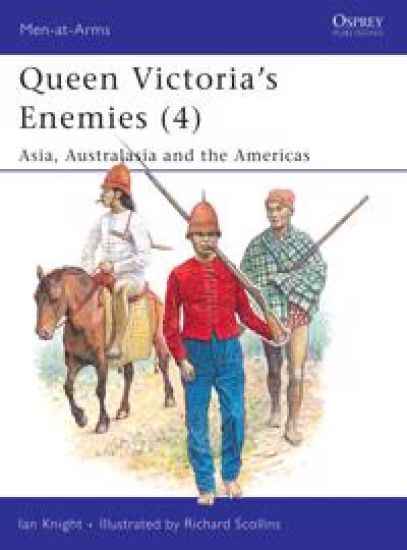
Queen Victoria's Enemies (4)

Queen Victoria's Enemies (4)

Ian Knight

Osprey Publishing
1990
nidottu
Due to the spread of British strategic and commercial interests during the Victorian period, the British military was called upon to serve in theatres across the world. Some of the fighting was severe; it took nearly 30 years of intermittent warfare to suppress Maori opposition to settler expansion in New Zealand. In other areas it amounted to little more than skirmishing, as in Brooke's campaign against the pirates of Borneo and the Jamaican revolt of 1865. This book details these various 'small wars' and examines the qualities of the disparate peoples who opposed the spread of the British Empire.
Queen Victoria's Enemies (3)

Queen Victoria's Enemies (3)

Ian Knight

Osprey Publishing
1990
nidottu
By the time Queen Victoria came to the throne, India – some 1,600,000 square miles, ranging from soaring mountains to deserts and jungle swamps, populated by 400,000,000 people with a kaleidoscope of different cultures and religions – was firmly in the grip of a handful of British East India Company administrators, either ruling directly or through Indian nominees. However, the Company's search for a policy in western India embroiled it in a string of military campaigns, including one of the worst disasters ever to befall a British army. Ian Knight's fascinating text examines the absorbing, dramatic and brutal history of the Company's exploits against Victoria's Indian enemies.
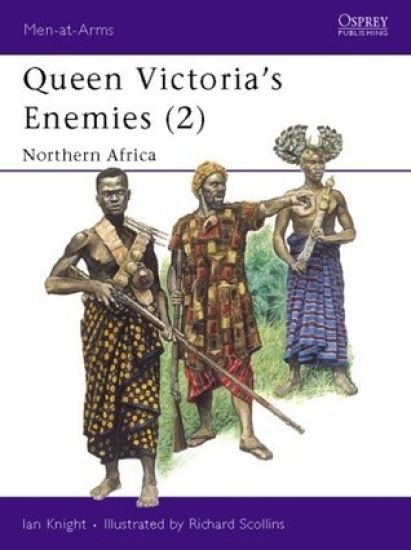
Queen Victoria's Enemies (2)

Queen Victoria's Enemies (2)

Ian Knight

Osprey Publishing
1989
nidottu
The British Army in Queen Victoria's reign fought a series of regional campaigns against various African groups with complex military traditions well-suited to their environment. In many instances, the outcome of the ensuing fighting was by no means one-sided. This book focuses on the large-scale wars in northern Africa in which British regular troops were engaged throughout the 19th century, including those in Abyssinia, Asante, Egypt and the Sudan. Containing a number of rare contemporary photographs and eight colour plates, the book charts the history of these campaigns and describes the African groups against which they were waged.
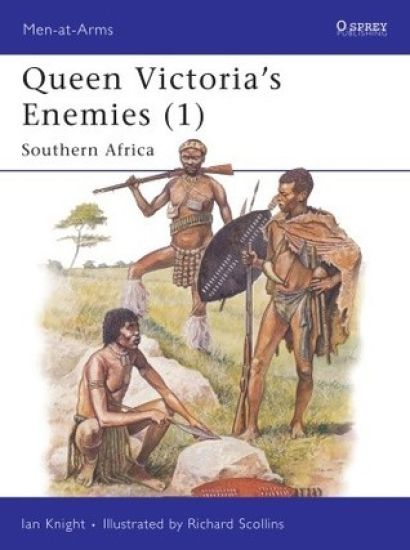
Queen Victoria's Enemies (1)

Queen Victoria's Enemies (1)

Ian Knight

Osprey Publishing
1989
nidottu
When Queen Victoria acceded to the British throne in 1837, British troops had recently concluded a war in southern Africa against the Xhosa people, and the seeds were already sown for a clash with the Boers. When she died in January 1901 Britain was fighting the Boers in one of the longest and costliest of the imperial colonial wars. This book details the history of Britain's numerous conflicts with the people of southern Africa, namely the Xhosa, Basotho, Tswana and Boers. Numerous illustrations, including rare photographs and colour plates, detail the dress, weaponry and organization of Victoria's enemies in the late 19th century.
The Zulus

The Zulus

Ian Knight

Osprey Publishing
1989
nidottu
'A very remarkable people, the Zulu', the British Prime Minister, Benjamin Disraeli, said on hearing of a fresh disaster in the war of 1879, 'They defeat our generals; they convert our bishops; they have settled the fate of a great European dynasty'. Remarkable indeed, to have taken on the full might of the British Empire at its height, and won, if not the war, at least some of the battles. This book explains who the Zulus were, and how they achieved the fame as warriors which they enjoy to this day.