Kirjojen hintavertailu. Mukana 12 595 353 kirjaa ja 12 kauppaa.

Kirjailija

Ian M. Miller

Kirjat ja teokset yhdessä paikassa: 2 kirjaa, julkaisuja vuosilta 2020-2024, suosituimpien joukossa Fir and Empire. Vertaile teosten hintoja ja tarkista saatavuus suomalaisista kirjakaupoista.

2 kirjaa

Kirjojen julkaisuhaarukka 2020-2024.

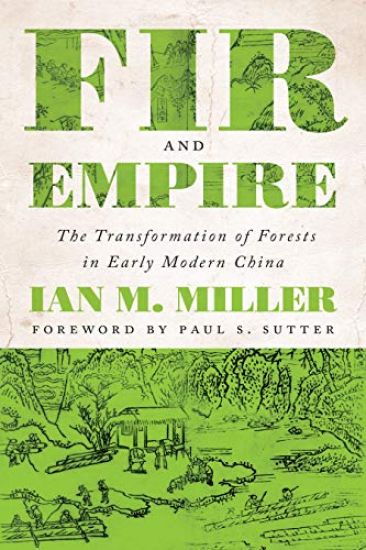
Fir and Empire

Fir and Empire

Ian M. Miller; Paul S. Sutter

UNIVERSITY OF WASHINGTON PRESS
2024
pokkari
A CHOICE OUTSTANDING ACADEMIC TITLERestores China's place in forest historyThe disappearance of China's naturally occurring forests is one of the most significant environmental shifts in the country's history, one often blamed on imperial demand for lumber. China's early modern forest history is typically viewed as a centuries-long process of environmental decline, culminating in a nineteenth-century social and ecological crisis. Pushing back against this narrative of deforestation, Ian Miller charts the rise of timber plantations between about 1000 and 1700, when natural forests were replaced with anthropogenic ones. Miller demonstrates that this form of forest management generally rested on private ownership under relatively distant state oversight and taxation. He further draws on in-depth case studies of shipbuilding and imperial logging to argue that this novel landscape was not created through simple extractive pressures, but by attempts to incorporate institutional and ecological complexity into a unified imperial state.Miller uses the emergence of anthropogenic forests in south China to rethink both temporal and spatial frameworks for Chinese history and the nature of Chinese empire. Because dominant European forestry models do not neatly overlap with the non-Western world, China's history is often left out of global conversations about them; Miller's work rectifies this omission and suggests that in some ways, China's forest system may have worked better than the more familiar European institutions.The open access publication of this book was made possible by a grant from the James P. Geiss and Margaret Y. Hsu Foundation.
Fir and Empire

Fir and Empire

Ian M. Miller; Paul S. Sutter

University of Washington Press
2020
sidottu
A CHOICE OUTSTANDING ACADEMIC TITLERestores China's place in forest historyThe disappearance of China's naturally occurring forests is one of the most significant environmental shifts in the country's history, one often blamed on imperial demand for lumber. China's early modern forest history is typically viewed as a centuries-long process of environmental decline, culminating in a nineteenth-century social and ecological crisis. Pushing back against this narrative of deforestation, Ian Miller charts the rise of timber plantations between about 1000 and 1700, when natural forests were replaced with anthropogenic ones. Miller demonstrates that this form of forest management generally rested on private ownership under relatively distant state oversight and taxation. He further draws on in-depth case studies of shipbuilding and imperial logging to argue that this novel landscape was not created through simple extractive pressures, but by attempts to incorporate institutional and ecological complexity into a unified imperial state.Miller uses the emergence of anthropogenic forests in south China to rethink both temporal and spatial frameworks for Chinese history and the nature of Chinese empire. Because dominant European forestry models do not neatly overlap with the non-Western world, China's history is often left out of global conversations about them; Miller's work rectifies this omission and suggests that in some ways, China's forest system may have worked better than the more familiar European institutions.The open access publication of this book was made possible by a grant from the James P. Geiss and Margaret Y. Hsu Foundation.