Kirjojen hintavertailu. Mukana 12 595 353 kirjaa ja 12 kauppaa.

Kirjailija

Ian Milligan

Kirjat ja teokset yhdessä paikassa: 13 kirjaa, julkaisuja vuosilta 1987-2024, suosituimpien joukossa Exploring Big Historical Data: The Historian's Macroscope. Vertaile teosten hintoja ja tarkista saatavuus suomalaisista kirjakaupoista.

13 kirjaa

Kirjojen julkaisuhaarukka 1987-2024.

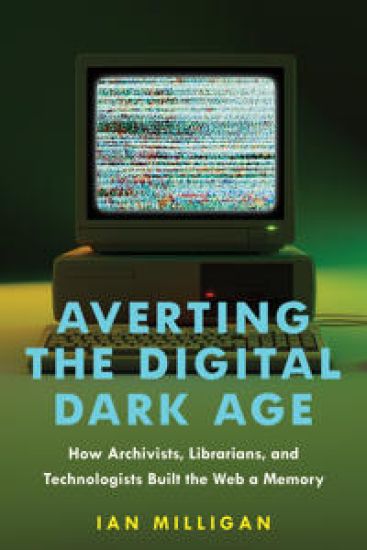
Averting the Digital Dark Age

Averting the Digital Dark Age

Ian Milligan

Johns Hopkins University Press
2024
sidottu
How the internet's memory infrastructure developed—averting a "digital dark age"—and introduced a golden age of historical memory.In early 1996, the web was ephemeral. But by 2001, the internet was forever. How did websites transform from having a brief life to becoming long-lasting? Drawing on archival material from the Internet Archive and exclusive interviews, Ian Milligan's Averting the Digital Dark Age explores how Western society evolved from fearing a digital dark age to building the robust digital memory we rely on today. By the mid-1990s, the specter of a "digital dark age" haunted libraries, portending a bleak future with no historical record that threatened cyber obsolescence, deletion, and apathy. People around the world worked to solve this impending problem. In San Francisco, technology entrepreneur Brewster Kahle launched his scrappy nonprofit, Internet Archive, filling tape drives with internet content. Elsewhere, in Washington, Canberra, Ottawa, and Stockholm, librarians developed innovative new programs to safeguard digital heritage. Cataloging worries among librarians, technologists, futurists, and writers from WWII onward, through early practitioners, to an extended case study of how September 11 prompted institutions to preserve thousands of digital artifacts related to the attacks, Averting the Digital Dark Age explores how the web gained a long-lasting memory. By understanding this history, we can equip our society to better grapple with future internet shifts.
The Transformation of Historical Research in the Digital Age
Historians make research queries on Google, ProQuest, and the HathiTrust. They garner information from keyword searches, carried out across millions of documents, their research shaped by algorithms they rarely understand. Historians often then visit archives in whirlwind trips marked by thousands of digital photographs, subsequently explored on computer monitors from the comfort of their offices. They may then take to social media or other digital platforms, their work shaped through these new forms of pre- and post-publication review. Almost all aspects of the historian's research workflow have been transformed by digital technology. In other words, all historians – not just Digital Historians – are implicated in this shift. The Transformation of Historical Research in the Digital Age equips historians to be self-conscious practitioners by making these shifts explicit and exploring their long-term impact. This title is also available as Open Access on Cambridge Core.
Exploring Big Historical Data: The Historian's Macroscope

Exploring Big Historical Data: The Historian's Macroscope

Shawn Graham; Ian Milligan; Scott B Weingart; Kimberley Martin

WORLD SCIENTIFIC PUBLISHING CO PTE LTD
2022
nidottu
Every day, more and more kinds of historical data become available, opening exciting new avenues of inquiry but also new challenges. This updated and expanded book describes and demonstrates the ways these data can be explored to construct cultural heritage knowledge, for research and in teaching and learning. It helps humanities scholars to grasp Big Data in order to do their work, whether that means understanding the underlying algorithms at work in search engines or designing and using their own tools to process large amounts of information.Demonstrating what digital tools have to offer and also what 'digital' does to how we understand the past, the authors introduce the many different tools and developing approaches in Big Data for historical and humanistic scholarship, show how to use them, what to be wary of, and discuss the kinds of questions and new perspectives this new macroscopic perspective opens up. Originally authored 'live' online with ongoing feedback from the wider digital history community, Exploring Big Historical Data breaks new ground and sets the direction for the conversation into the future.Exploring Big Historical Data should be the go-to resource for undergraduate and graduate students confronted by a vast corpus of data, and researchers encountering these methods for the first time. It will also offer a helping hand to the interested individual seeking to make sense of genealogical data or digitized newspapers, and even the local historical society who are trying to see the value in digitizing their holdings.
Exploring Big Historical Data: The Historian's Macroscope

Exploring Big Historical Data: The Historian's Macroscope

Shawn Graham; Ian Milligan; Scott B Weingart; Kimberley Martin

WORLD SCIENTIFIC PUBLISHING CO PTE LTD
2022
sidottu
Every day, more and more kinds of historical data become available, opening exciting new avenues of inquiry but also new challenges. This updated and expanded book describes and demonstrates the ways these data can be explored to construct cultural heritage knowledge, for research and in teaching and learning. It helps humanities scholars to grasp Big Data in order to do their work, whether that means understanding the underlying algorithms at work in search engines or designing and using their own tools to process large amounts of information.Demonstrating what digital tools have to offer and also what 'digital' does to how we understand the past, the authors introduce the many different tools and developing approaches in Big Data for historical and humanistic scholarship, show how to use them, what to be wary of, and discuss the kinds of questions and new perspectives this new macroscopic perspective opens up. Originally authored 'live' online with ongoing feedback from the wider digital history community, Exploring Big Historical Data breaks new ground and sets the direction for the conversation into the future.Exploring Big Historical Data should be the go-to resource for undergraduate and graduate students confronted by a vast corpus of data, and researchers encountering these methods for the first time. It will also offer a helping hand to the interested individual seeking to make sense of genealogical data or digitized newspapers, and even the local historical society who are trying to see the value in digitizing their holdings.
History in the Age of Abundance?

History in the Age of Abundance?

Ian Milligan

McGill-Queen's University Press
2019
sidottu
Believe it or not, the 1990s are history. As historians turn to study this period and beyond, they will encounter a historical record that is radically different from what has ever existed before. Old websites, social media, blogs, photographs, and videos are all part of the massive quantities of digital information that technologists, librarians, archivists, and organizations such as the Internet Archive have been collecting for the past three decades. In History in the Age of Abundance? Ian Milligan argues that web-based historical sources and their archives present extraordinary opportunities as well as daunting technical and ethical challenges for historians. Through case studies, he outlines the approaches, methods, tools, and search functions that can help a historian turn web documents into historical sources. He also considers the implications of the size and scale of digital sources, which amount to more information than historians have ever had at their fingertips, and many of which are by and about people who have traditionally been absent from the historical record. Scrutinizing the concept of the web and the mechanics of its archives, Milligan explains how these new media challenge, reshape, and enrich both the historical profession and the historical record. A wake-up call for historians of the twenty-first century, History in the Age of Abundance? is an essential introduction to the way web archives work, what possibilities they open up, what risks they entail, and what the shift to digital information means for historians, their professional training and organization, and society as a whole.
History in the Age of Abundance?

History in the Age of Abundance?

Ian Milligan

McGill-Queen's University Press
2019
nidottu
Believe it or not, the 1990s are history. As historians turn to study this period and beyond, they will encounter a historical record that is radically different from what has ever existed before. Old websites, social media, blogs, photographs, and videos are all part of the massive quantities of digital information that technologists, librarians, archivists, and organizations such as the Internet Archive have been collecting for the past three decades. In History in the Age of Abundance? Ian Milligan argues that web-based historical sources and their archives present extraordinary opportunities as well as daunting technical and ethical challenges for historians. Through case studies, he outlines the approaches, methods, tools, and search functions that can help a historian turn web documents into historical sources. He also considers the implications of the size and scale of digital sources, which amount to more information than historians have ever had at their fingertips, and many of which are by and about people who have traditionally been absent from the historical record. Scrutinizing the concept of the web and the mechanics of its archives, Milligan explains how these new media challenge, reshape, and enrich both the historical profession and the historical record. A wake-up call for historians of the twenty-first century, History in the Age of Abundance? is an essential introduction to the way web archives work, what possibilities they open up, what risks they entail, and what the shift to digital information means for historians, their professional training and organization, and society as a whole.
Exploring Big Historical Data: The Historian's Macroscope

Exploring Big Historical Data: The Historian's Macroscope

Shawn Graham; Ian Milligan; Scott B Weingart

Imperial College Press
2015
nidottu
The Digital Humanities have arrived at a moment when digital Big Data is becoming more readily available, opening exciting new avenues of inquiry but also new challenges. This pioneering book describes and demonstrates the ways these data can be explored to construct cultural heritage knowledge, for research and in teaching and learning. It helps humanities scholars to grasp Big Data in order to do their work, whether that means understanding the underlying algorithms at work in search engines, or designing and using their own tools to process large amounts of information.Demonstrating what digital tools have to offer and also what 'digital' does to how we understand the past, the authors introduce the many different tools and developing approaches in Big Data for historical and humanistic scholarship, show how to use them, what to be wary of, and discuss the kinds of questions and new perspectives this new macroscopic perspective opens up. Authored 'live' online with ongoing feedback from the wider digital history community, Exploring Big Historical Data breaks new ground and sets the direction for the conversation into the future. It represents the current state-of-the-art thinking in the field and exemplifies the way that digital work can enhance public engagement in the humanities.Exploring Big Historical Data should be the go-to resource for undergraduate and graduate students confronted by a vast corpus of data, and researchers encountering these methods for the first time. It will also offer a helping hand to the interested individual seeking to make sense of genealogical data or digitized newspapers, and even the local historical society who are trying to see the value in digitizing their holdings.The companion website to Exploring Big Historical Data can be found at www.themacroscope.org/. On this site you will find code, a discussion forum, essays, and datafiles that accompany this book.
Exploring Big Historical Data: The Historian's Macroscope

Exploring Big Historical Data: The Historian's Macroscope

Shawn Graham; Ian Milligan; Scott B Weingart

Imperial College Press
2015
sidottu
The Digital Humanities have arrived at a moment when digital Big Data is becoming more readily available, opening exciting new avenues of inquiry but also new challenges. This pioneering book describes and demonstrates the ways these data can be explored to construct cultural heritage knowledge, for research and in teaching and learning. It helps humanities scholars to grasp Big Data in order to do their work, whether that means understanding the underlying algorithms at work in search engines, or designing and using their own tools to process large amounts of information.Demonstrating what digital tools have to offer and also what 'digital' does to how we understand the past, the authors introduce the many different tools and developing approaches in Big Data for historical and humanistic scholarship, show how to use them, what to be wary of, and discuss the kinds of questions and new perspectives this new macroscopic perspective opens up. Authored 'live' online with ongoing feedback from the wider digital history community, Exploring Big Historical Data breaks new ground and sets the direction for the conversation into the future. It represents the current state-of-the-art thinking in the field and exemplifies the way that digital work can enhance public engagement in the humanities.Exploring Big Historical Data should be the go-to resource for undergraduate and graduate students confronted by a vast corpus of data, and researchers encountering these methods for the first time. It will also offer a helping hand to the interested individual seeking to make sense of genealogical data or digitized newspapers, and even the local historical society who are trying to see the value in digitizing their holdings.The companion website to Exploring Big Historical Data can be found at www.themacroscope.org/. On this site you will find code, a discussion forum, essays, and datafiles that accompany this book.
Rebel Youth

Rebel Youth

Ian Milligan

University of British Columbia Press
2015
pokkari
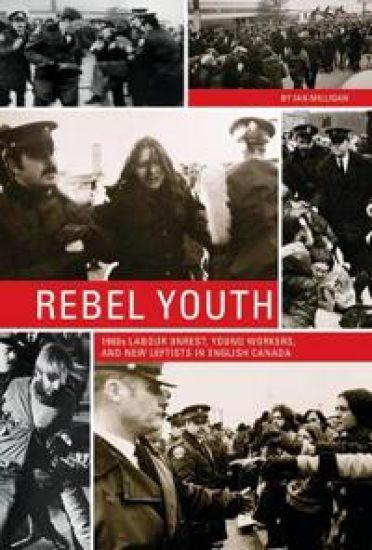
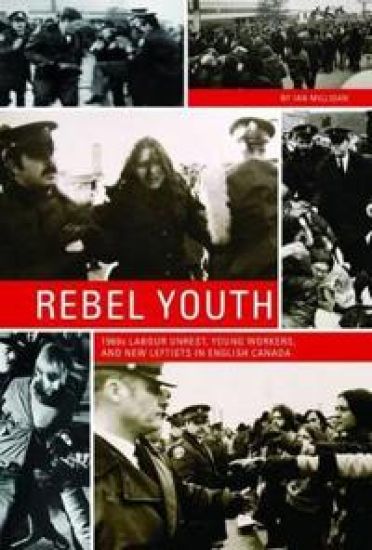
During the "long sixties," baby boomers raised on democratic postwar ideals demanded a more egalitarian society for all. While a few became vocal leaders at universities across Canada, nearly 90% of Canada's young people went straight to work after high school. There, they brought the anti-authoritarian spirit of the youth revolt to the labour movement.While university-based activists combined youth culture with a new brand of radicalism to form the New Left, young workers were pressing for wildcat strikes and defying their aging union leaders in a wave of renewed militancy. In Rebel Youth, Ian Milligan looks at these converging currents, demonstrating convincingly how they were part of a single youth phenomenon.With just short of seventy interviews complementing the extensive use of archival records from ten different cities, this book claims a central place for labour and class in the legacy of the Canadian sixties.
Rebel Youth

Rebel Youth

Ian Milligan

University of British Columbia Press
2014
sidottu
During the "long sixties," baby boomers raised on democratic postwar ideals demanded a more egalitarian society for all. While a few became vocal leaders at universities across Canada, nearly 90% of Canada's young people went straight to work after high school. There, they brought the anti-authoritarian spirit of the youth revolt to the labour movement.While university-based activists combined youth culture with a new brand of radicalism to form the New Left, young workers were pressing for wildcat strikes and defying their aging union leaders in a wave of renewed militancy. In Rebel Youth, Ian Milligan looks at these converging currents, demonstrating convincingly how they were part of a single youth phenomenon.With just short of seventy interviews complementing the extensive use of archival records from ten different cities, this book claims a central place for labour and class in the legacy of the Canadian sixties.
Residential Child Care

Residential Child Care

Ian Milligan; Irene Stevens

SAGE Publications Inc
2006
sidottu
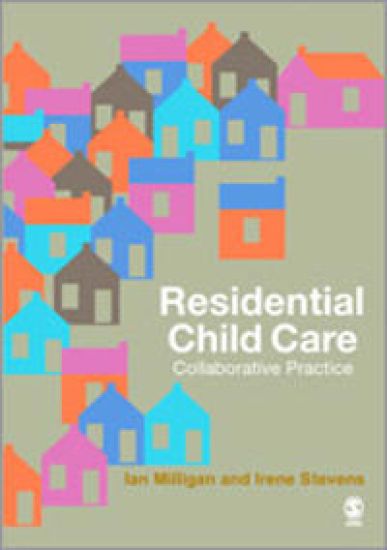
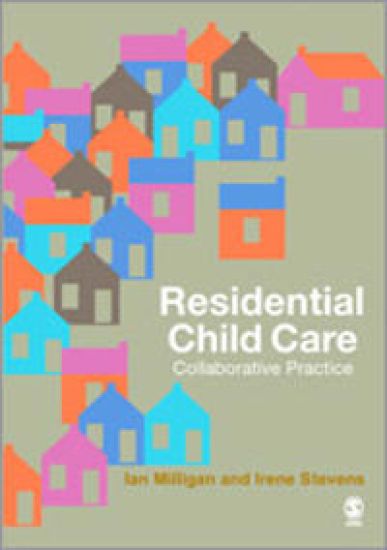
`This excellent book faces the difficulties of residential child care with integrity. The emphasis on collaboration is both timely and important since it is a major theme in the training of social workers in the UK, where this book will be a valuable resource' - Andrew Hill, University of York Residential Child Care is an innovative book which addresses the specific context of modern residential child care whilst promoting collaborative practice within a wider social work setting. The book analyses the collaborative role of organisations, field workers, parents, teachers, and children, and stresses how these interprofessional relationships are crucial to ensuring children's wellbeing. Residential Child Care: Collaborative Practice: " is founded on fundamental social work principles, values and ethics; " encourages collaborative practice by identifying how each professions' roles differ; " seeks to dispel 'barriers' that inhibit effective collaboration; " draws upon examples of good practice; " includes views and experiences of children and young people; " integrates relevant aspects of the social work Benchmark statement. Comprehensive and accessible, the book includes learning outcomes, activities, and case studies to help aid students' understanding. The book successfully balances its theoretical context with a focus on practice, making it an invaluable resource for students and practitioners. It is useful for social work and social care students, trainee residential workers, and professionals who have an interest in working with looked after children.
Residential Child Care

Residential Child Care

Ian Milligan; Irene Stevens

SAGE Publications Inc
2006
nidottu
`This excellent book faces the difficulties of residential child care with integrity. The emphasis on collaboration is both timely and important since it is a major theme in the training of social workers in the UK, where this book will be a valuable resource' - Andrew Hill, University of York Residential Child Care is an innovative book which addresses the specific context of modern residential child care whilst promoting collaborative practice within a wider social work setting. The book analyses the collaborative role of organisations, field workers, parents, teachers, and children, and stresses how these interprofessional relationships are crucial to ensuring children's wellbeing. Residential Child Care: Collaborative Practice: " is founded on fundamental social work principles, values and ethics; " encourages collaborative practice by identifying how each professions' roles differ; " seeks to dispel 'barriers' that inhibit effective collaboration; " draws upon examples of good practice; " includes views and experiences of children and young people; " integrates relevant aspects of the social work Benchmark statement. Comprehensive and accessible, the book includes learning outcomes, activities, and case studies to help aid students' understanding. The book successfully balances its theoretical context with a focus on practice, making it an invaluable resource for students and practitioners. It is useful for social work and social care students, trainee residential workers, and professionals who have an interest in working with looked after children.