Kirjojen hintavertailu. Mukana 12 471 263 kirjaa ja 12 kauppaa.

Kirjailija

Ian Parker

Kirjat ja teokset yhdessä paikassa: 39 kirjaa, julkaisuja vuosilta 1995-2024, suosituimpien joukossa Dance David Dance. Vertaile teosten hintoja ja tarkista saatavuus suomalaisista kirjakaupoista.

39 kirjaa

Kirjojen julkaisuhaarukka 1995-2024.

Pathologisation, Depathologisation and Mental Health

Pathologisation, Depathologisation and Mental Health

Ian Parker

Springer International Publishing AG
2024
sidottu
This book examines the pathologisation and depathologisation of mental health in Ibero-América. It highlights the possibilities and the epistemic limits of the interpretative models of pathos that have legitimised mental health pathologies. Further, it proposes a rereading of psychopathology and analyses the clinical, philosophical, ontological, ethical, psychological and anthropological consequences of this. Across ten chapters it brings together academics from Latin America with colleagues from Europe, Asia and North America to address issues including stigma, aesthetics, childhood, gender, migration, political public or social networks and their relationship with mental health. Section 1 brings critical psychology into dialogue with psychiatry, sociology, philosophy and psychoanalysis to review the conceptual frameworks through which "pathology" has been understood in "psy" discourses. Section 2 presents a range of case studies that demonstrate the impact of debates around the pathologisation and de-pathologisation on mental health care in various populations across Latin American. It will offer fresh insights to practitioners, as well as to students and scholars working in the areas of mental health, critical psychology, medical sociology, Latin American studies, psychiatry and psychoanalysis.
Psychoanalysis and Revolution

Psychoanalysis and Revolution

Ian Parker; David Pavon-Cuellar

1968 Press
2021
nidottu
What is revolutionary about psychoanalysis, and why should those of us concerned with political praxis take it seriously? This manifesto is an argument for connecting social transformation with personal liberation, showing that the two aspects of profound change can be intimately linked together using psychoanalysis. This manifesto explores what lies beyond us, what we keep repeating, what pushes and pulls us to stay the same and to change, and how those phenomena are transferred into clinical space. This book is not uncritical of psychoanalysis, and transforms it so that liberation movements can transform the world. With a preface by Suryia Nayak.
Mapping the English left through film
Ian Parker's Mapping the English Left through Film: Twenty Five Uneasy Pieces is a block-buster of a book, mercilessly unpicking the cinematic narratives that infuse twenty-five organisations. Key elements of plot and production are used to tell the story of purges and splits and cult-favourites in this innovative history of Trotskyist groups in England. This is the place where revolutionary Marxism goes to the movies.
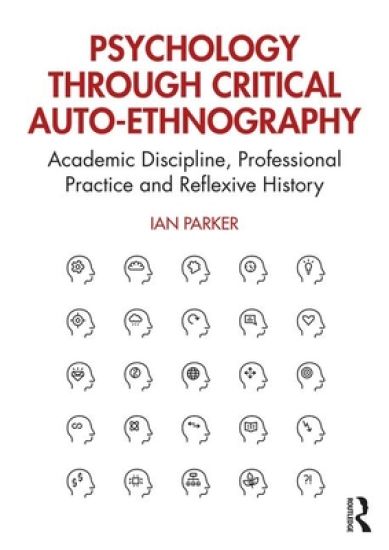
Psychology through Critical Auto-Ethnography
This unique book is an insider account about the discipline of psychology and its limits, introducing key debates in the field of psychology around the world today by closely examining the problematic role the discipline plays as a global phenomenon.Ian Parker traces the development of ‘critical psychology’ through an auto-ethnographic narrative in which the author is implicated in what he describes, laying bare the nature of contemporary psychology. In five parts, each comprising four chapters, the book explores the student experience, the world of psychological research, how psychology is taught, how alternative critical movements have emerged inside the discipline, and the role of psychology in coercive management practices. Providing a detailed account of how psychology actually operates as an academic discipline, it shows what teaching in higher education and immersion in research communities around the world looks like, and it culminates in an analytic description of institutional crises which psychology provokes. A reflexive history of psychology’s recent past as a discipline and as a cultural force, this book is an invaluable resource for anyone thinking of taking up a career in psychology, and for those reflecting critically on the role the discipline plays in people’s lives.
Psychology through Critical Auto-Ethnography
This unique book is an insider account about the discipline of psychology and its limits, introducing key debates in the field of psychology around the world today by closely examining the problematic role the discipline plays as a global phenomenon.Ian Parker traces the development of ‘critical psychology’ through an auto-ethnographic narrative in which the author is implicated in what he describes, laying bare the nature of contemporary psychology. In five parts, each comprising four chapters, the book explores the student experience, the world of psychological research, how psychology is taught, how alternative critical movements have emerged inside the discipline, and the role of psychology in coercive management practices. Providing a detailed account of how psychology actually operates as an academic discipline, it shows what teaching in higher education and immersion in research communities around the world looks like, and it culminates in an analytic description of institutional crises which psychology provokes. A reflexive history of psychology’s recent past as a discipline and as a cultural force, this book is an invaluable resource for anyone thinking of taking up a career in psychology, and for those reflecting critically on the role the discipline plays in people’s lives.
Psychoanalysis, Clinic and Context
Psychoanalysis is a strange and mysterious practice. In his new book, Ian Parker offers insights into his own experiences, first as trainee then as analyst, the common assumptions about psychoanalysis which can be so misleading, as well as a map of the key debates in the field today. Beginning with his own history, at first avoiding psychoanalysis before training as a Lacanian, Parker moves on to explore the wider historical development of clinical practice, making an argument for the importance of language, culture and history in this process. The book offers commentary on the key schools of thought, and how they manifest in the practice of psychoanalysis in different regions around the world.Psychoanalysis, Clinic and Context will be of great value to practitioners and social theorists who want to know how psychoanalytic ideas play out in training and the clinic, for trainees and students of psychoanalysis or psychoanalytic psychotherapy, and for the general reader who wants to know what psychoanalysis is and how it works.
Psychoanalysis, Clinic and Context
Psychoanalysis is a strange and mysterious practice. In his new book, Ian Parker offers insights into his own experiences, first as trainee then as analyst, the common assumptions about psychoanalysis which can be so misleading, as well as a map of the key debates in the field today. Beginning with his own history, at first avoiding psychoanalysis before training as a Lacanian, Parker moves on to explore the wider historical development of clinical practice, making an argument for the importance of language, culture and history in this process. The book offers commentary on the key schools of thought, and how they manifest in the practice of psychoanalysis in different regions around the world.Psychoanalysis, Clinic and Context will be of great value to practitioners and social theorists who want to know how psychoanalytic ideas play out in training and the clinic, for trainees and students of psychoanalysis or psychoanalytic psychotherapy, and for the general reader who wants to know what psychoanalysis is and how it works.
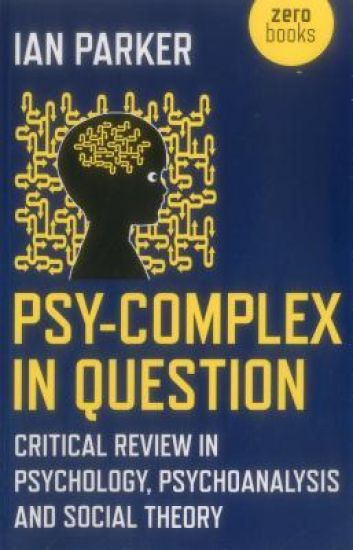
Psy–Complex in Question – Critical Review in Psychology, Psychoanalysis and Social Theory
Psy-Complex in Question traces a series of key debates in and against the psy-complex through critical reviews of twenty-five key texts over the last twenty-five years, with an emphasis on recent critical psychological, psychoanalytic and critical social theory contributions to how we think about human agency and subjectivity. The reviews together set out the unfolding context for the debate, and situate the texts under discussion in the cross-cutting debates that define critical psychology today. It also provides an accessible introduction to how psychoanalysis and social theory, with a particular focus on the work of Jacques Lacan and Slavoj Zizek, bears upon work carried out by a new generation of researchers. Ian Parker's book is written from the perspective of a critical insider to the discipline of psychology, psychoanalysis and social theory, and it will serve as a primer for those new to the ideas searching for compass points and radical arguments, as well as examples of how to write and how not to write a book review.
Revolutionary Keywords for a New Left

Revolutionary Keywords for a New Left

Ian Parker

John Hunt Publishing
2017
nidottu
Revolutionary Keywords for a New Left comprises short essays on fifty revolutionary keywords, each word being put to work on a contemporary political issue. With keywords ranging from academicisation to neoliberalism, from postcolonial to Zionism and with subjects including, Badiou, North Korea, sexual violence and Zizek, the book concludes with an essay mapping the development of progressive keywords before our century of revolution, which began in 1917, keywords that emerged in the fifty years of struggle between 1917 and 1967, and revolutionary keywords for the new left today.
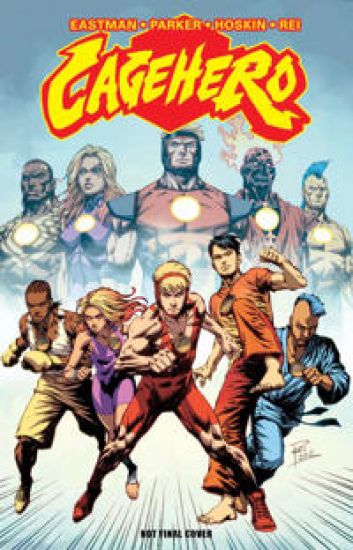
Cage Hero

Cage Hero

Kevin B. Eastman; Ian Parker; Mark Mastrandrea; Rik Hoskin

Dynamite Entertainment
2016
nidottu
Ryder Stone, a high school student and wrestling sensation, discovers his true destiny when he's recruited to join a superpowered team of mixed martial artists! Heir to one of eight medallions forged from a radioactive meteorite, he trains with his mysterious mentor Doc Proton for the day when, with focus and resolve, he and his new friends must harness the power to become the next generation of Cage Heroes. However, an evil network known as the Shadow Empire, led by the megalomaniacal Dark Sanctum and his vicious protege Stryker, seeks the medallions for an evil purpose: to wield in unison, plunging the world into darkness. Only by unlocking the hero within can Ryder and his teammates save civilization as we know it! Cage Hero, the perfect blend of superhero action and mixed martial arts, makes its explosive debut, from the minds Kevin Eastman (co-creator of Teenage Mutant Ninja Turtles), former UFC manager and MMA expert Ian Parker, and MMA personality Mark Mastrandrea!
The Crisis in Modern Social Psychology (Psychology Revivals)
In the late 1960s a ‘crisis’ erupted in social psychology, with many social psychologists highly critical of the ‘old paradigm’, laboratory-experimental approach. Originally published in 1989 The Crisis in Modern Social Psychology was the first book to provide a clear account of the complex body of work that is critical of traditional social psychological approaches. Ian Parker insisted that the ‘crisis’ was not over, showing how attempts to improve social psychology had failed, and explaining why we need instead a political understanding of social interaction which links research with change.Modern social psychology reflects the impact of structuralist and post-structuralist conceptual crises in other academic disciplines, and Parker describes the work of Foucault and Derrida sympathetically and lucidly, making these important debates accessible to the student and discussing their influence. He assesses the responses from both mainstream social psychology and from avant-garde textual social psychology to the influx of these radical ideas, and discusses the promises and pitfalls of a post-modern view of social action.
Discourse Dynamics (Psychology Revivals)
What are discourses? Are discourses ‘real’, and what is real outside language?Originally published in 1992, Ian Parker provides one of the clearest and most systematic introductions to discourse research and the essential theoretical debates in the area. At the time it was one of the few texts to defend a realist position, discuss accounts of postmodernity and set out criteria for the identification of discourses.Discourse Dynamics is essential reading to anyone interested in project research and an understanding of the theoretical issues involved in discourse analysis. The book will also be of use to students other than those studying psychology. It addresses the concerns of all those looking at qualitative textual research in the human sciences and is still very much relevant today.
Psychology After the Unconscious
Ian Parker has been a leading light in the fields of critical and discursive psychology for over 25 years. The Psychology After Critique series brings together for the first time his most important papers. Each volume in the series has been prepared by Ian Parker and presents a newly written introduction and focused overview of a key topic area.Psychology After the Unconscious is the fifth volume in the series and addresses three central questions: Why is Freud’s concept of the unconscious important today? Does language itself play a role in the creation of the unconscious? How does Lacan radicalize Freud’s notion of the unconscious in relation to cultural research?The book provides a clear explanation of Freudian and Lacanian accounts of the unconscious. It also highlights their role in offering a new way of describing, understanding and working with the human subject in clinical settings and in cultural research. Part One shows how the unconscious is elaborated in Freud’s early case studies in Studies on Hysteria, while Part Two focuses on Lacan’s re-working of the unconscious and its relationship to language and culture in his influential public seminars. The book also provides access to key debates currently occurring in Freudian and Lacanian psychoanalysis, exploring both the clinical dimension and the consequences for psychological and cultural research.Psychology After the Unconscious is essential reading for students and researchers in psychology, psychosocial studies, sociology, social anthropology and cultural studies, and to psychoanalysts of different traditions engaged in academic research. It will also introduce key ideas and debates within critical psychology to undergraduates and postgraduate students across the social sciences.
Psychology After the Unconscious
Ian Parker has been a leading light in the fields of critical and discursive psychology for over 25 years. The Psychology After Critique series brings together for the first time his most important papers. Each volume in the series has been prepared by Ian Parker and presents a newly written introduction and focused overview of a key topic area.Psychology After the Unconscious is the fifth volume in the series and addresses three central questions: Why is Freud’s concept of the unconscious important today? Does language itself play a role in the creation of the unconscious? How does Lacan radicalize Freud’s notion of the unconscious in relation to cultural research?The book provides a clear explanation of Freudian and Lacanian accounts of the unconscious. It also highlights their role in offering a new way of describing, understanding and working with the human subject in clinical settings and in cultural research. Part One shows how the unconscious is elaborated in Freud’s early case studies in Studies on Hysteria, while Part Two focuses on Lacan’s re-working of the unconscious and its relationship to language and culture in his influential public seminars. The book also provides access to key debates currently occurring in Freudian and Lacanian psychoanalysis, exploring both the clinical dimension and the consequences for psychological and cultural research.Psychology After the Unconscious is essential reading for students and researchers in psychology, psychosocial studies, sociology, social anthropology and cultural studies, and to psychoanalysts of different traditions engaged in academic research. It will also introduce key ideas and debates within critical psychology to undergraduates and postgraduate students across the social sciences.
Psychology After Discourse Analysis
Ian Parker has been a leading light in the fields of critical and discursive psychology for over 25 years. The Psychology After Critique series brings together for the first time his most important papers. Each volume in the series has been prepared by Ian Parker and presents a newly written introduction and focused overview of a key topic area.Psychology After Discourse Analysis is the third volume in the series and addresses three central questions: How did discourse analysis develop inside psychology? How does discursive psychology address concerns about the traditional ‘laboratory experiment’ paradigm in psychology? What is the future for discourse analysis? The book provides a clear account of the various forms of discourse analysis that have been used within psychology, and provides a review of their significance for a new generation of psychologists. The early chapters present a framework for understanding the origins of these various forms, as well as the differences between them. Emphasizing the gap between discursive psychology and mainstream psychology, Parker then explores relations between discourse analysis, psychoanalysis, social constructionism and the postmodern turn in the social sciences. The final chapters describe the limitations of discourse analysis and explore its flaws as a framework and as a practice, questioning its future within academia and in political and social contexts beyond psychology.Psychology After Discourse Analysis is essential reading for students and researchers in psychology, sociology, social anthropology and cultural studies, and for discourse analysts of different traditions. It will also introduce key ideas and debates within critical psychology to undergraduates and postgraduate students across the social sciences.