Kirjojen hintavertailu. Mukana 12 473 646 kirjaa ja 12 kauppaa.

Kirjailija

Ian Renshaw

Kirjat ja teokset yhdessä paikassa: 8 kirjaa, julkaisuja vuosilta 2019-2021, suosituimpien joukossa Nonlinear Pedagogy and the Athletic Skills Model. Vertaile teosten hintoja ja tarkista saatavuus suomalaisista kirjakaupoista.

8 kirjaa

Kirjojen julkaisuhaarukka 2019-2021.

Nonlinear Pedagogy and the Athletic Skills Model

Nonlinear Pedagogy and the Athletic Skills Model

James Rudd; Ian Renshaw; Geert Savelsbergh; Jia Yi Chow; Will Roberts; Daniel Newcombe; Keith Davids

Routledge
2021
sidottu
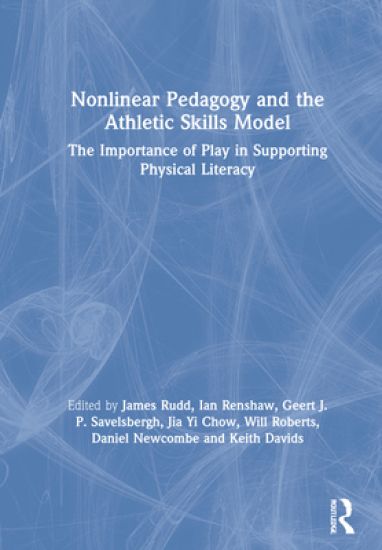
This book offers an ecological conceptualisation of physical literacy. Re-embracing our ancestry as hunter gatherers we gain a new appreciation and understanding of the importance of play, not only in terms of how children learn, but also in showing us as educators how we can lay the foundations for lifelong physical activity. The concept of physical literacy has been recognised and understood throughout history by different communities across the globe. Today, as governments grapple with the multiple challenges of urban life in the 21st century, we can learn from our forebears how to put play at the centre of children’s learning in order to build a more enduring physically active society. This book examines contemporary pedagogical approaches, such as constraints-led teaching, nonlinear pedagogy and the athletic skills model, which are underpinned by the theoretical framework of Ecological Dynamics. It is suggested that through careful design, these models, aimed at children, as well as young athletes, can (i) encourage play and facilitate physical activity and motor learning in children of different ages, providing them with the foundational skills needed for leading active lives; and (ii), develop young athletes in elite sports programmes in an ethical, enriching and supportive manner. Through this text, scientists, academics and practitioners in the sub-disciplines of motor learning and motor development, physical education, sports pedagogy and physical activity and exercise domains will better understand how to design programmes that encourage play and thereby develop the movement skills, self-regulating capacities, motivation and proficiency of people, so that they can move skilfully, effectively and efficiently while negotiating changes throughout the human lifespan.
Nonlinear Pedagogy and the Athletic Skills Model

Nonlinear Pedagogy and the Athletic Skills Model

James Rudd; Ian Renshaw; Geert Savelsbergh; Jia Yi Chow; Will Roberts; Daniel Newcombe; Keith Davids

Routledge
2021
nidottu
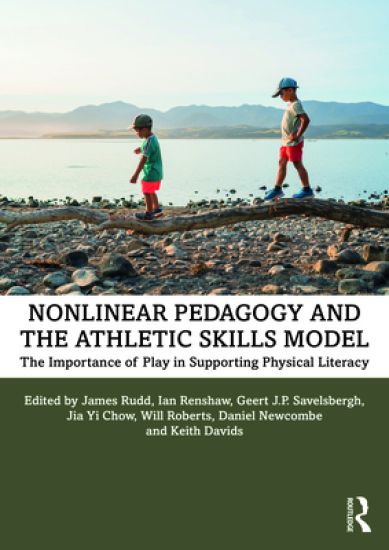
This book offers an ecological conceptualisation of physical literacy. Re-embracing our ancestry as hunter gatherers we gain a new appreciation and understanding of the importance of play, not only in terms of how children learn, but also in showing us as educators how we can lay the foundations for lifelong physical activity. The concept of physical literacy has been recognised and understood throughout history by different communities across the globe. Today, as governments grapple with the multiple challenges of urban life in the 21st century, we can learn from our forebears how to put play at the centre of children’s learning in order to build a more enduring physically active society. This book examines contemporary pedagogical approaches, such as constraints-led teaching, nonlinear pedagogy and the athletic skills model, which are underpinned by the theoretical framework of Ecological Dynamics. It is suggested that through careful design, these models, aimed at children, as well as young athletes, can (i) encourage play and facilitate physical activity and motor learning in children of different ages, providing them with the foundational skills needed for leading active lives; and (ii), develop young athletes in elite sports programmes in an ethical, enriching and supportive manner. Through this text, scientists, academics and practitioners in the sub-disciplines of motor learning and motor development, physical education, sports pedagogy and physical activity and exercise domains will better understand how to design programmes that encourage play and thereby develop the movement skills, self-regulating capacities, motivation and proficiency of people, so that they can move skilfully, effectively and efficiently while negotiating changes throughout the human lifespan.
Nonlinear Pedagogy in Skill Acquisition

Nonlinear Pedagogy in Skill Acquisition

Jia Yi Chow; Keith Davids; Chris Button; Ian Renshaw

TAYLOR FRANCIS LTD
2021
sidottu
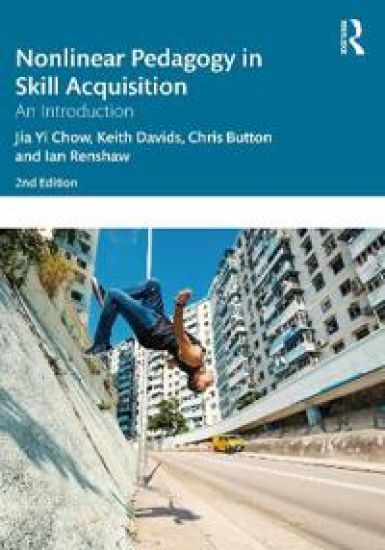
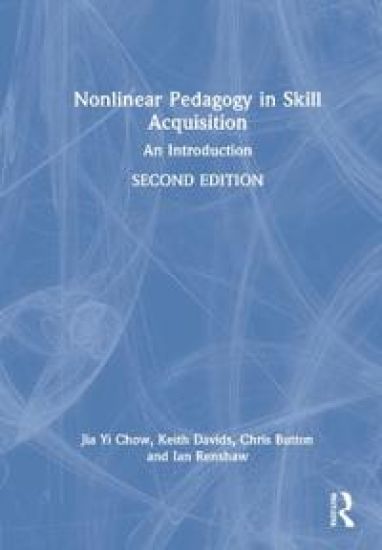
Nonlinear Pedagogy is a powerful paradigm for understanding human movement and for designing effective teaching, coaching and training programmes in sport, exercise and physical education (PE). It addresses the inherent complexity in learning movement skills, viewing the learner, the learning environment and the teacher or coach as a complex interacting system. The constraints of individual practice tasks provide the platform for functional movement behaviours to emerge during practice and performance. The second edition includes new materials, of practical, theoretical and empirical relevance, to enhance understanding of how to implement a Nonlinear Pedagogy to support learning in sport, PE and physical activity. There is updated, in-depth discussion on the various pedagogical principles that support Nonlinear Pedagogy and how these principles are applicable in learning designs in sports and physical education. There is further emphasis on examining how transfer of learning is implicated in practice, highlighting its relevance on skill adaptation and talent development. The first part of the book updates the general theoretical framework to explain processes of skill acquisition and motor learning. This edition draws clearer links between skill acquisition, expertise and talent development, focusing on how specificity and generality of transfer have a role to play in the development of learners. The book defines Nonlinear Pedagogy and outlines its key principles of practice. It offers a thorough and critical appraisal of the functional use of instructional constraints and practice design. It discusses methods for creating challenging and supportive individualised learning environments at developmental, sub-elite and elite levels of performance. The second part focuses on the application of Nonlinear Pedagogy in sports and PE. There is a greater emphasis on helping applied scientists and practitioners understand the impact of Nonlinear Pedagogy on transfer of learning. Every chapter is updated to provide relevant contemporary cases and examples from sport and exercise contexts, providing guidance on practice activities and lessons. Nonlinear Pedagogy in Skill Acquisition is an essential companion for any degree-level course in skill acquisition, motor learning, sport science, sport pedagogy, sports coaching practice, or pedagogy or curriculum design in physical education.
Nonlinear Pedagogy in Skill Acquisition

Nonlinear Pedagogy in Skill Acquisition

Jia Yi Chow; Keith Davids; Chris Button; Ian Renshaw

TAYLOR FRANCIS LTD
2021
nidottu
Nonlinear Pedagogy is a powerful paradigm for understanding human movement and for designing effective teaching, coaching and training programmes in sport, exercise and physical education (PE). It addresses the inherent complexity in learning movement skills, viewing the learner, the learning environment and the teacher or coach as a complex interacting system. The constraints of individual practice tasks provide the platform for functional movement behaviours to emerge during practice and performance. The second edition includes new materials, of practical, theoretical and empirical relevance, to enhance understanding of how to implement a Nonlinear Pedagogy to support learning in sport, PE and physical activity. There is updated, in-depth discussion on the various pedagogical principles that support Nonlinear Pedagogy and how these principles are applicable in learning designs in sports and physical education. There is further emphasis on examining how transfer of learning is implicated in practice, highlighting its relevance on skill adaptation and talent development. The first part of the book updates the general theoretical framework to explain processes of skill acquisition and motor learning. This edition draws clearer links between skill acquisition, expertise and talent development, focusing on how specificity and generality of transfer have a role to play in the development of learners. The book defines Nonlinear Pedagogy and outlines its key principles of practice. It offers a thorough and critical appraisal of the functional use of instructional constraints and practice design. It discusses methods for creating challenging and supportive individualised learning environments at developmental, sub-elite and elite levels of performance. The second part focuses on the application of Nonlinear Pedagogy in sports and PE. There is a greater emphasis on helping applied scientists and practitioners understand the impact of Nonlinear Pedagogy on transfer of learning. Every chapter is updated to provide relevant contemporary cases and examples from sport and exercise contexts, providing guidance on practice activities and lessons. Nonlinear Pedagogy in Skill Acquisition is an essential companion for any degree-level course in skill acquisition, motor learning, sport science, sport pedagogy, sports coaching practice, or pedagogy or curriculum design in physical education.
A Constraints-Led Approach to Golf Coaching

A Constraints-Led Approach to Golf Coaching

Ian Renshaw; Peter Arnott; Graeme McDowall

Routledge
2020
nidottu
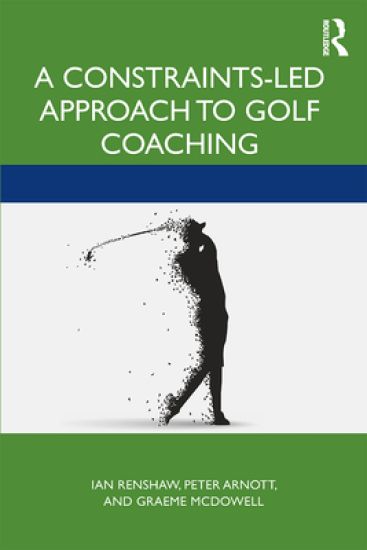
While the popularity of golf is coming under increased pressure, it continues to hook millions of players. However, the complexity of the game and the extremely high level of precision required to hit the ball consistently well means that it is a game that is difficult to even become ‘good’ at, let alone master. Consequently, irrespective of whether the player is a weekend golfer, a club member, or a tour professional, the search for the key to playing good golf feeds an insatiable desire for ideas and tips to improve golf performance and bring one’s handicap down. However, traditional coaching, with its primary focus on developing the perfect swing is not leading to a reduction in handicaps and the time is ripe for a new approach. This book aims to fill this void and is a landmark text for golf coaches and players about applying a constraints-led approach (CLA) to golf coaching. In this book, two golf coaches, Pete Arnott and Graeme McDowall talk to Ian Renshaw to demonstrate how their practice is driven and inspired by their alignment to a CLA. A Constraints-Led Approach to Golf Coaching includes case studies and examples of how constraints are manipulated to induce adaption in the technical, tactical (or put in golf terms, course management), physiological, and psychological development mechanisms needed to improve at golf. Examples cover coaching from their work with beginners, high handicappers, aspirant tour players, and elite players looking to make the ‘tour’.
A Constraints-Led Approach to Golf Coaching

A Constraints-Led Approach to Golf Coaching

Ian Renshaw; Peter Arnott; Graeme McDowall

Routledge
2020
sidottu
While the popularity of golf is coming under increased pressure, it continues to hook millions of players. However, the complexity of the game and the extremely high level of precision required to hit the ball consistently well means that it is a game that is difficult to even become ‘good’ at, let alone master. Consequently, irrespective of whether the player is a weekend golfer, a club member, or a tour professional, the search for the key to playing good golf feeds an insatiable desire for ideas and tips to improve golf performance and bring one’s handicap down. However, traditional coaching, with its primary focus on developing the perfect swing is not leading to a reduction in handicaps and the time is ripe for a new approach. This book aims to fill this void and is a landmark text for golf coaches and players about applying a constraints-led approach (CLA) to golf coaching. In this book, two golf coaches, Pete Arnott and Graeme McDowall talk to Ian Renshaw to demonstrate how their practice is driven and inspired by their alignment to a CLA. A Constraints-Led Approach to Golf Coaching includes case studies and examples of how constraints are manipulated to induce adaption in the technical, tactical (or put in golf terms, course management), physiological, and psychological development mechanisms needed to improve at golf. Examples cover coaching from their work with beginners, high handicappers, aspirant tour players, and elite players looking to make the ‘tour’.
The Constraints-Led Approach

The Constraints-Led Approach

Ian Renshaw; Keith Davids; Daniel Newcombe; Will Roberts

Routledge
2019
sidottu
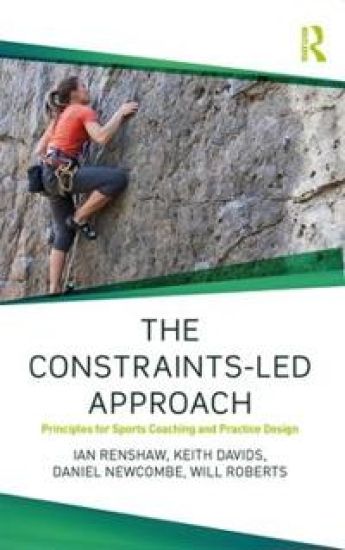
For the last 25 years, a constraints-based framework has helped to inform the way that many sport scientists seek to understand performance, learning design and the development of expertise and talent in sport. The Constraints-Led Approach: Principles for Sports Coaching and Practice Design provides students and practitioners with the theoretical knowledge required to implement constraints-led approaches in their work.Seeking to bridge the divide between theory and practice, the book sets out an ‘environment design framework’, including practical tools and guidance for the application of the framework in coaching and skill acquisition settings. It includes chapters on constraints-led approaches in golf, athletics and hockey, and provides applied reading for undergraduate and postgraduate students of motor learning, skill acquisition and developing sport expertise.Providing a thorough grounding in the theory behind constraints-led approaches to skill acquisition, and a foundational cornerstone in the Routledge Studies in Constraints-Based Methodologies in Sport series, this is a vital pedagogical resource for students and practising sports coaches, physical education teachers and sport scientists alike.
The Constraints-Led Approach

The Constraints-Led Approach

Ian Renshaw; Will Roberts; Keith Davids; Daniel Newcombe

Routledge
2019
nidottu
For the last 25 years, a constraints-based framework has helped to inform the way that many sport scientists seek to understand performance, learning design and the development of expertise and talent in sport. The Constraints-Led Approach: Principles for Sports Coaching and Practice Design provides students and practitioners with the theoretical knowledge required to implement constraints-led approaches in their work.Seeking to bridge the divide between theory and practice, the book sets out an ‘environment design framework’, including practical tools and guidance for the application of the framework in coaching and skill acquisition settings. It includes chapters on constraints-led approaches in golf, athletics and hockey, and provides applied reading for undergraduate and postgraduate students of motor learning, skill acquisition and developing sport expertise.Providing a thorough grounding in the theory behind constraints-led approaches to skill acquisition, and a foundational cornerstone in the Routledge Studies in Constraints-Based Methodologies in Sport series, this is a vital pedagogical resource for students and practising sports coaches, physical education teachers and sport scientists alike.