Kirjailija
Ian Tattersall
Kirjat ja teokset yhdessä paikassa: 26 kirjaa, julkaisuja vuosilta 1999-2022, suosituimpien joukossa Distilled. Vertaile teosten hintoja ja tarkista saatavuus suomalaisista kirjakaupoista.
26 kirjaa
Kirjojen julkaisuhaarukka 1999-2022.
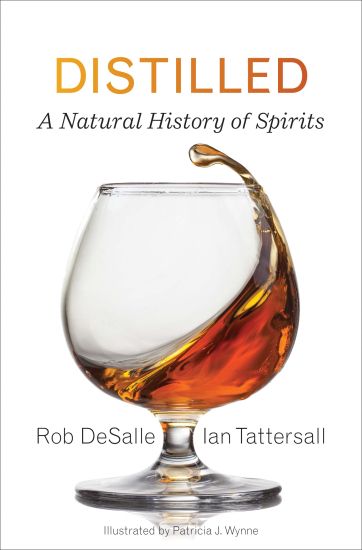
An imaginative natural history survey of the wide world of spirits, from whiskey and gin to grappa and moonshine In this follow-up book to A Natural History of Wine and A Natural History of Beer, authors Rob DeSalle and Ian Tattersall yet again use alcoholic beverages as a lens through which to gain a greater appreciation of natural history. This volume considers highly alcoholic spirits in the context of evolution, ecology, history, primatology, molecular biology, physiology, neurobiology, chemistry, and even astrophysics. With the help of illustrator Patricia Wynne, DeSalle and Tattersall address historical and cultural aspects and ingredients, the distillation process, and spirits and their effects. They also call on an international group of colleagues to contribute chapters on brandy, vodka, tequila, whiskies, gin, rum, eaux-de-vie, schnapps, baiju, grappa, ouzo, and cachaça. Covering beverages from across the globe and including descriptions of the experience of tasting each drink, this book offers an accessible and comprehensive exploration of the scientific dimensions of spirits.
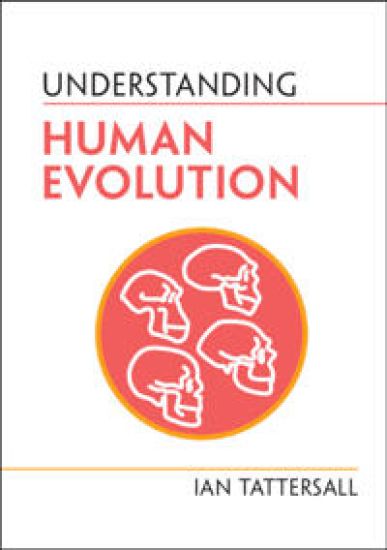
Human life, and how we came to be, is one of the greatest scientific and philosophical questions of our time. This compact and accessible book presents a modern view of human evolution. Written by a leading authority, it lucidly and engagingly explains not only the evolutionary process, but the technologies currently used to unravel the evolutionary past and emergence of Homo sapiens. By separating the history of palaeoanthropology from current interpretation of the human fossil record, it lays numerous misconceptions to rest, and demonstrates that human evolution has been far from the linear struggle from primitiveness to perfection that we've been led to believe. It also presents a coherent scenario for how Homo sapiens contrived to cross a formidable cognitive barrier to become an extraordinary and unprecedented thinking creature. Elegantly illustrated, Understanding Human Evolution is for anyone interested in the complex and tangled story of how we came to be.
The human species is very young, but in a short time it has acquired some striking, if biologically superficial, variations across the planet. As this book shows, however, none of those biological variations can be understood in terms of discrete races, which do not actually exist as definable entities. Starting with a consideration of evolution and the mechanisms of diversification in nature, this book moves to an examination of attitudes to human variation throughout history, showing that it was only with the advent of slavery that considerations of human variation became politicized. It then embarks on a consideration of how racial classifications have been applied to genomic studies, demonstrating how individualized genomics is a much more effective approach to clinical treatments. It also shows how racial stratification does nothing to help us understand the phenomenon of human variation, at either the genomic or physical levels.
A celebration of beer—its science, its history, and its impact on human culture “Curatorial eminences Rob DeSalle and Ian Tattersall serve up a potent scientific brew. . . . A marvellous paean to the pint, and to the researchers probing its depths.”—Barbara Kiser, Nature “Forced to choose between this book and a pint of hazy IPA, I would be at a loss. Better to consume them at the same time—both will go down easily, and leave you in an improved condition.”—Bill McKibben What can beer teach us about biology, history, and the natural world? From ancient Mesopotamian fermentation practices to the resurgent American craft brewery, Rob DeSalle and Ian Tattersall peruse the historical record and traverse the globe for engaging and often surprising stories about beer. They explain how we came to drink beer, what ingredients combine to give beers their distinctive flavors, how beer’s chemistry works at the molecular level, and how various societies have regulated the production and consumption of beer. Drawing from such diverse subject areas as animal behavior, ecology, history, archaeology, chemistry, sociology, law, genetics, physiology, neurobiology, and more, DeSalle and Tattersall entertain and inform with their engaging stories of beer throughout human history and the science behind it all. Readers are invited to grab a beer and explore the fascinating history of its creation.
When you think of evolution, the picture that most likely comes to mind is a straight-forward progression, the iconic illustration of a primate morphing into a proud, upright human being. But in reality, random events have played huge roles in determining the evolutionary histories of everything from lions to lobsters to humans. However, random genetic novelties are most likely to become fixed in small populations. It is mathematically unlikely that this will happen in large ones. With our enormous, close-packed, and seemingly inexorably expanding population, humanity has fallen under the influence of the famous (or infamous) “bell curve.” Ian Tattersall and Rob DeSalle’s revelatory new book explores what the future of our species could hold, while simultaneously revealing what we didn’t become—and what we won’t become. A cognitively unique species, and our actions fall on a bell curve as well. Individual people may be saintly or evil; generous or grasping; narrow-minded or visionary. But any attempt to characterize our species must embrace all of its members and so all of these antitheses. It is possible not just for the species, but for a single individual to be all of these things—even in the same day. We all fall somewhere within the giant hyperspace of the human condition that these curves describe. The Accidental Homo Sapiens shows readers that though humanity now exists on this bell curve, we are far from a stagnant species. Tattersall and DeSalle reveal how biological evolution in modern humans has given way to a cultural dynamic that is unlike anything else the Earth has ever witnessed, and that will keep life interesting—perhaps sometimes too interesting—for as long as we exist on this planet.
A celebration of beer—its science, its history, and its impact on human culture “Curatorial eminences Rob DeSalle and Ian Tattersall serve up a potent scientific brew. . . . A marvellous paean to the pint, and to the researchers probing its depths.”—Barbara Kiser, Nature “Forced to choose between this book and a pint of hazy IPA, I would be at a loss. Better to consume them at the same time—both will go down easily, and leave you in an improved condition.”—Bill McKibben What can beer teach us about biology, history, and the natural world? From ancient Mesopotamian fermentation practices to the resurgent American craft brewery, Rob DeSalle and Ian Tattersall peruse the historical record and traverse the globe for engaging and often surprising stories about beer. They explain how we came to drink beer, what ingredients combine to give beers their distinctive flavors, how beer’s chemistry works at the molecular level, and how various societies have regulated the production and consumption of beer. Drawing from such diverse subject areas as animal behavior, ecology, history, archaeology, chemistry, sociology, law, genetics, physiology, neurobiology, and more, DeSalle and Tattersall entertain and inform with their engaging stories of beer throughout human history and the science behind it all. Readers are invited to grab a beer and explore the fascinating history of its creation.
It is well established that all humans today, wherever they live, belong to one single species. Yet even many people who claim to abhor racism take for granted that human “races” have a biological reality. In Troublesome Science, Rob DeSalle and Ian Tattersall provide a lucid and forceful critique of how scientific tools have been misused to uphold misguided racial categorizations.DeSalle and Tattersall argue that taxonomy, the scientific classification of organisms, provides an antidote to the myth of race’s biological basis. They explain how taxonomists do their science—how to identify a species and to understand the relationships among different species and the variants within them. DeSalle and Tattersall also detail the use of genetic data to trace human origins and look at how scientists have attempted to recognize discrete populations within Homo sapiens. Troublesome Science demonstrates conclusively that modern genetic tools, when applied correctly to the study of human variety, fail to find genuine differences. While the diversity that exists within our species is a real phenomenon, it nevertheless defeats any systematic attempt to recognize discrete units within it. The stark lines that humans insist on drawing between their own groups and others are nothing but a mixture of imagination and ideology. Troublesome Science is an important call for researchers, journalists, and citizens to cast aside the belief that race has a biological meaning, for the sake of social justice and sound science alike.
Hoax: A History of Deception
Ian Tattersall; Peter Névraumont
Black Dog Leventhal Publishers Inc
2018
sidottu
An enthralling exploration of the most audacious and underhanded deceptions in the history of mankind, from sacred relics to financial schemes to fake art, music, and identities.World history is littered with tall tales and those who have fallen for them. Ian Tattersall, a curator emeritus at the American Museum of Natural History, and Peter Névraumont, an award-winning book producer, have teamed up to create this anti-history of the world, in which Michelangelo fakes a cupid; the holy foreskin is venerated; arctic explorers search for an entrance into a hollow Earth; a woman is elected Pope; and people can survive on only air and sunshine. Told chronologically, HOAX begins with the first documented announcement of the end of the world from 365 AD and winds its way through controversial tales such as the Loch Ness Monster and the Shroud of Turin, past proven fakes such as the Thomas Jefferson's ancient wine and the Davenport Tablets built by a lost race, and explores bald-faced lies in the art world, journalism, and archeology.
Fifty thousand years ago - merely a blip in evolutionary time - our Homo sapiens ancestors were competing for existence with several other human species, just as their precursors had done for millions of years. Yet something about our species distinguished it from the pack, and ultimately led to its survival while the rest became extinct. Just what was it that allowed Homo sapiens to become masters of the planet? Ian Tattersall, curator emeritus at the American Museum of Natural History, takes us deep into the fossil record to uncover what made humans so special. Surveying a vast field from initial bipedality to language and intelligence, Tattersall argues that Homo sapiens acquired a winning combination of traits that was not the result of long-term evolutionary refinement. Instead, the final result emerged quickly, shocking our world and changing it forever.
What evolutionary process could have resulted in the unique and amazing human brain? New research by neuroscientists, paleontologists, and others reveals startling answers. After several million years of jostling for ecological space, only one survivor from a host of hominid species remains standing: us. Human beings are extraordinary creatures, and it is the unprecedented human brain that makes them so. In this delightfully accessible book, the authors present the first full, step-by-step account of the evolution of the brain and nervous system. Tapping the very latest findings in evolutionary biology, neuroscience, and molecular biology, Rob DeSalle and Ian Tattersall explain how the cognitive gulf that separates us from all other living creatures could have occurred. They discuss the development and uniqueness of human consciousness, how human and nonhuman brains work, the roles of different nerve cells, the importance of memory and language in brain functions, and much more. Our brains, they conclude, are the product of a lengthy and supremely untidy history—an evolutionary process of many zigs and zags—that has accidentally resulted in a splendidly eccentric and creative product.
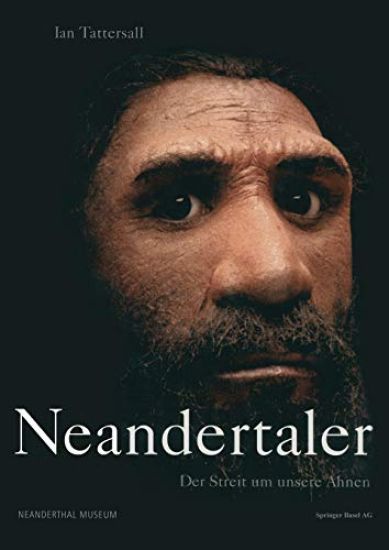
Die Entdeckung der Neandertaler vor rund 150 Jahren hat immer wieder für aufgeregte Diskussionen in Archäologie und Anthropologie gesorgt. Die Fragen, welchen genetischen Beitrag sie zur Entwicklung des heutigen Menschen geleistet haben oder warum die Neandertaler letztendlich ausstarben, sind bis heute ungeklärt. Dieser Streit in der Wissenschaft, die unterschiedlichen Interpretationen der Fossilien gestern und heute sowie die Evolution und Kultur des Neandertalers werden erstmalig vollständig und mit attraktivem Bildmaterial dargestellt. In einem aktuellen Anhang des Neanderthal Museums wird über die spektatkulären Neufunde im Neandertal und von anderen Orten Deutschlands berichtet.
An awe-inspiring study of the enduring power of Paleolithic art The cave art of France’s Dordogne region is world-famous for the mythology and beauty of its remarkable drawings and paintings. These ancient images of lively bison, horses, and mammoths, as well as symbols of all kinds, are fascinating touchstones in the development of human culture, demonstrating how far humankind has come and reminding us of the ties that bind us across the ages.Over more than twenty-five years of teaching and research, Christine Desdemaines-Hugon has become an unrivaled expert in the cave art and artists of the Dordogne region. In her new book she combines her expertise in both art and archaeology to convey an intimate understanding of the “cave experience.” Her keen insights communicate not only the incomparable artistic value of these works but also the near-spiritual impact of viewing them for oneself.Focusing on five fascinating sites, including the famed Font de Gaume and others that still remain open to the public, Stepping-Stones reveals striking similarities between art forms of the Paleolithic and works of modern artists and gives us a unique pathway toward understanding the culture of the Dordogne Paleolithic peoples and how it still touches our lives today.
Ever since the recognition of the Neanderthals as an archaic human in the mid-nineteenth century, the fossilized bones of extinct humans have been used by paleoanthropologists to explore human origins. These bones told the story of how the earliest humans—bipedal apes, actually—first emerged in Africa some 6 to 7 million years ago. Starting about 2 million years ago, the bones revealed, as humans became anatomically and behaviorally more modern, they swept out of Africa in waves into Asia, Europe and finally the New World.Even as paleoanthropologists continued to make important discoveries—Mary Leakey’s Nutcracker Man in 1959, Don Johanson’s Lucy in 1974, and most recently Martin Pickford’s Millennium Man, to name just a few—experts in genetics were looking at the human species from a very different angle. In 1953 James Watson and Francis Crick first saw the double helix structure of DNA, the basic building block of all life. In the 1970s it was shown that humans share 98.7% of their genes with the great apes—that in fact genetically we are more closely related to chimpanzees than chimpanzees are to gorillas. And most recently the entire human genome has been mapped—we now know where each of the genes on the chromosomes that make up DNA is located on the double helix.In Human Origins: What Bones and Genomes Tell Us about Ourselves, two of the world’s foremost scientists, geneticist Rob DeSalle and paleoanthropologist Ian Tattersall, show how research into the human genome confirms what fossil bones have told us about human origins. This unprecedented integration of the fossil and genomic records provides the most complete understanding possible of humanity’s place in nature, its emergence from the rest of the living world, and the evolutionary processes that have molded human populations to be what they are today.Human Origins serves as a companion volume to the American Museum of Natural History’s new permanent exhibit, as well as standing alone as an accessible overview of recent insights into what it means to be human.
Race has provided the rationale and excuse for some of the worst atrocities in human history. Yet, according to many biologists, physical anthropologists, and geneticists, there is no valid scientific justification for the concept of race. To be more precise, although there is clearly some physical basis for the variations that underlie perceptions of race, clear boundaries among “races” remain highly elusive from a purely biological standpoint. Differences among human populations that people intuitively view as “racial” are not only superficial but are also of astonishingly recent origin. In this intriguing and highly accessible book, physical anthropologist Ian Tattersall and geneticist Rob DeSalle, both senior scholars from the American Museum of Natural History, explain what human races actually are—and are not—and place them within the wider perspective of natural diversity. They explain that the relative isolation of local populations of the newly evolved human species during the last Ice Age—when Homo sapiens was spreading across the world from an African point of origin—has now begun to reverse itself, as differentiated human populations come back into contact and interbreed. Indeed, the authors suggest that all of the variety seen outside of Africa seems to have both accumulated and started reintegrating within only the last 50,000 or 60,000 years—the blink of an eye, from an evolutionary perspective. The overarching message of Race? Debunking a Scientific Myth is that scientifically speaking, there is nothing special about racial variation within the human species. These distinctions result from the working of entirely mundane evolutionary processes, such as those encountered in other organisms.
"Endlessly absorbing and informative. It would be hard to imagine a better introduction to this most important and fascinating field.”-Bill Bryson, author of A Short History of Nearly EverythingPaleontology: A Brief History of Life is the fifth title published in the Templeton Science and Religion Series, in which scientists from a wide range of fields distill their experience and knowledge into brief tours of their respective specialties. In this volume, Ian Tattersall, a highly esteemed figure in the fields of anthropology, archaeology, and paleontology, leads a fascinating tour of the history of life and the evolution of human beings. Starting at the very beginning, Tattersall examines patterns of change in the biosphere over time, and the correlations of biological events with physical changes in the Earth’s environment. He introduces the complex of evolutionary processes, situates human beings in the luxuriant diversity of Life (demonstrating that however remarkable we may legitimately find ourselves to be, we are the product of the same basic forces and processes that have driven the evolutionary histories of all other creatures), and he places the origin of our extraordinary spiritual sensibilities in the context of the exaptational and emergent acquisition of symbolic cognition and thought. Concise and yet comprehensive, historically penetrating and yet up-to-date, responsibly factual and yet engaging, Paleontology serves as the perfect entrÉe to science's greatest story.
This alphabetically arranged reference, an immensely entertaining browser's delight, offers a dazzling overview of the life and thought of Charles Darwin and his incredibly wide sphere of influence. Authoritative and abundantly illustrated, it illuminates the ways in which ideas of evolutionary biology have leapt the boundaries of science to influence philosophy, law, religion, literature, cinema, art, and popular culture."Darwin's Universe", a thoroughly revised and updated successor to Richard Milner's acclaimed "Encyclopedia of Evolution", contains more than a hundred new essays, including entries on animal behavior (Alex the parrot, Kanzi the bonobo, and Digit the gorilla), on women in science (Mary Anning and Rosalind Franklin), and on the latest finds of human fossils. A veritable museum of natural history, it also contains many original discoveries brought to light by Milner's historical sleuthing. Packed with hundreds of rare illustrations, including many new ones, this Darwin Bicentennial edition will appeal to a wide audience of readers.
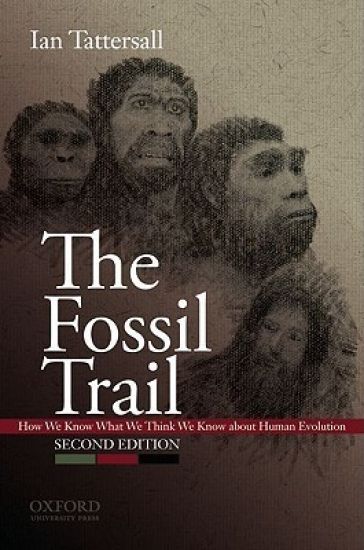
Ideal for courses in Human Evolution, History of Paleoanthropology, and as a supplement for Introduction to Biological Anthropology, The Fossil Trail is a history of paleoanthropological thought and discovery. Ian Tattersall's account of the study of human evolution offers a colorful history of fossil discoveries and a revealing insider's look at how these finds have been interpreted-and misinterpreted-through time. The second edition of The Fossil Trail brings the text up-to-date with a look at what has happened in paleoanthropology in the thirteen intervening years since the first edition's publication. There has been not only a dramatic increase in the size and scope of the human fossil record, but the introduction of new techniques of analysis and of ways of interpreting that record. Through it all, Tattersall discusses the great researchers and discoveries within the context of their social and scientific milieu to reveal the many forces that shape how we interpret fossil findings, and to give a picture of what lies ahead for the field. The Second Edition updates the original first fifteen chapters with the most recent research.The new edition also features a substantially revised Chapter 16, which provides a bridge to later developments about the Neanderthals and their precursors. Tattersall has also added two new chapters that cover the discoveries published over the past thirteen years. Chapter 17 launches a discussion of the state of paleoanthropology at the turn of the 21st Century, and Chapter 18 ties our most recent knowledge back to the beginning to look at where we've been and where we're headed. The author has also added a new gallery of maps of fossil sites-including Western Europe, Central Europe, The Caucuses and Near East, East Asia, Northern Africa, and Southern Africa-and updated the opening timeline to include the discovery of nearly 20 new species.