Kirjojen hintavertailu. Mukana 12 595 353 kirjaa ja 12 kauppaa.

Kirjailija

Ian Yearsley

Kirjat ja teokset yhdessä paikassa: 17 kirjaa, julkaisuja vuosilta 1996-2026, suosituimpien joukossa Southend in 50 Buildings. Vertaile teosten hintoja ja tarkista saatavuus suomalaisista kirjakaupoista.

17 kirjaa

Kirjojen julkaisuhaarukka 1996-2026.

City of Southend: A Potted History

City of Southend: A Potted History

Ian Yearsley

AMBERLEY PUBLISHING
2025
nidottu
The modern city of Southend-on-Sea has come a long way since its 18th-century origins as an oyster fishing hamlet at the south end of Prittlewell parish. Now Southend is a regional employment, shopping and educational center, attracting 6.5 million visitors a year and housing 180,000 permanent residents. The construction of the Royal Hotel in the 1790s began Southend's transformation into a resort, but it was the arrival of the railway in 1856 which was the real catalyst for growth. The town's boundaries expanded three times: in the 1890s, 1910s and 1930s. During the Second World War, Southend played a key part in the defense of London and in the organization of merchant shipping convoys. By the 1950s and 1960s the town was known far-and-wide as a mecca for leisure and entertainment. The awarding of city status in 2021, following the senseless murder of Southend West MP, Sir David Amess, who had long campaigned for it, was bitter-sweet but it was also the latest symbol of how Southend has grown. Illustrated throughout, this accessible historical portrait of the transformation that Southend has undergone through the ages will be of great interest to residents, visitors and all those with links to the city.
Secret City of Southend

Secret City of Southend

Ian Yearsley

AMBERLEY PUBLISHING
2022
nidottu
Southend-on-Sea was only developed in the eighteenth and nineteenth centuries, when it became a popular seaside resort, but behind its façade lie many little-known and fascinating stories. In Secret City of Southend, author Ian Yearsley reveals the history beneath the surface of Southend from its eight historic parishes to the present-day commercial centre. Amongst the topics covered are the old parish boundary markers that can be found today, what the various street names reveal about the times when they were built, the tramway and boulevard systems, the key role played by the town in the Second World War and the relics of wartime that still survive, the redevelopment of the town centre in the 1960s and 1970s, the blue plaques to famous locals – and much more. With tales of remarkable characters, unusual events and tucked-away or disappeared historical buildings and locations, Secret City of Southend will appeal to all those with an interest in the history of this town in Essex.
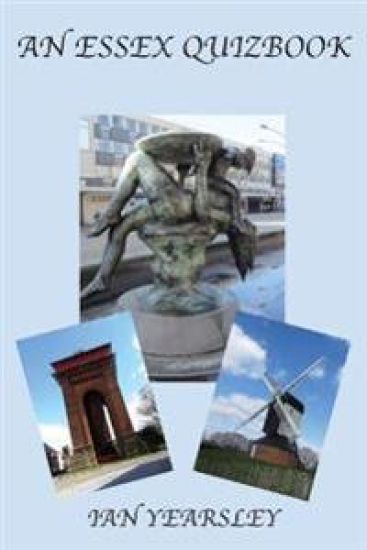
An Essex Quiz Book

An Essex Quiz Book

Ian Yearsley

Paragon Publishing
2021
pokkari
Essex is a remarkable county with a fascinating history, but how well do you know it?This fun, easy-to-use book contains 500 quiz questions in 50 rounds which are designed to test your knowledge about Essex. They range in difficulty from very easy to very hard and they cover topics as diverse as history, ancient buildings, scenes, waterways, transport, towns and villages, local claims to fame, towers, fortifications, the seaside, people, sport, writers, industry, science and islands. There are also some anagrams and some cryptic questions for you to try. Fourteen of the rounds are picture rounds. Can you recognise the places in them?This book can be used to test your own knowledge or the knowledge of your family members and friends. It can also be used in more competitive team quiz challenges in a village hall or a pub. You can even take it with you on a journey and test your knowledge of the places you visit as you go to. The book can also be used as an educational tool, providing ideas for places to visit, as the answers include background information on all the topics covered. There is much of interest in Essex and this book will help you uncover it and learn about many aspects of the county's long and interesting history.Enjoy discovering or rediscovering the many fascinating places in the best county in the country
Single-context Words

Single-context Words

Ian Yearsley

Paragon Publishing
2020
pokkari
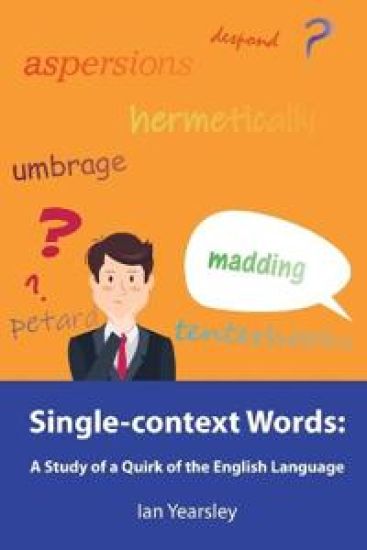
Did you know that aspersions are always cast, umbrage is always taken and the only thing that's madding is a crowd?All this and more can be explored in Single-context Words: A Study of a Quirk of the English Language, which uncovers the stories behind numerous words which are only ever used in one context.Ian Yearsley has spent 15 years collecting and researching single-context words and has written up over 300 examples in this volume. He explains how they came about and gives examples of their usage, with special reference throughout to the different parts of speech and how some suit single-context words better than others.The book explores a hitherto unexplored aspect of language and would be ideal as a gently humorous reference book, an educational work or an amusing, quirky gift book.This unique and compelling collection complements the existing body of language publications and is for anyone and everyone who has a love of and a fascination for language.
Dracula - the Essex Connection!

Dracula - the Essex Connection!

Ian Yearsley

Paragon Publishing
2018
pokkari
The story of Count Dracula, the blood-sucking vampire of Bram Stoker's classic gothic horror novel and the subsequent star of a multitude of stage and film presentations, is well-known: a creature which comes alive at night when everyone else is asleep to feast on the warm blood of young maidens before returning to its coffin home at dawn; one which can be repelled by garlic and crosses but killed only by a stake through the heart. What is not so well known is that much of Stoker's original 1897 novel is set in Essex - in the Thameside village (as it was then) of Purfleet, near Grays.Why should Bram Stoker have chosen such a seemingly insignificant settlement as the place where the Transylvanian vampire makes his English home? Could it be that the fiction of Dracula is based on some horrifying fact? Does Purfleet perhaps have a history of vampire associations? Are the characters and the locations in the novel drawn from actual people and places in the village? Or is there a more mundane reason for this Essex location being Stoker's choice?This book sets out to answer all these questions and more to provide once and for all an answer to the mystery of why Bram Stoker should wish to set such a horrific blood-curdling story in a quiet Essex Thameside village...
A History of Southend

A History of Southend

Ian Yearsley

Phillimore Co Ltd
2010
nidottu
Southend has a complex and surprisingly interesting history. From 18th-century origins as the ‘South End’ of Prittlewell Parish, it has grown over 300 years to swallow up six separate parishes: Prittlewell, Southchurch, Leigh, Eastwood, North Shoebury and South Shoebury. The town and wider borough are both now known as ‘Southend’. Starting in the Stone Age, it ends in the modern Information Age, covering all points in between. The story of its evolution as a seaside resort, a commuter town and a regional shopping ventre is unterwoven with a multitude of amusing, intriguing and impressive events, incidents and achievements in this very readable narrative. Southend has been unfairly maligned as ‘lacking much history’. This new book successfully demolishes that suggestion, revealing a wealth of interest in the town and its past – from Prittlewell’s Saxon origins to its important role in two world wars. It will be warmly welcomed throughout Essex.
Rayleigh: A History

Rayleigh: A History

Ian Yearsley

Phillimore Co Ltd
2008
sidottu
Rayleigh owes its origins to the flints on Hambro Hill, which attracted its first human residents as long ago as the Stone Age. In Saxon times the focus moved to the area covered by the modern High Street, but it was not until Rayleigh Castle was built under the Normans that the town really came to life. Its market and fair made it one of the principal towns in south-east Essex throughout the medieval period, and many significant historic buildings from the 14th century onwards survive.After a period of decline in the 18th and early 19th centuries the town’s importance revived with the coming of the railway in 1889. Rapid development followed, and the 20th century saw massive expansion beyond the High Street area. This book is the first full chronological history of Rayleigh to be written and sheds light on several poorly documented periods, including the first half of the 20th century. A wide selection of splendid, previously unpublished, illustrations enhances this welcome addition to the bookshelves of Rayleigh residents and local historians alike.
A History of Southend

A History of Southend

Ian Yearsley

Phillimore Co Ltd
2001
nidottu
From 18th-century origins as the ‘South End’ of Prittlewell parish, the town has grown over 300 years to include six formerly separate parishes—Prittlewell, Southchurch, Leigh, Eastwood, North and South Shoebury. The book provides a chronological history of the town; from the Stone Age to the present Information Age, covering all points in between. The story of its evolution as a seaside resort, commuter town and regional shopping centre is interwoven with every aspect of its interesting history in a well researched narrative.
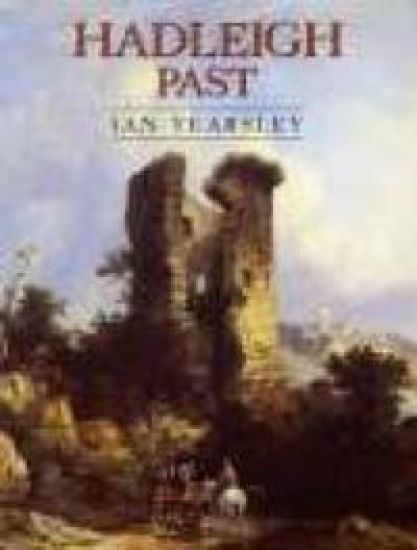
Hadleigh Past

Hadleigh Past

Ian Yearsley

Phillimore Co Ltd
1998
nidottu
Hadleigh has watched over the River Thames since the early 13th century. Together with the Royal Park the castle brought much activity to the village. The little Norman church is more than a century older and there is evidence of Saxon, Roman and Iron-Age occupation. “... the narrative cruises along almost effortlessly ... very well presented with many interesting old pictures and maps.” Essex Courier
Dedham, Flatford and East Bergholt: A Pictorial History
Dedham, Flatford and East Bergholt are most famous today for their connections with John Constable whose father owned the mills at Dedham and Flatford. Many of his paintings depict scenes at these three places or the River Stour, which weaves between them to the sea and which played an important part in the development of the early settlements. “An enjoyable stroll down memory lane ... and an excellent book to pick up and dip into ...” Express Series