Kirjojen hintavertailu. Mukana 12 657 676 kirjaa ja 12 kauppaa.

Kirjailija

Igor Boiko

Kirjat ja teokset yhdessä paikassa: 5 kirjaa, julkaisuja vuosilta 2008-2016, suosituimpien joukossa Non-parametric Tuning of PID Controllers. Vertaile teosten hintoja ja tarkista saatavuus suomalaisista kirjakaupoista.

5 kirjaa

Kirjojen julkaisuhaarukka 2008-2016.

Thus Said Tivol-Sivol (Stories for Little Kids and Grown Up Kids)

Thus Said Tivol-Sivol (Stories for Little Kids and Grown Up Kids)

Igor Boiko

Createspace Independent Publishing Platform
2016
nidottu
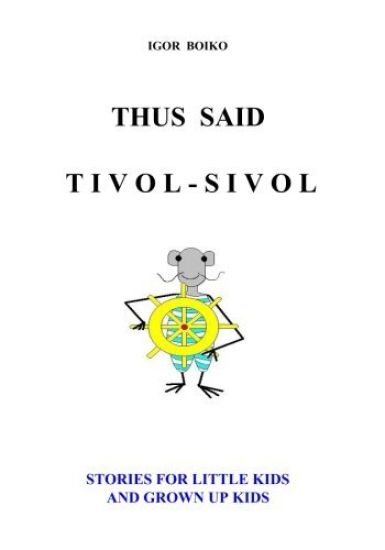
The idea of this book was conceived when the author's Granddaughter Shannon was born. He composed those stories of the adventures of a brave ant Tivol-Sivol to entertain her. The character of the very first story, Shan-Ny was a spin-off Shannon's name. Later, more stories were created and published in Ukraine and Russia. This book is an author's own translation from Russian into English. This collection of six tales was a beginning of a larger collection of tales for little kids and grown up kids.
Self-Oscillations in Dynamic Systems

Self-Oscillations in Dynamic Systems

Luis T. Aguilar; Igor Boiko; Leonid Fridman; Rafael Iriarte

Birkhauser Verlag AG
2016
nidottu
This monograph presents a simple and efficient two-relay control algorithm for generation of self-excited oscillations of a desired amplitude and frequency in dynamic systems. Developed by the authors, the two-relay controller consists of two relays switched by the feedback received from a linear or nonlinear system, and represents a new approach to the self-generation of periodic motions in underactuated mechanical systems.The first part of the book explains the design procedures for two-relay control using three different methodologies – the describing-function method, Poincaré maps, and the locus-of-a perturbed-relay-system method – and concludes with stability analysis of designed periodic oscillations.Two methods to ensure the robustness of two-relay control algorithms are explored in the second part, one based on the combination of the high-order sliding mode controller and backstepping, and the other on higher-order sliding-modes-based reconstruction of uncertainties and their compensation where Lyapunov-based stability analysis of tracking error is used. Finally, the third part illustrates applications of self-oscillation generation by a two-relay control with a Furuta pendulum, wheel pendulum, 3-DOF underactuated robot, 3-DOF laboratory helicopter, and fixed-phase electronic circuits.Self-Oscillations in Dynamic Systems will appeal to engineers, researchers, and graduate students working on the tracking and self-generation of periodic motion of electromechanical systems, including non-minimum-phase systems. It will also be of interest to mathematicians working on analysis of periodic solutions.
Non-parametric Tuning of PID Controllers

Non-parametric Tuning of PID Controllers

Igor Boiko

Springer London Ltd
2014
nidottu
The relay feedback test (RFT) has become a popular and efficient in process identification and automatic controller tuning. Non-parametric Tuning of PID Controllers couples new modifications of classical RFT with application-specific optimal tuning rules to form a non-parametric method of test-and-tuning. Test and tuning are coordinated through a set of common parameters so that a PID controller can obtain the desired gain or phase margins in a system exactly, even with unknown process dynamics. The concept of process-specific optimal tuning rules in the nonparametric setup, with corresponding tuning rules for flow, level pressure, and temperature control loops is presented in the text.Common problems of tuning accuracy based on parametric and non-parametric approaches are addressed. In addition, the text treats the parametric approach to tuning based on the modified RFT approach and the exact model of oscillations in the system under test using the locus of a perturbedrelay system (LPRS) method. Industrial loop tuning for distributed control systems using modified RFT is also described. Many of the problems of tuning rules optimization and identification with modified RFT are accompanied by MATLAB® code, downloadable from http://extras.springer.com/978-1-4471-4464-9 to allow the reader to duplicate the results.Non-parametric Tuning of PID Controllers is written for readers with previous knowledge of linear control and will be of interest to academic control researchers and graduate students and to practitioners working in a variety of chemical- mechanical- and process-engineering-related industries.
Non-parametric Tuning of PID Controllers

Non-parametric Tuning of PID Controllers

Igor Boiko

Springer London Ltd
2012
sidottu
The relay feedback test (RFT) has become a popular and efficient in process identification and automatic controller tuning. Non-parametric Tuning of PID Controllers couples new modifications of classical RFT with application-specific optimal tuning rules to form a non-parametric method of test-and-tuning. Test and tuning are coordinated through a set of common parameters so that a PID controller can obtain the desired gain or phase margins in a system exactly, even with unknown process dynamics. The concept of process-specific optimal tuning rules in the nonparametric setup, with corresponding tuning rules for flow, level pressure, and temperature control loops is presented in the text.Common problems of tuning accuracy based on parametric and non-parametric approaches are addressed. In addition, the text treats the parametric approach to tuning based on the modified RFT approach and the exact model of oscillations in the system under test using the locus of a perturbedrelay system (LPRS) method. Industrial loop tuning for distributed control systems using modified RFT is also described. Many of the problems of tuning rules optimization and identification with modified RFT are accompanied by MATLAB® code, downloadable from http://extras.springer.com/978-1-4471-4464-9 to allow the reader to duplicate the results.Non-parametric Tuning of PID Controllers is written for readers with previous knowledge of linear control and will be of interest to academic control researchers and graduate students and to practitioners working in a variety of chemical- mechanical- and process-engineering-related industries.
Discontinuous Control Systems

Discontinuous Control Systems

Igor Boiko

Birkhauser Boston Inc
2008
sidottu
Discontinuous control systems are the oldest type of control system and the mostwidespreadtypeofnonlinearcontrolsystem. Thetheoryofdiscontinuous control, and the theory of relay feedback systems in particular, is usually c- sidered a mature subject. However, many problems in discontinuous control theory still remain open. One problem involves the input-output properties of these systems, knowledge of which is extremely important to every app- cation. Two types of discontinuous control systems are studied in this book. The ?rst is the so-called relay feedback system, which normally encompasses - lay servomechanisms, various on-o? controllers, sigma-delta modulators, relay feedback tests used for process dynamics identi?cation, and controller tuning. Relaysystemsareoftenconsideredthemaintypeofnonlinearsystem,whichis evident by the enormous amount of house temperature control systems (that are usually implemented as on-o? controllers) that exist. The theory of relay systems is an old subject. The problem of analysis of relay feedback systems was ?rst considered by L. MacColl in 1945 [71]; the study was motivated by thedevelopmentofrelayservomechanismsofmissilethrustersontheonehand and vibrational voltage regulators on the other. MacColl’s analysis was based on an approximate approach close to the describing function method. Later, exact methods of analysis of relay feedback systems were developed, the most well-known of which is the Tsypkin locus [94]. The exact approach developed by Tsypkin, however, did not consider the servo aspect of relay feedback c- trol. Its purpose was limited to ?nding periodic motions that may occur in a relay system in an autonomous mode or under external excitation.