Kirjojen hintavertailu. Mukana 12 390 323 kirjaa ja 12 kauppaa.

Kirjailija

Igor L. Markov

Kirjat ja teokset yhdessä paikassa: 11 kirjaa, julkaisuja vuosilta 2008-2023, suosituimpien joukossa VLSI Physical Design: From Graph Partitioning to Timing Closure. Vertaile teosten hintoja ja tarkista saatavuus suomalaisista kirjakaupoista.

11 kirjaa

Kirjojen julkaisuhaarukka 2008-2023.

VLSI Physical Design: From Graph Partitioning to Timing Closure

VLSI Physical Design: From Graph Partitioning to Timing Closure

Andrew B. Kahng; Jens Lienig; Igor L. Markov; Jin Hu

Springer Nature Switzerland AG
2023
nidottu
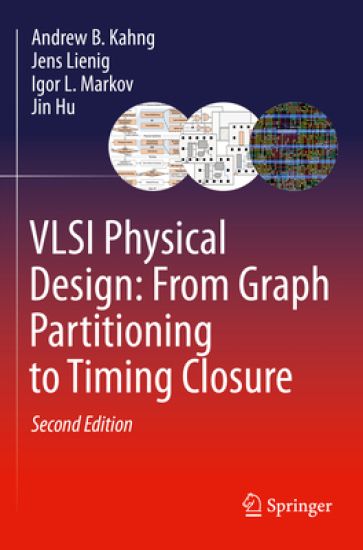
The complexity of modern chip design requires extensive use of specialized software throughout the process. To achieve the best results, a user of this software needs a high-level understanding of the underlying mathematical models and algorithms. In addition, a developer of such software must have a keen understanding of relevant computer science aspects, including algorithmic performance bottlenecks and how various algorithms operate and interact. This book introduces and compares the fundamental algorithms that are used during the IC physical design phase, wherein a geometric chip layout is produced starting from an abstract circuit design. This updated second edition includes recent advancements in the state-of-the-art of physical design, and builds upon foundational coverage of essential and fundamental techniques. Numerous examples and tasks with solutions increase the clarity of presentation and facilitate deeper understanding. A comprehensive set of slides is available on the Internet for each chapter, simplifying use of the book in instructional settings.“This improved, second edition of the book will continue to serve the EDA and design community well. It is a foundational text and reference for the next generation of professionals who will be called on to continue the advancement of our chip design tools and design the most advanced micro-electronics.” Dr. Leon Stok, Vice President, Electronic Design Automation, IBM Systems Group“This is the book I wish I had when I taught EDA in the past, and the one I’m using from now on.” Dr. Louis K. Scheffer, Howard Hughes Medical Institute“I would happily use this book when teaching Physical Design. I know of no other work that’s as comprehensive and up-to-date, with algorithmic focus and clear pseudocode for the key algorithms. The book is beautifully designed!”Prof. John P. Hayes, University of Michigan“The entire field of electronic design automation owes the authors a great debt for providing a single coherent source on physical design that is clear and tutorial in nature, while providing details on key state-of-the-art topics such as timing closure.”Prof. Kurt Keutzer, University of California, Berkeley“An excellent balance of the basics and more advanced concepts, presented by top experts in the field.” Prof. Sachin Sapatnekar, University of Minnesota
VLSI Physical Design: From Graph Partitioning to Timing Closure

VLSI Physical Design: From Graph Partitioning to Timing Closure

Andrew B. Kahng; Jens Lienig; Igor L. Markov; Jin Hu

Springer Nature Switzerland AG
2022
sidottu
The complexity of modern chip design requires extensive use of specialized software throughout the process. To achieve the best results, a user of this software needs a high-level understanding of the underlying mathematical models and algorithms. In addition, a developer of such software must have a keen understanding of relevant computer science aspects, including algorithmic performance bottlenecks and how various algorithms operate and interact. This book introduces and compares the fundamental algorithms that are used during the IC physical design phase, wherein a geometric chip layout is produced starting from an abstract circuit design. This updated second edition includes recent advancements in the state-of-the-art of physical design, and builds upon foundational coverage of essential and fundamental techniques. Numerous examples and tasks with solutions increase the clarity of presentation and facilitate deeper understanding. A comprehensive set of slides is available on the Internet for each chapter, simplifying use of the book in instructional settings.“This improved, second edition of the book will continue to serve the EDA and design community well. It is a foundational text and reference for the next generation of professionals who will be called on to continue the advancement of our chip design tools and design the most advanced micro-electronics.” Dr. Leon Stok, Vice President, Electronic Design Automation, IBM Systems Group“This is the book I wish I had when I taught EDA in the past, and the one I’m using from now on.” Dr. Louis K. Scheffer, Howard Hughes Medical Institute“I would happily use this book when teaching Physical Design. I know of no other work that’s as comprehensive and up-to-date, with algorithmic focus and clear pseudocode for the key algorithms. The book is beautifully designed!”Prof. John P. Hayes, University of Michigan“The entire field of electronic design automation owes the authors a great debt for providing a single coherent source on physical design that is clear and tutorial in nature, while providing details on key state-of-the-art topics such as timing closure.”Prof. Kurt Keutzer, University of California, Berkeley“An excellent balance of the basics and more advanced concepts, presented by top experts in the field.” Prof. Sachin Sapatnekar, University of Minnesota
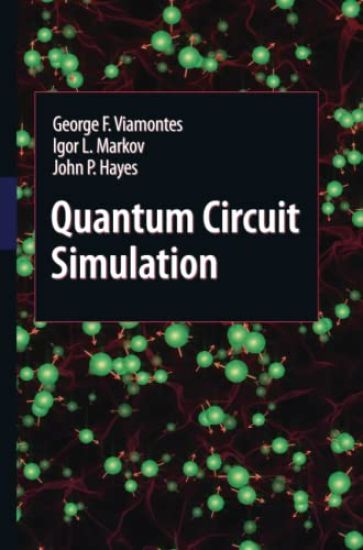
Quantum Circuit Simulation

Quantum Circuit Simulation

George F. Viamontes; Igor L. Markov; John P. Hayes

Springer
2014
nidottu
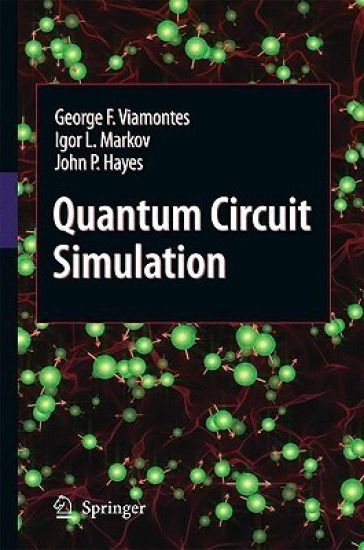
Quantum Circuit Simulation covers the fundamentals of linear algebra and introduces basic concepts of quantum physics needed to understand quantum circuits and algorithms. It requires only basic familiarity with algebra, graph algorithms and computer engineering. After introducing necessary background, the authors describe key simulation techniques that have so far been scattered throughout the research literature in physics, computer science, and computer engineering. Quantum Circuit Simulation also illustrates the development of software for quantum simulation by example of the QuIDDPro package, which is freely available and can be used by students of quantum information as a "quantum calculator."
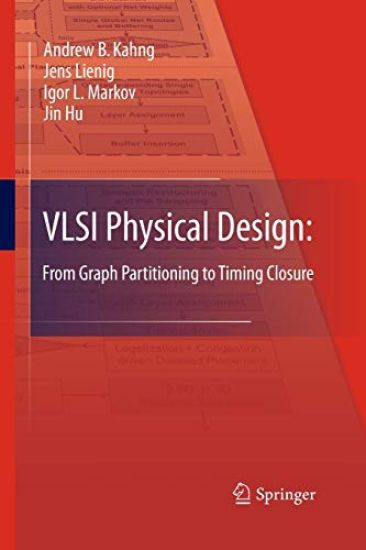
VLSI Physical Design: From Graph Partitioning to Timing Closure

VLSI Physical Design: From Graph Partitioning to Timing Closure

Andrew B. Kahng; Jens Lienig; Igor L. Markov; Jin Hu

Springer
2014
nidottu
Design and optimization of integrated circuits are essential to the creation of new semiconductor chips, and physical optimizations are becoming more prominent as a result of semiconductor scaling. Modern chip design has become so complex that it is largely performed by specialized software, which is frequently updated to address advances in semiconductor technologies and increased problem complexities. A user of such software needs a high-level understanding of the underlying mathematical models and algorithms. On the other hand, a developer of such software must have a keen understanding of computer science aspects, including algorithmic performance bottlenecks and how various algorithms operate and interact. "VLSI Physical Design: From Graph Partitioning to Timing Closure" introduces and compares algorithms that are used during the physical design phase of integrated-circuit design, wherein a geometric chip layout is produced starting from an abstract circuit design. The emphasis is on essential and fundamental techniques, ranging from hypergraph partitioning and circuit placement to timing closure.
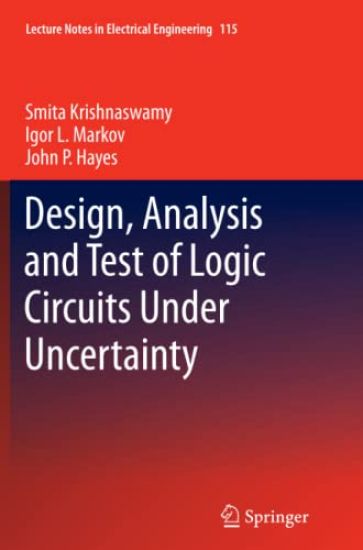
Design, Analysis and Test of Logic Circuits Under Uncertainty

Design, Analysis and Test of Logic Circuits Under Uncertainty

Smita Krishnaswamy; Igor L. Markov; John P. Hayes

Springer
2014
nidottu
Logic circuits are becoming increasingly susceptible to probabilistic behavior caused by external radiation and process variation. In addition, inherently probabilistic quantum- and nano-technologies are on the horizon as we approach the limits of CMOS scaling. Ensuring the reliability of such circuits despite the probabilistic behavior is a key challenge in IC design---one that necessitates a fundamental, probabilistic reformulation of synthesis and testing techniques. This monograph will present techniques for analyzing, designing, and testing logic circuits with probabilistic behavior.
Multi-Objective Optimization in Physical Synthesis of Integrated Circuits

Multi-Objective Optimization in Physical Synthesis of Integrated Circuits

David A. Papa; Igor L. Markov

Springer-Verlag New York Inc.
2014
nidottu
This book introduces techniques that advance the capabilities and strength of modern software tools for physical synthesis, with the ultimate goal to improve the quality of leading-edge semiconductor products. It provides a comprehensive introduction to physical synthesis and takes the reader methodically from first principles through state-of-the-art optimizations used in cutting edge industrial tools. It explains how to integrate chip optimizations in novel ways to create powerful circuit transformations that help satisfy performance requirements.
Design, Analysis and Test of Logic Circuits Under Uncertainty

Design, Analysis and Test of Logic Circuits Under Uncertainty

Smita Krishnaswamy; Igor L. Markov; John P. Hayes

Springer
2012
sidottu
Logic circuits are becoming increasingly susceptible to probabilistic behavior caused by external radiation and process variation. In addition, inherently probabilistic quantum- and nano-technologies are on the horizon as we approach the limits of CMOS scaling. Ensuring the reliability of such circuits despite the probabilistic behavior is a key challenge in IC design---one that necessitates a fundamental, probabilistic reformulation of synthesis and testing techniques. This monograph will present techniques for analyzing, designing, and testing logic circuits with probabilistic behavior.
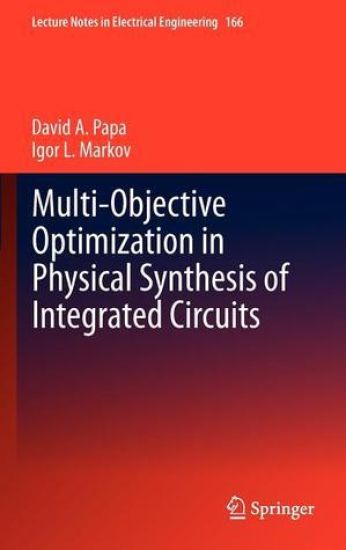
Multi-Objective Optimization in Physical Synthesis of Integrated Circuits

Multi-Objective Optimization in Physical Synthesis of Integrated Circuits

David A. Papa; Igor L. Markov

Springer-Verlag New York Inc.
2012
sidottu
This book introduces techniques that advance the capabilities and strength of modern software tools for physical synthesis, with the ultimate goal to improve the quality of leading-edge semiconductor products. It provides a comprehensive introduction to physical synthesis and takes the reader methodically from first principles through state-of-the-art optimizations used in cutting edge industrial tools. It explains how to integrate chip optimizations in novel ways to create powerful circuit transformations that help satisfy performance requirements.
Functional Design Errors in Digital Circuits

Functional Design Errors in Digital Circuits

Kai-Hui Chang; Igor L. Markov; Valeria Bertacco

Springer
2010
nidottu
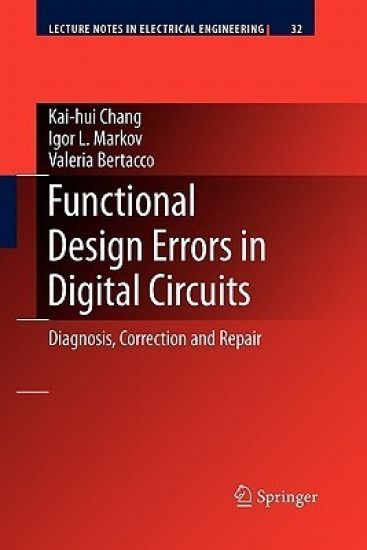
Functional Design Errors in Digital Circuits Diagnosis covers a wide spectrum of innovative methods to automate the debugging process throughout the design flow: from Register-Transfer Level (RTL) all the way to the silicon die. In particular, this book describes: (1) techniques for bug trace minimization that simplify debugging; (2) an RTL error diagnosis method that identifies the root cause of errors directly; (3) a counterexample-guided error-repair framework to automatically fix errors in gate-level and RTL designs; (4) a symmetry-based rewiring technology for fixing electrical errors; (5) an incremental verification system for physical synthesis; and (6) an integrated framework for post-silicon debugging and layout repair. The solutions provided in this book can greatly reduce debugging effort, enhance design quality, and ultimately enable the design and manufacture of more reliable electronic devices.
Quantum Circuit Simulation

Quantum Circuit Simulation

George F. Viamontes; Igor L. Markov; John P. Hayes

Springer
2009
sidottu
Quantum Circuit Simulation covers the fundamentals of linear algebra and introduces basic concepts of quantum physics needed to understand quantum circuits and algorithms. It requires only basic familiarity with algebra, graph algorithms and computer engineering. After introducing necessary background, the authors describe key simulation techniques that have so far been scattered throughout the research literature in physics, computer science, and computer engineering. Quantum Circuit Simulation also illustrates the development of software for quantum simulation by example of the QuIDDPro package, which is freely available and can be used by students of quantum information as a "quantum calculator."
Functional Design Errors in Digital Circuits

Functional Design Errors in Digital Circuits

Kai-Hui Chang; Igor L. Markov; Valeria Bertacco

Springer-Verlag New York Inc.
2008
sidottu
Functional Design Errors in Digital Circuits Diagnosis covers a wide spectrum of innovative methods to automate the debugging process throughout the design flow: from Register-Transfer Level (RTL) all the way to the silicon die. In particular, this book describes: (1) techniques for bug trace minimization that simplify debugging; (2) an RTL error diagnosis method that identifies the root cause of errors directly; (3) a counterexample-guided error-repair framework to automatically fix errors in gate-level and RTL designs; (4) a symmetry-based rewiring technology for fixing electrical errors; (5) an incremental verification system for physical synthesis; and (6) an integrated framework for post-silicon debugging and layout repair. The solutions provided in this book can greatly reduce debugging effort, enhance design quality, and ultimately enable the design and manufacture of more reliable electronic devices.