Kirjojen hintavertailu. Mukana 12 595 353 kirjaa ja 12 kauppaa.
Kirjailija
Ikujiro Nonaka
Kirjat ja teokset yhdessä paikassa: 11 kirjaa, julkaisuja vuosilta 1995-2023, suosituimpien joukossa Enabling Knowledge Creation. Vertaile teosten hintoja ja tarkista saatavuus suomalaisista kirjakaupoista.
This book offers a meditation on the links between philosophy and its implementation, interpreting why and how a leader's "philosophy" strengthens his action predicated on the purposeful vision of life; and discusses the a hypothesis that performance control in management may be driven by transcendental and intrinsic motivations, contrasting with the traditional management control theory. It construes how Inamori's management philosophy disciplines accounting and finance management towards putting its basic tenets into practice. Examining, in particular, the history of Kyocera, the authors provide a contemplative look at a human centric philosophy, which will be of interest to scholars of management, corporate executives, and economists with a philosophical bent.

This book, by one of world’s most innovative business scholars and a pioneering philosopher of Edmund Husserl, creatively applies insights from neuroscience, philosophy of experience called “phenomenology” to highly successful and intuitive method of business management. Based on phenomenological insights, they argue that empathy and intuition are as central, if not more, to the success of business innovation or strategy as an objective and analytic approach to business thinking and practice. To clarify how intuition works and why it is so essential, this book delves into the mechanism of empathy and human consciousness and how to take advantage of it for business practice. By incorporating new understandings from neuroscience and AI research, they proposes an organizational structure and a way of strategizing to embrace human innovation in its full complexity to lead business scholars, managers, and entrepreneurs to their own success in business.
This book offers a meditation on the links between philosophy and its implementation, interpreting why and how a leader's "philosophy" strengthens his action predicated on the purposeful vision of life; and discusses the a hypothesis that performance control in management may be driven by transcendental and intrinsic motivations, contrasting with the traditional management control theory. It construes how Inamori's management philosophy disciplines accounting and finance management towards putting its basic tenets into practice. Examining, in particular, the history of Kyocera, the authors provide a contemplative look at a human centric philosophy, which will be of interest to scholars of management, corporate executives, and economists with a philosophical bent.
This book, by one of world’s most innovative business scholars and a pioneering philosopher of Edmund Husserl, creatively applies insights from neuroscience, philosophy of experience called “phenomenology” to highly successful and intuitive method of business management. Based on phenomenological insights, they argue that empathy and intuition are as central, if not more, to the success of business innovation or strategy as an objective and analytic approach to business thinking and practice. To clarify how intuition works and why it is so essential, this book delves into the mechanism of empathy and human consciousness and how to take advantage of it for business practice. By incorporating new understandings from neuroscience and AI research, they proposes an organizational structure and a way of strategizing to embrace human innovation in its full complexity to lead business scholars, managers, and entrepreneurs to their own success in business.
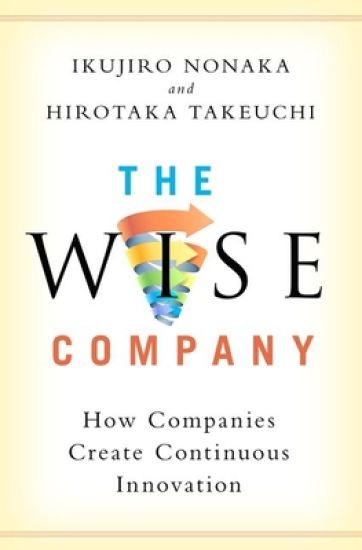
High-velocity change is the fundamental challenge facing companies today. Few companies, however, are prepared to continuously innovate-because they focus on the short-term and do not emphasize the wisdom needed to make sure that their interests are aligned with those of society. Practical wisdom is the bases of continuous innovation, where companies ceaselessly and repeatedly creating new knowledge, disseminating it throughout the organization, and converting knowledge to action over time. In The Wise Company, legendary management experts Ikujiro Nonaka and Hirotaka Takeuchi highlight how various companies have confronted the challenge of rapid change to create new products and new ways of doing business that benefit employees, consumers, and society. The key: a relentless self-renewal process where companies realize the future they envisions, rather than only responding to changes in the environment. Nonaka and Takeuchi argue that while knowledge-creating companies focusing on tacit and explicit knowledge can generate innovation, they cannot create it on a continuous and ongoing basis without having wisdom about human interactions and how they influence organizational structures and practices. Companies that have resilience, longevity, and sustainability share a number of characteristics, Nonaka and Takeuchi show. Strategies are based on alignment of organizational and societal benefits. Leaders grasp the core of any situation or problem quickly, and intuitively comprehend the nature and meaning of people, things, and events. But wise leadership is not enough: wisdom must infuse the organization through informal as well as formal shared interactions and communications that focus on metaphors and stories that convey the essence and meaning of strategies and actions. In short, Nonaka and Takeuchi demonstrate how continuous innovation results from companies ceaselessly and repeatedly creating new knowledge, disseminating knowledge throughout the organization, and converting that knowledge to action. The Wise Company presents a new model of knowledge-creation and practice for the twenty-first century.
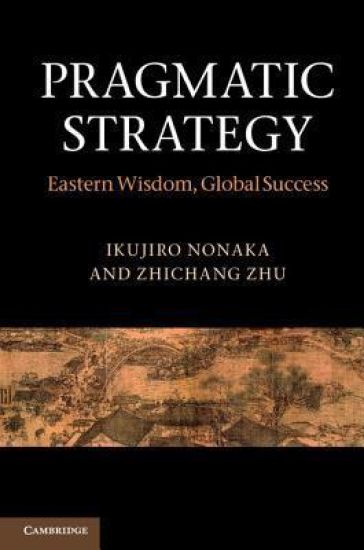
Pragmatism is enjoying a renaissance in management studies and the social sciences. Once written off as amoral, relativist and opposed to the ideals of Truth, Reason and Progress, it is now regaining influence in public policy, international relations and business strategy. But what can pragmatism teach us about strategy? How can pragmatic strategies help businesses to succeed? This innovative book presents a pragmatic framework for shaping and solving strategic problems in a practical, creative, ethical and finely balanced manner. To achieve this, the authors draw from Confucian teaching, American pragmatism and Aristotelian practical wisdom, as well as business cases across industries and nations, particularly from emerging economies. With significant theoretical depth, direct practical implication and profound cultural sensitivity, the book is useful for executive managers, public administrators, strategy researchers and advanced students in the search for pragmatic strategies in an interconnected, fast-moving world.
In a world where the only certainty is uncertainty, the one sure source of lasting competitive advantage is knowledge. The best companies survive by consistently creating new knowledge, disseminating it widely throughout the organization, and quickly leveraging it in their business processes and their products. In The Knowledge-Creating Company, Ikujiro Nonaka shows how your company can exploit its knowledge to continually innovate and reinvent itself in the face of relentless change. Since 1922, Harvard Business Review has been a leading source of breakthrough ideas in management practice. The Harvard Business Review Classics series now offers you the opportunity to make these seminal pieces a part of your permanent management library. Each highly readable volume contains a groundbreaking idea that continues to shape best practices and inspire countless managers around the world.
Slik skapes kunnskap er aktuell for ledere og mellomledere på alle nivåer i alle typer virksomheter. Den passer også som pensumbok i fag som knowledge management og strategisk ledelse, både i høgskolesystemet og innenfor etter- og videreutdanning.Kunnskapsledelse eller knowledge management er blitt en viktig retning innenfor ledelse. I mange organisasjoner er det sterkt fokus på å utvikle systemer for å dele, måle og kontrollere kunnskap. Dette perspektivet tar ikke hensyn til at kunnskap må skapes før den kan deles.Forfatterne av denne boka viser hvordan kunnskap skapes i en organisasjon. De mener at kunnskap egentlig ikke kan ledes. I stedet for å kontrollere og måle må ledelsen legge til rette for at kunnskap kan oppstå. I boka får vi vite hvordan ledere kan legge til rette for skaping av kunnskap ved å formulere en kunnskapsvisjon, lede samtaler, mobilisere kunnskapsaktivister, skape den riktige konteksten og gjøre den lokale kunnskapen global. Boka inneholder mange praktiske eksempler fra internasjonale og skandinaviske bedrifter som blant annet Siemens, Sony, Nokia, Skandia og Narvesen.
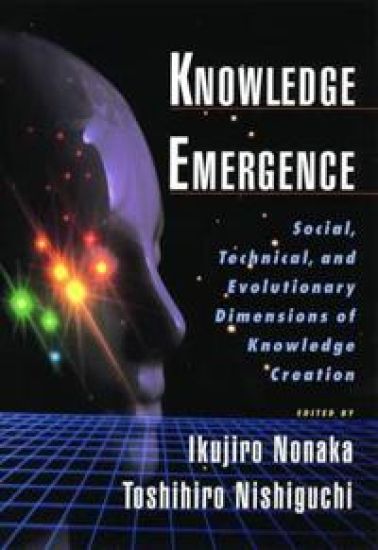
This book brings together the research of a number of scholars in the field of knowledge creation and imparts a sense of order to the field. The chapters share three characteristics: they are all grounded in extensive qualitative and/or quantitative research; they all go beyond the mere description of the knowledge-creation process and offer both theoretical and strategic implications; they share a view of knowledge creation and knowledge transfer as delicate processes, necessitating particular forms of support from managers.
When The Knowledge-Creating Company (OUP; nearly 40,000 copies sold) appeared, it was hailed as a landmark work in the field of knowledge management. Now, Enabling Knowledge Creation ventures even further into this all-important territory, showing how firms can generate and nurture ideas by using the concepts introduced in the first book. Weaving together lessons from such international leaders as Siemens, Unilever, Skandia, and Sony, along with their own first-hand consulting experiences, the authors introduce knowledge enabling--the overall set of organizational activities that promote knowledge creation--and demonstrate its power to transform an organization's knowledge into value-creating actions. They describe the five key "knowledge enablers" and outline what it takes to instill a knowledge vision, manage conversations, mobilize knowledge activists, create the right context for knowledge creation, and globalize local knowledge. The authors stress that knowledge creation must be more than the exclusive purview of one individual--or designated "knowledge" officer. Indeed, it demands new roles and responsibilities for everyone in the organization--from the elite in the executive suite to the frontline workers on the shop floor. Whether an activist, a caring expert, or a corporate epistemologist who focuses on the theory of knowledge itself, everyone in an organization has a vital role to play in making "care" an integral part of the everyday experience; in supporting, nurturing, and encouraging microcommunities of innovation and fun; and in creating a shared space where knowledge is created, exchanged, and used for sustained, competitive advantage. This much-anticipated sequel puts practical tools into the hands of managers and executives who are struggling to unleash the power of knowledge in their organization.
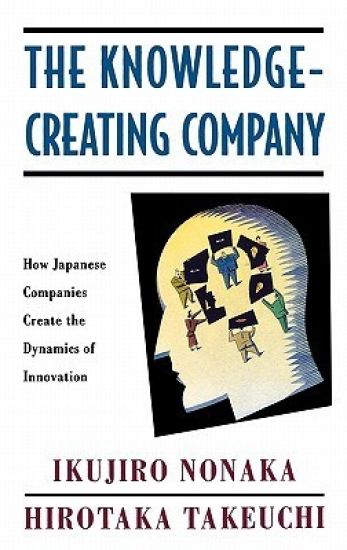
How has Japan become a major economic power, a world leader in the automotive and electronics industries? What is the secret of their success? The consensus has been that, though the Japanese are not particularly innovative, they are exceptionally skilful at imitation, at improving products that already exist. But now two leading Japanese business experts, Ikujiro Nonaka and Hiro Takeuchi, turn this conventional wisdom on its head: Japanese firms are successful, they contend, precisely because they are innovative, because they create new knowledge and use it to produce successful products and technologies. Examining case studies drawn from such firms as Honda, Canon, Matsushita, NEC, 3M, GE, and the U.S. Marines, this book reveals how Japanese companies translate tacit to explicit knowledge and use it to produce new processes, products, and services.