Kirjojen hintavertailu. Mukana 12 390 323 kirjaa ja 12 kauppaa.

Kirjailija

Ilan Stavans

Kirjat ja teokset yhdessä paikassa: 72 kirjaa, julkaisuja vuosilta 1997-2026, suosituimpien joukossa José Vasconcelos. Vertaile teosten hintoja ja tarkista saatavuus suomalaisista kirjakaupoista.

72 kirjaa

Kirjojen julkaisuhaarukka 1997-2026.

The One-handed Pianist and Other Stories

The One-handed Pianist and Other Stories

Ilan Stavans

Northwestern University Press
2007
nidottu
The One-Handed Pianist was published to acclaim in the early 1990s, with the two-part Spanish edition winning the Latino Literature Prize in 1989 and the Gamma Literature Prize in 1992. Its tales look at what it means to be Jewish in the Hispanic world - a world in which spirituality is often exercised outside the realm of orthodoxy. Stavans constructs fables that raise questions about ethnicity and community; even Stavans' person raises questions about ethnicity and community: what does it mean that a Jew of Eastern European lineage can call himself Latino and speak for that group?
Lengua Fresca: Latinos Writing on the Edge

Lengua Fresca: Latinos Writing on the Edge

Harold Augenbraum; Ilan Stavans

Harpervia
2006
nidottu
Brazen, bold, edgy, and fresh: an unexpected take on Latino life, spotlighting some of the culture's most exciting innovative and emerging voices. An entertaining, provocative and often exhilarating collection, Lengua Fresca celebrates some of the most original and cutting-edge work to emerge from the cultural collide that is Latino life in the United States. Featuring an eclectic mix of Latino writing--including fiction, journalism, essays, comics, and even cultural ephemera--this unique anthology showcases literature found in unexpected places. Selections include stories from Salvador Plascencia, Christina Henriquez, and Ana Menendez; graphic pieces from the Hernandez brothers (creators of the groundbreaking comix Love and Rockets) and Lalo Alcaraz (creator of La Cucaracha); and essays by Stephanie Elizondo Griest and Dagoberto Gilb on pop culture topics such as The George Lopez Show and Taco Bell. The growth of Spanglish, the lingua franca of Hispanic communities, is highlighted as well. Compiled by the editors of the classroom favorite Growing Up Latino, Lengua Fresca offers an unconventional window on a vibrant, quickly expanding culture.
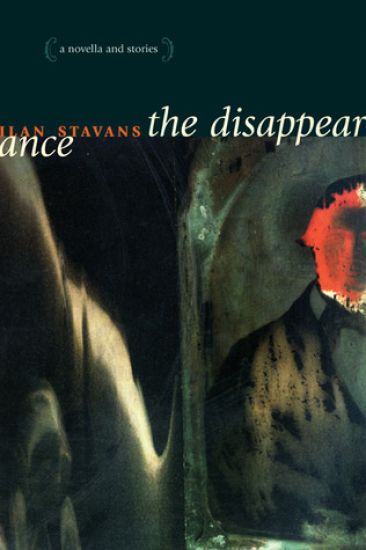
The Disappearance

The Disappearance

Ilan Stavans

Northwestern University Press
2006
sidottu
Hailed as one of the most important Hispanic writers of his generation, Ilan Stavans is mostly known for his penetrating essays on culture. He is also a celebrated storyteller whose work has been translated into a dozen languages and has garnered numerous international awards. ""The Disappearance: A Novella and Stories"" contains three small, masterful gems. The novella ""Morirse esta en hebreo,"" is a thought-provoking meditation on continuity and tradition among Mexican Jews that takes place just as a decades-long, one-party dictatorship is crumbling down. It is the basis for a critically-acclaimed Mexican feature film that will be released in the United States in late 2006. The volume also features ""Xerox Man,"" an intriguing story about a book thief with a bizarre theological obsession, which was commissioned and broadcast by the BBC and has been widely anthologized. The title story ""The Disappearance"" is the resonant tale of a Belgian actor who kidnaps himself in an attempt to respond to neo-Nazi groups. Together, these three pieces offer an unforeseen vista of Jewish-Hispanic relations and confirm Stavans's reputation as a lyrical, daring, and original literary voice.
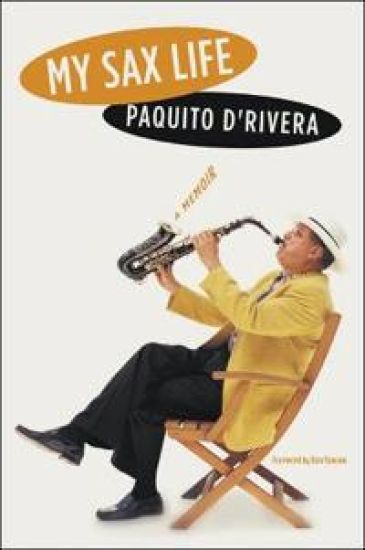
My Sax Life

My Sax Life

Paquito D'Rivera; Ilan Stavans

Northwestern University Press
2005
sidottu
Since defecting from Cuba in 1980 - and indeed long before that in his native land - Paquito D'Rivera has received glowing praise time and again. A best-selling artist with more than thirty solo albums to his credit. D'Rivera has performed at the White House and the Blue Note, and with orchestras, jazz ensembles, and chamber groups around the world. My Sax Life is the English-language edition of D'Rivera's memoirs, published to acclaim in 1998. Propelled by jazz-fueled high spirits. D'Rivera's story soars and spins from memory to memory in a collage of his remarkable life. Beginning with his father - a classical saxophone virtuoso and educator - and his own fame as a child prodigy, D'Rivera riffs on everything from Che Guevera to musical training to the unique Cuban personality (""hyperbolic and excessive""). And that's just in the first few pages. As a musician D'Rivera has few peers and his life experiences are as diverse as his work. He recalls his early nightclub appearances as a child, performing with clowns and exotic dancers, as well as his search for artistic freedom in communist Cuba and his hungry explorations of world music after his defection. Opinionated but always good-humored, My Sax Life is a fascinating statement on art and the artist's life.
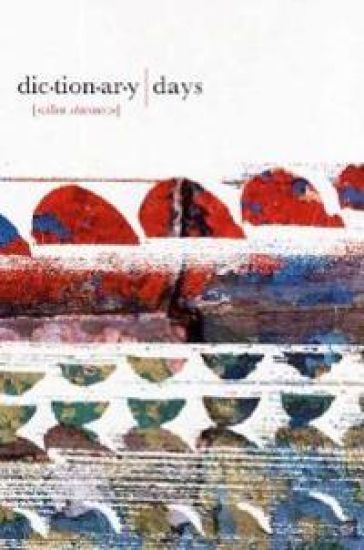
Dictionary Days

Dictionary Days

Ilan Stavans

Graywolf Press,U.S.
2005
sidottu
A dictionary, despite its heroic efforts to pin down language, is destined for failure the moment a single word is printed; for language, with its eternal mutations, is forever uncontainable. Award-winning essayist Ilyan Stavans explores the human need to isolate meaning: owner of hundreds of dictionaries, he follows a fascinating, zigzagging lexicography across many languages including English, French, Spanish, German, Arabic, Hebrew, Latin and Cyrillic. A fabulous selection of strange inconstancies, unusual origins and extraordinary anecdotes.
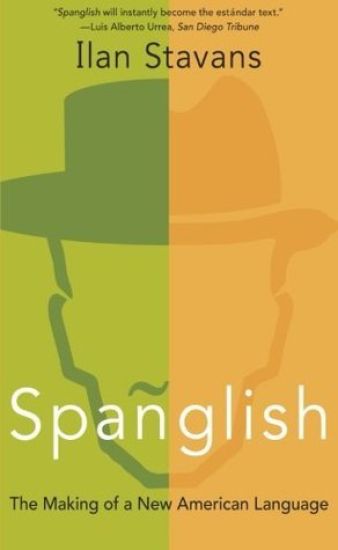
Spanglish

Spanglish

Ilan Stavans

HARPERCOLLINS PUBLISHERS INC
2004
nidottu
With the release of the census figures in 2000, Latino America wasanointed the future driving force of American culture. The emergence of Spanglish as a form of communication is one of the more influential markers of an America gone Latino. Spanish, present on this continent since the fifteenth century, when Iberian explorers sought to colonize territories in what are now Florida, New Mexico, Texas, and California, has become ubiquitous in the last few decades. The nation's unofficial second language, it is highly visible on several 24-hour TV networks and on more than 200 radio stations across the country.But Spanish north of the Rio Grande has not spread in its pure Iberian form. On the contrary, a signature of the brewing "Latin Fever" that has swept the United States since the mid-1980s is the astonishing creative linguistic amalgam of tongues used by people of Hispanic descent, not only in major cities but in rural areas as well -- neither Spanish nor English, but a hybrid, known only as Spanglish.
Bandido

Bandido

Ilan Stavans

Northwestern University Press
2003
nidottu
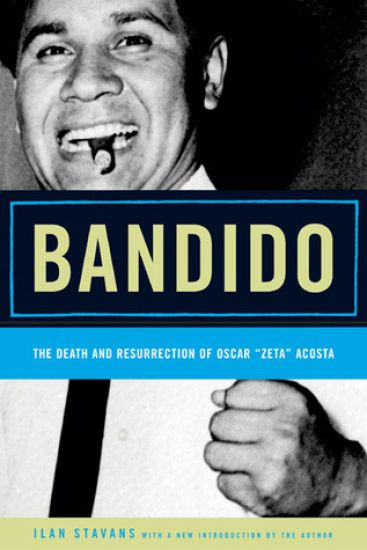
The Hispanic Malcolm X. Writer. Activist. Civil rights attorney. Obese, darkskinned, and angry. Man with a surplus of personality. Man of vision. All the above describe Oscar ""Zeta"" Acosta. El Paso-born, Acosta became a leading figure in the Chicano rights movement of the 1960s and 1970s, winning landmark decisions in civil rights cases as an attorney. As a tireless writer and activist, he had profound influence on his contemporaries. He seemed to be everywhere at once, knowing everyone in ""el movimiento"" and involving himself in many of its key moments. Tumultuous and prone to excess, he is the Samoan in Hunter S. Thompson's Fear and Loathing in Las Vegas. In 1974, after a last phone call to his son, Acosta disappeared in the Mexican state of Mazatlan. Hailed as ""a fine, learned homage"" (Kirkus), ""a kaleidoscopic portrait"" (Booklist), and ""a game of mirrors"" (The Washington Post), Bandido is a veritable tour de force. Through interviews and Acosta's writings (published and unpublished), Ilan Stavans reconstructs - even reinvents - the man behind the myth. Part biographical appraisal, part reflection on the legacy of the Civil Rights era, Bandido is an opportunity to understand the challenges and pitfalls Latinos face in finding a place of their own in America.
On Borrowed Words: A Memoir of Language
Yiddish, Spanish, Hebrew, and English-at various points in Ilan Stavans's life, each of these has been his primary language. In this rich memoir, the linguistic chameleon outlines his remarkable cultural heritage from his birth in politically fragile Mexico, through his years as a student activist and young Zionist in Israel, to his present career as a noted and controversial academic and writer. Along the way, Stavans introduces readers to some of the remarkable members of his family-his brother, a musical wunderkind; his father, a Mexican soap opera star; his grandmother, who arrived in Mexico from Eastern Europe in 1929 and wrote her own autobiography. Masterfully weaving personal reminiscences with a provocative investigation into language acquisition and cultural code switching, On Borrowed Words is a compelling exploration of Stavans's search for his place in the world.
The Hispanic Condition

The Hispanic Condition

Ilan Stavans

HarperCollins
2001
pokkari
In The Hispanic Condition, Ilan Stavans offers a subtle and insightful meditation on Hispanic society in the United States. A native of Mexico, Stavans has emerged as one of the most distinguished Latin American writers of our time, an award-winning novelist and critic praised by scholars and beloved by readers. In this pioneering psycho-historical profile, he delves into the cultural differences and similarities among the five major Hispanic groups: Cubans, Puerto Ricans, Mexicans, Central and South Americans, and Spaniards.Masterfully interweaving historical, literary, and political references with his personal experience, Stavans discusses the divisions within a common heritage; customs of music, love, sex, marriage, and religious belief; the role of the intellectual in society; ideological struggle; and the hopeful visions of the future at the core of a civilization rooted in the trauma of the past.
The Inveterate Dreamer

The Inveterate Dreamer

Ilan Stavans

University of Nebraska Press
2001
pokkari
Not only do "modern" Jewish languages like Yiddish and Hebrew have their own Jewish writers, but every major Western tongue—from German and Russian to English and Portuguese—does as well. These writers are often at the crossroad between the two traditions: their Jewish one and their own national one. Is there such a thing as a modern Jewish literary tradition, one navigating across linguistic and national lines? If so, how should one define it? Ilan Stavans is uniquely qualified to answer these questions and to comment on the power and challenges of cultural margins and literary crossings. He has been at the forefront of an appreciation of the Jewish literary tradition that is less asphyxiating, more global. His reflections on Jewish Latin America have won him the nickname "pathfinder." This incomparable volume showcases Stavans's most insightful and provocative—and at times controversial—observations on transnational Jewish culture and literature. Stavans explores the problems and prospects of representing Jewish experiences through such media as Holocaust memoirs and Jewish museums; astutely comments on well-known intellectual figures, including Lionel Trilling, Isaac Babel, Primo Levi, Harold Bloom, and Walter Benjamin; engages in memorable conversations with Norman Manea, Joseph Brodsky, and Ariel Dorfman; and offers compelling glimpses of revelatory moments in his own life.
The Essential Ilan Stavans

The Essential Ilan Stavans

Ilan Stavans

Routledge
2000
nidottu
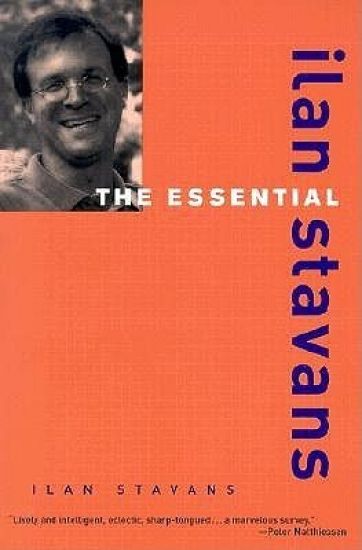
Here, Ilan Stavans, one of the foremost Latino scholars, collects his best essays into one volume. As a Mexican Jew whose native languages are Yiddish and Spanish, Stavans writes in English to limn the tensions, contradictions, and possibilities within the compex notion of a multi-cultural identity.
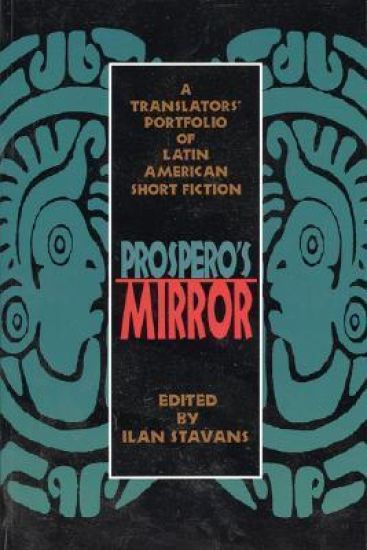
Prospero's Mirror

Prospero's Mirror

Ilan Stavans

Curbstone Press,U.S.
1997
nidottu
Sixteen master translators have chosen their favorite stories from Latin America. Writers and translators include Edith Grossman, Helen R. Lane, Augusto Monterroso, Gregory Rabassa, Alfonso Reyes, Hardie St. Martin, and Luisa Valenzuela. An introductory essay on translation by Ilan Stavans and an epilogue by Margaret Sayers Peden provide entertaining food for thought.