Kirjojen hintavertailu. Mukana 12 657 676 kirjaa ja 12 kauppaa.

Kirjailija

Ileana de la Teja

Kirjat ja teokset yhdessä paikassa: 3 kirjaa, julkaisuja vuosilta 2000-2008, suosituimpien joukossa Evaluator Competencies. Vertaile teosten hintoja ja tarkista saatavuus suomalaisista kirjakaupoista.

3 kirjaa

Kirjojen julkaisuhaarukka 2000-2008.

Evaluator Competencies

Evaluator Competencies

Darlene F. Russ-Eft; Marcie J. Bober; Ileana de la Teja; Marguerite Foxon; Tiffany A. Koszalka

Jossey-Bass Inc.,U.S.
2008
sidottu
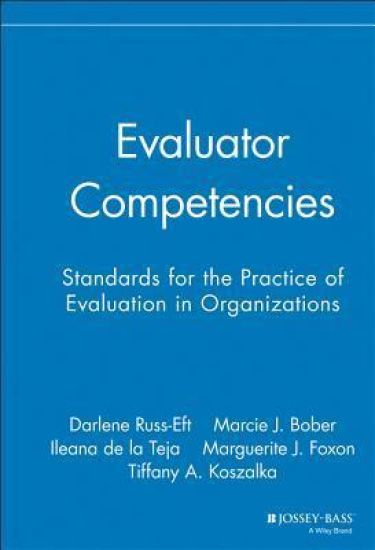
Evaluator Competencies, based on research conducted by the International Board of Standards for Training, Performance, and Instruction (ibspti¨) identifies the competencies needed by those undertaking evaluation efforts in organizational settings. Classified into domains, these evaluator competencies have been rigorously validated, and are accompanied by practical descriptions in the form of performance statements associated with each competency. The authors discuss the challenges and obstacles in conducting such evaluations within dynamic, changing organizations, and provide methods and strategies for putting these competencies to use.

Instructor Competencies

Instructor Competencies

James D. Klein; J.Michael Spector; Barbara L. Grabowski; Ileana de la Teja

Information Age Publishing
2000
sidottu
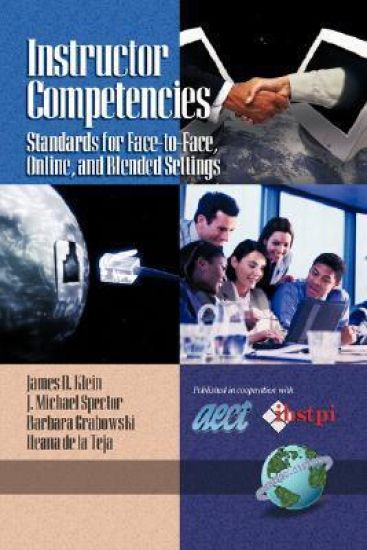
This edition is not just a rehash of old, albeit classic and still important, stuff. Instead, it provides a fresh perspective on a topic of perennial interest for those working in the field that has been variously called training and development, human resource development, performance technology, and workplace learning and performance. The fresh perspective takes into consideration two additional instructor settings to the traditional face-to-face environments that most instructors and trainers know -- that is, online and blended settings. These settings are, of course, becoming more critical as instruction moves beyond classroom settings to include virtual and combinations of classroom and other media delivery methods.The ibstpi instructor competencies match up well to Mapping the Future (Bernthal, Colteryahn, Davis, Naughton, Rothwell, & Wellins 2004), the current ASTD competency study of the field now known as Workplace Learning and Performance (WLP) and previously known as Training and Development (T&D). WLP is more than a new name for an old subject and represents a fundamental paradigm shift in what it means to be a professional in the field formerly known as training. WLP is all about getting improved performance -- and therefore improved results -- in organizational settings through planned and unplanned learning interventions. Instruction is thus a means to an end and not an end in itself. The ibstpi instructor competencies dovetail well with that philosophy.
Instructor Competencies

Instructor Competencies

James D. Klein; J.Michael Spector; Barbara L. Grabowski; Ileana de la Teja

Information Age Publishing
2000
nidottu
This edition is not just a rehash of old, albeit classic and still important, stuff. Instead, it provides a fresh perspective on a topic of perennial interest for those working in the field that has been variously called training and development, human resource development, performance technology, and workplace learning and performance. The fresh perspective takes into consideration two additional instructor settings to the traditional face-to-face environments that most instructors and trainers know -- that is, online and blended settings. These settings are, of course, becoming more critical as instruction moves beyond classroom settings to include virtual and combinations of classroom and other media delivery methods.The ibstpi instructor competencies match up well to Mapping the Future (Bernthal, Colteryahn, Davis, Naughton, Rothwell, & Wellins 2004), the current ASTD competency study of the field now known as Workplace Learning and Performance (WLP) and previously known as Training and Development (T&D). WLP is more than a new name for an old subject and represents a fundamental paradigm shift in what it means to be a professional in the field formerly known as training. WLP is all about getting improved performance -- and therefore improved results -- in organizational settings through planned and unplanned learning interventions. Instruction is thus a means to an end and not an end in itself. The ibstpi instructor competencies dovetail well with that philosophy.