Kirjojen hintavertailu. Mukana 12 595 353 kirjaa ja 12 kauppaa.

Kirjailija

Ilpo Helén

Kirjat ja teokset yhdessä paikassa: 3 kirjaa, julkaisuja vuosilta 2015-2024, suosituimpien joukossa Suspect Families. Vertaile teosten hintoja ja tarkista saatavuus suomalaisista kirjakaupoista.

3 kirjaa

Kirjojen julkaisuhaarukka 2015-2024.

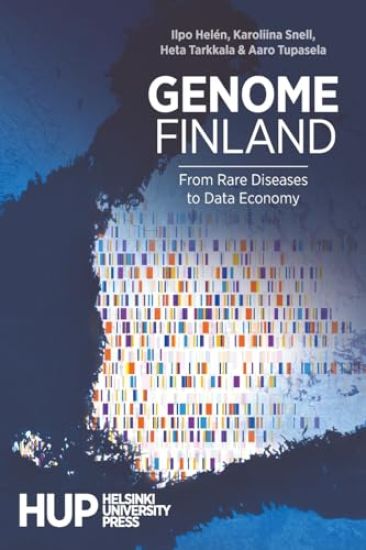
Genome Finland

Genome Finland

Ilpo Helén; Karoliina Snell; Heta Tarkkala

Helsinki University Press
2024
pokkari
Genome Finland tells a story of genomic medicine in Finland from the study of rare Finnish diseases in the 1960s and 1970s to the implementation of personalized medicine in the 2020s. The main focus is on the 21st century - the period after the Human Genome Project - and on the establishment of new infrastructures to support genomic medicine, such as biobanks. The book opens up the reasoning and discussions as well as the settings and events through which Finnish medical genetics reached the top level of international biomedicine in the late 1990s, biobanks and biobank research evolved during the 2000s and 2010s, and large transnational public-private partnership projects utilising massive amounts of genome and patient data started to dominate also Finnish research into the 2020s. In particular, Genome Finland examines and exposes the connections between biomedical science, 'knowledge-based' economy and business, and innovation policy in Finland during the past decades.
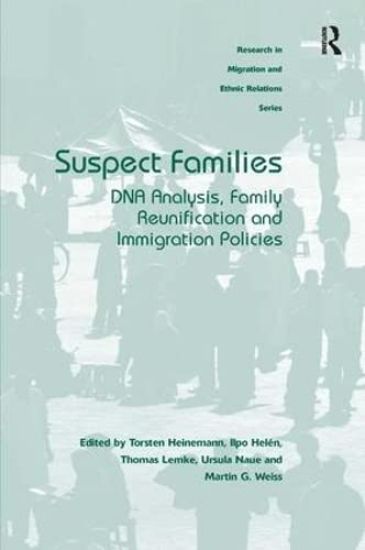
Suspect Families

Suspect Families

Torsten Heinemann; Ilpo Helén; Thomas Lemke; Ursula Naue

Routledge
2017
nidottu
This book outlines the European framework of family reunification and the reasons for focussing on Austria, Finland and Germany. It presents the case studies that provide a general understanding of how DNA testing affects the national immigration policies.
Suspect Families

Suspect Families

Torsten Heinemann; Ilpo Helén; Thomas Lemke; Ursula Naue

Routledge
2015
sidottu
Suspect Families is the first book to investigate the social, political, and ethical implications of parental testing for family reunification in immigration cases. Drawing on policy documents, legal frameworks, case study material and interviews with representatives of governmental and non-governmental organisation and immigration authorities, immigration lawyers, geneticists and applicants for family reunification, the book analyses the different political regimes and social arrangements in which DNA analysis is adopted for decision-making on family reunification in three distinct European countries: Austria, Finland and Germany. Interdisciplinary in scope, the book reconstructs the processes, institutional logic and the political and administrative practices of DNA testing from a comparative perspective, combining theoretical conceptualisation with detailed empirical work to explore the central societal, political and ethical issues raised by the use of DNA profiling in the context of immigration policy. A ground-breaking study of the role played by new technologies in migration decisions, Suspect Families will appeal to scholars of sociology, political science, science and technology studies and surveillance studies.