Kirjojen hintavertailu. Mukana 12 281 630 kirjaa ja 12 kauppaa.

Kirjailija

Ilpo Koskinen

Kirjat ja teokset yhdessä paikassa: 6 kirjaa, julkaisuja vuosilta 2007-2023, suosituimpien joukossa Drifting by Intention. Vertaile teosten hintoja ja tarkista saatavuus suomalaisista kirjakaupoista.

6 kirjaa

Kirjojen julkaisuhaarukka 2007-2023.

Design, Empathy, Interpretation

Design, Empathy, Interpretation

Ilpo Koskinen

MIT PRESS LTD
2023
nidottu
A new, empathic approach to design research, drawn from the informed experiences of a leading design research program in Finland. Design, Empathy, Interpretation tells the story of empathic design, a design research program at Aalto University in Helsinki, Finland, that has developed an interpretive approach to design over the past twenty years. As one of the leaders of the Helsinki group, Ilpo Koskinen draws on his own experiences to offer readers a general intellectual and professional history of design research, and argues for what he calls an interpretive approach. Design, Empathy, Interpretation shows how the group has created connections all across the globe, and how a seemingly soft approach to design research can be useful in both industry and government. Koskinen follows design research's transformation from questions of usability, in the 1980s, through to the revolution in personal electronics and the "user-centered" turn of the 1990s. Using the research community in Helsinki as a case study, and moving between specific projects and theoretical debates, he offers readers a focused introduction to the major methodological and intellectual challenges--as well as the opportunities--of design research. He argues that all design tasks, however simple or complex, begin with understanding the way humans ascribe meaning, both as individuals and as actors in complex societies. Thus all design research must be interpretive at its core.A new, empathic approach to design research, drawn from the informed experiences of a leading design research program in Finland.

Drifting by Intention

Drifting by Intention

Peter Gall Krogh; Ilpo Koskinen

Springer Nature Switzerland AG
2021
nidottu
Constructive design research, is an exploratory endeavor building exemplars, arguments, and evidence. In this monograph, it is shown how acts of designing builds relevance and articulates knowledge in combination. Using design acts to build new knowledge, invite reframing of questions and new perceptions to build up. Respecting the emergence of new knowledge in the process invite change of cause and action. The authors' term for this change is drifting; designers drift; and they drift intentionally, knowing what they do. The book details how drifting is a methodic practice of its own and provides examples of how and where it happens. This volume explores how to do it effectively, and how it depends on the concept of knowledge. The authors identify four epistemic traditions in constructive design research. By introducing a Knowledge/Relevance model they clarify how design experiments create knowledge and what kinds of challenges and contributions designers face when drifting. Along the lines of experimental design work the authors identify five main ways in which constructive experiments drift. Only one of them borrows its practices from experimental science, others build on precedents including arts and craft practices. As the book reveals, constructive design research builds on a rich body of research that finds its origins in some of the most important intellectual movements of 20th century. This background further expands constructive design research from a scientific model towards a more welcoming understanding of research and knowledge. This monograph provides novel actionable models for steering and navigating processes of constructive design research. It helps skill the design researcher in participating in the general language games of research and helps the design researcher build research relations beyond the discipline.
Drifting by Intention

Drifting by Intention

Peter Gall Krogh; Ilpo Koskinen

Springer Nature Switzerland AG
2020
sidottu
Constructive design research, is an exploratory endeavor building exemplars, arguments, and evidence. In this monograph, it is shown how acts of designing builds relevance and articulates knowledge in combination. Using design acts to build new knowledge, invite reframing of questions and new perceptions to build up. Respecting the emergence of new knowledge in the process invite change of cause and action. The authors' term for this change is drifting; designers drift; and they drift intentionally, knowing what they do. The book details how drifting is a methodic practice of its own and provides examples of how and where it happens. This volume explores how to do it effectively, and how it depends on the concept of knowledge. The authors identify four epistemic traditions in constructive design research. By introducing a Knowledge/Relevance model they clarify how design experiments create knowledge and what kinds of challenges and contributions designers face when drifting. Along the lines of experimental design work the authors identify five main ways in which constructive experiments drift. Only one of them borrows its practices from experimental science, others build on precedents including arts and craft practices. As the book reveals, constructive design research builds on a rich body of research that finds its origins in some of the most important intellectual movements of 20th century. This background further expands constructive design research from a scientific model towards a more welcoming understanding of research and knowledge. This monograph provides novel actionable models for steering and navigating processes of constructive design research. It helps skill the design researcher in participating in the general language games of research and helps the design researcher build research relations beyond the discipline.
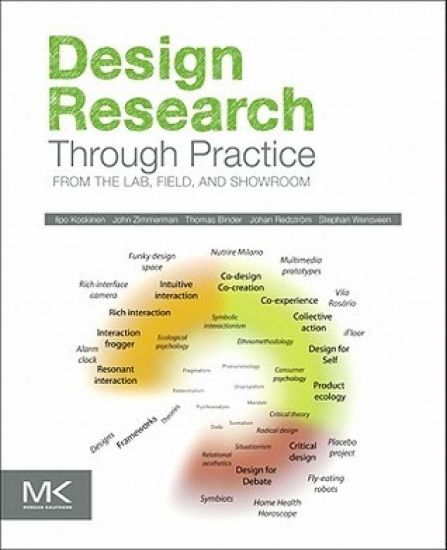
Design Research Through Practice

Design Research Through Practice

Ilpo Koskinen; John Zimmerman; Thomas Binder; Johan Redstrom; Stephan Wensveen

Morgan Kaufmann Publishers In
2011
nidottu
Design Research Through Practice: From the Lab, Field, and Showroom focuses on one type of contemporary design research known as constructive design research. It looks at three approaches to constructive design research: Lab, Field, and Showroom. The book shows how theory, research practice, and the social environment create commonalities between these approaches. It illustrates how one can successfully integrate design and research based on work carried out in industrial design and interaction design. The book begins with an overview of the rise of constructive design research, as well as constructive research programs and methodologies. It then describes the logic of studying design in the laboratory, design ethnography and field work, and the origins of the Showroom and its foundation on art and design rather than on science or the social sciences. It also discusses the theoretical background of constructive design research, along with modeling and prototyping of design items. Finally, it considers recent work in Lab that focuses on action and the body instead of thinking and knowing. Many kinds of designers and people interested in design will find this book extremely helpful.
Mobile Multimedia in Action

Mobile Multimedia in Action

Ilpo Koskinen

AldineTransaction
2010
nidottu
Mobile Multimedia in Action displays a revealing picture of how people communicate using camera phones and other mobile multimedia devices. With such devices spreading faster than practically any other new technology, questions about how these devices are being used (and abused) to capture and distribute embarrassing or raunchy images and content, and what should be done about it, are surfacing. This volume presents the first detailed study of the use of these devices.Using a variant of social science research known as ethnomethodology, Koskinen explores the kinds of images people take with camera phones and how they use sound to enhance these images. The book asks two main questions. First, what kinds of methods of expression, such as visuals or sound, do people use when they design multimedia messages? Second, how do people interact with and respond to each other through mobile multimedia devices? Koskinen has a broader objective centering on the impact of these devices on human relationships and society at large. He asks, what do people do with these devices? Is mobile telephony moving toward a more practical direction, or will it simply become a visual chatty channel fit for gossip but not for real news or other practical purposes? What kind of social activities and organizations does it best serve - peer-to-peer networks or institutional ones?Koskinen examines these questions from three unique perspectives: the design elements of mobile multimedia, which considers methods of expression people use in designing multimedia messages; mobile multimedia as interaction, which looks into how people interact with each other using this technology and makes a case for studying multimedia as a naturally occurring activity; and mobile multimedia in society, which searches for answers as to the societal consequences of mobile multimedia usage. A groundbreaking work, Mobile Multimedia in Action will be a fascinating read for both multimedia device professionals and everyday users alike. Providing a glimpse into the future, Koskinen asks where mobile multimedia technology is taking mankind and society.
Mobile Multimedia in Action

Mobile Multimedia in Action

Ilpo Koskinen

Transaction Publishers
2007
sidottu
Mobile Multimedia in Action displays a revealing picture of how people communicate using camera phones and other mobile multimedia devices. With such devices spreading faster than practically any other new technology, questions about how these devices are being used (and abused) to capture and distribute embarrassing or raunchy images and content, and what should be done about it, are surfacing. This volume presents the first detailed study of the use of these devices.Using a variant of social science research known as ethnomethodology, Koskinen explores the kinds of images people take with camera phones and how they use sound to enhance these images. The book asks two main questions. First, what kinds of methods of expression, such as visuals or sound, do people use when they design multimedia messages? Second, how do people interact with and respond to each other through mobile multimedia devices? Koskinen has a broader objective centering on the impact of these devices on human relationships and society at large. He asks, what do people do with these devices? Is mobile telephony moving toward a more practical direction, or will it simply become a visual chatty channel fit for gossip but not for real news or other practical purposes? What kind of social activities and organizations does it best serve - peer-to-peer networks or institutional ones?Koskinen examines these questions from three unique perspectives: the design elements of mobile multimedia, which considers methods of expression people use in designing multimedia messages; mobile multimedia as interaction, which looks into how people interact with each other using this technology and makes a case for studying multimedia as a naturally occurring activity; and mobile multimedia in society, which searches for answers as to the societal consequences of mobile multimedia usage. A groundbreaking work, Mobile Multimedia in Action will be a fascinating read for both multimedia device professionals and everyday users alike. Providing a glimpse into the future, Koskinen asks where mobile multimedia technology is taking mankind and society.