Kirjojen hintavertailu. Mukana 12 390 323 kirjaa ja 12 kauppaa.

Kirjailija

Ilpo Pöyhönen

Kirjat ja teokset yhdessä paikassa: 4 kirjaa, julkaisuja vuosilta 2023-2026, suosituimpien joukossa Medical-Device Usability. Vertaile teosten hintoja ja tarkista saatavuus suomalaisista kirjakaupoista.

4 kirjaa

Kirjojen julkaisuhaarukka 2023-2026.

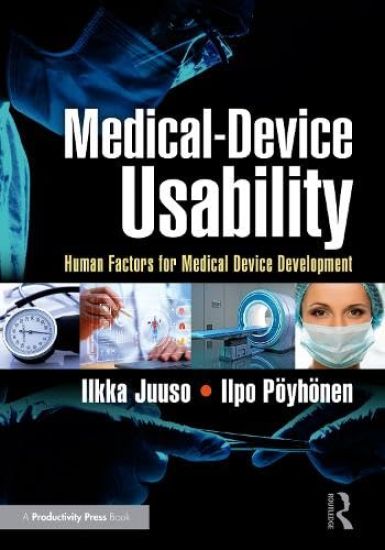
Medical-Device Usability

Medical-Device Usability

Ilkka Juuso; Ilpo Pöyhönen

TAYLOR FRANCIS LTD
2026
sidottu
This book simplifies the process regarding the application of usability to medical devices for new developers by providing a thought-out walkthrough of what is involved and how the expectations from the essential standards affect their work and why. Based on the authors’ experiences, the information in the book provides other more seasoned experts with a wealth of insight and nuggets of new perspectives on addressing the usability of medical devices, particularly medical software. The discussion in the book is rooted in recent real-world experiences from both the manufacturer and assessment body sides—the authors provide a novel high-level “roadmap” to using usability engineering to guide development activities from initial conceptual design to research, development, and ultimately release of a medical device. They build toward this map throughout the book and ultimately present the full model. This roadmap is the result of the authors’ experiences of taking a research project and launching both a medical device and a medical device business after obtaining all the necessary regulatory approvals. The book helps product developers to understand the usability requirements around their own work, and to also better understand their users and to present the expected usability information in a way that is readily understood by the auditors. Managers of such work will also greatly benefit from the discussion of the required deliverables and the goals of the usability activities. Finally, the authors ease the divide between manufacturers and healthcare professionals using medical devices. By simultaneously showing the requirements for the manufacturer’s development process and also discussing the realities of work on the healthcare side, the authors facilitate collaboration.
Medical-Device Usability

Medical-Device Usability

Ilkka Juuso; Ilpo Pöyhönen

TAYLOR FRANCIS LTD
2026
nidottu
This book simplifies the process regarding the application of usability to medical devices for new developers by providing a thought-out walkthrough of what is involved and how the expectations from the essential standards affect their work and why. Based on the authors’ experiences, the information in the book provides other more seasoned experts with a wealth of insight and nuggets of new perspectives on addressing the usability of medical devices, particularly medical software. The discussion in the book is rooted in recent real-world experiences from both the manufacturer and assessment body sides—the authors provide a novel high-level “roadmap” to using usability engineering to guide development activities from initial conceptual design to research, development, and ultimately release of a medical device. They build toward this map throughout the book and ultimately present the full model. This roadmap is the result of the authors’ experiences of taking a research project and launching both a medical device and a medical device business after obtaining all the necessary regulatory approvals. The book helps product developers to understand the usability requirements around their own work, and to also better understand their users and to present the expected usability information in a way that is readily understood by the auditors. Managers of such work will also greatly benefit from the discussion of the required deliverables and the goals of the usability activities. Finally, the authors ease the divide between manufacturers and healthcare professionals using medical devices. By simultaneously showing the requirements for the manufacturer’s development process and also discussing the realities of work on the healthcare side, the authors facilitate collaboration.
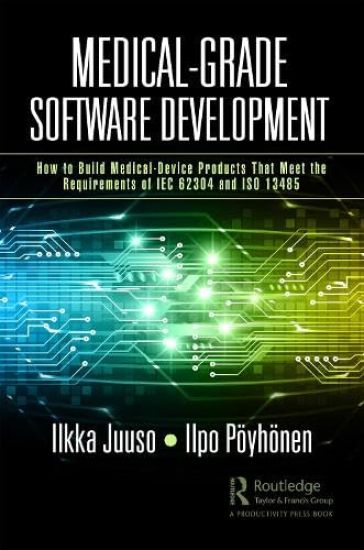
Medical-Grade Software Development

Medical-Grade Software Development

Ilkka Juuso; Ilpo Pöyhönen

TAYLOR FRANCIS LTD
2023
nidottu
This book is a practical guide to meeting IEC 62304 software-development requirements within the context of an ISO 13485 quality management system (QMS). The book proves this can be done with a minimum amount of friction, overlap, and back-and-forth between development stages. It essentially shows you how you should shape your medical-software development processes to fit in with the QMS processes in the smartest and leanest way possible.By following the advice in this book, you can reuse processes from your QMS, ensure your product-realization processes meet the requirements for medical-software development, and marry all the requirements together using tried and tested solutions into one efficient system. The expertise of the authors here goes beyond just the experiences of one real-world project as they tap into over 30 years of experience and countless software and software-assessment projects to distill their advice.The book takes a hands-on approach by first teaching you the top 25 lessons to know before starting to develop a process for medical-software development. It then walks you through the expectations placed on the key aspects of such a process by the key standards. The book progresses from an overview of both standards and the general requirements involved to a detailed discussion of the expected stages from software development and maintenance to risk management, configuration management, and problem resolution. The book provides insightful advice on how the requirements of the IEC 62304 software-development life cycle can be married with an ISO 13485 QMS, how the development of the technical file should be organized, and how to address conformity assessment, the daily after-approval, and the recent trends that will affect the industry in the coming years.The book is modeled after the IEC 62304 standard and adopts its clause structure in the numbering of sections for easy reference. The book does not attempt to replicate either standard. For the ISO 13485 standard, it recites the necessary requirements succinctly. For IEC 62304, the discussion is in-depth and also addresses the impact of ISO 13485 on the requirements discussed. In this way, the book drills into both standards to expose the core of each requirement and shape these into a practical, cohesive workflow for developing, maintaining, and improving a Lean software development pipeline.
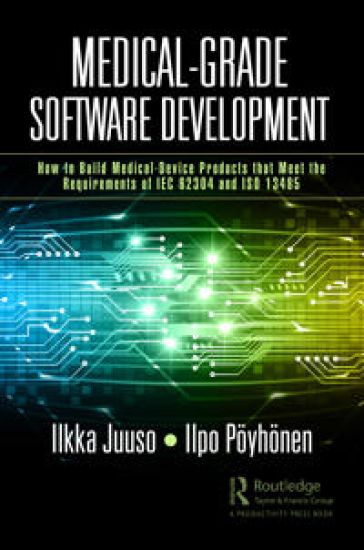
Medical-Grade Software Development

Medical-Grade Software Development

Ilkka Juuso; Ilpo Pöyhönen

TAYLOR FRANCIS LTD
2023
sidottu
This book is a practical guide to meeting IEC 62304 software-development requirements within the context of an ISO 13485 quality management system (QMS). The book proves this can be done with a minimum amount of friction, overlap, and back-and-forth between development stages. It essentially shows you how you should shape your medical-software development processes to fit in with the QMS processes in the smartest and leanest way possible.By following the advice in this book, you can reuse processes from your QMS, ensure your product-realization processes meet the requirements for medical-software development, and marry all the requirements together using tried and tested solutions into one efficient system. The expertise of the authors here goes beyond just the experiences of one real-world project as they tap into over 30 years of experience and countless software and software-assessment projects to distill their advice.The book takes a hands-on approach by first teaching you the top 25 lessons to know before starting to develop a process for medical-software development. It then walks you through the expectations placed on the key aspects of such a process by the key standards. The book progresses from an overview of both standards and the general requirements involved to a detailed discussion of the expected stages from software development and maintenance to risk management, configuration management, and problem resolution. The book provides insightful advice on how the requirements of the IEC 62304 software-development life cycle can be married with an ISO 13485 QMS, how the development of the technical file should be organized, and how to address conformity assessment, the daily after-approval, and the recent trends that will affect the industry in the coming years.The book is modeled after the IEC 62304 standard and adopts its clause structure in the numbering of sections for easy reference. The book does not attempt to replicate either standard. For the ISO 13485 standard, it recites the necessary requirements succinctly. For IEC 62304, the discussion is in-depth and also addresses the impact of ISO 13485 on the requirements discussed. In this way, the book drills into both standards to expose the core of each requirement and shape these into a practical, cohesive workflow for developing, maintaining, and improving a Lean software development pipeline.