Kirjojen hintavertailu. Mukana 12 595 353 kirjaa ja 12 kauppaa.

Kirjailija

Immanuel Ness

Kirjat ja teokset yhdessä paikassa: 24 kirjaa, julkaisuja vuosilta 1998-2023, suosituimpien joukossa Encyclopedia of World Cities. Vertaile teosten hintoja ja tarkista saatavuus suomalaisista kirjakaupoista.

24 kirjaa

Kirjojen julkaisuhaarukka 1998-2023.

Migration as Economic Imperialism

Migration as Economic Imperialism

Immanuel Ness

JOHN WILEY AND SONS LTD
2023
sidottu
For several decades, wealthy states, international development agencies and multinational corporations have encouraged labour migration from the Global South to the Global North. As well as providing essential workers to support the transformation of advanced economies, the remittances that migrants send home have been touted as the most promising means of national development for poor and undeveloped countries. As Immanuel Ness argues in this sharp corrective to conventional wisdom, temporary labour migration represents the most recent form of economic imperialism and global domination. A closer look at the economic and social evidence demonstrates that remittances deepen economic exploitation, unravel societal stability and significantly expand economic inequality between poor and rich societies. The book exposes the damaging political, economic and social effects of migration on origin countries in Africa, Asia and Latin America, and how border and security mechanisms control and marginalize low-wage migrant workers, especially women and youth. Ness asserts that remittances do not bring growth to poor countries but extend national dependence on the export of migrant workers, leading to warped and unequal development on the global periphery. This expert take will be a valuable resource for students and scholars of migration and development across the social sciences.
Migration as Economic Imperialism

Migration as Economic Imperialism

Immanuel Ness

JOHN WILEY AND SONS LTD
2023
nidottu
For several decades, wealthy states, international development agencies and multinational corporations have encouraged labour migration from the Global South to the Global North. As well as providing essential workers to support the transformation of advanced economies, the remittances that migrants send home have been touted as the most promising means of national development for poor and undeveloped countries. As Immanuel Ness argues in this sharp corrective to conventional wisdom, temporary labour migration represents the most recent form of economic imperialism and global domination. A closer look at the economic and social evidence demonstrates that remittances deepen economic exploitation, unravel societal stability and significantly expand economic inequality between poor and rich societies. The book exposes the damaging political, economic and social effects of migration on origin countries in Africa, Asia and Latin America, and how border and security mechanisms control and marginalize low-wage migrant workers, especially women and youth. Ness asserts that remittances do not bring growth to poor countries but extend national dependence on the export of migrant workers, leading to warped and unequal development on the global periphery. This expert take will be a valuable resource for students and scholars of migration and development across the social sciences.
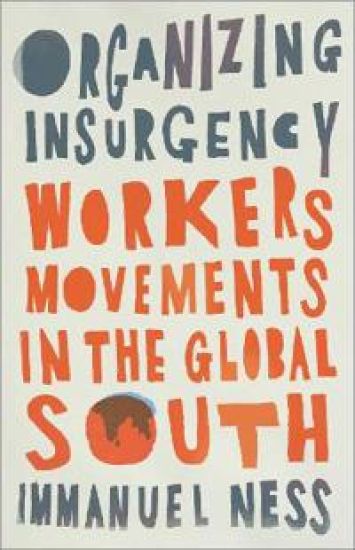
Organizing Insurgency

Organizing Insurgency

Immanuel Ness

Pluto Press
2021
pokkari
'A breath of fresh air' - Norman Finklestein Workers in the Global South are doomed through economic imperialism to carry the burden of the entire world. While these workers appear isolated from the Global North, they are in fact deeply integrated into global commodity chains and essential to the maintenance of global capitalism. Looking at contemporary case studies in India, the Philippines and South Africa, this book affirms the significance of political and economic representation to the struggles of workers against deepening levels of poverty and inequality that oppress the majority of people on the planet. Immanuel Ness shows that workers are eager to mobilise to improve their conditions, and can achieve lasting gains if they have sustenance and support from political organisations. From the Dickensian industrial zones of Delhi to the agrarian oligarchy on the island of Mindanao, a common element remains – when workers organise they move closer to the realisation of socialism, solidarity and equality.
Organizing Insurgency

Organizing Insurgency

Immanuel Ness

Pluto Press
2021
sidottu
'A breath of fresh air' - Norman Finklestein Workers in the Global South are doomed through economic imperialism to carry the burden of the entire world. While these workers appear isolated from the Global North, they are in fact deeply integrated into global commodity chains and essential to the maintenance of global capitalism. Looking at contemporary case studies in India, the Philippines and South Africa, this book affirms the significance of political and economic representation to the struggles of workers against deepening levels of poverty and inequality that oppress the majority of people on the planet. Immanuel Ness shows that workers are eager to mobilise to improve their conditions, and can achieve lasting gains if they have sustenance and support from political organisations. From the Dickensian industrial zones of Delhi to the agrarian oligarchy on the island of Mindanao, a common element remains – when workers organise they move closer to the realisation of socialism, solidarity and equality.
Trade Unions and the Betrayal of the Unemployed
This book examines the problematic relationship between unions and the unemployed in New York City during the 1990's. Historically, trade unions in the U.S. have had an interest in the political mobilization of the jobless to expand unemployment insurance and lessen the threat of lower wages, reduced union density, and weaker bargaining positions for unions. Despite these advantages, trade unions have rarely organized the unemployed, because they represent a potential threat to the organizational control, leadership, and legitimacy of the trade unions themselves. Moreover, the interests of the unemployed conflict directly with those of the securely employed trade unionist. The study identifies union responses to unemployment at local and regional levels and the responses of independent activist organizations. The research suggests that hiring hall unions produce exclusive organizing strategies that have deeper accountability to their members, but with organizing objectives that serve only the narrow interests of core members. By contrast, workplace-based unions typically engender class-oriented unions with narrow accountability to members, but with organizing objectives that extend beyond their immediate members.
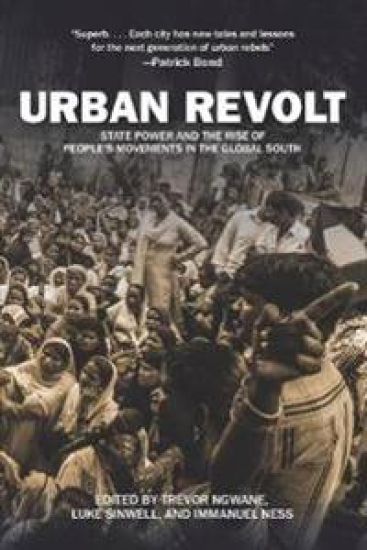
Urban Revolt

Urban Revolt

Immanuel Ness; Luke Sinwell

Haymarket Books
2017
nidottu
How do individuals and organisations move beyond the boundaries of constitutional or legal constructs to challenge neoliberalism and capitalism? As major urban areas have become the principal sites of poor and working-class social upheaval in the early twenty-first century, the chapters in this book explore key cities in the Global South. Through detailed case studies, Urban Revolt unravels the potential and limitations of urban social movements on an international level.
Southern Insurgency

Southern Insurgency

Immanuel Ness

Pluto Press
2015
sidottu
The site of industrial struggle is shifting. Across the Global South, peasant communities are forced off the land to live and work in harsh and impoverished conditions. Inevitably, new methods of combating the spread of industrial capitalism are evolving in ambitious, militant and creative ways. This is the first book to theorise and examine the present and future shape of global class struggles. Immanuel Ness looks at three key countries: China, India and South Africa. In each case he considers the broader historical forces at play - the effects of imperialism, the decline of the trade union movement, the class struggle and the effects of the growing reserve army of labour. For each case study, he narrows his focus to reveal the specifics of each grassroots insurgency: export promotion and the rise of worker insurgency in China, the new labour organisations in India, and the militancy of the miners in South Africa. This is a study about the nature of the new industrial worker in the Global South; about people living a terrifying, precarious existence - but also one of experimentation, solidarity and struggle.
Southern Insurgency

Southern Insurgency

Immanuel Ness

Pluto Press
2015
pokkari
The site of industrial struggle is shifting. Across the Global South, peasant communities are forced off the land to live and work in harsh and impoverished conditions. Inevitably, new methods of combating the spread of industrial capitalism are evolving in ambitious, militant and creative ways. This is the first book to theorise and examine the present and future shape of global class struggles. Immanuel Ness looks at three key countries: China, India and South Africa. In each case he considers the broader historical forces at play - the effects of imperialism, the decline of the trade union movement, the class struggle and the effects of the growing reserve army of labour. For each case study, he narrows his focus to reveal the specifics of each grassroots insurgency: export promotion and the rise of worker insurgency in China, the new labour organisations in India, and the militancy of the miners in South Africa. This is a study about the nature of the new industrial worker in the Global South; about people living a terrifying, precarious existence - but also one of experimentation, solidarity and struggle.
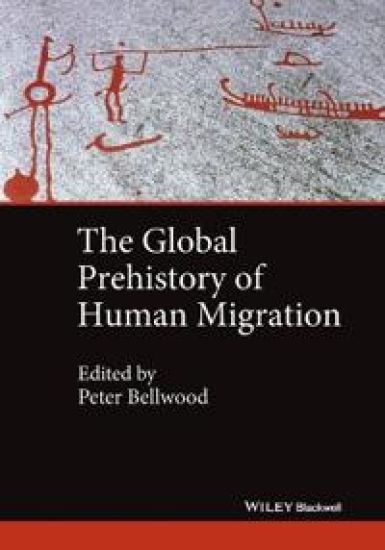
The Global Prehistory of Human Migration

The Global Prehistory of Human Migration

Immanuel Ness

John Wiley Sons Inc
2014
nidottu
Previously published as the first volume of The Encyclopedia of Global Human Migration, this work is devoted exclusively to prehistoric migration, covering all periods and places from the first hominin migrations out of Africa through the end of prehistory. Presents interdisciplinary coverage of this topic, including scholarship from the fields of archaeology, anthropology, genetics, biology, linguistics, and moreIncludes contributions from a diverse international team of authors, representing 17 countries and a variety of disciplinesDivided into two sections, covering the Pleistocene and Holocene; each section examines human migration through chapters that focus on different regional and disciplinary lenses
Guest Workers and Resistance to U.S. Corporate Despotism

Guest Workers and Resistance to U.S. Corporate Despotism

Immanuel Ness

University of Illinois Press
2011
nidottu
Political scientist Immanuel Ness thoroughly investigates the use of guest workers in the United States, the largest recipient of migrant labor in the world. Ness argues that the use of migrant labor is increasing in importance and represents despotic practices calculated by key U.S. business leaders in the global economy to lower labor costs and expand profits under the guise of filling a shortage of labor for substandard or scarce skilled jobs. Drawing on ethnographic field research, government data, and other sources, Ness shows how worker migration and guest worker programs weaken the power of labor in both sending and receiving countries. His in-depth case studies of the rapid expansion of technology and industrial workers from India and hospitality workers from Jamaica reveal how these programs expose guest workers to employers' abuses and class tensions in their home countries while decreasing jobs for American workers and undermining U.S. organized labor. Where other studies of labor migration focus on undocumented immigrant labor and contend immigrants fill jobs that others do not want, this is the first to truly advance understanding of the role of migrant labor in the transformation of the working class in the early twenty-first century. Questioning why global capitalists must rely on migrant workers for economic sustenance, Ness rejects the notion that temporary workers enthusiastically go to the United States for low-paying jobs. Instead, he asserts the motivations for improving living standards in the United States are greatly exaggerated by the media and details the ways organized labor ought to be protecting the interests of American and guest workers in the United States.
Guest Workers and Resistance to U.S. Corporate Despotism

Guest Workers and Resistance to U.S. Corporate Despotism

Immanuel Ness

University of Illinois Press
2011
sidottu
Political scientist Immanuel Ness thoroughly investigates the use of guest workers in the United States, the largest recipient of migrant labor in the world. Ness argues that the use of migrant labor is increasing in importance and represents despotic practices calculated by key U.S. business leaders in the global economy to lower labor costs and expand profits under the guise of filling a shortage of labor for substandard or scarce skilled jobs. Drawing on ethnographic field research, government data, and other sources, Ness shows how worker migration and guest worker programs weaken the power of labor in both sending and receiving countries. His in-depth case studies of the rapid expansion of technology and industrial workers from India and hospitality workers from Jamaica reveal how these programs expose guest workers to employers' abuses and class tensions in their home countries while decreasing jobs for American workers and undermining U.S. organized labor. Where other studies of labor migration focus on undocumented immigrant labor and contend immigrants fill jobs that others do not want, this is the first to truly advance understanding of the role of migrant labor in the transformation of the working class in the early twenty-first century. Questioning why global capitalists must rely on migrant workers for economic sustenance, Ness rejects the notion that temporary workers enthusiastically go to the United States for low-paying jobs. Instead, he asserts the motivations for improving living standards in the United States are greatly exaggerated by the media and details the ways organized labor ought to be protecting the interests of American and guest workers in the United States.
Ours To Master And To Own

Ours To Master And To Own

Immanuel Ness; Dario Azzellini

Haymarket Books
2011
nidottu
From the very dawn of the industrial epoch, wage earners have organised themselves into unions, fought bitter strikes and even gone so far as to challenge the premises of the system by enacting democratic self-management aimed at controlling production. A groundbreaking volume on workers' history, Ours to Master and to Own illuminates this under-appreciated and under-investigated aspect of working-class resistance.
The Encyclopedia of Strikes in American History

The Encyclopedia of Strikes in American History

Aaron Brenner; Benjamin Day; Immanuel Ness

Routledge
2009
sidottu
Strikes have been part of American labor relations from colonial days to the present, reflecting the widespread class conflict that has run throughout the nation's history. Against employers and their goons, against the police, the National Guard, local, state, and national officials, against racist vigilantes, against their union leaders, and against each other, American workers have walked off the job for higher wages, better benefits, bargaining rights, legislation, job control, and just plain dignity. At times, their actions have motivated groundbreaking legislation, defining new rights for all citizens; at other times they have led to loss of workers' lives. This comprehensive encyclopedia is the first detailed collection of historical research on strikes in America. To provide the analytical tools for understanding strikes, the volume includes two types of essays - those focused on an industry or economic sector, and those focused on a theme. Each industry essay introduces a group of workers and their employers and places them in their economic, political, and community contexts. The essay then describes the industry's various strikes, including the main issues involved and outcomes achieved, and assesses the impact of the strikes on the industry over time. Thematic essays address questions that can only be answered by looking at a variety of strikes across industries, groups of workers, and time, such as, why the number of strikes has declined since the 1970s, or why there was a strike wave in 1946. The contributors include historians, sociologists, anthropologists, and philosophers, as well as current and past activists from unions and other social movement organizations. Photos, a Topic Finder, a bibliography, and name and subject indexes add to the works appeal.
The New Urban Immigrant Workforce

The New Urban Immigrant Workforce

Sarumathi Jayaraman; Immanuel Ness

Routledge
2005
nidottu
This ground-breaking look at contemporary immigrant labor organizing and mobilization draws on participant observation, ethnographic interviews, historical documents, and new case studies of three organizing drives. The expert contributors provide tangible evidence of immigrants' eagerness for collective action and organizing. Parting company with mainstream thinking, they argue lucidly that immigrants' propensity to organize stems from social isolation. Many of the contributors highlight a specific ethnic group and special labor niches, such as the dominance of Punjabi in the New York City taxi industry. Each case study examines efforts beyond the conventional unions to organize the immigrants, such as worker centers and independent syndicalism on the job. An essential text for courses in labor-relations and immigrant studies, the book takes into account the latest debates in the fields of labor studies, urban studies, sociology, and political science.
The New Urban Immigrant Workforce

The New Urban Immigrant Workforce

Sarumathi Jayaraman; Immanuel Ness

Routledge
2005
sidottu
This ground-breaking look at contemporary immigrant labor organizing and mobilization draws on participant observation, ethnographic interviews, historical documents, and new case studies of three organizing drives. The expert contributors provide tangible evidence of immigrants' eagerness for collective action and organizing. Parting company with mainstream thinking, they argue lucidly that immigrants' propensity to organize stems from social isolation. Many of the contributors highlight a specific ethnic group and special labor niches, such as the dominance of Punjabi in the New York City taxi industry. Each case study examines efforts beyond the conventional unions to organize the immigrants, such as worker centers and independent syndicalism on the job. An essential text for courses in labor-relations and immigrant studies, the book takes into account the latest debates in the fields of labor studies, urban studies, sociology, and political science.
Immigrants Unions & The New Us Labor Mkt

Immigrants Unions & The New Us Labor Mkt

Immanuel Ness

Temple University Press,U.S.
2005
pokkari
In recent years, New Yorkers have been surprised to see workers they had taken for granted-Mexicans in greengroceries, West African supermarket deliverymen and South Asian limousine drivers-striking, picketing, and seeking support for better working conditions. Suddenly, businesses in New York and the nation had changed and were now dependent upon low-paid immigrants to fill the entry-level jobs that few native-born Americans would take. Immigrants, Unions, and the New U.S. Labor Market tells the story of these workers' struggle for living wages, humane working conditions, and the respect due to all people. It describes how they found the courage to organize labor actions at a time when most laborers have become quiescent and while most labor unions were ignoring them. Showing how unions can learn from the example of these laborers, and demonstrating the importance of solidarity beyond the workplace, Immanuel Ness offers a telling look into the lives of some of America's newest immigrants.
Immigrants Unions & The New Us Labor Mkt

Immigrants Unions & The New Us Labor Mkt

Immanuel Ness

Temple University Press,U.S.
2005
sidottu
In recent years, New Yorkers have been surprised to see workers they had taken for granted-Mexicans in greengroceries, West African supermarket deliverymen and South Asian limousine drivers-striking, picketing, and seeking support for better working conditions. Suddenly, businesses in New York and the nation had changed and were now dependent upon low-paid immigrants to fill the entry-level jobs that few native-born Americans would take. Immigrants, Unions, and the New U.S. Labor Market tells the story of these workers' struggle for living wages, humane working conditions, and the respect due to all people. It describes how they found the courage to organize labor actions at a time when most laborers have become quiescent and while most labor unions were ignoring them. Showing how unions can learn from the example of these laborers, and demonstrating the importance of solidarity beyond the workplace, Immanuel Ness offers a telling look into the lives of some of America's newest immigrants.
Encyclopedia of American Social Movements
"A comprehensive range of social movements is treated in 16 broad categories, from civil rights and women to antiwar protests and global justice. Timely entries on the Fair Trade Coffee campaign and the anti-sweatshop movement highlight current issues, while the section on antiwar movements covers everything from early Quaker pacifism to protests of the current U.S. intervention in Iraq. Students researching antebellum abolitionists, the history of gay-rights movements, or the development of conservativeAmerican politics will find useful and authoritative information."--"Reference that rocks," American Libraries, May 2005.Sixteen broad categories offer information on a range of social movements, from civil rights and women to pacifism and prtotest of the U.S. intervention in Iraq.
Central Labor Councils and the Revival of American Unionism:
Central Labor Councils are the local arm of the labor movement responsible for coordinating collective activities among different unions in a region. Once quite powerful organizations with important political roles at local and regional levels, CLCs waned significantly during the 1940s and 50s. This work examines the recent re-emergence of Central Labor Councils and how they are being utilized as effective bodies to help rejuvenate the labor movement. It combines comprehensive history of the CLCs in America since the early 19th century and case studies by CLC leaders in Atlanta, Milwaukee, San Jose, and Seattle -- the regions where CLCs have re-emerged as important players in advancing the labor movement.