Kirjailija
Imran Ali
Kirjat ja teokset yhdessä paikassa: 13 kirjaa, julkaisuja vuosilta 2004-2025, suosituimpien joukossa Environmental Water. Vertaile teosten hintoja ja tarkista saatavuus suomalaisista kirjakaupoista.
13 kirjaa
Kirjojen julkaisuhaarukka 2004-2025.
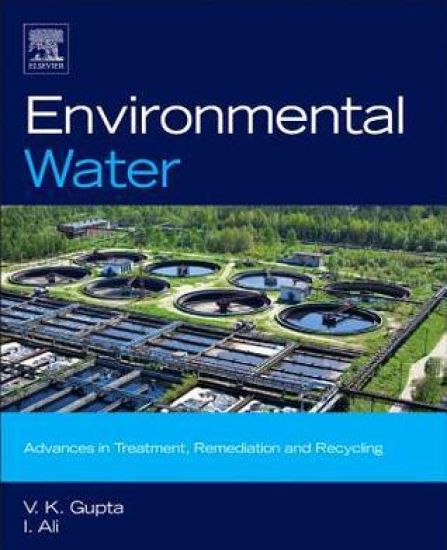
The world is facing a drinking water crisis. Besides continuous population growth, uneven distribution of water resources and periodic droughts have forced scientists to search for new and effective water treatment, remediation and recycling technologies. Therefore, there is a great need for the development of suitable, inexpensive and rapid wastewater treatment and reuse or conservation methods. This title discusses different types of wastewater treatment, remediation and recycling techniques, like adsorption, membrane filtration and reverse osmosis. It also provides guidance for the selection of the appropriate technologies or their combinations for specific applications so that one can select the exact and accurate technology without any problem. The book comprises detailed discussion on the application of various technologies for water treatment, remediation and recycling technologies and provides an update on the development in water treatment, detailed analysis of their features and economic analysis, bridging the current existing information gap. Each chapter is also documented by references and updated citations.
Chirale Umweltschadstoffe
Roland Kallenborn; Heinrich Hühnerfuss; Hassan Y. Aboul-Enein; Imran Ali
Springer International Publishing AG
2025
sidottu
In seiner aktualisierten zweiten Auflage beschreibt dieses Buch die Bedeutung von neuen chiralen Umweltschadstoffen für die Umwelt, Mensch und Tier. Vor allem enantiomer selektiver Trenn- und Analyseverfahren für zahlreiche chirale Umweltschadstoffe werden kritisch beschrieben. Im Vergleich zur ersten Auflage von 2001 wurde die Neuauflage vollständig umstrukturiert, und eine Fülle neuer Materialien hinzugefügt, um der fachlichen Weiterentwicklungen der letzten 20 Jahre Rechnung zu tragen. Das Buch berichtet über moderne enantiomer selektive Trennverfahren, einschließlich enantiomer selektiver Chromatographietechniken, die sogar erfolgreich im Weltraum während der ESA-Rosetta-Mission getestet wurden. Die Autoren stellen dar, warum das Thema chirale Umweltschadstoffe in den letzten Jahrzehnten noch wichtiger geworden ist. In den letzten Jahren wurden viele neue chirale bioaktive Verbindungen für Anwendungen in Medizin, Landwirtschaft und Technische Verbraucherprodukte entwickelt. Umweltanalysen zeigen, dass Spuren dieser Verbindungen inzwischen auch in der Umwelt zu finden sind. Die Autoren erläutern ausführlich, dass das Prinzip Chiralität heutzutage ein sehr wichtiger Faktor für die Bewertung der Bioaktivität anthropogener Schadstoffe sein kann. In diesem Buch finden Leser eine detaillierte Einführung in das Thema. Diese Einführung beinhaltet auch alle wichtigen Aspekte, ausgehend von der Einführung neuer enantiomer selektiver analytischer Methoden neu entdeckter chiraler Umweltschadstoffe bis hin zu Aspekten der Umwelt- und Humantoxikologie. Unter anderem werden sowohl Methoden zur enantiomer selektiver Risikobewertung ausgewählte chirale Stoffe aber auch bedeutende Aspekte des Klimawandels näher beleuchtet. Das Buch ist daher ein Muss für alle, die im Bereich chiraler Umweltschadstoffe arbeiten. Außerdem kann es ist auch für Lehrzwecke in spezialisierten Bachelor- und Mastergradskursen sowie für fortgeschrittene analytische Chemie, pharmazeutische Analytik oder Umweltchemie von Nutzen sein.
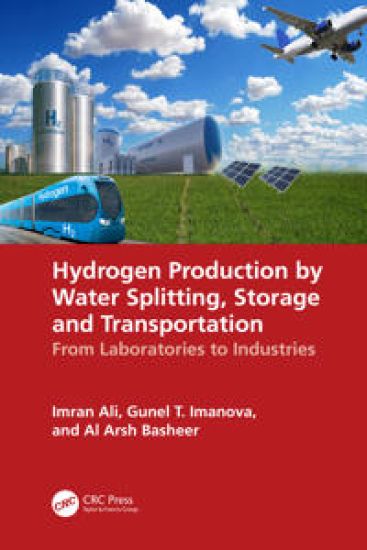
Hydrogen Production by Water Splitting, Storage and Transportation
Imran Ali; Gunel T. Imanova; Al Arsh Basheer
TAYLOR FRANCIS LTD
2024
sidottu
This book provides a comprehensive understanding of the process of hydrogen production by water splitting, including materials used, methods and instrumentation. It discusses hydrogen production methods with a focus on water splitting (laboratory/industrial scales) followed by its storage and perspectives. It describes all the methods of hydrogen production, i.e., water electrolysis, steam electrolysis, steam reforming, membrane electrolysis and water splitting. The effects of various radiations (ultraviolet, visible, gamma, X-ray and infrared) on hydrogen production are also included.Features:Presents a complete collection of hydrogen generation and discusses the water spitting process in detail.Explores the effects of the radiation of hydrogen generation.Discusses hydrogen generation and storage on a large scale.Presents a future perspective of hydrogen as fuel.Includes future challenges and perspectives to produce hydrogen economically on a large scale.This book is aimed at graduate students and researchers in materials and chemical engineering, radiation science, physics, chemistry and materials science.
Chiral Environmental Pollutants
Roland Kallenborn; Heinrich Hühnerfuss; Hassan Y. Aboul-Enein; Imran Ali
Springer Nature Switzerland AG
2022
nidottu
Now in its updated second edition, this book describes emerging chiral environmental pollutants and their importance in environmental and human toxicology, as well as enantiomer selective separation and analytical methods. Compared to the first edition from 2001, the book has been completely restructured and a wealth of new material has been added to account for new developments. The book reports on the modern enantiomer selective separation methods, including enantio-selective chromatography techniques, which have even been successfully tested in space during the ESA Rossetta mission. The authors clearly outline why the topic of chiral environmental pollutants has become even more important: many new chiral compounds have been released in recent years (e.g. as new pharmaceuticals or agrochemicals), and traces of these compounds can now be found in the environment. The authors explain that (and how) chirality can be a very important feature for the bioactivityof anthropogenic pollutants. In this book, readers find an introduction to the topic, including all important aspects, from the introduction of new enantiomer selective analytical methods, and of emerging chiral environmental pollutants, to aspects on environmental and human toxicology and exposure, risk assessment, and aspects on climate change as well as other new aspects on chirality in the environment. The book is thus a must-read for everybody working in the field of chiral environmental pollutants, but it is also beneficial for teaching purposes in specialized post-graduate courses in advanced analytical chemistry, pharmaceutical analytics, or environmental chemistry.
Chiral Environmental Pollutants
Roland Kallenborn; Heinrich Hühnerfuss; Hassan Y. Aboul-Enein; Imran Ali
Springer Nature Switzerland AG
2021
sidottu
Now in its updated second edition, this book describes emerging chiral environmental pollutants and their importance in environmental and human toxicology, as well as enantiomer selective separation and analytical methods. Compared to the first edition from 2001, the book has been completely restructured and a wealth of new material has been added to account for new developments. The book reports on the modern enantiomer selective separation methods, including enantio-selective chromatography techniques, which have even been successfully tested in space during the ESA Rossetta mission. The authors clearly outline why the topic of chiral environmental pollutants has become even more important: many new chiral compounds have been released in recent years (e.g. as new pharmaceuticals or agrochemicals), and traces of these compounds can now be found in the environment. The authors explain that (and how) chirality can be a very important feature for the bioactivityof anthropogenic pollutants. In this book, readers find an introduction to the topic, including all important aspects, from the introduction of new enantiomer selective analytical methods, and of emerging chiral environmental pollutants, to aspects on environmental and human toxicology and exposure, risk assessment, and aspects on climate change as well as other new aspects on chirality in the environment. The book is thus a must-read for everybody working in the field of chiral environmental pollutants, but it is also beneficial for teaching purposes in specialized post-graduate courses in advanced analytical chemistry, pharmaceutical analytics, or environmental chemistry.
Instrumental Methods in Metal Ion Speciation
Imran Ali; Hassan Y. Aboul-Enein
CRC Press
2019
nidottu
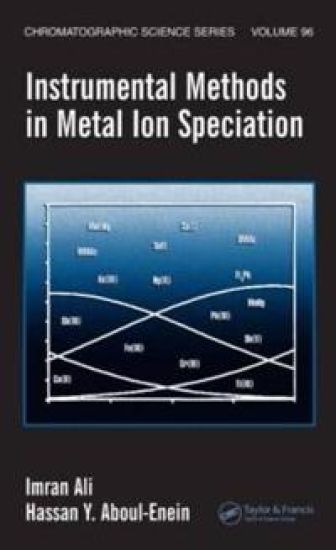
The knowledge of metal ion speciation is essential for predicting the exact toxicities of metal ion species in the environment. Metal ions can exist in various oxidation states, each of which possesses different physical and chemical properties as well as exhibit varying toxicities. Often, toxicity data is unreliable because it is based on metal ion concentration measurements that fail to identify a dominant species either more or less harmful than the average. Instrumental Methods in Metal Ion Speciation provides analytical techniques and experimental methodologies for determining the concentration of the different physicochemical forms of metal ions in environmental and biological samples, leading to more accurate measurements of actual toxicity.The authors introduce the principles of metal ion speciation and discuss important analytical techniques such as gas and liquid chromatography, capillary electrophoresis, and both electrochemical and radiochemical methods used to determine concentration and composition. They present a range of liquid chromatographic approaches, including capillary electrochromatography and high-performance, ion, ion pair, micellar electrokinetic, size exclusion, chiral, and supercritical fluid chromatographies for all metal ion species. Comprehensive in scope, the text covers the sources, distribution, toxicity, biotransformation, and biodegradation of each metal ions species as well as extraction methods, sample preparation, and experimental optimization techniques that can be useful in designing future experiments. Instrumental Methods in Metal Ion Speciation is a unique and valuable source of reference for scientists, academics, and researchers involved in analytical, biological, pharmaceutical, and environmental chemistries, as well as material industries, geochemistry, agriculture, biotechnology, and occupational safety and regulations.
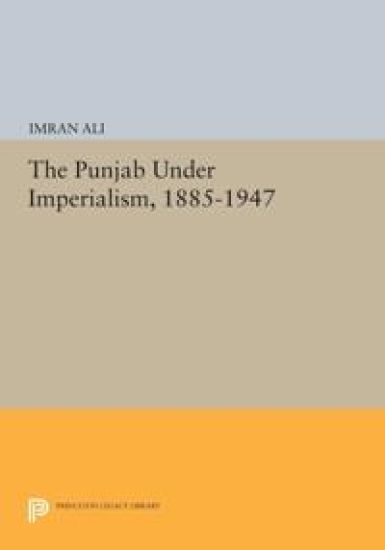
The Punjab--an area now divided between Pakistan and India--experienced significant economic growth under British rule from the second half of the nineteenth century. This expansion was founded on the construction of an extensive network of canals in the western parts of the province. The ensuing agricultural settlement transformed the previously barren area into one of the most important regions of commercial agriculture in South Asia. Nevertheless, Imran Ali argues that colonial strategy distorted the development of what came to be called the "bread basket" of the Indian subcontinent. This comprehensive survey of British rule in the Punjab demonstrates that colonial policy making led to many of the socio-economic and political problems currently plaguing Pakistan and Indian Punjab. Subordinating developmental goals to its political and military imperatives, the colonial state cooperated with the dominant social classes, the members of which became the major beneficiaries of agricultural colonization. Even while the rulers tried to use the vast resources of the Punjab to advance imperial purposes, they were themselves being used by their collaborators to advance implacable private interests. Such processes effectively retarded both nationalism and social change and resulted in the continued backwardness of the region even after the departure of the British. Originally published in 1988. The Princeton Legacy Library uses the latest print-on-demand technology to again make available previously out-of-print books from the distinguished backlist of Princeton University Press. These editions preserve the original texts of these important books while presenting them in durable paperback and hardcover editions. The goal of the Princeton Legacy Library is to vastly increase access to the rich scholarly heritage found in the thousands of books published by Princeton University Press since its founding in 1905.
Who is Alain? Gay. Adopted. Extremely awkward. Ugly especially to himself and others. He's longing for love and it ain't going to be an easy road. What does it take to find someone who will love you back for who you are inside and out? Great things happen for those with pure heart and those who is worth of them.
Nanochromatography and Nanocapillary Electrophoresis
Imran Ali; Hassan Y. Aboul-Enein; Vinod K. Gupta
John Wiley Sons Inc
2009
sidottu
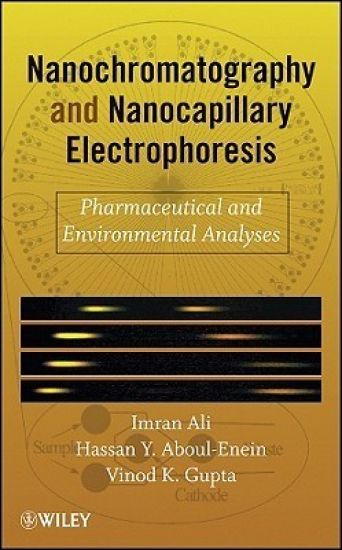
Detection of drugs at low concentration is required in a variety of biological and medical situations, in order to avoid harmful side effects posed by some drug residues. The book details the instrumentation, detection, and application of nano chromatography (that is, any chromatographic and capillary electrophoretic method dealing with the detection of a sample at nano gram per liter or lower) and capillary electrophoresis in the analyses of biological and environmental samples. Methods discussed include: Nano Gas Chromatography, Nano Capillary Electrophoresis, Nano Chiral Chromatography, Micellar Electrokinetic Chromatography, Supercritical Fluid Chromatography, and Nano High Performance Liquid Chromatography.
Instrumental Methods in Metal Ion Speciation
Imran Ali; Hassan Y. Aboul-Enein
CRC Press Inc
2006
sidottu
The knowledge of metal ion speciation is essential for predicting the exact toxicities of metal ion species in the environment. Metal ions can exist in various oxidation states, each of which possesses different physical and chemical properties as well as exhibit varying toxicities. Often, toxicity data is unreliable because it is based on metal ion concentration measurements that fail to identify a dominant species either more or less harmful than the average. Instrumental Methods in Metal Ion Speciation provides analytical techniques and experimental methodologies for determining the concentration of the different physicochemical forms of metal ions in environmental and biological samples, leading to more accurate measurements of actual toxicity.The authors introduce the principles of metal ion speciation and discuss important analytical techniques such as gas and liquid chromatography, capillary electrophoresis, and both electrochemical and radiochemical methods used to determine concentration and composition. They present a range of liquid chromatographic approaches, including capillary electrochromatography and high-performance, ion, ion pair, micellar electrokinetic, size exclusion, chiral, and supercritical fluid chromatographies for all metal ion species. Comprehensive in scope, the text covers the sources, distribution, toxicity, biotransformation, and biodegradation of each metal ions species as well as extraction methods, sample preparation, and experimental optimization techniques that can be useful in designing future experiments. Instrumental Methods in Metal Ion Speciation is a unique and valuable source of reference for scientists, academics, and researchers involved in analytical, biological, pharmaceutical, and environmental chemistries, as well as material industries, geochemistry, agriculture, biotechnology, and occupational safety and regulations.
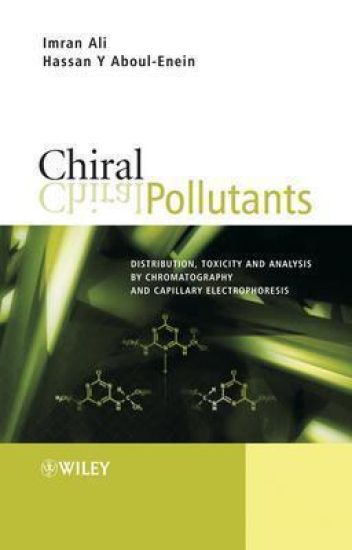
The chiral analysis of environmental pollutants is a fairly recent development and attracts scientists needing to investigate the toxicity of enantiomers. For example, approximately 25% of agrochemicals are chiral in nature, including pesticides that are applied as their racemates in agricultural and forestry activities. To predict the exact toxicity of pollutants the determination of the concentration of both enantiomers in environmental matrices is essential. Various approaches to chiral resolution have been developed for the analysis of pharmaceuticals and drugs but this is the first text to present detailed metholodology on the chiral separation of pollutants. This book is divided into 10 chapters: the first is an introduction to the principles of chirality; Chapters 2 to 9 discuss the sources, distribution, biotransformation, toxicity, sample preparation and chiral resolution of environmental pollutants by chromatography and capillary electrophoresis. In addition, the optimization of experimental parameters for chromatographic and capillary electrophoretic techniques is presented, making this book a useful ‘how to’ guide to chiral pollutants analysis. Coverage of the types, structures and properties of chiral stationary phases and their applications for the analysis of chiral pollutants is also presented. The concluding chapter reports on chiral legislation globally, and presents perspectives which could guide future research in this area. This book will be of interest to researchers in biology, analytical chemistry and the environmental in industry, academia and governmental regulatory agencies.