Kirjojen hintavertailu. Mukana 12 595 353 kirjaa ja 12 kauppaa.
Kirjailija
Imre Szeman
Kirjat ja teokset yhdessä paikassa: 12 kirjaa, julkaisuja vuosilta 2004-2027, suosituimpien joukossa Green Dreams. Vertaile teosten hintoja ja tarkista saatavuus suomalaisista kirjakaupoista.
Electric cars, green AI, carbon capture, clean tech - everywhere we turn, we’re told technology will save the planet. Green Dreams challenges this comforting story. It examines green techno-optimism, its messaging and claims, and looks at how it plays out across banks, governments, energy corporations, Big Tech, and even Hollywood. It shows how green techno-optimism—the belief that innovation alone can deliver a sustainable future—has become one of the most powerful and misleading ideas of our time. Tracing its roots from Enlightenment progress myths to Silicon Valley manifestos, Big Tech sustainability reports, and Hollywood’s eco-fantasies, Green Dreams reveals why greener machines so often reinforce the problems they seek to solve. Clear-eyed, provocative, and accessible, Green Dreams argues that green technology can play a role in climate action only if we confront the political, economic, and cultural barriers standing in the way of real change. Without systemic transformation, the green dream is a dangerous illusion. Foregrounding the gap between green techno-optimism and our endlessly growth-oriented system and ever-warming planet, it shows how and why technology cannot save the world.
Who will lead the transition from fossil fuel–dependent societies into renewable energy futures? Energy transition is crucial to the struggle against climate change. But even while embracing the death of fossil fuels, some want to preserve the current social and political order. Futures of the Sun explores the competing eco-stories being offered by people intent on shaping the transition to fit their vision and version of a renewable society. Imre Szeman explains how and why key players are working hard to make sure a greener, cleaner future will look much like the world we live in today. He examines the rhetoric, ideology, and politics of liberal nationalists intent on fighting a war against climate change, billionaire solar entrepreneurs who believe only in themselves, and the populist far right who want no change at all. Offering possible new critical and political avenues, Szeman reveals how those on the environmental left can ensure their vision of egalitarianism beyond the status quo can become the reality of our renewable future.
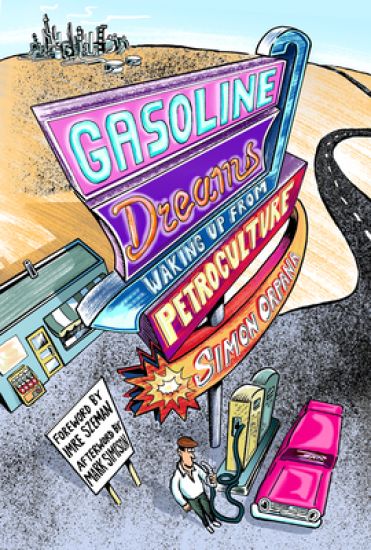
A graphic novel that confronts our habits, narratives, and fantasies head-on to help break our petroleum dependency What if the biggest barriers to responding to climate change are not technological or governmental but, rather, cultural? In other words, what if we ourselves could help to enact change through a deeper understanding of our petroleum dependency? In a provocative graphic format that draws widely from history, critical theory, and popular culture, Gasoline Dreams explores and challenges the ways fossil fuels have shaped our identities, relationships, and our ability to imagine sustainable, equitable futures. As our rapidly warming planet is pushed toward ecological collapse, we might often feel helpless or paralyzed by the enormity of the challenges confronting us. However, reflecting upon the cultural dimensions of our predicament helps reveal the great potential for social transformation inherent in the multiplying crises. Author and artist Simon Orpana engages with contemporary scholarship in the emergent field of Energy Humanities to confront the habits, narratives, and fantasies that support our attachment to fossil fuels. By revealing the many ways petroculture repeatedly fails to deliver on its promises of "the good life," Gasoline Dreams calls us to the difficult work of waking up from the fantasies that inhibit us from working toward a global transition to renewable energy. Written in an engaging graphic format that makes relevant historical, cultural, and political analyses of global warming and petrol dependency important to a wide audience, Gasoline Dreams refutes the progress narratives that depict contemporary, energy-intensive societies as the inevitable product of human history. By revealing the contingencies, coercions, and compulsions this myth disguises, the book allows us to imagine truly progressive alternatives. Rather than casting climate change as a problem for technological elites to solve, the book confronts the everyday realities that reinforce our dependence on fossil fuels, offering a space of hope and engagement from which concerned people can work to build a more sustainable future. On the threshold of the single greatest transformation the human species has yet faced, Gasoline Dreams challenges us to start living, working, and dreaming differently to become less culturally dependent on petroleum.
A graphic novel that confronts our habits, narratives, and fantasies head-on to help break our petroleum dependency What if the biggest barriers to responding to climate change are not technological or governmental but, rather, cultural? In other words, what if we ourselves could help to enact change through a deeper understanding of our petroleum dependency? In a provocative graphic format that draws widely from history, critical theory, and popular culture, Gasoline Dreams explores and challenges the ways fossil fuels have shaped our identities, relationships, and our ability to imagine sustainable, equitable futures. As our rapidly warming planet is pushed toward ecological collapse, we might often feel helpless or paralyzed by the enormity of the challenges confronting us. However, reflecting upon the cultural dimensions of our predicament helps reveal the great potential for social transformation inherent in the multiplying crises. Author and artist Simon Orpana engages with contemporary scholarship in the emergent field of Energy Humanities to confront the habits, narratives, and fantasies that support our attachment to fossil fuels. By revealing the many ways petroculture repeatedly fails to deliver on its promises of "the good life," Gasoline Dreams calls us to the difficult work of waking up from the fantasies that inhibit us from working toward a global transition to renewable energy. Written in an engaging graphic format that makes relevant historical, cultural, and political analyses of global warming and petrol dependency important to a wide audience, Gasoline Dreams refutes the progress narratives that depict contemporary, energy-intensive societies as the inevitable product of human history. By revealing the contingencies, coercions, and compulsions this myth disguises, the book allows us to imagine truly progressive alternatives. Rather than casting climate change as a problem for technological elites to solve, the book confronts the everyday realities that reinforce our dependence on fossil fuels, offering a space of hope and engagement from which concerned people can work to build a more sustainable future. On the threshold of the single greatest transformation the human species has yet faced, Gasoline Dreams challenges us to start living, working, and dreaming differently to become less culturally dependent on petroleum.
On Petrocultures brings together key essays by Imre Szeman, a leading scholar in the field of energy humanities and a critical voice in debates about globalization and neoliberalism. Szeman's most important and influential essays, in dialogue with exciting new pieces written for the book, investigate ever-evolving circuits of power in the contemporary world, as manifested in struggles over space and belonging, redefinitions of work and individual autonomy, and the deep links between energy use and climate change.These essays explore life lived in the twenty-first century by examining critically the vocabulary through which capitalism makes sense of itself, focusing on concepts like the nation, globalization, neoliberalism, creativity, and entrepreneurship. At the heart of the volume is the concept of "petrocultures," which demands that we understand a fundamental fact of modern life: we are shaped by and through fossil fuels. Szeman argues that we cannot take steps to address global warming without fundamentally changing the social, cultural, and political norms and expectations developed in conjunction with the energy riches of the past century. On Petrocultures maps the significant challenge of our dependence on fossil fuels and probes ways we might begin to leave petrocultures behind.
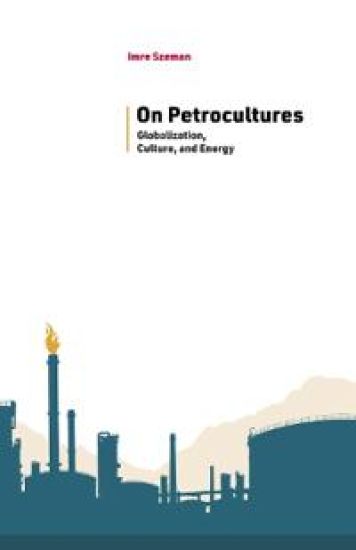
On Petrocultures brings together key essays by Imre Szeman, a leading scholar in the field of energy humanities and a critical voice in debates about globalization and neoliberalism. Szeman’s most important and influential essays, in dialog with exciting new pieces written for the book, investigate ever-evolving circuits of power in the contemporary world, as manifested in struggles over space and belonging, redefinitions of work and individual autonomy, and the deep links between energy use and climate change.These essays explore life lived in the twenty-first century by examining critically the vocabulary through which capitalism makes sense of itself, focusing on concepts like the nation, globalization, neoliberalism, creativity, and entrepreneurship. At the heart of the volume is the concept of “petrocultures,” which demands that we understand a fundamental fact of modern life: we are shaped by and through fossil fuels. Szeman argues that we cannot take steps to address global warming without fundamentally changing social, cultural, and political norms and expectations developed in conjunction with the energy riches of the past century. On Petrocultures maps the significant challenge of our dependence on fossil fuels and probes ways that we might begin to leave petrocultures behind.
Popular Culture: A User’s Guide, International Edition ventures beyond the history of pop culture to give readers the vocabulary and tools to address and analyze the contemporary cultural landscape that surrounds them. Moves beyond the history of pop culture to give students the vocabulary and tools to analyze popular culturesuitable for the study of popular culture across a range of disciplines, from literary theory and cultural studies to philosophy and sociologyCovers a broad range of important topics including the underlying socioeconomic structures that affect media, the politics of pop culture, the role of consumers, subcultures and countercultures, and the construction of social realityExamines the ways in which individuals and societies act as consumers and agents of popular culture
Popular Culture: A User’s Guide, International Edition ventures beyond the history of pop culture to give readers the vocabulary and tools to address and analyze the contemporary cultural landscape that surrounds them. Moves beyond the history of pop culture to give students the vocabulary and tools to analyze popular culturesuitable for the study of popular culture across a range of disciplines, from literary theory and cultural studies to philosophy and sociologyCovers a broad range of important topics including the underlying socioeconomic structures that affect media, the politics of pop culture, the role of consumers, subcultures and countercultures, and the construction of social realityExamines the ways in which individuals and societies act as consumers and agents of popular culture
"After Oil"explores the social, cultural and political changes needed to make possible a full-scale transition from fossil fuels to new forms of energy. Written collectively by participants in the first After Oil School, "After Oil"explains why the adoption of renewable, ecologically sustainable energy sources is only the first step of energy transition. Energy plays a critical role in determining the shape, form and character of our daily existence, which is why a genuine shift in our energy usage demands a wholesale transformation of the petrocultures in which we live."After Oil"provides readers with the resources to make this happen. "
AFTER GLOBALIZATION “Relentlessly, remorselessly, endlessly, we are told there is no alternative to globalization, whether our lecturers are bourgeois economists, progressive journalists, or imaginative litterateurs. Eric Cazdyn and Imre Szeman dare to go beyond the standard thinking of the day and query the very heart of mobile capital and its impact on daily life. Their alternative vision breathes new life into our sense of evolution and inevitability.”Toby Miller, author of Globalization and Sport and Global Hollywood“Cazdyn and Szeman begin with the idea that the current economic crisis has historicized globalization, turning it from a process that looked as inevitable as, say, global warming still does, into an episode in the history of capitalism: hence the possibility not just of more globalization but of an “after globalization.” And hence also, they argue, the renewed possibility of an “after capitalism.” In powerful critiques of what they describe as the common sense of capital today they sketch out the terms in which changes more radical than substituting generous and honest leaders for the greedy and dishonest ones we’ve currently got might begin to be imagined.”Walter Benn Michaels, University of Illinois at ChicagoIn lively and unflinching prose, Eric Cazdyn and Imre Szeman argue that contemporary thought about the world is disabled by a fatal flaw: the inability to think “an after” to globalization. After establishing seven theses (on education, morality, nation, future, history, capitalism, and common sense) that challenge the false promises that sustain this time limit, After Globalization examines four popular thinkers (Richard Florida, Thomas Friedman, Paul Krugman, and Naomi Klein) and considers how their work is dulled by these promises. Cazdyn and Szeman then speak to students from around the globe who are both unconvinced and uninterested in these promises and who understand the world very differently than the way it is popularly represented.After Globalization argues that a true capacity to think an after to globalization is the very beginning of politics today.
AFTER GLOBALIZATION “Relentlessly, remorselessly, endlessly, we are told there is no alternative to globalization, whether our lecturers are bourgeois economists, progressive journalists, or imaginative litterateurs. Eric Cazdyn and Imre Szeman dare to go beyond the standard thinking of the day and query the very heart of mobile capital and its impact on daily life. Their alternative vision breathes new life into our sense of evolution and inevitability.”Toby Miller, author of Globalization and Sport and Global Hollywood“Cazdyn and Szeman begin with the idea that the current economic crisis has historicized globalization, turning it from a process that looked as inevitable as, say, global warming still does, into an episode in the history of capitalism: hence the possibility not just of more globalization but of an “after globalization.” And hence also, they argue, the renewed possibility of an “after capitalism.” In powerful critiques of what they describe as the common sense of capital today they sketch out the terms in which changes more radical than substituting generous and honest leaders for the greedy and dishonest ones we’ve currently got might begin to be imagined.”Walter Benn Michaels, University of Illinois at ChicagoIn lively and unflinching prose, Eric Cazdyn and Imre Szeman argue that contemporary thought about the world is disabled by a fatal flaw: the inability to think “an after” to globalization. After establishing seven theses (on education, morality, nation, future, history, capitalism, and common sense) that challenge the false promises that sustain this time limit, After Globalization examines four popular thinkers (Richard Florida, Thomas Friedman, Paul Krugman, and Naomi Klein) and considers how their work is dulled by these promises. Cazdyn and Szeman then speak to students from around the globe who are both unconvinced and uninterested in these promises and who understand the world very differently than the way it is popularly represented.After Globalization argues that a true capacity to think an after to globalization is the very beginning of politics today.
Attempts by writers and intellectuals in former colonies to create unique national cultures are often thwarted by a context of global modernity, which discourages particularity and uniqueness. In describing unstable social and political cultures, such "third-world intellectuals" often find themselves torn between the competing literary requirements of the "local" culture of the colony and the cosmopolitan, "world" culture introduced by Western civilization. In Zones of Instability, Imre Szeman examines the complex relationship between literature and politics by exploring the production of nationalist literature in the former British empire. Taking as his case studies the regions of the British Caribbean, Nigeria, and Canada, Szeman analyzes the work of authors for whom the idea of the"nation" and literature are inexorably entwined, such as Chinua Achebe, Wole Soyinka, C.L.R. James, Frantz Fanon, and V.S. Naipaul. Szeman focuses on literature created in the two decades after World War II, decades in which the future prospects for many colonies went from extreme political optimism to extreme political disappointment. He finds that the "nation" can be read as that space in which literature is thought to be able to conjoin two things that history has separated-the writer and the people.