Kirjojen hintavertailu. Mukana 12 469 023 kirjaa ja 12 kauppaa.

Kirjailija

Indra de Soysa

Kirjat ja teokset yhdessä paikassa: 3 kirjaa, julkaisuja vuosilta 2003-2025, suosituimpien joukossa Foreign Direct Investment, Democracy and Development. Vertaile teosten hintoja ja tarkista saatavuus suomalaisista kirjakaupoista.

3 kirjaa

Kirjojen julkaisuhaarukka 2003-2025.

Economic Governance, Political Freedoms and the Conditions of Societal Violence
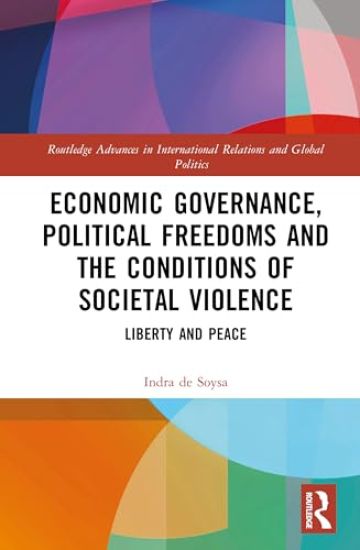
This book shows how the underlying causes of civil war and political violence is based in concrete conditions relating to economic governance. The author argues that what matters for cauterizing the potentiality of “sustainable” violence is economic governance, specifically growth-promoting governance that maximizes returns to investment due to competitive free-market processes upheld by the rule of law and the protection of private property rights. Political and economic rights and freedoms are clearly intertwined, but there may be advantages to prefacing one over another. This study shows why and how economic governance matters for generating civil peace, perhaps more so than rival perspectives based on the understanding that violence is motivated by political concerns and grievances that motivate people to rebel broadly. The book demonstrates that the organization of violence that is sustained over long periods of time are far more narrowly focused that the loud discourses generated by violence itself predict. Even if people have legitimate reasons for contesting a government’s policies, such concerns become side-tracked, even abandoned, for reasons that may trump the necessity of compromise; namely, because more narrowly organised groups may have advantages for organizing violence and survive sanction. The mechanism through which this may occur is the primary focus of this book. The author examines quantitative data but uses empirical detail from Sri Lanka as a case study. Relying on historical sources on the Sri Lankan conflict to guide the discussion, the author uses data collected by a host of individuals and agencies in the statistical analyses that follow.The work demonstrates that economic governance matters more than the political mechanisms most often argued in the literature. It will be of interest to those studying South Asian Politics, economic development, sociology, history, law, international relations, cultural studies and peace, security and conflict studies.
Foreign Direct Investment, Democracy and Development
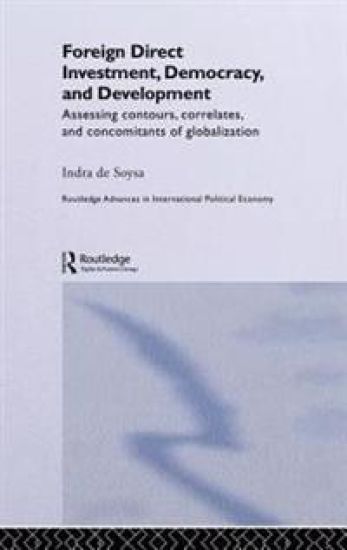
The effects of globalization on economy and society are highly contested subjects in academic and political arenas. This study brings an empirical perspective to the crucially important arguments that encapsulate the major debates in this area. Using quantitative data, this book addresses the shape and degree of internationalisation by focussing on the impact of Foreign Direct Investment (FDI) and democracy on economic development and the effects of economic internationalisation on democracy. The author examines democracy's effects on economic growth and considers the claim that foreign capital has a detrimental effect on democracy to show that FDI in fact plays a supporting role for democracy and creates higher growth rates than domestic capital. From these results the author suggests that policy makers should seek to encourage globalization by ensuring open access to products from poorer countries, encouraging private investment within poorer countries and that such countries should concentrate on building up human and institutional capital to attract investment.
Foreign Direct Investment, Democracy and Development
The effects of globalization on economy and society are highly contested subjects in academic and political arenas. This study brings an empirical perspective to the crucially important arguments that encapsulate the major debates in this area. Using quantitative data, this book addresses the shape and degree of internationalisation by focussing on the impact of Foreign Direct Investment (FDI) and democracy on economic development and the effects of economic internationalisation on democracy. The author examines democracy's effects on economic growth and considers the claim that foreign capital has a detrimental effect on democracy to show that FDI in fact plays a supporting role for democracy and creates higher growth rates than domestic capital. From these results the author suggests that policy makers should seek to encourage globalization by ensuring open access to products from poorer countries, encouraging private investment within poorer countries and that such countries should concentrate on building up human and institutional capital to attract investment.