

Kirjailija
Ingeborg Bachmann
Kirjat ja teokset yhdessä paikassa: 70 kirjaa, julkaisuja vuosilta 1981-2026, suosituimpien joukossa En plats för tillfälligheter. Vertaile teosten hintoja ja tarkista saatavuus suomalaisista kirjakaupoista.
70 kirjaa
Kirjojen julkaisuhaarukka 1981-2026.
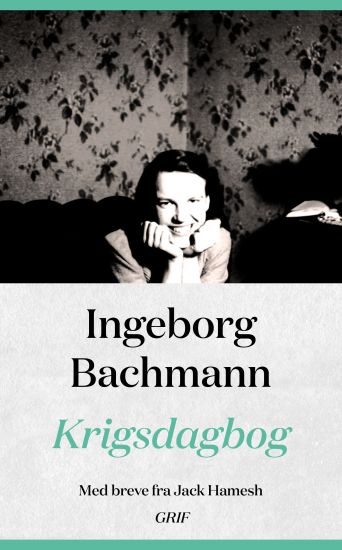
Efter succesen med romanen Malina udkommer nu Ingeborg Bachmanns Krigsdagbog fra 1945. Den 18-årige kvinde jubler i juni 1945 i sin dagbog over, at opleve den skønneste sommer i sit liv. Det var sommeren, hvor freden endelig nåede Østrig. Sommeren, hvor hun, datter af en nazist, mødte den britisk-jødiske soldat, Jack Hamesh, som blev hendes åndelige forbundsfælle i et samfund der var ribbet for troen på mennesket og på fremtiden. Ingeborg Bachmanns bevægende dagbogsblade udgives her sammen med brevene fra Jack Hamesh, der emigrerede til Israel i 1946. Hans sidste brev til hende er fra 1947, og de to sås aldrig igen. "Helt inde ved kærlighedens atomkerne." - Politiken, 5 hjerter"En stor og vidunderlig kærlighedshistorie og en fuldbyrdet tragedie." - Berlingske, 5 stjerner"Et scoop." - Femina, 4 stjerner"En udgivelse med litterær og historisk tyngde i sig selv." - Information
”Ingeborg Bachmann er den første kvinde i den tysksprogede efterkrigslitteratur, der med de mest radikale poetiske virkemidler beskriver krigens og ødelæggelsens videreførelse i forholdet mellem mænd og kvinder.” – Elfriede Jelinek”Den betydeligste forfatterinde, vores land har frembragt i dette århundrede.” – Thomas BernhardIngeborg Bachmanns ufuldendte roman Franzas bog begynder med den unge arkæologistuderende Martin Ranner, der kort før sin afrejse til Ægypten har modtaget et kryptisk telegram fra sin storesøster Franza: Hun er flygtet fra sin ægtemand, den verdensberømte psykiater Leopold Jordan, der kontinuerligt udøver forsøg på sin unge kone. Martin finder hende på afgrundens rand i deres barndomshjem i provinsen Kärnten. Franza taler i vildelse, og hendes fine natkjole er forvandlet til en sølle klud. Blandt sine få ejendele har hun et falsk pas, der skal hjælpe hende med at undslippe sin magtfulde mand og flygte med Martin til Egypten. Han føler sig fremmed over for sin ofte fraværende søster, men giver efter for hendes ønske, i håb om at rejsen kan helbrede Franza for hendes pludselige og tilsyneladende dødelige sygdom.Sammen tager de to på en rejse gennem Sudan og Ægypten og gennem Franzas nedbrudte sind, hendes sygdom og traumer og hendes tidligere forhold til de mænd, der har ageret elskere og/eller faderfigurer for hende.Hos Bachmann bærer alle på sygdomme, psykiske såvel som ideologiske. Det gælder også i Franzas bog, hvor spørgsmål om bøddel og offer, om skyld og uskyld efter 2. verdenskrig, om køn, racisme og kolonialisme vendes og drejes i Bachmann svimlende og svimle prosa, der både er en undersøgelse af traumets mange manifestationer – og hvordan disse ultimativt leder til et menneskes død – og af en verden, hvor fascistiske og imperialistiske ideologier lever hverdagsligt videre efter krigen.Romanfragmentet er en del af Bachmanns ufærdige romancyklus Todesarten (Dødsmåder), der skulle udforske de måder, hvorpå kvinders død påføres dem af mænd. På dansk udkom fra samme cyklus Malina i 2021 (Grif, overs. Judyta Preis & Jørgen Herman Monrad).Ingeborg Bachmann (1926-1973) blev født og voksede op i den østrigske provinsby Klagenfurt. I 1953 flyttede hun til Rom. Der skrev hun essays, hørespil, librettoer og især digte, som gav hende status af en af efterkrigstidens største tysksprogede lyrikere. Senere skrev hun sine prosaværker, der især beskæftiger sig med fascismens oprindelse og konsekvenser, og som er gennemsyret af et mismodigt syn på magtforhold mellem mænd og kvinder.Mod slutningen var Bachmanns liv præget af alkoholisme og pillemisbrug. Hun døde i 1973 af brandsår, hun havde pådraget sig ved at falde i søvn i sengen med en tændt cigaret. Hun anses i dag for en af de vigtigste østrigske litterære stemmer i efterkrigstiden.
Salzburger Bachmann Edition
Ingeborg Bachmann; Günter Eich; Ilse Aichinger
SUHRKAMP VERLAG
2021
sidottu
Der gute Gott von Manhatten. EinFach Deutsch Unterrichtsmodelle
Ingeborg Bachmann
Schoeningh Verlag
2021
muu
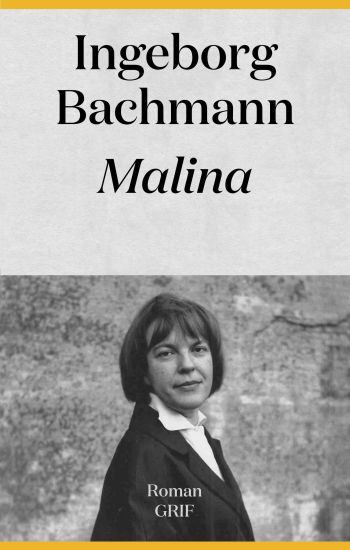
Kærlighedsroman, trekantsdrama, psykologisk thriller, historie om en forbrydelse – Malina er det hele. En imaginær selvbiografi, kaldte Ingeborg Bachmann selv romanen. Men først og fremmest er den en svimlende og fuldstændig omvæltende læseoplevelse for den, der giver sig tid til at finde ind i den. Den navnløse jegfortæller lever sammen med militærmanden Malina i Wien. Men det er en anden mand, Ivan, hun elsker. ”Lykkelig med Ivan” hedder første del, hvor den forelskede hovedperson dog mest tilbringer tiden med at længes efter den fortravlede Ivan og ryge smøger. Anden del, ”Den tredje mand”, skildrer i drømmens surreelle form den vold og lidelse, udgående fra faderen som figur, der har ført til en nedbrydning af det kvindelige jeg. I sidste del finder en afsked med kærligheden sted, hovedpersonen er alene tilbage med Malina, og i romanens berømte slutscene forsvinder hun ind i væggen. "Uafrystelig roman. (...) Nu er Malina endelig også kommet på dansk, med 50 års forsinkelse, men det har været værd at vente på, også fordi jeg sjældent har læst så god en oversættelse som den, Judyta Preis og Jørgen Herman Monrad har præsteret her." Politiken, 6 hjerter"Det er mesterligt gjort. Læs Malina og giv dig selv en oplevelse, du aldrig glemmer." Berlingske, seks stjerner"Vigtig og dybt original roman." - Kristeligt Dagblad, seks stjerner"En fantastisk og utrolig vigtig bog." - Information"Et mesterværk." - Weekendavisen
The first English translation of the essays, lectures, and other critical writings of the celebrated Austrian poet, novelist, and public intellectual, one of the most influential postwar writers in German. The Austrian Ingeborg Bachmann (1926-1973) is one of the most important postwar writers in German. Her work is enmeshed with the intellectual and cultural developments of the period: she was influenced by European modernism in the early 1950s, experienced the sweeping changes of the 60s, and worked until her death in 1973 on her celebrated and sprawling "Todesarten" (Ways of Death) project, on the decades following National Socialism. Her poetry and prose confront what she called "the sickness of our time": the subtle connection between patriarchal society, catastrophic history in the form of National Socialism, and the subjugation of the Other. Even during her lifetime, Bachmann achieved a prominent position in postwar German-language literature. Interest in her literary output increased sharply in the early 1980s with the publication of the first edition of her works, and has been growing steadily ever since. Bachmann's impact on German literature is comparable to that of Virginia Woolf on English literature. Just as an appreciation of Woolf's poetic oeuvre, and that of other women writers, is impossible without reference to "A Room of One's Own," the critical writings of Bachmann enhance our awareness of not only her own works, but also those of many other writers, philosophers, and artists. As the only translation of Bachmann's essays, lectures, speeches, and theoretical texts into English, The Critical Writings will be a valuable tool for students of Comparative Literature and German literature and cultural studies.
Ingeborg Bachmann (1926-1973) is recognized as one of post-war German literature’s most important novelists, poets, and playwrights. Influenced by Hans Weigel and the legendary literary circle Gruppe 47, Bachmann gained international renown for her poems, short stories, and novels, and won numerous awards for her work. Sadly, her life ended abruptly in October of 1973 when a lit cigarette burned down her apartment causing Bachmann to suffer severe burns that would eventually prove fatal. The author was only forty-seven, and her tragic death left what could have been a long and lustrous writing career regretfully stunted. Nearly twenty years after her death, during an estate sale in Vienna, fifteen episodes of the popular Viennese radio drama The Radio Family were discovered. Remarkably, they happened to be written by Ingeborg Bachmann herself, who had been a writer on the show just after she graduated university. The Radio Family was a popular radio soap opera broadcast in the American sector of occupied Vienna in the 1950s. The program focused on a middle-class Viennese family and their everyday life. Topics ranged from birthday parties and holiday plans to profiteering and currency fraud in the commercial sector, and Austrians’ involvement in the Nazi past. All fifteen scripts have now been compiled and masterfully translated, revealing an early and significant piece of Bachmann’s body of work, while simultaneously offering a rare glimpse into Vienna’s quotidian history.
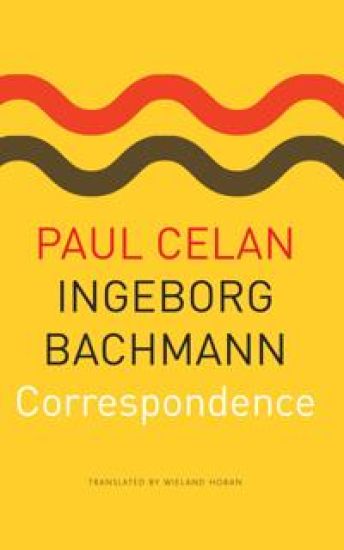
Paul Celan (192070) is one of the best-known German poets of the Holocaust; many of his poems, admired for their spare, precise diction, deal directly with its stark themes. Austrian writer Ingeborg Bachmann (192673) is recognized as one of postWorld War II German literature's most important novelists, poets and playwrights. It seems only appropriate that these two contemporaries and masters of language were at one time lovers, and they shared a lengthy, artful and passionate correspondence.Collected here for the first time in English are their letters written between 1948 and 1961. Their correspondence forms a moving testimony of the discourse of love in the age after Auschwitz, with all the symptomatic disturbances and crises caused by their conflicting backgrounds and their hard-to-reconcile designs for living-as a woman, as a man, as writers. In addition to the almost 200 letters, the volume includes an important exchange between Bachmann and Gisele Celan-Lestrange, who married Celan in 1951, as well as the letters between Paul Celan and Swiss writer Max Frisch, who was Bachmann's lover for four years. 'Wieland Hoban has worked with accuracy and determination to capture the nuances of style and register, which include oblique awkwardness (Celan) and self-assuredness (Bachmann), alongside infinite courage and astounding strength (Celan-Lestrange). The translation reads well, with just a slight edge of the original diction remaining to remind readers that we are witnessing a different time and place, and way of perceiving the world. . . . This is an important addition tot he work in translation of two major post-war writers.'- Times Literary Supplement'This book is highly recommended. You cannot possibly be disappointed by it, especially if you are familiar with these writers' literary output, each of which left the world a completely original, masterful, and highly influential body of work. The letters move from youthful heartbreak and poetical exuberance to the destructive later exchanges between two people who cannot trust one another although they are, until the end, drawn to each other. It's not a book you read and shelve. It's a book to read and reread, a book to treasure.'- Shigekuni. Read the lengthy, detailed and enligtening review of the book here.'Correspondence, rendered perfectly in English by Wieland Hoban, traces [Celan and Bachmann's] letters, telegrams, and book inscriptions to one another, color-coded and augmented by hundreds of footnotes. Like other volumes from Seagull Books, it's physically gorgeous, with a pleasingly compact trim size. Reading Correspondence feels like an indulgence. It also feels disorienting. The world of the letters and the world of their authors' real lives are askew in a sometimes jarring way, so that the emotional content of the letters reads almost as fiction.'- Aaron Belz, Books & Culture
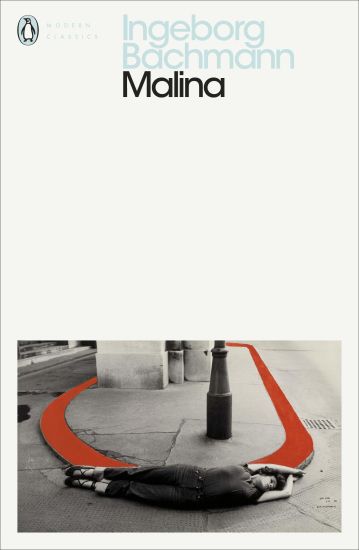
'An intense, courageous novel, equal to the best of Virginia Woolf and Samuel Beckett' The New York TimesPart detective novel, part love story, part psychoanalytic case study, Malina is a staggering portrait of a writer trying to tell her own story in a world dominated by men.'I was subordinate to him from the beginning, and I must have known early on that he was destined to be my doom'A woman in postwar Vienna walks a tightrope between the two men in her life. There is her lover Ivan, beautiful and unavailable, who obsesses her. And there is Malina, the civil servant with whom she shares an apartment: reserved, fastidious, exacting, chillingly calm. As the balance of power between them starts to shift, she feels her fragile identity unravelling, gradually revealing the dark, bruised heart of her past.
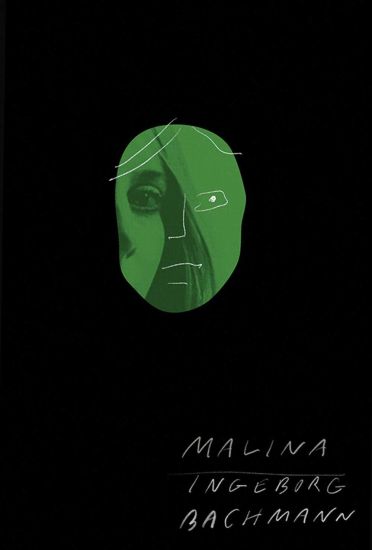
Malina invites the reader on a linguistic journey, into a world that stretches the very limits of language with Wittgensteinian zeal and Joycean inventiveness, where Ingeborg Bachmann ventriloquizes--and in the process demolishes--Proust, Musil, and Balzac, and yet filters everything through her own utterly singular idiom. Malina is, quite simply, unlike anything else; it's a masterpiece. In Malina, Bachmann uses the intertwined lives of three characters to explore the roots of society's breakdown that lead to fascism, and in Bachmann's own words, "it doesn't start with the first bombs that are dropped; it doesn't start with the terror that can be written about in every newspaper. It starts with relationships between people. Fascism is the first thing in the relationship between a man and a woman, and I attempted to say that here in this society there is always war. There isn't war and peace, there's only war."
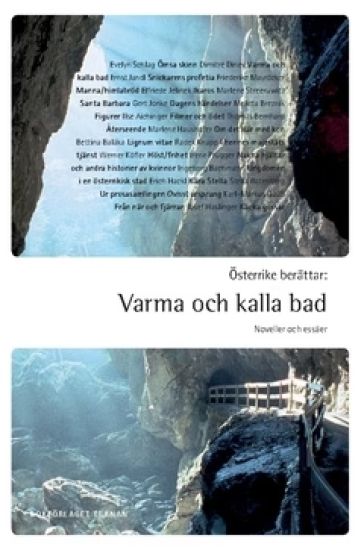
Österrike berättar : varma och kalla bad - noveller och essäer
Melitta Breznik; Marlene Haushofer; Marlene Streeruwitz; Dimitré Dinev; Karl-Markus Gauss; Thomas Bernhard; Gert Jonke; Ilse Aichinger; Evelyn Schlag; Friederike Mayröcker; Ernst Jandl; Erich Hackl; Elfriede Jelinek; Radek Knapp; Ingeborg Bachmann; Stella Rotenberg; Irene Prugger; Werner Köfler; Josef Haslinger; Bettina Baláka
Bokförlaget Tranan
2019
nidottu
Varma och kalla bad utspelas i ett land som besväras av det förflutna. Av det Habsburgska riket, kejsardömet mitt i Europa, återstår det betydligt mindre Österrike. Namnen på de författare som kommer till tals vittnar dels om ett slaviskt, dels om ett tyskt eller tyskjudiskt ursprung, även om alla skriver på tyska. I Varma och kalla bad medverkar flera generationer författare som berättar om sina personliga upplevelser av kriget och nazismen, men här skildras också samtiden. Alltifrån valutareformer till hembygds-berättelser, kvinnlig frigörelse och lyriska kärleksförklaringar gör antologin till ett både roande och tankeväckande nedslag i dagens österrikiska samhälle och litteratur.
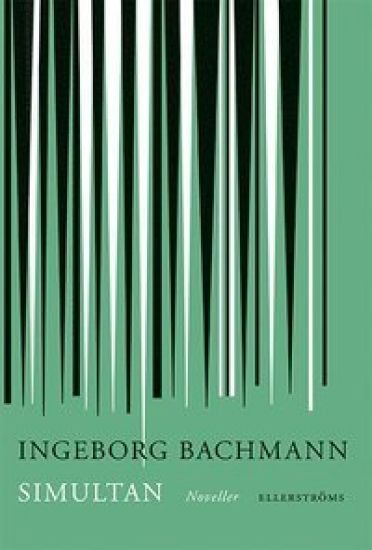
De fem novellerna i Simultan är skrivna med Ingeborg Bachmanns sedvanliga skärpa och språkliga intensitet, och de har alla kvinnliga huvudpersoner. En är simultantolk och har rest till kusten med en man hon inte känner. En älskar att somna om på morgnarna och ska just träffa sin älskare. En ser sin extrema närsynthet som en ovanlig gåva. En hälsar regelbundet på hos sin åldrande svärmor och börjar hemlighålla besöken för sin man. En är fotograf och försöker vid ett besök i sitt barndomshem följa turistkartans vägar mot sjön. Ingeborg Bachmann skrev Simultan (1972) parallellt med romanen Malina (1971), som en sorts sidohistorier till denna. Boken ingår i hennes omfattande prosaprojekt ”Todesarten” – ”sätt att dö”, som inte kunde fullbordas, i och med hennes död i sviterna av en eldsvåda.

»schreib alles was wahr ist auf«
Ingeborg Bachmann; Hans Magnus Enzensberger
SUHRKAMP VERLAG
2018
sidottu
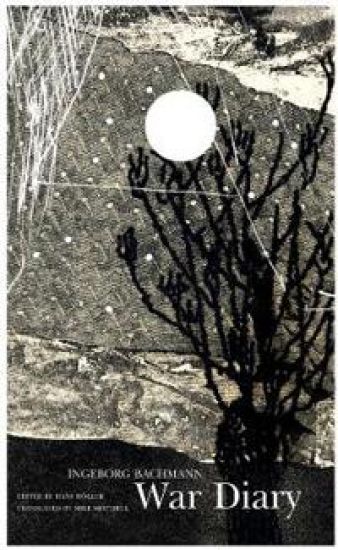
Austrian writer Ingeborg Bachmann (1926-73) is recognized as one of the most important novelists, poets, and playwrights of postwar German literature. As befitting such a versatile writer, her War Diary is not a day-by-day journal but a series of sketches, depicting the last months of World War II and the first year of the subsequent British occupation of Austria. These articulate and powerful entries--ll the more remarkable taking into account Bachmann's young age at the time--reveal the eighteen-year-old's hatred of both war and Nazism as she avoids the fanatics' determination to "defend Klagenfurt to the last man and the last woman." The British occupation leads to her incredible meeting with a British officer, Jack Hamesh, a Jew who had originally fled Vienna for England in 1938. He is astonished to find in Austria a young girl who has read banned authors such as Mann, Schnitzler, and Hofmannsthal. Their relationship is captured here in the emotional and moving letters Hamesh writes to Bachmann when he travels to Israel in 1946. In his correspondence, he describes how in his new home of Israel, he still suffers from the rootlessness affecting so many of those who lost parents, family, friends, and homes in the war. War Diary provides unusual insight into the formation of Bachmann as a writer and will be cherished by the many fans of her work. But it is also a poignant glimpse into life in Austria in the immediate aftermath of the war, and the reflections of both Bachmann and Hamesh speak to a significant and larger story beyond their personal experiences.

U p'jatokh opovidannjakh Ingeborg Bakhman postajut majsterno zmalovani obrazi zhinok, jaki zhivut u sviti absurdnoji sinkhronnosti, paralelnogo poslugovuvannja movami, spivisnuvannja dosvidiv ta vidchuttiv. Gerojinja titulnogo opovidannja, kvalifikovana perekladachka, pid chas korotkoji vidpustki z majzhe neznajomim cholovikom vijavljaje, scho ni vona, ni vin ne majut scho skazati odne odnomu, inertna moloda divchina, najbilshe schastja dlja jakoji spati do poludnja abo prosidzhuvati dnjami v perukarni, Miranda, jaka svoju korotkozorist vvazhaje "darom Bozhim", bo ta daje jij zmogu ne bachiti u vsikh detaljakh zlostivist, merzennist i ogidnist tsogo svitu, stara pani Jordan, jaku jedinij sin velikodushno pririk na samotnje isnuvannja v malenkomu pomeshkanni, uspishna fotokorespondentka, jaka prijizhdzhaje navidati batka v staromu domi svojeji junosti - vsi voni v najivnomu zvorushenni abo v bolisnomu usvidomlenni perezhivajut tu dovgu mit zhakhu, protjagom jakoji vijavljajut, scho bulo, scho je i scho moglo buti.PerekladachVolodimir Kam'janets