Kirjojen hintavertailu. Mukana 12 293 529 kirjaa ja 12 kauppaa.

Kirjailija

Ingo Venzke

Kirjat ja teokset yhdessä paikassa: 6 kirjaa, julkaisuja vuosilta 2012-2022, suosituimpien joukossa Towards a New Enlightenment - The Case for Future-Oriented Humanities. Vertaile teosten hintoja ja tarkista saatavuus suomalaisista kirjakaupoista.

6 kirjaa

Kirjojen julkaisuhaarukka 2012-2022.

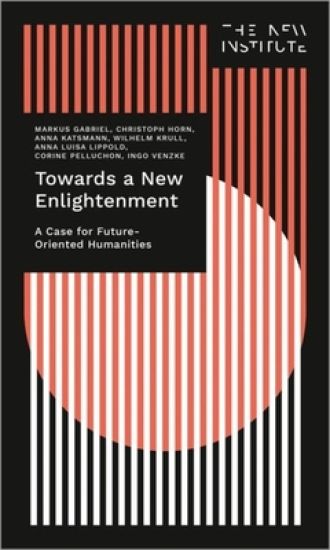
Towards a New Enlightenment - The Case for Future-Oriented Humanities

Towards a New Enlightenment - The Case for Future-Oriented Humanities

Markus Gabriel; Christoph Horn; Anna Katsman; Wilhelm Krull; Anna Luisa Lippold; Corine Pelluchon; Ingo Venzke

TRANSCRIPT VERLAG
2022
nidottu
What role can the humanities play in shaping our common future? What are the values that guide us in the 21st century? How can we unleash the potential the humanities offer in a time of multiple crises? This volume tackles some of these fundamental questions, acknowledging and developing the changing role of academic discourse in a turbulent world. This timely book argues that the humanities engender conceptual tools that are capable of reconciling theory and practice. In a bold move, we call for the humanities to reach beyond the confines of universities and engage in the most urgent debates facing humanity today – in a multidisciplinary, transformative, and constructive way. This is a blueprint for how societal change can be inclusive and equitable for the good of humans and non-humans alike.

The Internal Effects of ASEAN External Relations

The Internal Effects of ASEAN External Relations

Ingo Venzke; Li-ann Thio

Cambridge University Press
2016
pokkari
Starting with a typology of ASEAN external agreements, the authors go on to provide an original reading of plurilateral agreements as 'joint' agreements. The book then offers both a clarification of the effects - direct or indirect - of external agreements within the legal orders of ASEAN Member States, and an explanation of the effects of external agreements within the legal regime of ASEAN. The authors conclude with a discussion of the role of ASEAN centrality and the role of the secretariat in shaping it.
In Whose Name?

In Whose Name?

Armin von Bogdandy; Ingo Venzke

Oxford University Press
2016
nidottu
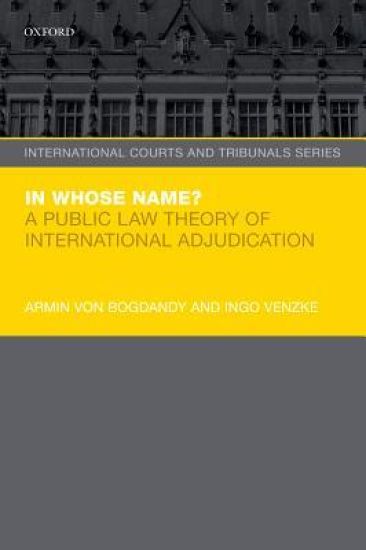
The vast majority of all international judicial decisions have been issued since 1990. This increasing activity of international courts over the past two decades is one of the most significant developments within the international law. It has repercussions on all levels of governance and has challenged received understandings of the nature and legitimacy of international courts. It was previously held that international courts are simply instruments of dispute settlement, whose activities are justified by the consent of the states that created them, and in whose name they decide. However, this understanding ignores other important judicial functions, underrates problems of legitimacy, and prevents a full assessment of how international adjudication functions, and the impact that it has demonstrably had. This book proposes a public law theory of international adjudication, which argues that international courts are multifunctional actors who exercise public authority and therefore require democratic legitimacy. It establishes this theory on the basis of three main building blocks: multifunctionality, the notion of an international public authority, and democracy. The book aims to answer the core question of the legitimacy of international adjudication: in whose name do international courts decide? It lays out the specific problem of the legitimacy of international adjudication, and reconstructs the common critiques of international courts. It develops a concept of democracy for international courts that makes it possible to constructively show how their legitimacy is derived. It argues that ultimately international courts make their decisions, even if they do not know it, in the name of the peoples and the citizens of the international community.
In Whose Name?

In Whose Name?

Armin von Bogdandy; Ingo Venzke

Oxford University Press
2014
sidottu
The vast majority of all international judicial decisions have been issued since 1990. This increasing activity of international courts over the past two decades is one of the most significant developments within the international law. It has repercussions on all levels of governance and has challenged received understandings of the nature and legitimacy of international courts. It was previously held that international courts are simply instruments of dispute settlement, whose activities are justified by the consent of the states that created them, and in whose name they decide. However, this understanding ignores other important judicial functions, underrates problems of legitimacy, and prevents a full assessment of how international adjudication functions, and the impact that it has demonstrably had. This book proposes a public law theory of international adjudication, which argues that international courts are multifunctional actors who exercise public authority and therefore require democratic legitimacy. It establishes this theory on the basis of three main building blocks: multifunctionality, the notion of an international public authority, and democracy. The book aims to answer the core question of the legitimacy of international adjudication: in whose name do international courts decide? It lays out the specific problem of the legitimacy of international adjudication, and reconstructs the common critiques of international courts. It develops a concept of democracy for international courts that makes it possible to constructively show how their legitimacy is derived. It argues that ultimately international courts make their decisions, even if they do not know it, in the name of the peoples and the citizens of the international community.
How Interpretation Makes International Law

How Interpretation Makes International Law

Ingo Venzke

Oxford University Press
2014
nidottu
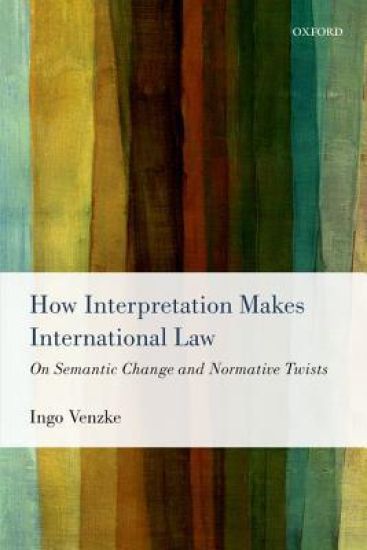
Challenging the classic narrative that sovereign states make the law that constrains them, this book argues that treaties and other sources of international law form only the starting point of legal authority. Interpretation can shift the meaning of texts and, in its own way, make law. In the practice of interpretation actors debate the meaning of the written and customary laws, and so contribute to the making of new law. In such cases it is the actor's semantic authority that is key - the capacity for their interpretation to be accepted and become established as new reference points for legal discourse. The book identifies the practice of interpretation as a significant space for international lawmaking, using the key examples of the UN High Commissioner for Refugees and the Appellate Body of the WTO to show how international institutions are able to shape and develop their constituent instruments by adding layers of interpretation, and moving the terms of discourse. The book applies developments in linguistics to the practice of international legal interpretation, building on semantic pragmatism to overcome traditional explanations of lawmaking and to offer a fresh account of how the practice of interpretation makes international law. It discusses the normative implications that arise from viewing interpretation in this light, and the implications that the importance of semantic changes has for understanding the development of international law. The book tests the potential of international law and its doctrine to respond to semantic change, and ultimately ponders how semantic authority can be justified democratically in a normative pluriverse.
How Interpretation Makes International Law

How Interpretation Makes International Law

Ingo Venzke

Oxford University Press
2012
sidottu
Challenging the classic narrative that sovereign states make the law that constrains them, this book argues that treaties and other sources of international law form only the starting point of legal authority. Interpretation can shift the meaning of texts and, in its own way, make law. In the practice of interpretation actors debate the meaning of the written and customary laws, and so contribute to the making of new law. In such cases it is the actor's semantic authority that is key - the capacity for their interpretation to be accepted and become established as new reference points for legal discourse. The book identifies the practice of interpretation as a significant space for international lawmaking, using the key examples of the UN High Commissioner for Refugees and the Appellate Body of the WTO to show how international institutions are able to shape and develop their constituent instruments by adding layers of interpretation, and moving the terms of discourse. The book applies developments in linguistics to the practice of international legal interpretation, building on semantic pragmatism to overcome traditional explanations of lawmaking and to offer a fresh account of how the practice of interpretation makes international law. It discusses the normative implications that arise from viewing interpretation in this light, and the implications that the importance of semantic changes has for understanding the development of international law. The book tests the potential of international law and its doctrine to respond to semantic change, and ultimately ponders how semantic authority can be justified democratically in a normative pluriverse.