

Kirjailija
Ingrid Anderson
Kirjat ja teokset yhdessä paikassa: 4 kirjaa, julkaisuja vuosilta 2016-2026, suosituimpien joukossa Utbildning av den unga hästen. Vertaile teosten hintoja ja tarkista saatavuus suomalaisista kirjakaupoista.
4 kirjaa
Kirjojen julkaisuhaarukka 2016-2026.

Supporting Children’s Mental Health and Wellbeing
Jean Barbre; Ingrid Anderson
Redleaf Press
2022
nidottu
The emotional lives of young children are growing increasingly more complex. There is growing interest in understanding early mental health and wellbeing and how early childcare providers can support children birth to age five who have experienced traumatic events and learn strategies to promote children’s social and emotional development. Supporting Children’s Mental Health and Wellbeing: A Strength-based Approach for Early Childhood Educators incorporates strength-based child care strategies to foster positive reciprocal relationships between caregiver and young children and strengthen children’s resiliency and wellbeing. Strategies include building on children’s mental health and resiliency; identifying protective factors and indicators of risk; promoting healthy attachment; and, scaffolding social and emotional development within the context of family relationships and culture. Supporting Children’s Mental Health and Well-being covers:Introduction to national statistics on the growing concerns regarding early mental health and traumaThe impact trauma has on the developing brainThe impact of children’s behavior on the workplace and teacher burnoutStages of typical social-emotional developmentStrategies to collaborate with families, public school systems, and community servicesOutlining practices to build resiliency in children and teachersCreating psychologically safe spaces for children and adultsBuilding a toolkit of resources and strategies
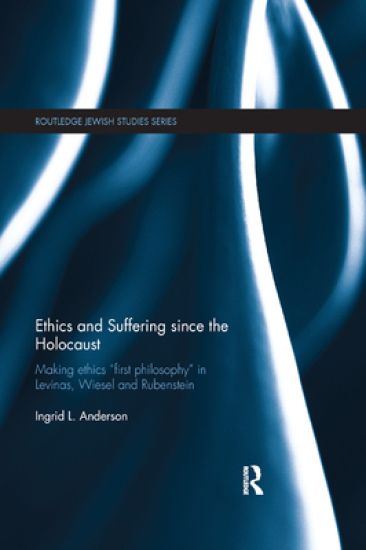
For many, the Holocaust made thinking about ethics in traditional ways impossible. It called into question the predominance of speculative ontology in Western thought, and left many arguing that Western political, cultural and philosophical inattention to universal ethics were both a cause and an effect of European civilization's collapse in the twentieth century.Emmanuel Levinas, Elie Wiesel and Richard Rubenstein respond to this problem by insisting that ethics must be Western thought's first concern. Unlike previous thinkers, they locate humanity's source of universal ethical obligation in the temporal world of experience, where human suffering, rather than metaphysics, provides the ground for ethical engagement. All three thinkers contend that Judaism’s key lesson is that our fellow human is our responsibility, and use Judaism to develop a contemporary ethics that could operate with or without God. Ethics and Suffering since the Holocaust explores selected works of Levinas, Wiesel, and Rubenstein for practical applications of their ethics, analyzing the role of suffering and examining the use each thinker makes of Jewish sources and the advantages and disadvantages of this use. Finally, it suggests how the work of Jewish thinkers living in the wake of the Holocaust can be of unique value to those interested in the problem of ethics in the twentieth and twenty-first centuries.Presenting a thorough investigation of the work of Levinas, Wiesel and Rubinstein, this book is of key interest to students and scholars of Jewish studies, as well as Jewish ethics and philosophy.
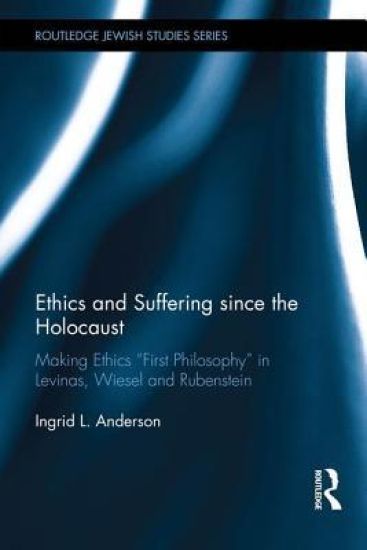
For many, the Holocaust made thinking about ethics in traditional ways impossible. It called into question the predominance of speculative ontology in Western thought, and left many arguing that Western political, cultural and philosophical inattention to universal ethics were both a cause and an effect of European civilization's collapse in the twentieth century.Emmanuel Levinas, Elie Wiesel and Richard Rubenstein respond to this problem by insisting that ethics must be Western thought's first concern. Unlike previous thinkers, they locate humanity's source of universal ethical obligation in the temporal world of experience, where human suffering, rather than metaphysics, provides the ground for ethical engagement. All three thinkers contend that Judaism’s key lesson is that our fellow human is our responsibility, and use Judaism to develop a contemporary ethics that could operate with or without God. Ethics and Suffering since the Holocaust explores selected works of Levinas, Wiesel, and Rubenstein for practical applications of their ethics, analyzing the role of suffering and examining the use each thinker makes of Jewish sources and the advantages and disadvantages of this use. Finally, it suggests how the work of Jewish thinkers living in the wake of the Holocaust can be of unique value to those interested in the problem of ethics in the twentieth and twenty-first centuries.Presenting a thorough investigation of the work of Levinas, Wiesel and Rubinstein, this book is of key interest to students and scholars of Jewish studies, as well as Jewish ethics and philosophy.