
Kirjojen hintavertailu. Mukana 12 447 422 kirjaa ja 12 kauppaa.

Kirjailija

Ingrid H. Tague

Kirjat ja teokset yhdessä paikassa: 3 kirjaa, julkaisuja vuosilta 2002-2017, suosituimpien joukossa Animal Companions. Vertaile teosten hintoja ja tarkista saatavuus suomalaisista kirjakaupoista.

3 kirjaa

Kirjojen julkaisuhaarukka 2002-2017.

Animal Companions

Animal Companions

Ingrid H. Tague

Pennsylvania State University Press
2017
pokkari
Animal Companions explores how eighteenth-century British society perceived pets and the ways in which conversation about them reflected and shaped broader cultural debates.While Europeans kept pets long before the eighteenth century, many believed that doing so was at best frivolous and at worst downright dangerous. Ingrid Tague argues that for Britons of the eighteenth century, pets offered a unique way to articulate what it meant to be human and what society ought to look like. With the dawn of the Enlightenment and the end of the Malthusian cycle of dearth and famine that marked previous eras, England became the wealthiest nation in Europe, with a new understanding of religion, science, and non-European cultures and unprecedented access to consumer goods of all kinds. These transformations generated excitement and anxiety that were reflected in debates over the rights and wrongs of human-animal relationships.Drawing on a broad array of sources, including natural histories, periodicals, visual and material culture, and the testimony of pet owners themselves, Animal Companions shows how pets became both increasingly visible indicators of spreading prosperity and catalysts for debates about the morality of the radically different society emerging in eighteenth-century Britain.

Animal Companions

Animal Companions

Ingrid H. Tague

Pennsylvania State University Press
2015
sidottu
Animal Companions explores how eighteenth-century British society perceived pets and the ways in which conversation about them reflected and shaped broader cultural debates.While Europeans kept pets long before the eighteenth century, many believed that doing so was at best frivolous and at worst downright dangerous. Ingrid Tague argues that for Britons of the eighteenth century, pets offered a unique way to articulate what it meant to be human and what society ought to look like. With the dawn of the Enlightenment and the end of the Malthusian cycle of dearth and famine that marked previous eras, England became the wealthiest nation in Europe, with a new understanding of religion, science, and non-European cultures and unprecedented access to consumer goods of all kinds. These transformations generated excitement and anxiety that were reflected in debates over the rights and wrongs of human-animal relationships.Drawing on a broad array of sources, including natural histories, periodicals, visual and material culture, and the testimony of pet owners themselves, Animal Companions shows how pets became both increasingly visible indicators of spreading prosperity and catalysts for debates about the morality of the radically different society emerging in eighteenth-century Britain.
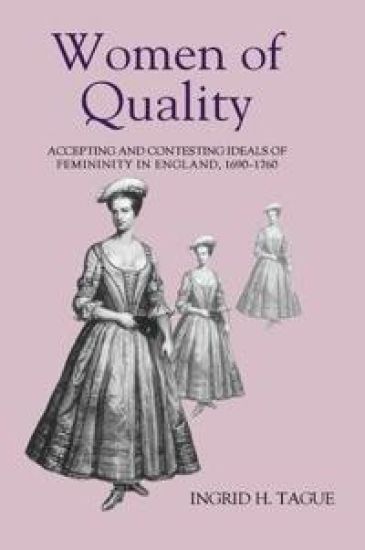
Women of Quality

Women of Quality

Ingrid H. Tague

The Boydell Press
2002
sidottu
An examination of the interaction between ideology and experience in the lives of English women during a period of great social and intellectual change. Focusing on the complex relationship between discourse and experience, Women of Quality examines the role of gender in aristocratic women's daily lives during a period of significant cultural change. In the years followingthe Glorious Revolution, didactic writers and other social critics responded to a perceived crisis of gender relations by creating a new discourse of 'natural' feminine behavior in opposition to the luxury and decadence of fashionable women. Modern scholars have often portrayed this agenda as representing the rise of a middle-class ideology, but Ingrid Tague argues that the new rhetoric held enormous appeal for those women who would appear to be its greatest targets: wealthy, fashionable 'women of quality'. Using the correspondence and diaries of these women, Tague traces the ways in which they adopted, adapted, and exploited ideals of femininity. In their hands, feminine values could become powerful tools that enabled them to compete for status and reputation. Ironically, by identifying femininity with private, trivial concerns, these ideals created unique opportunities for elite women. Female participation in informal social and political activities placed women at the heart of aristocratic power in the early eighteenth century, even as they employed the language of wifely subordination and domesticity. Ingrid Tague is Assistant Professor of History at the University of Denver.