Kirjojen hintavertailu. Mukana 12 595 353 kirjaa ja 12 kauppaa.

Kirjailija

Insung Jung

Kirjat ja teokset yhdessä paikassa: 8 kirjaa, julkaisuja vuosilta 2009-2026, suosituimpien joukossa Pathways to International Publication in the Social Sciences. Vertaile teosten hintoja ja tarkista saatavuus suomalaisista kirjakaupoista.

8 kirjaa

Kirjojen julkaisuhaarukka 2009-2026.

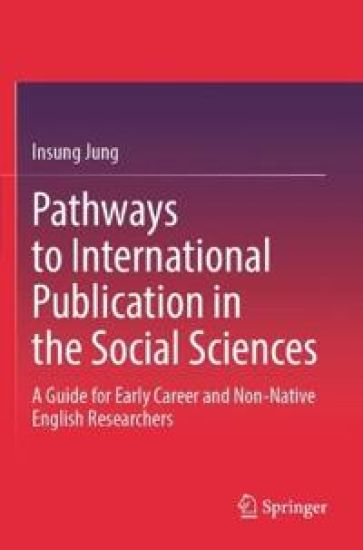
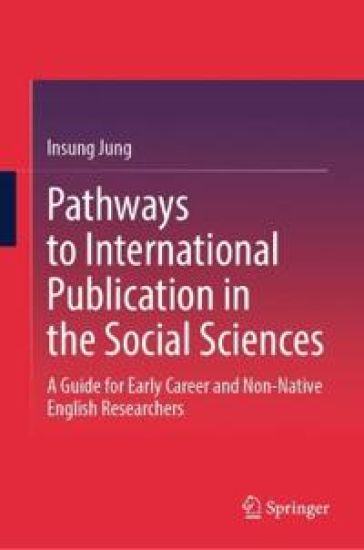
Pathways to International Publication in the Social Sciences

Pathways to International Publication in the Social Sciences

Insung Jung

Springer Nature Switzerland AG
2025
sidottu
This guide offers a clear step-by-step approach for graduate students and early-career researchers, especially non-native English speakers, seeking to publish in international journals in the social sciences. It provides practical strategies for preparing, submitting, and refining research papers, helping researchers navigate the challenges of academic publishing. With 21 chapters, the guide covers every stage of writing, revising, and submission, while addressing the unique obstacles faced by non-native English speakers. The guide helps researchers identify reputable journals, avoid predatory ones, and use digital tools to meet international standards. It then provides a structured roadmap that simplifies the publication process, covering steps like journal selection, writing compelling abstracts, and drafting the methods and results sections. By the end of the guide, it is expected that researchers will have a strong first draft or, ideally, a submission-ready manuscript. The guide also addresses language barriers, cultural differences, and unfamiliarity with international conventions. It offers practical solutions for improving English writing, utilizing digital tools, responding to peer reviews, and managing revisions effectively. It emphasizes ethical guidelines like avoiding plagiarism, properly crediting co-authors, and ensuring research transparency to help researchers meet global standards. Unlike other research guides, this one is specifically tailored to early career and non-native English researchers working in social science disciplines. It offers practical strategies and real-world examples to equip researchers—and teachers of research methods and academic writing—with a framework for achieving publishing success in global academia.
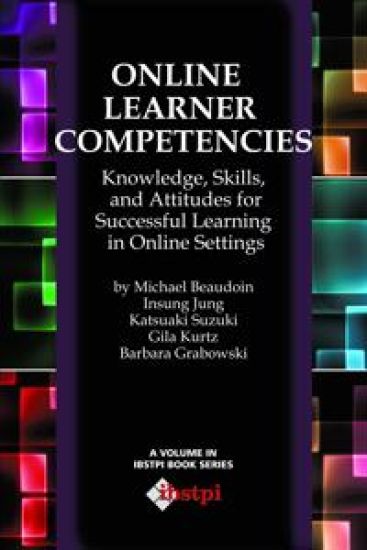
Online Learner Competencies

Online Learner Competencies

Michael Beaudoin; Gila Kurtz; Insung Jung; Katsuaki Suzuki; Barbara L. Grabowski

Information Age Publishing
2013
sidottu
The book identifies a set of validated competencies and performance statements, withsupporting explanation and data to inform and equip online learners with the critical attitudes, knowledge and skills for successful learning in online and/or blended learning settings. The work also enables online education providers (e.g., instructors, course designers, program administrators, scholars) to better understand learner needs in order to design and deliver online education products and services best suited to learners. Supplementing a large number of anecdotally-based “how to” books published for those engaged in online education, this volume offers a definitive set of 14 competencies and 75 performance statements (that demonstrate those competencies). Validated by systematic research and input from over 1,000 online users and providers worldwide, this work should impact the quality of learning and teaching at both the individual and organizational levels, involved in online education.
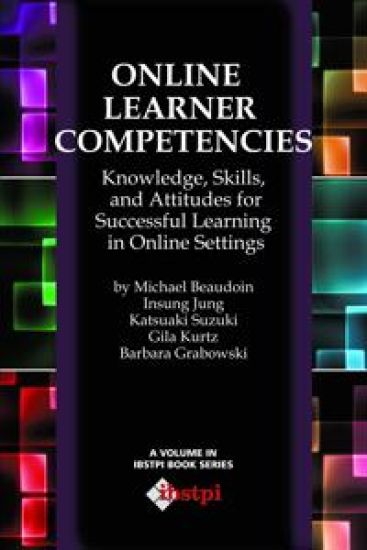
Online Learner Competencies

Online Learner Competencies

Michael Beaudoin; Gila Kurtz; Insung Jung; Katsuaki Suzuki; Barbara L. Grabowski

Information Age Publishing
2013
nidottu
The book identifies a set of validated competencies and performance statements, withsupporting explanation and data to inform and equip online learners with the critical attitudes, knowledge and skills for successful learning in online and/or blended learning settings. The work also enables online education providers (e.g., instructors, course designers, program administrators, scholars) to better understand learner needs in order to design and deliver online education products and services best suited to learners. Supplementing a large number of anecdotally-based “how to” books published for those engaged in online education, this volume offers a definitive set of 14 competencies and 75 performance statements (that demonstrate those competencies). Validated by systematic research and input from over 1,000 online users and providers worldwide, this work should impact the quality of learning and teaching at both the individual and organizational levels, involved in online education.
Quality Assurance and Accreditation in Distance Education and e-Learning
Quality assurance (QA) in open and distance learning (ODL) can be a contentious issue. Some argue that it should be judged by the same criteria and methods as face-to-face education, while others claim that it is so different in its organization, enrolments and operations that conventional QA mechanisms cannot apply. Some advocate the use of specific guidelines and standards for e-learning; others believe that, regardless of the technology, the basic principles of quality teaching and learning should apply. Providers who have enjoyed freedom from external scrutiny may resist attempts at external regulation and auditing and look upon QA as yet another imposition of corporatization and bureaucracy on education. Others see it as a means of establishing a culture of quality, self-reflection and self-improvement. There is little research-based literature to guide policy-makers, managers and practitioners in applying QA in education and training to ensure the right balance is found between accountability and autonomy, as well as assuring quality for the time and costs involved. In this respect, Quality Assurance and Accreditation in Distance Education and e-Learning is a book that is long overdue. It explains what is involved in QA and accreditation in education. It describes and analyzes applications of these practices in open, distance, dual-mode and conventional universities throughout Europe, North America, Africa, and the Asia-Pacific, looking at open schooling, e-learning in conventional schools, non-formal adult and community education, and corporate and small-to-medium enterprises. Quality Assurance and Accreditation in Distance Education and e-Learning is edited and authored by experts with extensive international experience in ODL, e-learning and QA who give careful consideration to the possibilities and challenges involved. The book will be an invaluable guide for all policy-makers, managers, practitioners and researchers in the field.
Quality Assurance and Accreditation in Distance Education and e-Learning
Quality assurance (QA) in open and distance learning (ODL) can be a contentious issue. Some argue that it should be judged by the same criteria and methods as face-to-face education, while others claim that it is so different in its organization, enrolments and operations that conventional QA mechanisms cannot apply. Some advocate the use of specific guidelines and standards for e-learning; others believe that, regardless of the technology, the basic principles of quality teaching and learning should apply. Providers who have enjoyed freedom from external scrutiny may resist attempts at external regulation and auditing and look upon QA as yet another imposition of corporatization and bureaucracy on education. Others see it as a means of establishing a culture of quality, self-reflection and self-improvement. There is little research-based literature to guide policy-makers, managers and practitioners in applying QA in education and training to ensure the right balance is found between accountability and autonomy, as well as assuring quality for the time and costs involved. In this respect, Quality Assurance and Accreditation in Distance Education and e-Learning is a book that is long overdue. It explains what is involved in QA and accreditation in education. It describes and analyzes applications of these practices in open, distance, dual-mode and conventional universities throughout Europe, North America, Africa, and the Asia-Pacific, looking at open schooling, e-learning in conventional schools, non-formal adult and community education, and corporate and small-to-medium enterprises. Quality Assurance and Accreditation in Distance Education and e-Learning is edited and authored by experts with extensive international experience in ODL, e-learning and QA who give careful consideration to the possibilities and challenges involved. The book will be an invaluable guide for all policy-makers, managers, practitioners and researchers in the field.
Distance and Blended Learning in Asia

Distance and Blended Learning in Asia

Colin Latchem; Insung Jung

Routledge
2009
nidottu
Distance and Blended Learning in Asia is a unique and comprehensive overview of open, distance learning (ODL) and information and communication technology (ICT) in Asian education and training. Broad in coverage, this book critically examines ODL and ICT experiences from Japan to Turkey and from Sri Lanka to Mongolia – drawing conclusions from the successes and failures, and recommending ways in which planning, management and practice may be developed for the world’s largest concentration of adult open and distance learners.This pioneering book draws on Asian theory, research and practice to identify the strengths, weaknesses and challenges in all sectors of Asian education and training. It critically and insightfully discusses the ideas, skills and practices that are necessary to advance knowledge in leadership and management, professional development, innovation and quality assurance and research and diffusion. Distance and Blended Learning in Asia provides an insightful, informative and critical review of ODL / ICT developments in schools, open schooling, colleges, universities, workplace training, professional development and non-formal adult and community education. The book is an invaluable reference for ODL / ICT professionals, educators and students anywhere in the world, and is essential reading for all of those involved in ODL / ICT in Asia.
Distance and Blended Learning in Asia

Distance and Blended Learning in Asia

Colin Latchem; Insung Jung

Routledge
2009
sidottu
Distance and Blended Learning in Asia is a unique and comprehensive overview of open, distance learning (ODL) and information and communication technology (ICT) in Asian education and training. Broad in coverage, this book critically examines ODL and ICT experiences from Japan to Turkey and from Sri Lanka to Mongolia – drawing conclusions from the successes and failures, and recommending ways in which planning, management and practice may be developed for the world’s largest concentration of adult open and distance learners.This pioneering book draws on Asian theory, research and practice to identify the strengths, weaknesses and challenges in all sectors of Asian education and training. It critically and insightfully discusses the ideas, skills and practices that are necessary to advance knowledge in leadership and management, professional development, innovation and quality assurance and research and diffusion. Distance and Blended Learning in Asia provides an insightful, informative and critical review of ODL / ICT developments in schools, open schooling, colleges, universities, workplace training, professional development and non-formal adult and community education. The book is an invaluable reference for ODL / ICT professionals, educators and students anywhere in the world, and is essential reading for all of those involved in ODL / ICT in Asia.