Kirjojen hintavertailu. Mukana 12 209 252 kirjaa ja 12 kauppaa.

Kirjailija

Ira Chernus

Kirjat ja teokset yhdessä paikassa: 8 kirjaa, julkaisuja vuosilta 1982-2023, suosituimpien joukossa Monsters to Destroy. Vertaile teosten hintoja ja tarkista saatavuus suomalaisista kirjakaupoista.

8 kirjaa

Kirjojen julkaisuhaarukka 1982-2023.

Something to Fear

Something to Fear

Ira Chernus; Randall P. Fowler

UNIVERSITY PRESS OF KANSAS
2023
sidottu
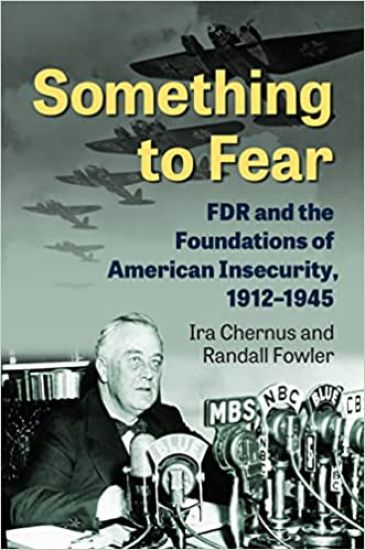
A presidency unlike any other, Franklin D. Roosevelt’s legacy in foreign affairs has been contested since the day of his passing. Few presidential statements have echoed through history like FDR’s charge to conquer “fear itself.” Yet immediately after the end of World War II, the United States was gripped by a pervasive sense of national insecurity.In Something to Fear, Ira Chernus and Randall Fowler demonstrate that Roosevelt’s rhetoric, vision, and policies promoted a broadly defined sense of American security over a period of thirty-three years, ultimately helping elevate security to its primacy in US political discourse by the end of his presidency. In doing so, however, he also heightened the prominence of insecurity in American public life, mediating the United States’ transition to superpower status in a way that also elevated fear in debates over foreign affairs.FDR’s presidency precipitated a complex shift in US foreign policy that defies any straightforward account organized along a linear isolationist-to-interventionist trajectory. Chernus and Fowler investigate the uncertainties and contradictions embedded in FDR’s presidential rhetoric, which drew from realist, racial, progressive, nostalgic, apocalyptic, liberal internationalist, and American exceptionalist discourses. In this way, Roosevelt’s rhetoric anticipated the ambivalences contained in American adventures abroad ever since.Something to Fear shows how FDR’s response to the Great Depression, the debates over intervention, and World War II left an immense rhetorical legacy that often stressed insecurity. This study of FDR’s entire political career also carefully links him to the Progressive Era before his presidency and to the Cold War era after it.

Apocalypse Management

Apocalypse Management

Ira Chernus

Stanford University Press
2008
sidottu
For eight years President Dwight Eisenhower claimed to pursue peace and national security. Yet his policies entrenched the United States in a seemingly permanent cold war, a spiraling nuclear arms race, and a deepening state of national insecurity. Ira Chernus uncovers the key to this paradox in Eisenhower's unwavering commitment to a consistent way of talking, in private as well as in public, about the cold war rivalry. Contrary to what most historians have concluded, Eisenhower never aimed at any genuine rapprochement with the Soviet Union. He discourse always assumed that the United States would forever face an enemy bent on destroying it, making national insecurity a permanent way of life. The "peace" he sought was only an endless process of managing apocalyptic threats, a permanent state of "apocalypse management," intended to give the United States unchallenged advantage in every arena of the cold war. The goal and the discourse that supported it were inherently self-defeating. Yet the discourse is Eisenhower's most enduring legacy, for it has shaped U.S. foreign policy ever since, leaving us still a national insecurity state.
Monsters to Destroy

Monsters to Destroy

Ira Chernus

Paradigm
2006
nidottu
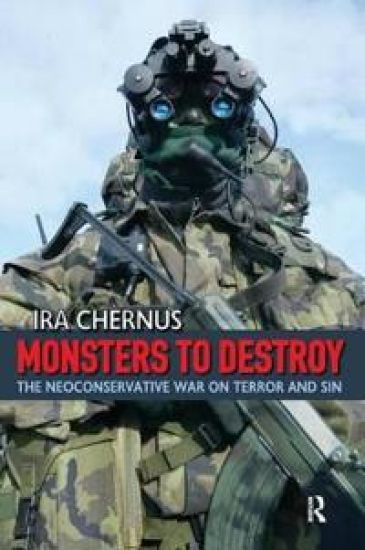
"This book takes an incisive look at the stories we are told -- and tell ourselves -- about evil forces and American responses. Chernus pushes beyond political rhetoric and media cliches to examine psychological mechanisms that freeze our concepts of the world." Norman Solomon, author, War Made Easy: How Presidents and Pundits Keep Spinning Us to Death In his new book Monsters to Destroy: The Neoconservative War on Terror and Sin, Ira Chernus tackles the question of why U.S. foreign policy, aimed at building national security, has the paradoxical effect of making the country less safe and secure. His answer: The "war on terror" is based not on realistic appraisals of the causes of conflict, but rather on "stories" that neoconservative policymakers tell about human nature and a world divided between absolute good and absolute evil. The root of the stories is these policymakers' terror of the social and cultural changes that swept through U.S. society in the 1960s. George W. Bush and the neoconservatives cast the agents of change not simply as political opponents, but as enemies or sinners acting with evil intent to destroy U.S. values and morals-that is, as "monsters" rather than human beings. The war on terror transfers that plot from a domestic to a foreign stage, making it more appealing even to those who reject the neoconservative agenda at home. Because it does not deal with the real causes of global conflict, it harms rather than helps the goal of greater national security.
Monsters to Destroy

Monsters to Destroy

Ira Chernus

Paradigm
2006
sidottu
"This book takes an incisive look at the stories we are told -- and tell ourselves -- about evil forces and American responses. Chernus pushes beyond political rhetoric and media cliches to examine psychological mechanisms that freeze our concepts of the world." Norman Solomon, author, War Made Easy: How Presidents and Pundits Keep Spinning Us to Death In his new book Monsters to Destroy: The Neoconservative War on Terror and Sin, Ira Chernus tackles the question of why U.S. foreign policy, aimed at building national security, has the paradoxical effect of making the country less safe and secure. His answer: The "war on terror" is based not on realistic appraisals of the causes of conflict, but rather on "stories" that neoconservative policymakers tell about human nature and a world divided between absolute good and absolute evil. The root of the stories is these policymakers' terror of the social and cultural changes that swept through U.S. society in the 1960s. George W. Bush and the neoconservatives cast the agents of change not simply as political opponents, but as enemies or sinners acting with evil intent to destroy U.S. values and morals-that is, as "monsters" rather than human beings. The war on terror transfers that plot from a domestic to a foreign stage, making it more appealing even to those who reject the neoconservative agenda at home. Because it does not deal with the real causes of global conflict, it harms rather than helps the goal of greater national security.
American Nonviolence

American Nonviolence

Ira Chernus

Orbis Books (USA)
2004
nidottu
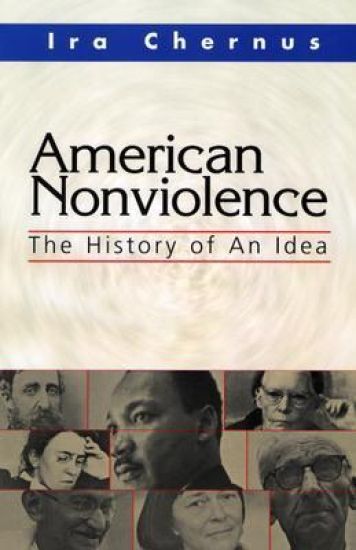
Most Americans can recite the names of famous generals and historic battles. Some can also name champions of nonviolence like Martin Luther King Jr., or recall the struggles for peace and justice that run like a thread through U.S. history. But little attention is paid to the intellectual tradition of nonviolence. Ira Chernus surveys the evolution of this powerful idea from the Colonial Era up to today, focusing on representative movements (Anabaptists, Quakers, Anarchists, Progressives) and key individuals (Thoreau, Reinhold Niebuhr, Dorothy Day, A.J. Muste, King, Barbara Deming), including non-Americans like Mohandas Gandhi or Thich Nhat Hanh, who have helped form the idea of nonviolence in the United States. American Nonviolence offers an essential guide for both students and activists.
Eisenhower's Atoms for Peace

Eisenhower's Atoms for Peace

Ira Chernus

Texas A M University Press
2002
nidottu
On July 16, 1945, the United States set off the world's first atomic explosion. In his ""Atoms for Peace"" speech of 1953, President Dwight D. Eisenhower captured the tensions_and the ironies_of the atomic age. While nuclear devastation threatened all nations, Eisenhower believed only nuclear preparedness offered protection; while nuclear weapons loomed as the ultimate war cloud, nuclear power offered progress and hope. In this consideration of Eisenhower's speech and others leading up to it, Ira Chernus views the ""Atoms for Peace"" speech, presented to the General Assembly of the United Nations, not merely as a legitimation of American foreign policy but as itself an act of policy. Indeed, he frames the policy in a new interpretation of Eisenhower's broad discursive goal, which he calls ""apocalypse management,"" a plan to allow the United States to manage threats and crises around the world. The full text of Eisenhower's speech is presented in this volume. Chernus sheds new light on the internal consistency of Eisenhower's thought, which many observers have found inconsistent, as well as on the ways in which the president's rhetoric backed him into a policy corner he had not intended to occupy. Chernus also reviews the domestic impact of the speech through a detailed examination of media interpretations in the United States. This tightly reasoned, clearly written study offers a new understanding of the evolution of Cold War nuclear policy, the power of presidential rhetoric, and the political understanding of America's ""man of peace,"" Dwight D. Eisenhower.
Eisenhower's Atoms for Peace

Eisenhower's Atoms for Peace

Ira Chernus

Texas A M University Press
2002
sidottu
On July 16, 1945, the United States set off the world's first atomic explosion. In his ""Atoms for Peace"" speech of 1953, President Dwight D. Eisenhower captured the tensions_and the ironies_of the atomic age. While nuclear devastation threatened all nations, Eisenhower believed only nuclear preparedness offered protection; while nuclear weapons loomed as the ultimate war cloud, nuclear power offered progress and hope. In this consideration of Eisenhower's speech and others leading up to it, Ira Chernus views the ""Atoms for Peace"" speech, presented to the General Assembly of the United Nations, not merely as a legitimation of American foreign policy but as itself an act of policy. Indeed, he frames the policy in a new interpretation of Eisenhower's broad discursive goal, which he calls ""apocalypse management,"" a plan to allow the United States to manage threats and crises around the world. The full text of Eisenhower's speech is presented in this volume. Chernus sheds new light on the internal consistency of Eisenhower's thought, which many observers have found inconsistent, as well as on the ways in which the president's rhetoric backed him into a policy corner he had not intended to occupy. Chernus also reviews the domestic impact of the speech through a detailed examination of media interpretations in the United States. This tightly reasoned, clearly written study offers a new understanding of the evolution of Cold War nuclear policy, the power of presidential rhetoric, and the political understanding of America's ""man of peace,"" Dwight D. Eisenhower.