Kirjojen hintavertailu. Mukana 12 595 353 kirjaa ja 12 kauppaa.

Kirjailija

Iram Siraj

Kirjat ja teokset yhdessä paikassa: 19 kirjaa, julkaisuja vuosilta 2013-2026, suosituimpien joukossa The Creating a Culture for Learning (CCL) Scale. Vertaile teosten hintoja ja tarkista saatavuus suomalaisista kirjakaupoista.

19 kirjaa

Kirjojen julkaisuhaarukka 2013-2026.

The Creating a Culture for Learning (CCL) Scale

The Creating a Culture for Learning (CCL) Scale

Denise Kingston; Iram Siraj; Judith Barrett

TAYLOR FRANCIS LTD
2026
sidottu
Designed to measure the quality of pedagogy and practice, this essential tool will help early years educators, teachers, and school leadership successfully develop their children’s positive dispositions, self-regulation, perseverance, engagement, ability to learn and citizenship. This unique Creating a Culture for Learning measurement scale is versatile and can be used in a number of ways. Educators can use it for self-evaluation for their own practice, so that they can build on what they already do and improve where they need to. Leadership teams and mentors can use it to audit quality, supporting positive discussions and the setting of development targets. Finally, inspectors and researchers will find it essential to capture the quality of support and teaching for creating a culture for learning. The scale itself is informed by the evidence-base of effective practice linked to improved children’s outcomes. It focuses on supporting positive, respectful relationships and building cultures for learning. It includes both the ‘how’ and ‘what’ to develop when supporting children’s self-regulation and personal, social, emotional and academic achievements. The scale is particularly useful when supporting children from disadvantaged backgrounds and those with additional learning needs, as well as resolving attendance issues. Titles also available from the same author team, all published by Routledge: The Improving Maths Pedagogy and Practice (IMPP) Scale The Early Childhood Quality Rating Scale - Emergent Curriculum (ECQRS-EC) The Pedagogical Leadership in the Early Years (PLEY) The Movement Environment Rating Scale (MOVERS) The Sustained Shared Thinking and Emotional Well-being (SSTEW) Scale

The Creating a Culture for Learning (CCL) Scale

The Creating a Culture for Learning (CCL) Scale

Denise Kingston; Iram Siraj; Judith Barrett

TAYLOR FRANCIS LTD
2026
nidottu
Designed to measure the quality of pedagogy and practice, this essential tool will help early years educators, teachers, and school leadership successfully develop their children’s positive dispositions, self-regulation, perseverance, engagement, ability to learn and citizenship. This unique Creating a Culture for Learning measurement scale is versatile and can be used in a number of ways. Educators can use it for self-evaluation for their own practice, so that they can build on what they already do and improve where they need to. Leadership teams and mentors can use it to audit quality, supporting positive discussions and the setting of development targets. Finally, inspectors and researchers will find it essential to capture the quality of support and teaching for creating a culture for learning. The scale itself is informed by the evidence-base of effective practice linked to improved children’s outcomes. It focuses on supporting positive, respectful relationships and building cultures for learning. It includes both the ‘how’ and ‘what’ to develop when supporting children’s self-regulation and personal, social, emotional and academic achievements. The scale is particularly useful when supporting children from disadvantaged backgrounds and those with additional learning needs, as well as resolving attendance issues. Titles also available from the same author team, all published by Routledge: The Improving Maths Pedagogy and Practice (IMPP) Scale The Early Childhood Quality Rating Scale - Emergent Curriculum (ECQRS-EC) The Pedagogical Leadership in the Early Years (PLEY) The Movement Environment Rating Scale (MOVERS) The Sustained Shared Thinking and Emotional Well-being (SSTEW) Scale
Improving Maths Pedagogy and Practice (IMPP) Scale

Improving Maths Pedagogy and Practice (IMPP) Scale

Denise Kingston; Iram Siraj; Judy Barrett

TAYLOR FRANCIS LTD
2025
nidottu
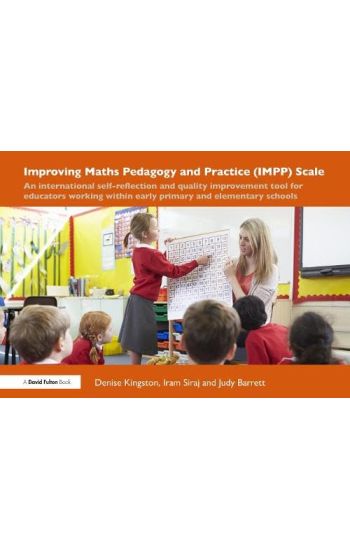
The Improving Maths Pedagogy and Practice scale (IMPP) is an innovative way of assessing and improving the quality and effectiveness of mathematics teaching in the first few years of primary or elementary schooling. It is informed by the evidence base of practice shown to improve children’s outcomes, and extensive professional development delivered by the authors.The IMPP supports both the ‘how’ and ‘what’ of teaching mathematics to young children, encourages positive dispositions towards maths, and addresses issues such as maths anxiety and disengagement. It focuses on teaching developmentally appropriate maths with understanding, using ‘maths talk’, child-friendly contexts, concrete, pictorial and abstract representations to their best effect.This unique measurement scale supports –the teaching of early mathematics in primary/elementary schools, using the evidence base of what works best to support fluency and masteryteachers’ content and pedagogical content knowledge of mathematics, including comprehensive sets of practical examplesquality improvement processes and self-assessment of the mathematics taught in classroomschildren learning mathematics with understanding, which also supports their engagement, enjoyment and achievementsresearchers, auditors and/or inspectors looking for a measure of mathematical quality and effectiveness in the classroomThe IMPP will help teachers and school leadership successfully develop their children’s mathematical understanding, reasoning and problem solving. Educators can use the scale for self-evaluation of their own practice, so they can build on what they already do well and improve where required. Leadership teams and mentors can use it to audit quality, support positive discussions and set effective development targets. The scale is particularly useful when supporting children living with disadvantage, and those with additional learning needs and maths anxiety.
Improving Maths Pedagogy and Practice (IMPP) Scale

Improving Maths Pedagogy and Practice (IMPP) Scale

Denise Kingston; Iram Siraj; Judy Barrett

TAYLOR FRANCIS LTD
2025
sidottu
The Improving Maths Pedagogy and Practice scale (IMPP) is an innovative way of assessing and improving the quality and effectiveness of mathematics teaching in the first few years of primary or elementary schooling. It is informed by the evidence base of practice shown to improve children’s outcomes, and extensive professional development delivered by the authors.The IMPP supports both the ‘how’ and ‘what’ of teaching mathematics to young children, encourages positive dispositions towards maths, and addresses issues such as maths anxiety and disengagement. It focuses on teaching developmentally appropriate maths with understanding, using ‘maths talk’, child-friendly contexts, concrete, pictorial and abstract representations to their best effect.This unique measurement scale supports –the teaching of early mathematics in primary/elementary schools, using the evidence base of what works best to support fluency and masteryteachers’ content and pedagogical content knowledge of mathematics, including comprehensive sets of practical examplesquality improvement processes and self-assessment of the mathematics taught in classroomschildren learning mathematics with understanding, which also supports their engagement, enjoyment and achievementsresearchers, auditors and/or inspectors looking for a measure of mathematical quality and effectiveness in the classroomThe IMPP will help teachers and school leadership successfully develop their children’s mathematical understanding, reasoning and problem solving. Educators can use the scale for self-evaluation of their own practice, so they can build on what they already do well and improve where required. Leadership teams and mentors can use it to audit quality, support positive discussions and set effective development targets. The scale is particularly useful when supporting children living with disadvantage, and those with additional learning needs and maths anxiety.
The Pedagogical Leadership in the Early Years (PLEY) Quality Rating Scale
With an increasing spotlight on early childhood education and care (ECEC), it's crucial that leaders and teachers in ECEC can evidence their intentions and show how they support the learning of both children and staff, through the promotion of excellent practice, improved child learning, and family support. The Pedagogical Leadership in the Early Years (PLEY) Quality Rating Scale will help leaders working in centres with children aged birth to six to achieve their full potential and enjoy the benefits and pleasure of delivering high quality early education and care, as well as acting as a scaffold to improve their understanding of high quality leadership for learning.The Quality Rating Scale (QRS) is a unique tool to uplift process quality in Early Childhood Education and Care. It is designed to support systematic quality improvement processes in a centre or class and enhance children’s learning and development. It supports leaders to be self-reflective, lead and manage themselves, change process in their centres, promote intentional and relational learning, pedagogy and curriculum development with staff, and forge diverse partnerships. It democratises assessment, as educators use it for self-assessment, and will be an invaluable classroom tool for all early years leaders of classrooms and centre managers.
The Pedagogical Leadership in the Early Years (PLEY) Quality Rating Scale
With an increasing spotlight on early childhood education and care (ECEC), it's crucial that leaders and teachers in ECEC can evidence their intentions and show how they support the learning of both children and staff, through the promotion of excellent practice, improved child learning, and family support. The Pedagogical Leadership in the Early Years (PLEY) Quality Rating Scale will help leaders working in centres with children aged birth to six to achieve their full potential and enjoy the benefits and pleasure of delivering high quality early education and care, as well as acting as a scaffold to improve their understanding of high quality leadership for learning.The Quality Rating Scale (QRS) is a unique tool to uplift process quality in Early Childhood Education and Care. It is designed to support systematic quality improvement processes in a centre or class and enhance children’s learning and development. It supports leaders to be self-reflective, lead and manage themselves, change process in their centres, promote intentional and relational learning, pedagogy and curriculum development with staff, and forge diverse partnerships. It democratises assessment, as educators use it for self-assessment, and will be an invaluable classroom tool for all early years leaders of classrooms and centre managers.
Early Childhood Quality Rating Scale – Emergent Curriculum (ECQRS–EC)

Early Childhood Quality Rating Scale – Emergent Curriculum (ECQRS–EC)

Kathy Sylva; Iram Siraj; Brenda Taggart; Denise Kingston

TAYLOR FRANCIS LTD
2025
nidottu
The Early Childhood Quality Rating Scale – Emergent Curriculum (ECQRS–EC) is designed to measure the quality of support for literacy, mathematics, and science in pre-school settings.Although different curricular frameworks are used around the world, there is increasing agreement that emerging academic skills should be supported by a playful pedagogy. The ECQRS–EC substantially updates the ECERS–E, which was the first observational scale to focus directly on the development of emergent academic skills. This evidence-based tool also includes a subscale dedicated to diversity and inclusion to help educators support gender and cultural differences in children aged 3–6 years old who are developing at different rates.This revised quality rating scale recognises the important role of the adult in providing children with high-quality interactions and can be used for research, teacher self-evaluation, and programme improvement, audit and regulation.
Early Childhood Quality Rating Scale – Emergent Curriculum (ECQRS–EC)

Early Childhood Quality Rating Scale – Emergent Curriculum (ECQRS–EC)

Kathy Sylva; Iram Siraj; Brenda Taggart; Denise Kingston

TAYLOR FRANCIS LTD
2025
sidottu
The Early Childhood Quality Rating Scale – Emergent Curriculum (ECQRS–EC) is designed to measure the quality of support for literacy, mathematics, and science in pre-school settings.Although different curricular frameworks are used around the world, there is increasing agreement that emerging academic skills should be supported by a playful pedagogy. The ECQRS–EC substantially updates the ECERS–E, which was the first observational scale to focus directly on the development of emergent academic skills. This evidence-based tool also includes a subscale dedicated to diversity and inclusion to help educators support gender and cultural differences in children aged 3–6 years old who are developing at different rates.This revised quality rating scale recognises the important role of the adult in providing children with high-quality interactions and can be used for research, teacher self-evaluation, and programme improvement, audit and regulation.
Early Childhood Quality Rating Scale—Emergent Curriculum (ECQRS-EC)

Early Childhood Quality Rating Scale—Emergent Curriculum (ECQRS-EC)

Kathy Sylva; Iram Siraj; Brenda Taggart; Denise Kingston; W. Steven Barnett; Ellen C. Frede

TEACHERS' COLLEGE PRESS
2025
kierre
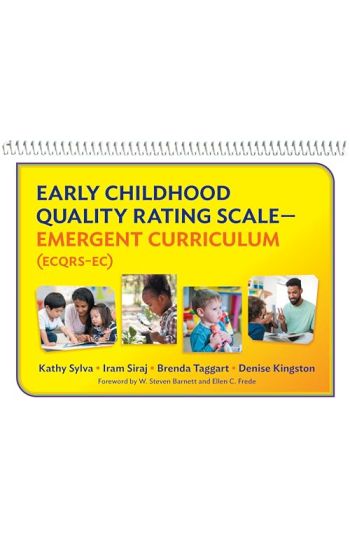
"Using the ECQRS-EC as a teacher self-assessment tool would be extremely effective for ensuring that teachers understand the intentional pedagogical strategies that enhance learning... Large-scale use in state and other continuous improvement systems can help to provide all children with the early childhood education each needs to thrive." —From the Foreword by W. Steven Barnett and Ellen C. Frede, co-directors, National Institute for Early Education Research, Rutgers, the State University of New Jersey Young children's learning depends on a wide range of experiences that support their holistic development. While many different curricular frameworks are used around the world, there is increasing agreement that the emerging academic skills of language and literacy, mathematics, and science should be supported by a playful pedagogy in the early years. The Early Childhood Quality Rating Scale—Emergent Curriculum (ECQRS-EC) is designed to measure quality in these key areas within preschool settings. In addition to three content-area subscales, this evidence-based tool includes a subscale dedicated to diversity and inclusion to help educators support gender and cultural differences in children 3– years old who are developing at different rates. Because it recognizes the important role of the adult in providing children with high-quality interactions, this new quality rating scale can be used for research, teacher self-evaluation, and program improvement, audit, and regulation. Book Features: Focuses on the role of the early childhood educator, their pedagogy, and planning.Items are firmly grounded in culturally and developmentally appropriate practice.Diversity Subscale, "Supporting Diversity and Inclusion," reflects the importance of sensitivity to supporting special needs and being inclusive of all cultures, including Indigenous people.
The Movement Environment Rating Scale (MOVERS)

The Movement Environment Rating Scale (MOVERS)

Carol Archer; Iram Siraj

TAYLOR FRANCIS LTD
2023
sidottu
This revised new edition of The Movement Environment Rating Scale (MOVERS) offers a brand-new method of measuring the quality of environment and pedagogy in which young children are encouraged to move and be physically active.As physical development is a key component of an educational curriculum, MOVERS offers practitioners the opportunity to accurately assess the quality of a child’s physical experiences, and the environmental and pedagogical quality of these experiences. The MOVERS is placed firmly in the family of CLIQRS – Curriculum, Leadership and Interaction Quality Rating Scales, which includes the Early Childhood Quality Rating Scale – Emergent Curriculum (ECQRS-EC), the Sustained Shared Thinking and Emotional Well-being Scale (SSTEW) and the Pedagogical Leadership in the Early Years (PLEY) scale, all of which have a similar format to previously mentioned scales, making it easy for educators already familiar with these well-established scales to adopt them and adapt them to their own unique settings. MOVERS has four sub-scales:- curriculum, environment and resources for physical development- pedagogy for physical development- supporting physical activity and critical thinking- parents/carers and staff.This book will be an invaluable tool for research, self-evaluation and improvement, audit and regulation. With additional notes derived using the feedback from extensive use of this resource by practitioners in hundreds of settings and early years specialists around the world, it has also been rigorously updated according to latest research, practice and policy.
The Movement Environment Rating Scale (MOVERS)

The Movement Environment Rating Scale (MOVERS)

Carol Archer; Iram Siraj

TAYLOR FRANCIS LTD
2023
nidottu
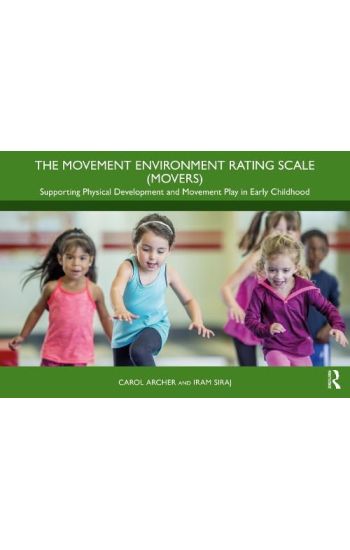
This revised new edition of The Movement Environment Rating Scale (MOVERS) offers a brand-new method of measuring the quality of environment and pedagogy in which young children are encouraged to move and be physically active.As physical development is a key component of an educational curriculum, MOVERS offers practitioners the opportunity to accurately assess the quality of a child’s physical experiences, and the environmental and pedagogical quality of these experiences. The MOVERS is placed firmly in the family of CLIQRS – Curriculum, Leadership and Interaction Quality Rating Scales, which includes the Early Childhood Quality Rating Scale – Emergent Curriculum (ECQRS-EC), the Sustained Shared Thinking and Emotional Well-being Scale (SSTEW) and the Pedagogical Leadership in the Early Years (PLEY) scale, all of which have a similar format to previously mentioned scales, making it easy for educators already familiar with these well-established scales to adopt them and adapt them to their own unique settings. MOVERS has four sub-scales:- curriculum, environment and resources for physical development- pedagogy for physical development- supporting physical activity and critical thinking- parents/carers and staff.This book will be an invaluable tool for research, self-evaluation and improvement, audit and regulation. With additional notes derived using the feedback from extensive use of this resource by practitioners in hundreds of settings and early years specialists around the world, it has also been rigorously updated according to latest research, practice and policy.
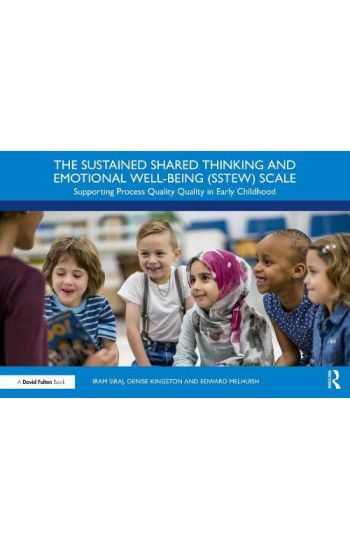
The Sustained Shared Thinking and Emotional Well-being (SSTEW) Scale

The Sustained Shared Thinking and Emotional Well-being (SSTEW) Scale
Iram Siraj; Denise Kingston; Edward Melhuish

TAYLOR FRANCIS LTD
2023
sidottu
The SSTEW Scale helps all those working with children aged two to six to achieve their full potential and enjoy the benefits and pleasure of delivering high quality early education and care.The Quality Rating Scale (QRS) is a tool to uplift process quality in Early Childhood Education and Care and it is known to be predictive of child development. Using it to support quality improvement in a setting or class will result in enhancing children’s learning and development.Designed to measure and promote practice that supports children and adults engaging in sustained shared thinking (SST) and emotional well-being (EW), it facilitates the development of strong relationships, effective communication, self-regulation and concept development. It looks at the quality of interactions that occur between the adults and the children and between the children themselves. It also considers the responsiveness of the adults to the children and how they intentionally support children’s play, learning and development.It can be used by practitioners at all levels, helping them to take a systematic approach to self-assessment so that they can build on what they do well and improve where they need to. It is also an essential resource for measurement by researchers and those engaged in auditing settings.This new edition includes updated information about the evidence-base for SSTEW and children’s development and learning as well as new examples of practice and supplementary information accompanying the indicators. In addition, there is a stronger focus on formative assessment and new additions to the assessment section.Online or face to face training can be set up via the authors’ dedicated website https://birthtosevenmatters.co.uk/
The Sustained Shared Thinking and Emotional Well-being (SSTEW) Scale
The Sustained Shared Thinking and Emotional Well-being (SSTEW) Scale
Iram Siraj; Denise Kingston; Edward Melhuish

TAYLOR FRANCIS LTD
2023
nidottu
The SSTEW Scale helps all those working with children aged two to six to achieve their full potential and enjoy the benefits and pleasure of delivering high quality early education and care.The Quality Rating Scale (QRS) is a tool to uplift process quality in Early Childhood Education and Care and it is known to be predictive of child development. Using it to support quality improvement in a setting or class will result in enhancing children’s learning and development.Designed to measure and promote practice that supports children and adults engaging in sustained shared thinking (SST) and emotional well-being (EW), it facilitates the development of strong relationships, effective communication, self-regulation and concept development. It looks at the quality of interactions that occur between the adults and the children and between the children themselves. It also considers the responsiveness of the adults to the children and how they intentionally support children’s play, learning and development.It can be used by practitioners at all levels, helping them to take a systematic approach to self-assessment so that they can build on what they do well and improve where they need to. It is also an essential resource for measurement by researchers and those engaged in auditing settings.This new edition includes updated information about the evidence-base for SSTEW and children’s development and learning as well as new examples of practice and supplementary information accompanying the indicators. In addition, there is a stronger focus on formative assessment and new additions to the assessment section.Online or face to face training can be set up via the authors’ dedicated website https://birthtosevenmatters.co.uk/
Social Class and Educational Inequality

Social Class and Educational Inequality

Iram Siraj; Aziza Mayo

Cambridge University Press
2015
pokkari
Social class is often seen as an intractable barrier to success, yet a number of children from disadvantaged backgrounds still manage to show resilience and succeed against the odds. This book presents the findings from fifty Child and Family Case Studies (CFCS) conducted with 13-16 year olds. The authors look specifically at the roles that people and experiences - at home, in schools and in the wider community - have played in the learning life-courses of these children; how these factors have affected their achievement; and explanations and meanings given by respondents to the unique characteristics, experiences and events in their lives. Featuring the voices of real parents and children, and backed up by a decade of quantitative data, this is a compelling record that will help readers to understand the complex nature of social disadvantage and the interplay between risk and protective factors in homes and schools that can make for a transformational educational experience.
Encouraging Physical Development Through Movement-Play

Encouraging Physical Development Through Movement-Play

Carol Archer; Iram Siraj

SAGE Publications Ltd
2015
nidottu
Movement-play, put simply, is encouraging physical activity in a child-led manner for the benefit of children's health, learning and wellbeing. This book looks at the theory behind the importance of movement and: how movement play links with all the areas of early childhood developmentphysical activity guidelines for young childrenpractical advice and photos to support implementation in settingshow to assess your own settinghow to best work with parents on this topiccomprehensive guidance on writing a physical development policy The early years is one of the critical periods in the establishment of physical behaviours and physical development is also one of the prime areas of the EYFS as well as other, global, curricula. A must-read for students on Early Childhood and Early Years courses and Early Years practitioners to improve their practice and understanding of psychical development for the benefit of young children.
Encouraging Physical Development Through Movement-Play

Encouraging Physical Development Through Movement-Play

Carol Archer; Iram Siraj

SAGE Publications Ltd
2015
sidottu
Movement-play, put simply, is encouraging physical activity in a child-led manner for the benefit of children's health, learning and wellbeing. This book looks at the theory behind the importance of movement and: how movement play links with all the areas of early childhood developmentphysical activity guidelines for young childrenpractical advice and photos to support implementation in settingshow to assess your own settinghow to best work with parents on this topiccomprehensive guidance on writing a physical development policy The early years is one of the critical periods in the establishment of physical behaviours and physical development is also one of the prime areas of the EYFS as well as other, global, curricula. A must-read for students on Early Childhood and Early Years courses and Early Years practitioners to improve their practice and understanding of psychical development for the benefit of young children.
Social Class and Educational Inequality

Social Class and Educational Inequality

Iram Siraj; Aziza Mayo

Cambridge University Press
2014
sidottu
Social class is often seen as an intractable barrier to success, yet a number of children from disadvantaged backgrounds still manage to show resilience and succeed against the odds. This book presents the findings from fifty Child and Family Case Studies (CFCS) conducted with 13-16 year olds. The authors look specifically at the roles that people and experiences - at home, in schools and in the wider community - have played in the learning life-courses of these children; how these factors have affected their achievement; and explanations and meanings given by respondents to the unique characteristics, experiences and events in their lives. Featuring the voices of real parents and children, and backed up by a decade of quantitative data, this is a compelling record that will help readers to understand the complex nature of social disadvantage and the interplay between risk and protective factors in homes and schools that can make for a transformational educational experience.
Effective and Caring Leadership in the Early Years

Effective and Caring Leadership in the Early Years

Iram Siraj; Elaine Hallet

SAGE Publications Ltd
2013
sidottu
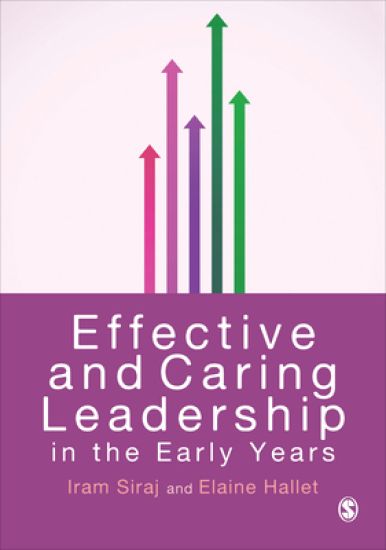
This book introduces an intriguing juxtaposition of "caring" alongside "effective", and it is a thought-provoking book. Including examples of early years leaders on their own reflective learning journeys, it provides a rich source of ideas for relational leadership that are firmly based in research and professional experience.' - Professor Margaret Carr, University of Waikato, New Zealand Effective and caring leadership is an essential part of raising standards and increasing the quality of learning in early childhood settings. This book explains leadership practices that can make a positive difference to the provision offered and improve outcomes for both children and families. With theoretical, practical and research-informed perspectives, this book: Uses case studies to provide examples of effective leadership Integrates education and care with key practices in effective leadership Explores directional, collaborative, empowering and pedagogical leadership Offers readers opportunity to reflect upon their own leadership practices This is a key text for anyone studying Early Childhood, existing and aspiring leaders, graduate Early Years Leaders and those training to work in settings, schools and children’s services. Professor Iram Siraj is Professor of Early Childhood Education at the Institute of Education, University of London. Dr. Elaine Hallet is a Lecturer in Early Childhood Education at the Institute of Education, University of London.
Effective and Caring Leadership in the Early Years

Effective and Caring Leadership in the Early Years

Iram Siraj; Elaine Hallet

SAGE Publications Ltd
2013
nidottu
This book introduces an intriguing juxtaposition of "caring" alongside "effective", and it is a thought-provoking book. Including examples of early years leaders on their own reflective learning journeys, it provides a rich source of ideas for relational leadership that are firmly based in research and professional experience.' - Professor Margaret Carr, University of Waikato, New Zealand Effective and caring leadership is an essential part of raising standards and increasing the quality of learning in early childhood settings. This book explains leadership practices that can make a positive difference to the provision offered and improve outcomes for both children and families. With theoretical, practical and research-informed perspectives, this book: Uses case studies to provide examples of effective leadership Integrates education and care with key practices in effective leadership Explores directional, collaborative, empowering and pedagogical leadership Offers readers opportunity to reflect upon their own leadership practices This is a key text for anyone studying Early Childhood, existing and aspiring leaders, graduate Early Years Leaders and those training to work in settings, schools and children’s services. Professor Iram Siraj is Professor of Early Childhood Education at the Institute of Education, University of London. Dr. Elaine Hallet is a Lecturer in Early Childhood Education at the Institute of Education, University of London.