Kirjojen hintavertailu. Mukana 12 343 652 kirjaa ja 12 kauppaa.

Kirjailija

Irene Kacandes

Kirjat ja teokset yhdessä paikassa: 4 kirjaa, julkaisuja vuosilta 2001-2015, suosituimpien joukossa Let's Talk About Death. Vertaile teosten hintoja ja tarkista saatavuus suomalaisista kirjakaupoista.

4 kirjaa

Kirjojen julkaisuhaarukka 2001-2015.

Let's Talk About Death

Let's Talk About Death

Steve Gordon; Irene Kacandes

Prometheus Books
2015
pokkari
Experts in end-of-life care tell us that we should talk about death and dying with relatives and friends, but how do we get such conversations off the ground in a society that historically has avoided the topic? This book provides one example of such a conversation. The coauthors take up challenging questions about pain, caregiving, grief, and what comes after death. Their unlikely collaboration is itself connected to death: the murders of two of Irene's closest friends and Steve's support in perpetuating memories of those friends' lives and not just their violent ends. The authors share the results of a no-holds-barred discussion they conducted for several years over email. Readers can consider a range of views on complicated issues to which there are no right answers. Letting ourselves pose certain questions has the potential to profoundly change the way we think about death, how we choose to die, and, just as importantly, the way we live. Honest, probing, sensitive, and even humorous at times, the completely open discussions in this book will help readers deal with a topic that most of us try to avoid but that everyone will face eventually.
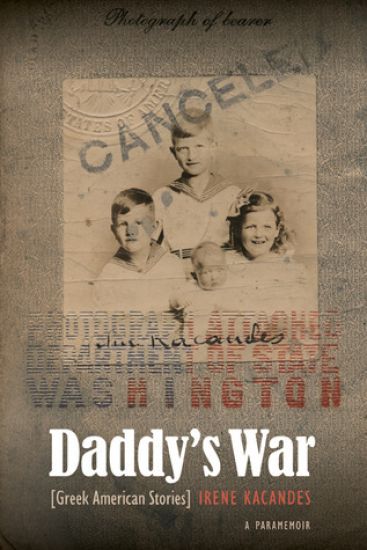
Daddy's War

Daddy's War

Irene Kacandes

University of Nebraska Press
2012
pokkari
When she was very young, Irene Kacandes knew things about her father that had no plot, no narrator, and no audience. To her childhood self these things resembled beings who resided with her family, like the ancestresses who'd thrown themselves off cliffs rather than be taken by the Turks, or the forefathers who'd fought the Trojans. For decades she thought of these cohabitants as Daddy's War Experiences and tried to stay away from them. When tragedy touched the adult life she had constructed for herself, however, she realized she had to confront her family's wartime past. Kacandes begins with what she did know: that her immigrant grandmother returned to Greece with four young children—and without her husband—only to get trapped there by the Nazi occupation. Though still a child himself, her father, John, helped feed his younger siblings by taking up any task possible, including smuggling arms to the Resistance. Kacandes painstakingly uncovers a complex truth her father chose not to tell, a truth inextricably entwined with the Holocaust, discovering, too, a common but little-told story about how the telling of such memories is negotiated between survivors and their children. Daddy's War brings new understanding to how trauma, like the revenge of Greek gods, can visit each generation and offers a model for breaking the cycle.
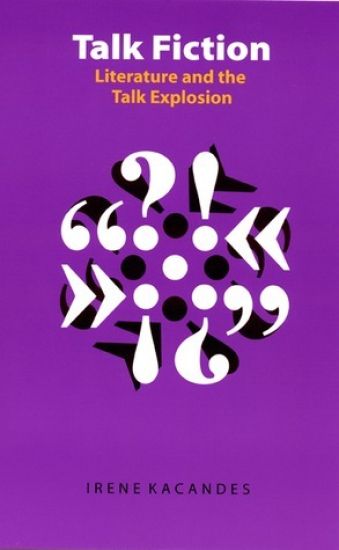
Talk Fiction

Talk Fiction

Irene Kacandes

University of Nebraska Press
2002
sidottu
Everywhere you turn today, someone (or something) is talking to you--the television, the radio, cell phones, your computer. If you think some of the novels and stories you read are talking to you too, you're not alone, and you're not mistaken. In this innovative, multidisciplinary work, Irene Kacandes reads contemporary fiction as a form of conversation and as part of the larger conversation that is modern culture. Within a framework of talk as interaction, Kacandes considers texts that can be classified as "statements," that is, texts that wholly or in part ask for their readers to react-- to talk back--to them in certain ways. The works she addresses--from writers as varied as Harriet O. Wilson, Margaret Atwood, William Faulkner, Virginia Woolf, Graham Swift, G nter Grass, John Barth, Julio Cort zar, and Italo Calvino--conduct their interactions in certain modes to accomplish different sorts of cultural work: storytelling, testimony, apostrophe, and interactivity. By focusing on texts within these groupings, Kacandes is able to relate the different modes of talk fiction to extraliterary cultural developments in our oral age--and to show how such interactions, however contrary to the dominant twentieth-century view of literature as art for art's sake, help to keep literature alive and speaking to us.
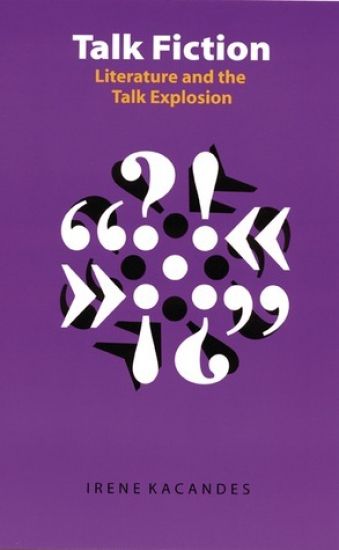
Talk Fiction

Talk Fiction

Irene Kacandes

University of Nebraska Press
2001
pokkari
Everywhere you turn today, someone (or something) is talking to you—the television, the radio, cell phones, your computer. If you think some of the novels and stories you read are talking to you too, you're not alone, and you're not mistaken. In this innovative, multidisciplinary work, Irene Kacandes reads contemporary fiction as a form of conversation and as part of the larger conversation that is modern culture. Within a framework of talk as interaction, Kacandes considers texts that can be classified as "statements," that is, texts that wholly or in part ask for their readers to react— to talk back—to them in certain ways. The works she addresses—from writers as varied as Harriet O. Wilson, Margaret Atwood, William Faulkner, Virginia Woolf, Graham Swift, Günter Grass, John Barth, Julio Cortázar, and Italo Calvino—conduct their interactions in certain modes to accomplish different sorts of cultural work: storytelling, testimony, apostrophe, and interactivity. By focusing on texts within these groupings, Kacandes is able to relate the different modes of talk fiction to extraliterary cultural developments in our oral age—and to show how such interactions, however contrary to the dominant twentieth-century view of literature as art for art's sake, help to keep literature alive and speaking to us.