Kirjojen hintavertailu. Mukana 12 088 404 kirjaa ja 12 kauppaa.

Kirjailija

Irwin L. Morris

Kirjat ja teokset yhdessä paikassa: 8 kirjaa, julkaisuja vuosilta 2010-2025, suosituimpien joukossa The Rational Southerner. Vertaile teosten hintoja ja tarkista saatavuus suomalaisista kirjakaupoista.

8 kirjaa

Kirjojen julkaisuhaarukka 2010-2025.

Partisan Places

Partisan Places

Irwin L. Morris

OXFORD UNIVERSITY PRESS INC
2025
nidottu
Below the surface of America's polarized, hyper-competitive standoff between the national Republican and Democratic parties, a dramatic partisan change is occurring at the local and state level. In Partisan Places, Irwin L. Morris describes the shift in American politics caused by domestic migration patterns. Places with growing populations are becoming more Democratic, while places with declining or stagnating communities are increasingly Republican. These partisan shifts are primarily a function of the demographic profile of movers--who tend to be younger, more educated, more racially diverse, and more Democratic than stayers who remain in their hometowns. Interestingly, this phenomenon is occurring regardless of a place's status as urban or rural: higher rates of immigration from other states or counties results in more Democratic support, while more emigration, especially in predominantly White communities, fosters Republican strength. Morris' analysis has significant implications for the future trajectory of party competition in the US, indicating that the Republican party should aim to attract "mover" support to remain competitive. With case studies from across the nation, Partisan Places lays a foundation for understanding the evolving geography of American politics.
Partisan Places

Partisan Places

Irwin L. Morris

OXFORD UNIVERSITY PRESS INC
2025
sidottu
Below the surface of America's polarized, hyper-competitive standoff between the national Republican and Democratic parties, a dramatic partisan change is occurring at the local and state level. In Partisan Places, Irwin L. Morris describes the shift in American politics caused by domestic migration patterns. Places with growing populations are becoming more Democratic, while places with declining or stagnating communities are increasingly Republican. These partisan shifts are primarily a function of the demographic profile of movers--who tend to be younger, more educated, more racially diverse, and more Democratic than stayers who remain in their hometowns. Interestingly, this phenomenon is occurring regardless of a place's status as urban or rural: higher rates of immigration from other states or counties results in more Democratic support, while more emigration, especially in predominantly White communities, fosters Republican strength. Morris' analysis has significant implications for the future trajectory of party competition in the US, indicating that the Republican party should aim to attract "mover" support to remain competitive. With case studies from across the nation, Partisan Places lays a foundation for understanding the evolving geography of American politics.
Movers and Stayers

Movers and Stayers

Irwin L. Morris

Oxford University Press Inc
2021
nidottu
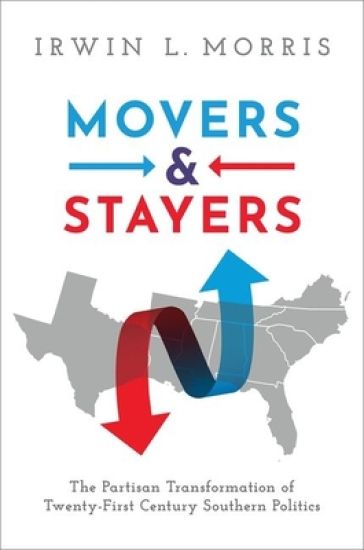
As migration alters the southern political landscape, partisan battle lines will be drawn between the Democrat-leaning areas of growth and the increasingly Republican areas of decline and stagnation. The Democratic Party is gaining support in the South, but the prevailing explanations of partisan shift fail to capture how and why this transformation has come about. In Movers and Stayers, Irwin Morris develops a new theory that explains the Democrats' renewed influence in the region and empirically demonstrates the influence of population growth. As Morris shows, migratory patterns play a significant role in politics, and urbanization is driving polarization in the South. Those who move to cities--the "movers" of Morris's framework--do so for jobs, and they tend to be progressive, young, well-educated Democrats. Their liberal views tend to be reinforced by the diversity of the communities in which they choose to live, and their progressivism fosters similar values among long-term residents. At the same time, "stayers" (long-term residents) absorb the consequences--or "community threat"--of this large-scale migration. While white stayers tend to become more conservative, the effects on voter behavior play out differently across racial lines. Both movers and stayers are altering the southern political landscape and polarization nationwide. Powerfully counterintuitive, Movers and Stayers provides a game-changing way of understanding one of the most confounding trends in American politics.
Reactionary Republicanism

Reactionary Republicanism

Bryan T. Gervais; Irwin L. Morris

Oxford University Press Inc
2018
nidottu
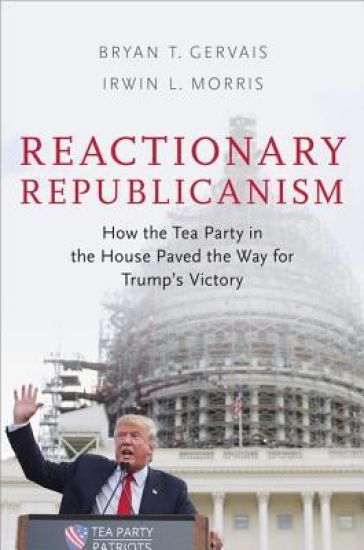
The shocking election of President Trump spawned myriad analyses and post-mortems, but they consistently underestimate the crucial role of the Tea Party on the GOP and Republican House members specifically. In Reactionary Republicanism, Bryan T. Gervais and Irwin L. Morris develop the most sophisticated analysis to date for gauging the Tea Party's impact upon the U.S. House of Representatives. They employ multiple types of data to illustrate the multi-dimensional impact of the Tea Party movement on members of Congress. Contrary to conventional wisdom, they find that Republicans associated with the Tea Party movement were neither a small minority of the Republican conference nor intransigent backbenchers. Most importantly, the invigoration of racial hostility and social conservatism among Tea Party supporters fostered the growth of reactionary Republicanism. Tea Party legislators, in turn, endeavored to aggravate these feelings of resentment via digital home styles that incorporated uncivil and aversion-inducing rhetoric. Trump fed off of this during his run, and his symbiotic relationship with Tea Party regulars has guided-and seems destined to-the trajectory of his administration.
Reactionary Republicanism

Reactionary Republicanism

Bryan T. Gervais; Irwin L. Morris

Oxford University Press Inc
2018
sidottu
The shocking election of President Trump spawned myriad analyses and post-mortems, but they consistently underestimate the crucial role of the Tea Party on the GOP and Republican House members specifically. In Reactionary Republicanism, Bryan T. Gervais and Irwin L. Morris develop the most sophisticated analysis to date for gauging the Tea Party's impact upon the U.S. House of Representatives. They employ multiple types of data to illustrate the multi-dimensional impact of the Tea Party movement on members of Congress. Contrary to conventional wisdom, they find that Republicans associated with the Tea Party movement were neither a small minority of the Republican conference nor intransigent backbenchers. Most importantly, the invigoration of racial hostility and social conservatism among Tea Party supporters fostered the growth of reactionary Republicanism. Tea Party legislators, in turn, endeavored to aggravate these feelings of resentment via digital home styles that incorporated uncivil and aversion-inducing rhetoric. Trump fed off of this during his run, and his symbiotic relationship with Tea Party regulars has guided-and seems destined to-the trajectory of his administration.
The Rational Southerner

The Rational Southerner

M. V. Hood III; Quentin Kidd; Irwin L. Morris

Oxford University Press Inc
2014
nidottu
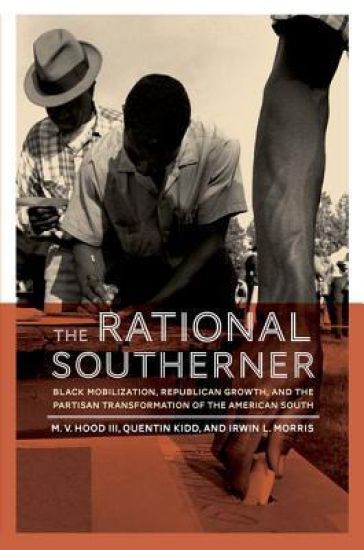
Since 1950, the South has undergone the most dramatic political transformation of any region in the United States. The once Solid-meaning Democratic-South is now overwhelmingly Republican, and long-disenfranchised African Americans vote at levels comparable to those of whites. In The Rational Southerner, M.V. Hood III, Quentin Kidd, and Irwin L. Morris argue that local strategic dynamics played a decisive and underappreciated role in both the development of the Southern Republican Party and the mobilization of the region's black electorate. Mobilized blacks who supported the Democratic Party made it increasingly difficult for conservative whites to maintain control of the Party's machinery. Also, as local Republican Party organizations became politically viable, the strategic opportunities that such a change provided made the GOP an increasingly attractive alternative for white conservatives. Blacks also found new opportunities within the Democratic Party as whites fled to the GOP, especially in the deep South, where large black populations had the potential to dominate state and local Democratic Parties. As a result, Republican Party viability also led to black mobilization. Using the theory of relative advantage, Hood, Kidd, and Morris provide a new perspective on party system transformation. Following a theoretically-informed description of recent partisan dynamics in the South, they demonstrate, with decades of state-level, sub-state, and individual-level data, that GOP organizational strength and black electoral mobilization were the primary determinants of political change in the region. The authors' finding that race was, and still is, the primary driver behind political change in the region stands in stark contrast to recent scholarship which points to in-migration, economic growth, or religious factors as the locus of transition. The Rational Southerner contributes not only to the study of Southern politics, but to our understanding of party system change, racial politics, and the role that state and local political dynamics play in the larger context of national politics and policymaking.
The Rational Southerner

The Rational Southerner

M. V. Hood III; Quentin Kidd; Irwin L. Morris

Oxford University Press Inc
2012
sidottu
Since 1950, the South has undergone the most dramatic political transformation of any region in the country. The Solid (Democratic) South is now overwhelmingly Republican, and long disenfranchised African Americans vote at levels comparable to those of whites. In The Rational Southerner, M.V. Hood III, Quentin Kidd, and Irwin L. Morris argue that strategic decisions by politically active members of both races played a decisive and underappreciated role in the development of the Southern Republican Party and the mobilization of the black electorate. They explain that mobilized blacks joining the Democratic Party made it increasingly difficult for conservative whites to maintain control of the Democratic Party machinery, making the increasingly visible Republican Party in the region more attractive to conservative whites looking to maintain political power in the region. The authors reach this conclusion by using their theory of relative advantage, which describes the way in which regional differentiation in demographics and electoral makeup produced an internally differentiated system. Following a theoretically-informed description of recent partisan dynamics in the South, Hood, Kidd, and Morris demonstrate with decades of state-level, sub-state, and individual-level data that GOP organizational strength and black electoral mobilization were the primary determinants of political change in the region. The core finding of their research, that race was, and still is, the primary driver behind political change in the region, stands in stark contrast to recent scholarship which points to in-migration, economic growth, or religious factors as the locus of transition. Original, groundbreaking, and strikingly relevant to the coming 2012 election year, The Rational Southerner provides a new perspective not only on Southern Politcs, but on the study of local political dynamics and party system transformation as a whole.
The American Presidency

The American Presidency

Irwin L. Morris

Cambridge University Press
2010
pokkari
Presidential scholars increasingly turn to science to address the fundamental issues in the field, but undergraduates are rarely taught the skills to do the same. The American Presidency introduces students to new insights produced by the scientific study of the presidency and the scientific endeavor itself. After chapters on the scientific study of the presidency and background information on the presidency, the text discusses prominent theories of presidential power. Chapters on presidential elections, the president's relationship with other political actors (such as Congress and the Supreme Court), the president's role in foreign and economic policy, and presidential greatness include guided research exercises that provide students with the opportunity to apply the scientific method to empirical questions with significant theoretical content. The American Presidency provides students with the opportunity to learn about the presidency and enables them to draw their own reasoned conclusions about the nature of presidential power.