Kirjailija
Isaac Bashevis Singer
Kirjat ja teokset yhdessä paikassa: 93 kirjaa, julkaisuja vuosilta 1963-2026, suosituimpien joukossa Isaac Bashevis Singer: Writings on Yiddish and Yiddishkayt. Vertaile teosten hintoja ja tarkista saatavuus suomalaisista kirjakaupoista.
93 kirjaa
Kirjojen julkaisuhaarukka 1963-2026.
From the Nobel Prize–winning writer, a new collection of literary and personal essaysOld Truths and New Clichés collects nineteen essays—most of them previously unpublished in English—by Isaac Bashevis Singer on topics that were central to his artistic vision throughout an astonishing and prolific literary career spanning more than six decades. Expanding on themes reflected in his best-known work—including the literary arts, Yiddish and Jewish life, and mysticism and philosophy—the book illuminates in new ways the rich intellectual, aesthetic, religious, and biographical background of Singer’s singular achievement as the first Yiddish-language author to be awarded the Nobel Prize for Literature.Like a modern Montaigne, Singer studied human nature and created a body of work that contributed to a deeper understanding of the human spirit. Much of his philosophical thought was funneled into his stories. Yet these essays, which Singer himself translated into English or oversaw the translation of, present his ideas in a new way, as universal reflections on the role of the artist in modern society. The unpublished essays featured here include “Old Truths and New Clichés,” “The Kabbalah and Modern Times,” and “A Trip to the Circus.”Old Truths and New Clichés brims with stunning archival finds that will make a significant impact on how readers understand Singer and his work. Singer’s critical essays have long been overlooked because he has been thought of almost exclusively as a storyteller. This book offers an important correction to the record by further establishing Singer as a formidable intellectual.

First published as Short Friday and Other Stories, Singer's 1965 collection presents a profoundly gifted writer who can deftly immerse the reader in a rich sensory experience of both bygone and modern life. The collection features some of Singer's most provocative early stories, including "Blood," "Taibele and Her Demon," "The Last Demon," and "Yentl the Yeshiva Boy," which was later adapted for the screen by Barbara Streisand. One moment the reader has goosebumps, the next her heart is inspired to the heights of human inspiration, as each story takes its twists and turns to offer new insights into the richness of life and its wonders. Praise: "Incomparable, inimitable, indescribable." - Newsweek "Singer is a master at telling a story." - Saturday Review "Singer shuns sentimentality and delights in the exotic." - Slavic Review
First published in 1957 by Noonday Press, Isaac Bashevis Singer's first collection of stories, Gimpel the Fool, is a landmark work that has attracted international acclaim. The title story follows the exploits of Gimpel, an ingenuous baker who is universally deceived but who declines to retaliate against his tormentors. Gimpel and the protagonists of the other stories all inhabit the distinctive pre-World War II shtetls of Poland and, beyond that, the larger world created by Singer's unforgettable prose. Praise: "These stories are a unique blend of lyric mysticism and earthy realism in characters that are universal human symbols of the worldly and the supernatural. Fantasy is Singer's surest guide to truth in literature." - Anzia Yezierska, The New York Times Review of Books "Extraordinarily beautiful... It's the integrity of the human imagination that Singer conveys so beautifully." - Alfred Kazin, The New Leader "Singer is a genius. He has total command of his imagined world." - Irving Howe, The New Republic "A peerless storyteller, Singer restores the sheer enchantment with story, with outcome, with what-happens-next that has been denied most readers since their adolescence." - David Boroff, Saturday Review
In his classic followup to his debut story collection, Gimpel the Fool and Other Stories, Isaac Bashevis Singer continues to introduce readers to his unique brand of fiction in eleven unforgettable stories. Praise: "The most brilliant living representative of the Yiddish language in prose and one of the important contemporary writers in America." - The New York Times Review of Books "There is a very old, durable and sage glow to these stories." - Kirkus "Sparkling and triumphant, Isaac Bashevis Singer's stories are filled with wonder, gratitude, humor, irony and a wry eroticism that manages to exalt the pleasures of the flesh and the soul at the same time." - The Washington Post Book World
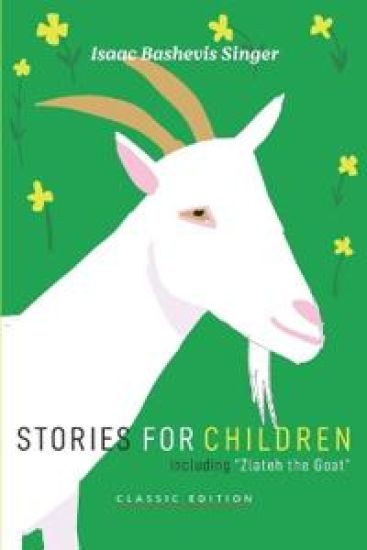
Isaac Bashevis Singer is known for his mastery of storytelling - but it was not until 1966, at the age of sixty-two, that he published his first children's book, Zlateh the Goat, a Newbery Honor Book and instant classic. Singer went on to write many stories for children, most of which are included in this volume, along with a brief introduction and a special epilogue, "Are Children the Ultimate Literary Critics?" The collection presents exuberant and timeless tales for children rich in fantasy and deeply rooted in the lost cultural tradition of his native Poland. A number of the stories appear in book form for the first time - and all have been translated from the Yiddish with the author's personal supervision.
Originally published in Yiddish between 1953-1955 as a single work, Isaac Bashevis Singer's The Manor and The Estate now appear in a single-volume English edition. Recounting the tales of Polish Jews in the second half of the nineteenth century - a time of rapid industrial growth and radical social change - the novel depicts the Jewish community moving from the ghetto to prominence within Polish society. As Singer writes in his author's note, "All the spiritual and intellectual ideas that triumphed in the modern era had their roots in the world of that time - socialism and nationalism, Zionism and assimilationism, nihilism and anarchism, suffragettism, atheism, the weakening of the family bond, free love, and even the beginnings of Fascism." Telling the story of Calman Jacoby, who stands between the old and the new, the book portrays the difficulties encountered by traditional Jews coming to terms with the changes brought on by modernity.
Set in seventeenth-century Poland, The Slave tells the story of Jacob, a young Talmudic scholar sold into slavery after the Chmielnicki massacres - and who falls in love with his master's daughter, Wanda. Even after he is ransomed, he finds he can't live without her, and the two escape together to a distant Jewish community. Racked by his consciousness of sin in taking a wife who is not Jewish, and by the difficulties of concealing her identity, Jacob stands firm as the violence of the era threatens to destroy the ill-fated couple.
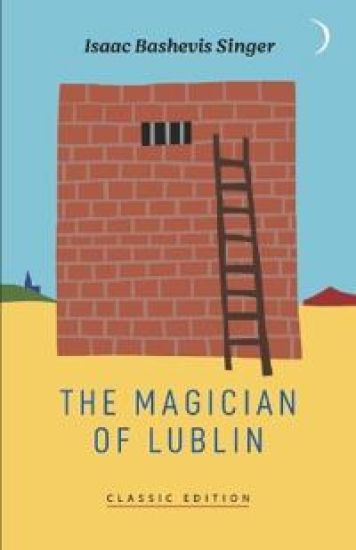
Set in nineteenth-century Poland, this novel tells the story of Yasha - a sword swallower, fire eater, acrobat and master of escape - famous for Houdini-like tricks. A free thinker with an observant Jewish wife at home and a woman in every town, his exploits catch up with him and he is tempted to make one final escape - from his marriage, his homeland, and his father's religious heritage. But his plans unravel and he instead seeks to lock himself up in a place that even he won't be able to escape - and to spend the rest of his days doing penitence.
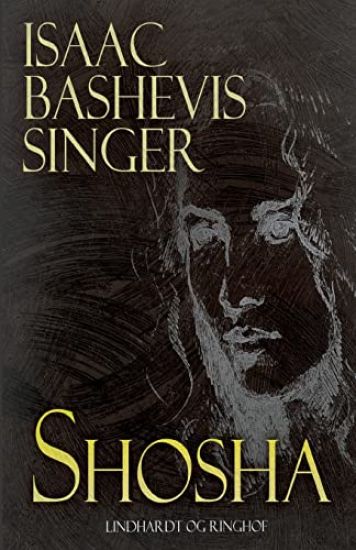
It is Warsaw in the 1930s, the years of Hitler's rise to power. Aaron Greidinger, familiarly known as Tsutsik, and an aspiring young writer, struggles to be true to his art when he is faced with a chance of riches and a passport to America. Tsutsik finds himself emotionally involved with four women-Betty, who admires his talent; Celia, an older married woman he meets through Dr. Feitelzohn, a senior member of the Writers' Club; Tekla, a girl from the country who works as a maid in his new flat; and Dora the Marxist, an old flame with whom he is reconciled on the eve of her Soviet departure. "In all the novels I have read," Tsutsik tells himself, "the hero desires only one woman, but here I was lusting after the whole female gender." One spring day, walking with Betty through his old Krochmalna Street neighborhood, Tsutsik rediscovers his past-in the person of his childhood playmate, Shosha, still an innocent young woman. Tsutsik's and Shosha's subsequent fate and that of all of his friends, revealed in an epilogue in Israel, rounds off this wonderful saga of human unpredictability, self-deception, and humor in the midst of tragedy.One of Singer's most personal works, Shosha is an unforgettable novel about the conflicted desires, lost lives and the redemption of one man. "Isaac Bashevis Singer...celebrates the dignity, mystery, and unexpected joy of living with more art and fervor than any other writer alive," Peter R. Prescott stated in Newsweek when the novel was first published. "He is concerned with all the major themes, with good and evil, belief and doubt, action and contemplation, the nature of illusion and the joys of the flesh." With the publication of Shosha, the novelist confirmed his position as one of the major figures in Twentieth Century American Letters.
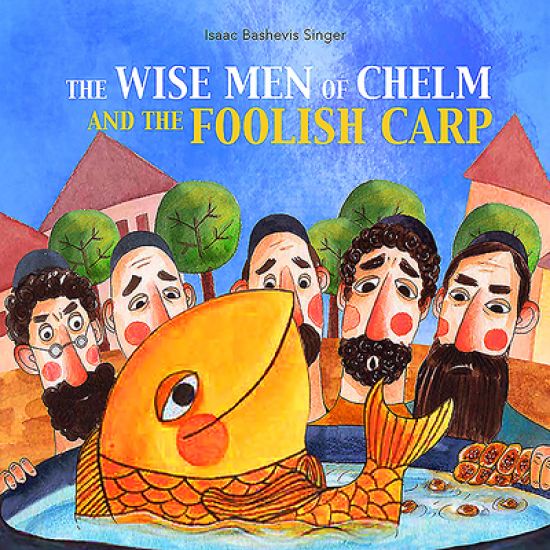
When Chelm community leader, Gronam Ox, is given a live carp in honour of his great wisdom, he is delighted. He knows, of course, that eating the brain of a carp increases wisdom and that the size of the tail is indicative of the size of the brain. But when the carp uses that very tail to slap him across the face - in what can only have been a deliberate act - Gronam Ox is shocked. Surely no Chelm carp would have behaved in such an appalling manner. There is nothing else for it; the carp must be punished. While Gronam Ox ponders the most fitting punishment, the carp is fed and looked after in a large tub of water stationed in the town centre. It is essential that the carp survives until the day of judgement but Gronam Ox's deliberations are taking quite some time. The carp grows fatter and fatter until finally, many months later, Gronam Ox arrives at an apt sentence - one so clever that all the people of Chelm flock to see it exacted. The carp must be drowned. Written for children by the master storyteller, and former Nobel Laureate, Isaac Bashevis Singer, this classic Yiddish folktale is infused with his signature humour, warmth and wisdom. This beautifully illustrated new publication will bring the famously foolish people of Chelm to life for a new generation of children.
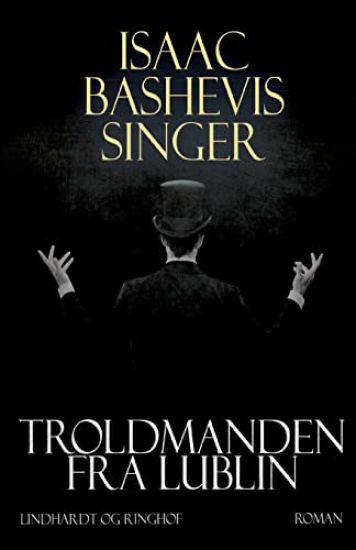
"Troldmanden fra Lublin" er en erotisk kunstnerroman om en overmodig og succesrig polsk j de fra forrige rhundrede, der gennem sine l gne mister sin udstr ling og dermed sin magt over kvinder og sit publikum. Isaac Bashevis Singer, 1904-1991, amerikansk-jiddisch forfatter. Han blev f dt i Polen, men udvandrede i 1935 til USA, og hans v rker er nok bedst kendt p engelsk, selvom de blev skrevet p jiddisch f rst. I centrum for forfatterskabet st r livet i j diske landsbyer i Central- og steuropa f r holocaust, fremskrevet i en realistisk stil med et isl t af mystik - en stil, der af flere bliver anset for b de grotesk og obsk n. Persongalleriet udspringer af j disk folklore og byder p alt fra synske personer, troldm nd, t ber, vise, ludere, bodf rdige og fanatikere til dj vle, d moner og intellektuelle. I tr d hermed afspejles indholdsm ssigt kampe mellem tradition og modernitet, godt og ondt og moral og liderlighed. De mandlige hovedpersoner er Don Juan-typer, der pines af samvittighedsnag, mens de drives frem af deres lidenskaber. Kvindeskikkelserne lider under Singers tvetydige eller ligefrem fjendtlige holdning. Forfatterskabet, der t ller romaner, noveller, b rnefort llinger og erindringer, indbragte i 1978 Singer nobelprisen.
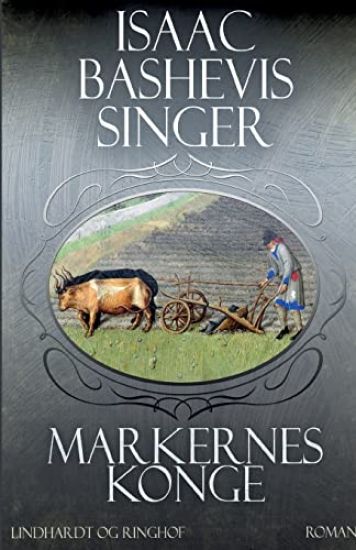
"Markernes konge" er den amerikansk-jiddische forfatter Isaac Bashevis Singers historiske roman om den tidlige middelalder i en hedensk landsby i Polen. Her opst r blodige brydninger, da en j disk skomager ankommer - medbringende alfabetet og troen p Gud. Isaac Bashevis Singer, 1904-1991, amerikansk-jiddisch forfatter. Han blev f dt i Polen, men udvandrede i 1935 til USA, og hans v rker er nok bedst kendt p engelsk, selvom de blev skrevet p jiddisch f rst. I centrum for forfatterskabet st r livet i j diske landsbyer i Central- og steuropa f r holocaust, fremskrevet i en realistisk stil med et isl t af mystik - en stil, der af flere bliver anset for b de grotesk og obsk n. Persongalleriet udspringer af j disk folklore og byder p alt fra synske personer, troldm nd, t ber, vise, ludere, bodf rdige og fanatikere til dj vle, d moner og intellektuelle. I tr d hermed afspejles indholdsm ssigt kampe mellem tradition og modernitet, godt og ondt og moral og liderlighed. De mandlige hovedpersoner er Don Juan-typer, der pines af samvittighedsnag, mens de drives frem af deres lidenskaber. Kvindeskikkelserne lider under Singers tvetydige eller ligefrem fjendtlige holdning. Forfatterskabet, der t ller romaner, noveller, b rnefort llinger og erindringer, indbragte i 1978 Singer nobelprisen.
"Shosha" er fort llingen om den h befulde unge forfatter, der i mellemkrigstidens Warszawa st r over for valget om et nyt, frit liv i USA eller at forblive tro mod sin polsk-j diske rod - p trods af den krig, der lurer i horisonten. Hans anker er k rligheden til barndomsveninden Shosha, hvis sk bne er ubarmhjertig. Isaac Bashevis Singer, 1904-1991, amerikansk-jiddisch forfatter. Han blev f dt i Polen, men udvandrede i 1935 til USA, og hans v rker er nok bedst kendt p engelsk, selvom de blev skrevet p jiddisch f rst. I centrum for forfatterskabet st r livet i j diske landsbyer i Central- og steuropa f r holocaust, fremskrevet i en realistisk stil med et isl t af mystik - en stil, der af flere bliver anset for b de grotesk og obsk n. Persongalleriet udspringer af j disk folklore og byder p alt fra synske personer, troldm nd, t ber, vise, ludere, bodf rdige og fanatikere til dj vle, d moner og intellektuelle. I tr d hermed afspejles indholdsm ssigt kampe mellem tradition og modernitet, godt og ondt og moral og liderlighed. De mandlige hovedpersoner er Don Juan-typer, der pines af samvittighedsnag, mens de drives frem af deres lidenskaber. Kvindeskikkelserne lider under Singers tvetydige eller ligefrem fjendtlige holdning. Forfatterskabet, der t ller romaner, noveller, b rnefort llinger og erindringer, indbragte i 1978 Singer nobelprisen.
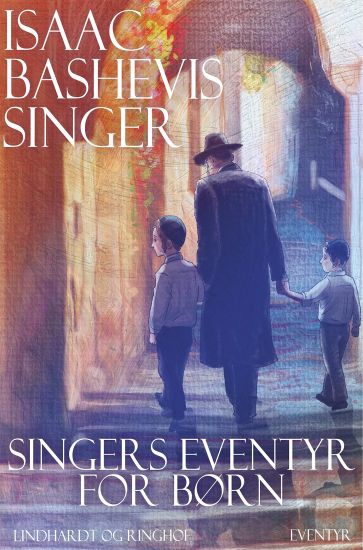
"Singers eventyr for b rn" tager udgangspunkt i den ldre j diske fort lletradition og folklore og indeholder: De ldre i Chelm og Genendels n gle, En historie om tre nsker, De slukkede lys, Mazel og Shlimazel, Hvorfor Noa valgte duen, Geden Zlateh, Den syndige by, Rabbi Leib og heksen Kunigunde, En undulat ved navn Dreidel, Den dag jeg for vild, Menashe og Rachel, Forretningsmanden Shlemiel, Josef og Koza, En Hanukka-aften hjemme hos mine for ldre, Tsirtsur og Peziza, Hershele og Hanukka, Da Shlemiel rejste til Warszawa, Slaven Elias, Lysets magt, Utzel og hans datter, Fattigdom, Adelsmanden, Ole og Trufa, Topiel og Tekla, Hanukka p fattigg rden, Snedige Todie og N rige Lyzer, Den skr kkelige kro, Menases dr m, Tashlik. Isaac Bashevis Singer, 1904-1991, amerikansk-jiddisch forfatter. Han blev f dt i Polen, men udvandrede i 1935 til USA, og hans v rker er nok bedst kendt p engelsk, selvom de blev skrevet p jiddisch. I centrum for forfatterskabet st r livet i j diske landsbyer i Central- og steuropa f r holocaust, fremskrevet i en realistisk stil med et isl t af mystik - en stil, der af flere bliver anset for b de grotesk og obsk n. Persongalleriet udspringer af j disk folklore og byder p alt fra synske personer, troldm nd, t ber, vise, ludere, bodf rdige og fanatikere til dj vle, d moner og intellektuelle. I tr d hermed afspejles kampe mellem tradition og modernitet, godt og ondt og moral og liderlighed. Forfatterskabet indbragte i 1978 Singer nobelprisen.