Kirjojen hintavertailu. Mukana 12 595 353 kirjaa ja 12 kauppaa.

Kirjailija

Isabel Schoultz

Kirjat ja teokset yhdessä paikassa: 3 kirjaa, julkaisuja vuosilta 2017-2020, suosituimpien joukossa Edwin H. Sutherland. Vertaile teosten hintoja ja tarkista saatavuus suomalaisista kirjakaupoista.

3 kirjaa

Kirjojen julkaisuhaarukka 2017-2020.

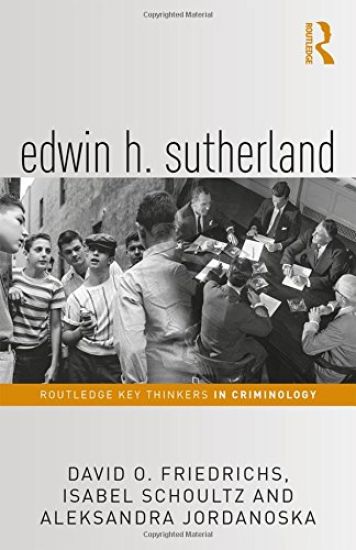
Edwin H. Sutherland

Edwin H. Sutherland

David Friedrichs; Isabel Schoultz; Aleksandra Jordanoska

Routledge
2020
nidottu
Edwin H. Sutherland is widely identified as the single most important and influential criminologist of the twentieth century. He is especially well-known for his path-breaking criminology textbook (first published in 1924), his promotion of a sociological (and scientific) approach to the understanding of crime and its control, his theory of differential association, and his work over his final ten years on white-collar crime, a term he is credited with having introduced. This book explores the contemporary meaning of Edwin Sutherland and considers why criminologists today should continue to engage with his work. What can and should Sutherland mean to future 21st century criminologists, those working in the field say between 2021 and 2050, or some one hundred years after the 1921 to 1950 period that encompassed Sutherland’s criminological career? Which dimensions of Sutherland’s work have best survived the march of time and which are most likely to – and deserve to – survive going forward?Making the case that Sutherland is important to both mainstream and critical criminologists, to positivistic criminologists and those who study crimes of the powerful, this book is essential reading for both students and scholars interested in exploring the enduring legacy of this key thinker in criminology.
Om rättssociologisk tillämpning

Om rättssociologisk tillämpning

Isabel Schoultz; Ida Nafstad; Matthias Baier; Reza Banakar; Peter Bergwall; Cansu Bostan; Karl Dahlstrand; Eva Friis; Håkan Hydén; Martin Joormann; Marie Leth-Espensen; Monika Lindbekk; Staffan Michelson; Nicolas Serrano; Lena Svenaeus; Rustamjon Urinboyev; John Woodlock; Karsten Åström

Studentlitteratur AB
2020
nidottu
Law is everywhere - Rätten finns överallt. Det uttrycket kan beskriva rättens roll i våra liv. Utöver formella lagar, regleringar och avtal möter vi i vår vardag även informella lagar och sociala normer: i familjen, i skolan, på arbetsplatsen och i samhället i stort. De styr både hur vi tänker och agerar och vad vi förväntar oss av andra. Rättssociologi handlar om att analysera relationen mellan rätten och samhället.I den här boken beskrivs hur rättssociologiska begrepp kan tillämpas på en praktisk nivå, i forskning om och studier av samhället. Konkreta exempel visar hur teoretiska och metodologiska begrepp har tillämpats i olika rättssociologiska studier. Begreppen blir därmed nyttiga verktyg för en ökad förståelse av samhället från ett rättssociologiskt perspektiv.Om rättssociologisk tillämpning är en fortsättning på Baier, Svensson & Nafstads Om rättssociologi (2018). Böckerna är tänkta för studenter på grundnivå i rättssociologi, men kan vara intressanta även för studerande i andra discipliner, som kriminologi, sociologi och juridik. Även forskare, lärare och praktiker kan ha glädje och nytta av böckerna.
Edwin H. Sutherland

Edwin H. Sutherland

David Friedrichs; Isabel Schoultz; Aleksandra Jordanoska

Routledge
2017
sidottu
Edwin H. Sutherland is widely identified as the single most important and influential criminologist of the twentieth century. He is especially well-known for his path-breaking criminology textbook (first published in 1924), his promotion of a sociological (and scientific) approach to the understanding of crime and its control, his theory of differential association, and his work over his final ten years on white-collar crime, a term he is credited with having introduced. This book explores the contemporary meaning of Edwin Sutherland and considers why criminologists today should continue to engage with his work. What can and should Sutherland mean to future 21st century criminologists, those working in the field say between 2021 and 2050, or some one hundred years after the 1921 to 1950 period that encompassed Sutherland’s criminological career? Which dimensions of Sutherland’s work have best survived the march of time and which are most likely to – and deserve to – survive going forward?Making the case that Sutherland is important to both mainstream and critical criminologists, to positivistic criminologists and those who study crimes of the powerful, this book is essential reading for both students and scholars interested in exploring the enduring legacy of this key thinker in criminology.