Kirjojen hintavertailu. Mukana 12 595 353 kirjaa ja 12 kauppaa.

Kirjailija

Isabelle Stengers

Kirjat ja teokset yhdessä paikassa: 27 kirjaa, julkaisuja vuosilta 1992-2025, suosituimpien joukossa Order Out of Chaos. Vertaile teosten hintoja ja tarkista saatavuus suomalaisista kirjakaupoista.

27 kirjaa

Kirjojen julkaisuhaarukka 1992-2025.

Magic's Translations

Magic's Translations

Margaret J. Wiener; Isabelle Stengers

DUKE UNIVERSITY PRESS
2025
sidottu
“Do you believe in magic?” This familiar question suggests magic is easily recognized but unreal. In Magic’s Translations, Margaret J. Wiener argues that such views are shaped by historical power struggles, especially in Europe’s relations with the wider world. Focusing on nineteenth- and twentieth-century Dutch interactions with Indonesians, Wiener reveals how colonial agents framed unfamiliar practices, practitioners, and objects as “magic,” rendering distinct phenomena fundamentally alike and advancing colonizing projects that deemed magic antithetical to reason and reality. While colonial authorities, including ethnologists, mobilized the concept of magic to differentiate Europeans from Indonesians, nature from culture, reason from superstition, and fact from fetish, their efforts produced unexpected outcomes: Some Indonesian artifacts and acts not only retained their power but invaded European experiences. As anthropologists were among the key translators of magic throughout the world, Wiener intersperses accounts of magic’s translations in the Indies with reflections on anthropology’s ongoing engagement with the concept. She demonstrates that magic became an object of expert knowledge, political control, and popular fascination, rather than a self-evident category or relic of naïve belief.
Magic's Translations

Magic's Translations

Margaret J. Wiener; Isabelle Stengers

DUKE UNIVERSITY PRESS
2025
pokkari
“Do you believe in magic?” This familiar question suggests magic is easily recognized but unreal. In Magic’s Translations, Margaret J. Wiener argues that such views are shaped by historical power struggles, especially in Europe’s relations with the wider world. Focusing on nineteenth- and twentieth-century Dutch interactions with Indonesians, Wiener reveals how colonial agents framed unfamiliar practices, practitioners, and objects as “magic,” rendering distinct phenomena fundamentally alike and advancing colonizing projects that deemed magic antithetical to reason and reality. While colonial authorities, including ethnologists, mobilized the concept of magic to differentiate Europeans from Indonesians, nature from culture, reason from superstition, and fact from fetish, their efforts produced unexpected outcomes: Some Indonesian artifacts and acts not only retained their power but invaded European experiences. As anthropologists were among the key translators of magic throughout the world, Wiener intersperses accounts of magic’s translations in the Indies with reflections on anthropology’s ongoing engagement with the concept. She demonstrates that magic became an object of expert knowledge, political control, and popular fascination, rather than a self-evident category or relic of naïve belief.
Hypnosis Between Science and Magic

Hypnosis Between Science and Magic

Isabelle Stengers

BLOOMSBURY PUBLISHING PLC
2024
nidottu
What if judgment returned to the craft of magic? How would that relieve the burdens of critique and realign its priorities? These questions regarding the value of magic to thinking are at the very heart of the acclaimed philosopher of science Isabelle Stengers' political and philosophical thought and her insistence that ‘the smoke of the burned witches still hangs in our nostrils’.Now, in the first English translation of this classic text, Hypnosis Between Science and Magic provides an entry point to the work of Isabelle Stengers, who has so originally and forcefully shifted how we think about the history of ideas. The book focuses in on an area of her thought that has recurred throughout her career: the presumed antagonism between magic and science, and especially the evacuation of magic from all that is thought to be scientifically valid.
Hypnosis Between Science and Magic

Hypnosis Between Science and Magic

Isabelle Stengers

BLOOMSBURY PUBLISHING PLC
2024
sidottu
What if judgment returned to the craft of magic? How would that relieve the burdens of critique and realign its priorities? These questions regarding the value of magic to thinking are at the very heart of the acclaimed philosopher of science Isabelle Stengers' political and philosophical thought and her insistence that ‘the smoke of the burned witches still hangs in our nostrils’.Now, in the first English translation of this classic text, Hypnosis Between Science and Magic provides an entry point to the work of Isabelle Stengers, who has so originally and forcefully shifted how we think about the history of ideas. The book focuses in on an area of her thought that has recurred throughout her career: the presumed antagonism between magic and science, and especially the evacuation of magic from all that is thought to be scientifically valid.
Virgin Mary and the Neutrino

Virgin Mary and the Neutrino

Isabelle Stengers

DUKE UNIVERSITY PRESS
2023
pokkari
In Virgin Mary and the Neutrino, first published in French in 2006 and here appearing in English for the first time, Isabelle Stengers experiments with the possibility of addressing modern practices not as a block but through their divergence from each other. Drawing on thinkers ranging from John Dewey to Gilles Deleuze, she develops what she calls an “ecology of practices” into a capacious and heterogeneous perspective that is inclusive of cultural and political forces but not reducible to them. Stengers first advocates for an approach to sciences that would emphasize the way each should be situated by the kind of relationships demanded by what it attempts to address. This approach turns away from the disabling scientific/nonscientific binary-like the opposition between the neutrino and the Virgin Mary. An ecology of practices instead stimulates an appetite for thinking reality not as an arbiter but as what we can relate to through the generation of diverging concerns and obligations.
Virgin Mary and the Neutrino

Virgin Mary and the Neutrino

Isabelle Stengers

DUKE UNIVERSITY PRESS
2023
sidottu
In Virgin Mary and the Neutrino, first published in French in 2006 and here appearing in English for the first time, Isabelle Stengers experiments with the possibility of addressing modern practices not as a block but through their divergence from each other. Drawing on thinkers ranging from John Dewey to Gilles Deleuze, she develops what she calls an “ecology of practices” into a capacious and heterogeneous perspective that is inclusive of cultural and political forces but not reducible to them. Stengers first advocates for an approach to sciences that would emphasize the way each should be situated by the kind of relationships demanded by what it attempts to address. This approach turns away from the disabling scientific/nonscientific binary-like the opposition between the neutrino and the Virgin Mary. An ecology of practices instead stimulates an appetite for thinking reality not as an arbiter but as what we can relate to through the generation of diverging concerns and obligations.
Making Sense in Common

Making Sense in Common

Isabelle Stengers

UNIVERSITY OF MINNESOTA PRESS
2023
sidottu
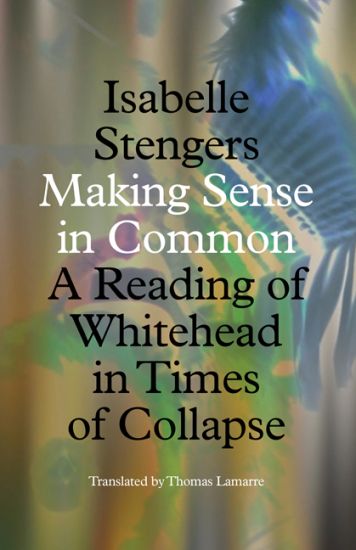
A leading philosopher seeks to recover “common sense” as a meeting place to reconcile science and philosophy With her previous books on Alfred North Whitehead, Isabelle Stengers not only secured a reputation as one of the premier philosophers of our times but also inspired a rethinking of critical theory, political thought, and radical philosophy across a range of disciplines. Here, Stengers unveils what might well be seen as her definitive reading of Whitehead.Making Sense in Common will be greeted eagerly by the growing group of scholars who use Stengers’s work on Whitehead as a model for how to think with conceptual precision through diverse domains of inquiry: environmentalism and ecology, animal studies, media and technology studies, the history and philosophy of science, feminism, and capitalism. On the other hand, the significance of this new book extends beyond Whitehead. Instead, it lies in Stengers’s recovery of the idea of “common sense” as a meeting place-a commons-where opposed ideas of science and humanistic inquiry can engage one another and help to move society forward. Her reconciliation of science and philosophy is especially urgent today-when climate disaster looms all around us, when the values of what we thought of as civilization and modernity are discredited, and when expertise of any kind is under attack.
Making Sense in Common

Making Sense in Common

Isabelle Stengers

UNIVERSITY OF MINNESOTA PRESS
2023
nidottu
A leading philosopher seeks to recover “common sense” as a meeting place to reconcile science and philosophy With her previous books on Alfred North Whitehead, Isabelle Stengers not only secured a reputation as one of the premier philosophers of our times but also inspired a rethinking of critical theory, political thought, and radical philosophy across a range of disciplines. Here, Stengers unveils what might well be seen as her definitive reading of Whitehead.Making Sense in Common will be greeted eagerly by the growing group of scholars who use Stengers’s work on Whitehead as a model for how to think with conceptual precision through diverse domains of inquiry: environmentalism and ecology, animal studies, media and technology studies, the history and philosophy of science, feminism, and capitalism. On the other hand, the significance of this new book extends beyond Whitehead. Instead, it lies in Stengers’s recovery of the idea of “common sense” as a meeting place-a commons-where opposed ideas of science and humanistic inquiry can engage one another and help to move society forward. Her reconciliation of science and philosophy is especially urgent today-when climate disaster looms all around us, when the values of what we thought of as civilization and modernity are discredited, and when expertise of any kind is under attack.
Porjadok iz khaosa. Novyj dialog cheloveka s prirodoj
Kniga izvestnogo belgijskogo fiziko-khimika, laureata Nobelevskoj premii I.Prigozhina i ego soavtora I.Stengers posvjaschena rassmotreniju nauki i filosofii XIX i XX vv. s pozitsij nauki vtoroj poloviny XX stoletija, a takzhe problemam i osobennostjam sovremennogo nauchnogo myshlenija. Tsel knigi - osmyslit put, projdennyj naukoj i poznaniem, i izlozhit trebovanija sovremennoj nauki i obschestva vosstanovit na novykh osnovanijakh sojuz cheloveka s prirodoj, v kotorom budet edinstvo ne tolko prirody i cheloveka, no takzhe nauki, kultury i obschestva. Avtory dajut glubokoe istoriko-filosofskoe rassmotrenie nauchnogo poznanija, nachinaja s Njutona i Laplasa i zakanchivaja ego pozdnejshej kritikoj sovremennymi zapadnymi filosofami.Rekomenduetsja kak spetsialistam estestvenno-nauchnykh i gumanitarnykh distsiplin, tak i shirokomu krugu chitatelej, interesujuschikhsja problemami sovremennoj nauki.
Testing Knowledge

Testing Knowledge

Alice Rivières; Alice Wexler; Isabelle Stengers

Punctum Books
2021
pokkari
This volume presents the collective adventure of Dingdingdong, the Institute for the Co-production of Knowledge about Huntington's Disease, founded in 2012 between Paris and Brussels.Katrin Solhdju's Testing Knowledge: Toward an Ecology of Diagnosis pursues the question of taming the violence of the new species of medical foreknowledge represented by genetic testing. Adopting historical and epistemological perspectives on diagnostic situations, including observations from anthropological field research, speculative storytelling, and ancient oracles, Testing Knowledge proposes a new ecology of predictive diagnostic gestures, which potentially concern us all.Testing Knowledge is preceded by the Dingdingdong collective's Manifesto (2013), which tells the story of the young Alice Rivi res, who in 2006 took the presymptomatic, genetic test, foretelling her that she will eventually develop Huntington's. Her first-person account of the revelation of her test results, which she experienced as an act of poisoning or cursing, pulls the reader into the manifold ethical, psychological, and existential issues inherent to medical predictions.Testing Knowledge is preceded by a foreword from Alice Wexler, author of Mapping Fate: A Memoir of Family, Risk, and Genetic Research, and followed by an afterword by philosopher Isabelle Stengers.
Women Who Make a Fuss

Women Who Make a Fuss

Isabelle Stengers; Vinciane Despret

UNIVERSITY OF MINNESOTA PRESS
2021
nidottu
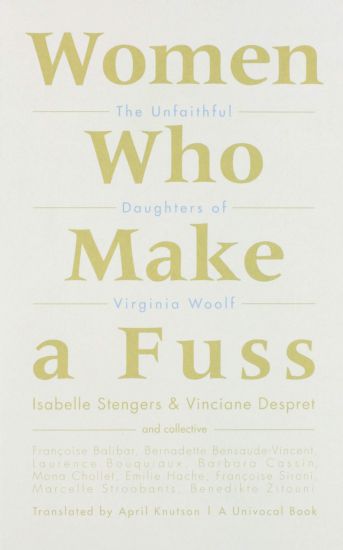
Virginia Woolf, to whom university admittance had been forbidden, watched the universities open their doors. Though she was happy that her sisters could study in university libraries, she cautioned women against joining the procession of educated men and being co-opted into protecting a “civilization” with values alien to women. Now, as Woolf’s disloyal (unfaithful) daughters, who have professional positions in Belgian universities, Isabelle Stengers and Vinciane Despret, along with a collective of women scholars in Belgium and France, question their academic careers and reexamine the place of women and their role in thinking, both inside and outside the university. They urge women to heed Woolf’s cry-Think We Must-and to always make a fuss about injustice, cruelty, and arrogance.
Doctors and Healers

Doctors and Healers

Tobie Nathan; Isabelle Stengers

Polity Press
2018
sidottu
We think we know what healers do: they build on patients’ irrational beliefs and treat them in a ‘symbolic’ way. If they get results, it’s thanks to their capacity to listen, rather than any influence on a clinical level. At the same time, we also think we know what modern medicine is: a highly technical and rational process, but one that scarcely listens to patients at all. In this book, ethnopsychiatrist Tobie Nathan and philosopher Isabelle Stengers argue that this commonly posed opposition between traditional and modern medicine is misleading. They show instead that healers are interesting precisely because they don’t listen to patients, using techniques of ‘divination’ rather than ‘diagnosis’. Healers construct genuine therapeutic strategies by identifying the origins of symptoms in external forces, outside of the mind of the sufferer. Modern medicine, for its part, is characterized by empiricism rather than rationality. What appears to be the pursuit of rationality is ultimately only a means to dismiss and exclude other forms of treatment. Blurring the distinctions between traditional and modern practices and drawing on perspectives from across the globe, this ethnopsychiatric manifesto encourages us to think in radically new ways about illness, challenging accepted notions on the relationship between sufferer and symptom.
Doctors and Healers

Doctors and Healers

Tobie Nathan; Isabelle Stengers

Polity Press
2018
nidottu
We think we know what healers do: they build on patients’ irrational beliefs and treat them in a ‘symbolic’ way. If they get results, it’s thanks to their capacity to listen, rather than any influence on a clinical level. At the same time, we also think we know what modern medicine is: a highly technical and rational process, but one that scarcely listens to patients at all. In this book, ethnopsychiatrist Tobie Nathan and philosopher Isabelle Stengers argue that this commonly posed opposition between traditional and modern medicine is misleading. They show instead that healers are interesting precisely because they don’t listen to patients, using techniques of ‘divination’ rather than ‘diagnosis’. Healers construct genuine therapeutic strategies by identifying the origins of symptoms in external forces, outside of the mind of the sufferer. Modern medicine, for its part, is characterized by empiricism rather than rationality. What appears to be the pursuit of rationality is ultimately only a means to dismiss and exclude other forms of treatment. Blurring the distinctions between traditional and modern practices and drawing on perspectives from across the globe, this ethnopsychiatric manifesto encourages us to think in radically new ways about illness, challenging accepted notions on the relationship between sufferer and symptom.
Order Out of Chaos

Order Out of Chaos

Isabelle Stengers; Ilya Prigogine

Verso Books
2018
nidottu
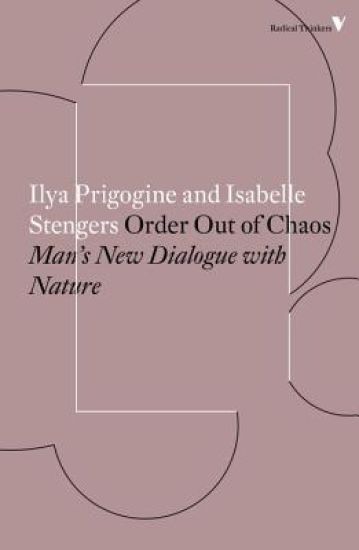
Order Out of Chaos is a sweeping critique of the discordant landscape of modern scientific knowledge. In this landmark book, Nobel Laureate Ilya Prigogine and acclaimed philosopher Isabelle Stengers offer an exciting and accessible account of the philosophical implications of thermodynamics. Prigogine and Stengers bring contradictory philosophies of time and chance into a novel and ambitious synthesis. Since its first publication in France in 1978, this book has sparked debate among physicists, philosophers, literary critics and historians.
Another Science is Possible

Another Science is Possible

Isabelle Stengers

Polity Press
2017
sidottu
Like fast food, fast science is quickly prepared, not particularly good, and it clogs up the system. Efforts to tackle our most pressing issues have been stymied by conflict within the scientific community and mixed messages symptomatic of a rushed approach. What is more, scientific research is being shaped by the bubbles and crashes associated with economic speculation and the market. A focus on conformism, competitiveness, opportunism and flexibility has made it extremely difficult to present cases of failure to the public, for fear that it will lose confidence in science altogether. In this bold new book, distinguished philosopher Isabelle Stengers shows that research is deeply intertwined with broader social interests, which means that science cannot race ahead in isolation but must learn instead to slow down. Stengers offers a path to an alternative science, arguing that researchers should stop seeing themselves as the 'thinking, rational brain of humanity' and refuse to allow their expertise to be used to shut down the concerns of the public, or to spread the belief that scientific progress is inevitable and will resolve all of society's problems. Rather, science must engage openly and honestly with an intelligent public and be clear about the kind of knowledge it is capable of producing. This timely and accessible book will be of great interest to students, scholars and policymakers in a wide range of fields, as well anyone concerned with the role of science and its future.
Another Science is Possible

Another Science is Possible

Isabelle Stengers

Polity Press
2017
nidottu
Like fast food, fast science is quickly prepared, not particularly good, and it clogs up the system. Efforts to tackle our most pressing issues have been stymied by conflict within the scientific community and mixed messages symptomatic of a rushed approach. What is more, scientific research is being shaped by the bubbles and crashes associated with economic speculation and the market. A focus on conformism, competitiveness, opportunism and flexibility has made it extremely difficult to present cases of failure to the public, for fear that it will lose confidence in science altogether. In this bold new book, distinguished philosopher Isabelle Stengers shows that research is deeply intertwined with broader social interests, which means that science cannot race ahead in isolation but must learn instead to slow down. Stengers offers a path to an alternative science, arguing that researchers should stop seeing themselves as the 'thinking, rational brain of humanity' and refuse to allow their expertise to be used to shut down the concerns of the public, or to spread the belief that scientific progress is inevitable and will resolve all of society's problems. Rather, science must engage openly and honestly with an intelligent public and be clear about the kind of knowledge it is capable of producing. This timely and accessible book will be of great interest to students, scholars and policymakers in a wide range of fields, as well anyone concerned with the role of science and its future.
Speculative Empiricism

Speculative Empiricism

Isabelle Stengers

Edinburgh University Press
2017
nidottu
Can experience be thought systematically without transforming the richness of the world as it is lived into reductive philosophical generalities? Can the method of empiricism ever be reconciled with a method of systematic cosmological speculation? Didier Debaise's reading of Process and Reality shows clearly what a philosophy that makes this possible looks like, how it works and what is at stake. He focuses in on Whitehead's attempt to construct a metaphysical system of everything in the universe that exists whilst simultaneously claiming that it can account for every element of our experience: everything enjoyed and perceived, willed or thought. In this way, Debaise illustrates how Whitehead's philosophy gives us a radically new way of conceiving the relations between experience and speculation.
Thinking with Whitehead

Thinking with Whitehead

Isabelle Stengers; Bruno Latour

Harvard University Press
2014
nidottu
Alfred North Whitehead has never gone out of print, but for a time he was decidedly out of fashion in the English-speaking world. In a splendid work that serves as both introduction and erudite commentary, Isabelle Stengers—one of today’s leading philosophers of science—goes straight to the beating heart of Whitehead’s thought. The product of thirty years’ engagement with the mathematician-philosopher’s entire canon, this volume establishes Whitehead as a daring thinker on par with Gilles Deleuze, Felix Guattari, and Michel Foucault.Reading the texts in broadly chronological order while highlighting major works, Stengers deftly unpacks Whitehead’s often complicated language, explaining the seismic shifts in his thinking and showing how he called into question all that philosophers had considered settled after Descartes and Kant. She demonstrates that the implications of Whitehead’s philosophical theories and specialized knowledge of the various sciences come yoked with his innovative, revisionist take on God. Whitehead’s God exists within a specific epistemological realm created by a radically complex and often highly mathematical language.“To think with Whitehead today,” Stengers writes, “means to sign on in advance to an adventure that will leave none of the terms we normally use as they were.”
Cosmopolitics II

Cosmopolitics II

Isabelle Stengers

University of Minnesota Press
2011
sidottu
Originally published in French in seven volumes, Cosmopolitics investigates the role and authority of the sciences in modern societies and challenges their claims to objectivity, rationality, and truth. Cosmopolitics II includes the first English-language translations of the last four books: Quantum Mechanics: The End of the Dream, In the Name of the Arrow of Time: Prigogine’s Challenge, Life and Artifice: The Faces of Emergence, and The Curse of Tolerance. Arguing for an “ecology of practices” in the sciences, Isabelle Stengers explores the discordant landscape of knowledge derived from modern science, seeking intellectual consistency among contradictory, confrontational, and mutually exclusive philosophical ambitions and approaches. For Stengers, science is a constructive enterprise, a diverse, interdependent, and highly contingent system that does not simply discover preexisting truths but, through specific practices and processes, helps shape them. Stengers concludes this philosophical inquiry with a forceful critique of tolerance; it is a fundamentally condescending attitude, she contends, that prevents those worldviews that challenge dominant explanatory systems from being taken seriously. Instead of tolerance, she proposes a “cosmopolitics” that rejects politics as a universal category and allows modern scientific practices to peacefully coexist with other forms of knowledge.