Kirjailija
Isaiah Berlin
Kirjat ja teokset yhdessä paikassa: 39 kirjaa, julkaisuja vuosilta 1997-2025, suosituimpien joukossa Karl Marx. Vertaile teosten hintoja ja tarkista saatavuus suomalaisista kirjakaupoista.
39 kirjaa
Kirjojen julkaisuhaarukka 1997-2025.
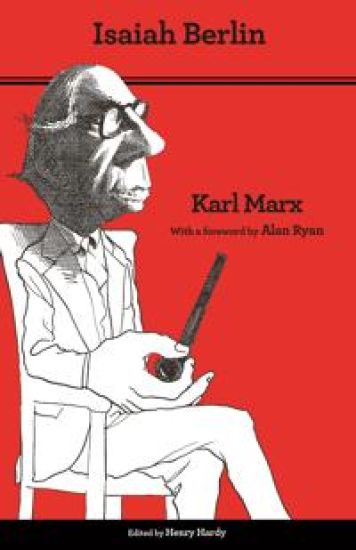
Isaiah Berlin's intellectual biography of Karl Marx has long been recognized as one of the best concise accounts of the life and thought of the man who had, in Berlin's words, a more "direct, deliberate, and powerful" influence on mankind than any other nineteenth-century thinker. A brilliantly lucid work of synthesis and exposition, the book introduces Marx's ideas and sets them in their context, explains why they were revolutionary in political and intellectual terms, and paints a memorable portrait of Marx's dramatic life and outsized personality. Berlin takes readers through Marx's years of adolescent rebellion and post-university communist agitation, the personal high point of the 1848 revolutions, and his later years of exile, political frustration, and intellectual effort. Critical yet sympathetic, Berlin's account illuminates a life without reproducing a legend. New features of this thoroughly revised edition include references for Berlin's quotations and allusions, Terrell Carver's assessment of the distinctiveness of Berlin's book, and a revised guide to further reading.
Mit diesem Buch wird eine Neuübersetzung der vor 85 Jahren erschienenen, richtungweisenden Biografie von Karl Marx vorgelegt. Isaiah Berlins Biografie aus dem Jahr 1939 ist eine hellsichtige, bis in die feinsten Verästelungen vordringende Einführung in das Denken von Karl Marx als Theoretiker und sozialistischer Revolutionär. Sie beleuchtet einfühlsam sowohl seine Persönlichkeit als auch den sozialen und historischen Kontext, in den Marx hineingeboren wurde, in dem er aufwuchs und der seine Entwicklung als Philosoph beeinflusste. Berlins flüssiger Stil und sein profundes Wissen lassen die Diskurse im 19. Jahrhundert vor unseren Augen wieder lebendig werden. Es ist die Biografie von Marx in seiner Zeit. Das Nachwort des Herausgebers Hans-Peter Müller bettet Berlins Marx in dessen umfassendes Werk ein und lädt zur Neulektüre des begnadeten Ideenhistorikers ein.
'Brilliant. Searching and profound' E.H. Carr, Times Literary Supplement'When reading Isaiah Berlin we breathe an altogether different air' New York Review of Books'Beautifully written' W. H. Auden, New Yorker'Ingenious. Exactly what good critical writing should be' Max Beloff, GuardianThe fox knows many things, but the hedgehog knows one big thing.For Isaiah Berlin, there is a fundamental distinction in mankind: those who are fascinated by the infinite variety of things - foxes - and those who relate everything to a central all-embracing system - hedgehogs. It can be applied to the greatest creative minds: Dante, Ibsen and Proust are hedgehogs, while Shakespeare, Aristotle and Joyce are foxes.Yet when Berlin reaches the case of Tolstoy, he finds a fox by nature, but a hedgehog by conviction; a duality which holds the key to understanding Tolstoy's work, illuminating a paradox of his philosophy of history and showing why he was frequently misunderstood by his contemporaries and critics.With a foreword by Michael IgnatieffA W&N Essential
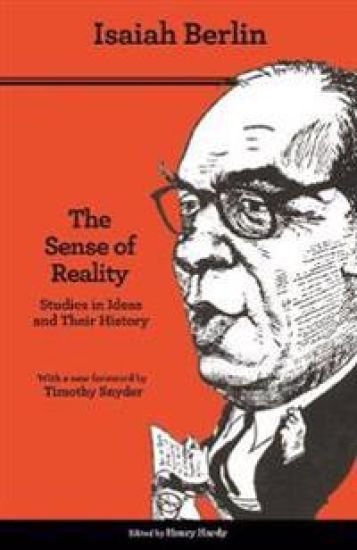
A New York Times Notable Book of the Year"For anyone wanting to understand the twists and turns of the history of ideas, this book will be indispensable." John Gray, New York Times Book ReviewThe Sense of Reality was the last new collection of essays published by Isaiah Berlin in his lifetime. All informed by Berlin's lifelong fascination with the history of ideas, these engaging studies range widely: the subjects explored include realism in history; judgment in politics; the history of socialism; the nature and impact of Marxism; the radical cultural revolution instigated by the Romantics; Russian notions of artistic commitment; and the origins and practice of nationalism. The title essay, taking its cue from the impossibility of recreating a bygone epoch, is a superb centerpiece. Now with a new foreword by Timothy Snyder and a new appendix comprising a previously unpublished essay on the great Russian critic Vissarion Belinksy and a previously uncollected lecture on utopianism, The Sense of Reality is a rich and illuminating collection from one of the most seductive writers and thinkers of the twentieth century.
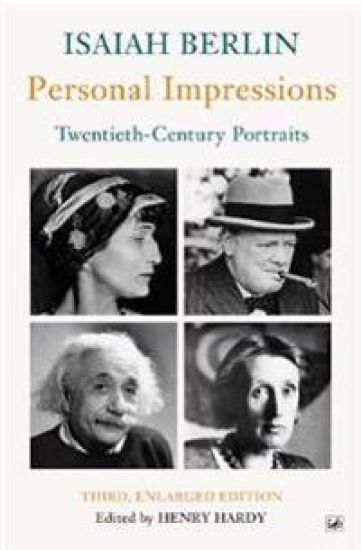
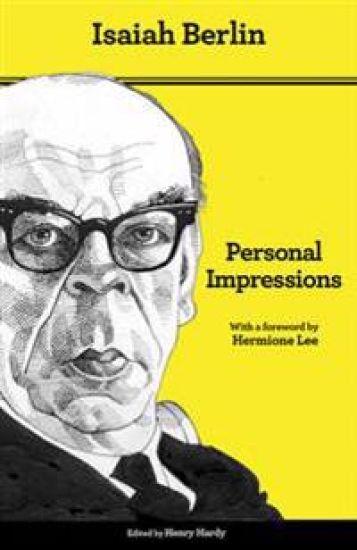
The third, enlarged edition of Isaiah Berlin's remarkable series of character portraits, Personal ImpressionsWinston Churchill, Franklin D. Roosevelt, Virginia Woolf, Aldous Huxley, Albert Einstein, Boris Pasternak and Anna Akhmatova: Isaiah Berlin’s Personal Impressions collects the essayist and intellectual historian’s most remarkable portraits of prominent twentieth-century thinkers, writers and politicians. For this third, enlarged edition, ten new pieces have been added, including portraits of David Ben-Gurion, Maynard and Lydia Keynes, and Stephen Spender, as well as Berlin's autobiographical reflections on Jewish Oxford and his Oxford undergraduate years. Rich and enlightening, Personal Impressions is a vibrant demonstration of Berlin's belief that ideas truly live only through people.
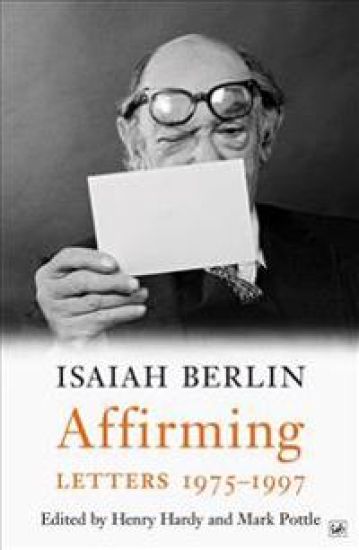
‘IB was one of the great affirmers of our time.’ John Banville, New York Review of BooksThe title of this final volume of Isaiah Berlin’s letters is echoed by John Banville’s verdict in his review of its predecessor, Building: Letters 1960–75, which saw Berlin publish some of his most important work, and create, in Oxford’s Wolfson College, an institutional and architectural legacy. In the period covered by this new volume (1975–97) he consolidates his intellectual legacy with a series of essay collections. These generate many requests for clarification from his readers, and stimulate him to reaffirm and sometimes refine his ideas, throwing substantive new light on his thought as he grapples with human issues of enduring importance.Berlin’s comments on world affairs, especially the continuing conflict between Israel and the Palestinians, and the collapse of Communism, are characteristically acute. This is also the era of the Northern Ireland Troubles, the Iranian revolution, the rise of Solidarity in Poland, the Chernobyl nuclear disaster, the fall of the Berlin Wall, Ayatollah Khomeini’s fatwa against Salman Rushdie, the spread of Islamic fundamentalism, and wars in the Falkland Islands, the Persian Gulf and the Balkans. Berlin scrutinises the leading politicians of the day, including Reagan, Thatcher and Gorbachev, and draws illuminating sketches of public figures, notably contrasting the personas of Alexander Solzhenitsyn and Andrey Sakharov. He declines a peerage, is awarded the Agnelli Prize for ethics, campaigns against philistine architecture in London and Jerusalem, helps run the National Gallery and Covent Garden, and talks at length to his biographer. He reflects on the ideas for which he is famous – especially liberty and pluralism – and there is a generous leavening of the conversational brilliance for which he is also renowned, as he corresponds with friends about politics, the academic world, music and musicians, art and artists, and writers and their work, always displaying a Shakespearean fascination with the variety of humankind.Affirming is the crowning achievement both of Berlin’s epistolary life and of the widely acclaimed edition of his letters whose first volume appeared in 2004.
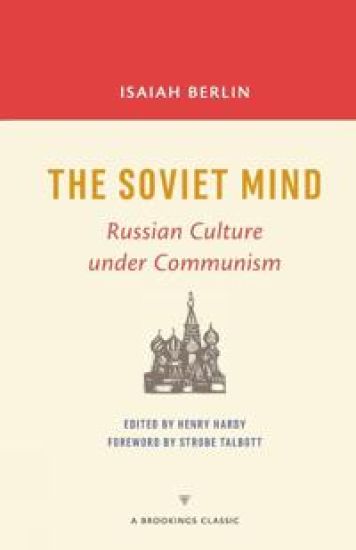
"With a revised foreword by Brookings President Strobe Talbott and a new introduction by Berlin’s editor, Henry Hardy.George Kennan, the architect of US policy toward the Soviet Union, called Isaiah Berlin “the patron saint among the commentators of the Russian scene.” In The Soviet Mind, Berlin proves himself fully worthy of that accolade. Although the essays in this book were originally written to explore the tensions between Soviet communism and Russian culture, the thinking about the Russian mind that emerges is as relevant today under Putin’s post-communist Russia as it was when this book first appeared more than a decade ago.This Brookings Classic brings together Berlin’s writings about the Soviet Union. Among the highlights are accounts of Berlin’s meetings with the Russian writers in the aftermath of the war; a celebrated memorandum he wrote for the British Foreign Office in 1945 about the state of the arts under Stalin; Berlin’s account of Stalin’s manipulative “artificial dialectic”; portraits of Pasternak and poet Osip Mandel'shtam; Berlin’s survey of Russian culture based on a visit in 1956; and a postscript reflecting on the fall of the Berlin Wall and other events in 1989.Henry Hardy prepared the essays for publication; his introductory discussions describe their history. In his foreword, revised for this new edition, Brookings’s Strobe Talbott, a long-time expert on Russia and the Soviet Union, relates the essays to Berlin’s other work.The essays and other pieces in The Soviet Mind—which includes a new essay, “Marxist versus Non-Marxist Ideas in Soviet Policy”, and a summary of a talk on communism—represent Berlin at his most brilliant, and are invaluable for policy-makers, students and anyone interested in Russian politics and thought—past, present and future."
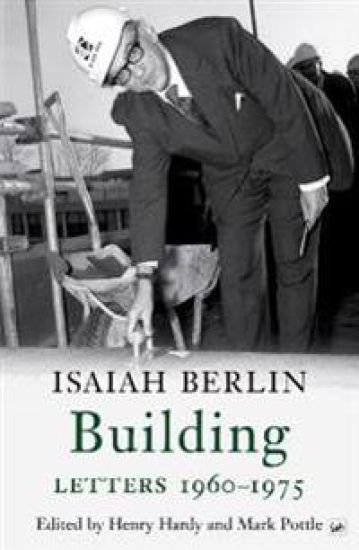
In the period covered here (1960–75) Isaiah Berlin creates Wolfson College, Oxford; John F. Kennedy becomes US President (and is assassinated); Berlin dines with JFK on the day he is told of the Soviet missile bases in Cuba; the Six-Day Arab–Israeli war of 1967 creates problems that are still with us today; Richard M. Nixon succeeds Johnson as US President and resigns over Watergate; and the long agony of the Vietnam War grinds on in the background.At the same time Berlin publishes some of his most important work, including Four Essays on Liberty – the key texts of his liberal pluralism – and the essays later included in Vico and Herder. He talks on the radio, appears on television and in documentary films and gives numerous lectures, especially his celebrated Mellon Lectures, later published as The Roots of Romanticism.Behind these public events is a constant stream of gossip and commentary, acerbic humour and warm personal feeling. Berlin writes about an enormous range of topics to a sometimes dazzling cast of correspondents. This new volume leaves no doubt that Berlin is one of the very best letter-writers of the twentieth century.
Personal Impressions
Isaiah Berlin; Henry (EDT) Hardy; Noel (AFT) Annan
Princeton University Press
2014
pokkari
In this collection of remarkable biographical portraits, the great essayist and intellectual historian Isaiah Berlin brings to life a wide range of prominent twentieth-century thinkers, politicians, and writers. These include Winston Churchill, Franklin D. Roosevelt, Chaim Weizmann, Albert Einstein, Virginia Woolf, Aldous Huxley, Boris Pasternak, and Anna Akhmatova. With the exception of Roosevelt, Berlin met them all, and he knew many of them well. Other figures recalled here include the Zionist Yitzhak Sadeh, the U.S. Supreme Court judge Felix Frankfurter, the classicist and wit Maurice Bowra, the philosopher J. L. Austin, and the literary critic Edmund Wilson. For this edition, ten new pieces have been added, including portraits of David Ben-Gurion, Maynard and Lydia Keynes, and Stephen Spender, as well as Berlin's autobiographical reflections on Jewish Oxford and his Oxford undergraduate years. Rich and enlightening, Personal Impressions is a vibrant demonstration of Berlin's belief that ideas truly live only through people.
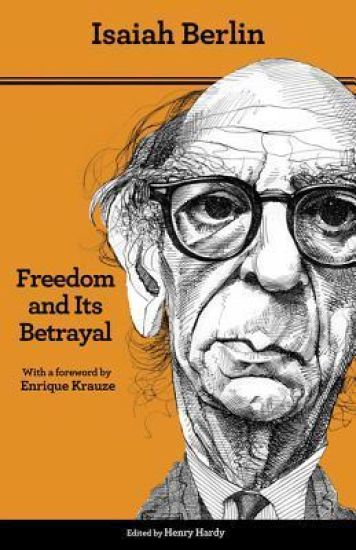
Freedom and Its Betrayal
Isaiah Berlin; Henry (EDT) Hardy; Enrique (FRW) Krause
Princeton University Press
2014
pokkari
These celebrated lectures constitute one of Isaiah Berlin's most concise, accessible, and convincing presentations of his views on human freedom-views that later found expression in such famous works as "Two Concepts of Liberty" and were at the heart of his lifelong work on the Enlightenment and its critics. When they were broadcast on BBC radio in 1952, the lectures created a sensation and confirmed Berlin's reputation as an intellectual who could speak to the public in an appealing and compelling way. A recording of only one of the lectures has survived, but Henry Hardy has recreated them all here from BBC transcripts and Berlin's annotated drafts. Hardy has also added, as an appendix to this new edition, a revealing text of "Two Concepts" based on Berlin's earliest surviving drafts, which throws light on some of the issues raised by the essay. And, in a new foreword, historian Enrique Krauze traces the origin of Berlin's idea of negative freedom to his rejection of the notion that the creation of the State of Israel left Jews with only two choices: to emigrate to Israel or to renounce Jewish identity.
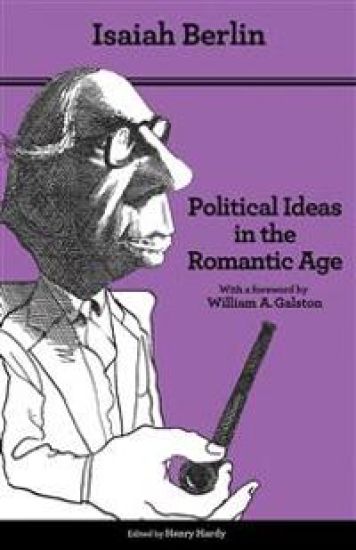
Political Ideas in the Romantic Age: Their Rise and Influence on Modern Thought - Updated Edition
Isaiah Berlin
PRINCETON UNIVERSITY PRESS
2014
nidottu
This new edition features the previously unpublished delivery text of Berlin's inaugural lecture as a professor at Oxford, which derives from this volume and stands as the briefest and most pithy version of his famous essay "Two Concepts of Liberty.? Political Ideas in the Romantic Age is the only book in which the great intellectual historian Isaiah Berlin lays out in one continuous account most of his key insights about the period he made his own. Written for a series of lectures at Bryn Mawr College in 1952, and heavily revised and expanded by Berlin afterward, the book argues that the political ideas of 1760-1830 are still largely ours, down to the language and metaphors they are expressed in. Berlin provides a vivid account of some of the era's most influential thinkers, including Rousseau, Fichte, Hegel, Helvetius, Condorcet, Saint-Simon, and Schelling. Written in Berlin's characteristically accessible style, this is his longest single text. Distilling his formative early work and containing much that is not to be found in his famous essays, the book is of great interest both for what it reveals about the continuing influence of Romantic political thinking and for what it shows about the development of Berlin's own influential thought. The book has been carefully prepared by Berlin's longtime editor Henry Hardy, and Joshua L. Cherniss provides an illuminating introduction that sets it in the context of Berlin's life and work.
This book brings together three major studies from Isaiah Berlin's central intellectual project â?? to explain the opposition to the excessively scientistic French Enlightenment by getting under the skin of its critics and giving a sympathetic account of their views.
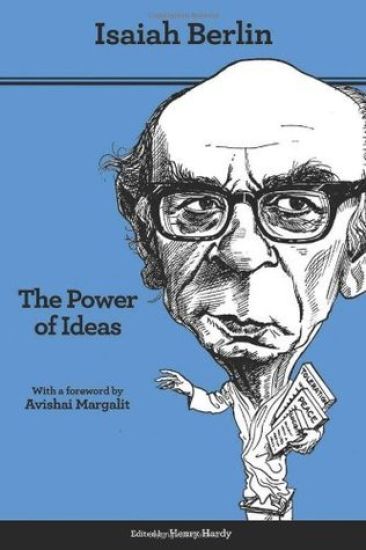
The Power of Ideas
Isaiah Berlin; Henry (EDT) Hardy; Avishai (FRW) Margalit
Princeton University Press
2013
pokkari
The essays collected in this new volume reveal Isaiah Berlin at his most lucid and accessible. He was constitutionally incapable of writing with the opacity of the specialist, but these shorter, more introductory pieces provide the perfect starting-point for the reader new to his work. Those who are already familiar with his writing will also be grateful for this further addition to his collected essays. The connecting theme of these essays, as in the case of earlier volumes, is the crucial social and political role--past, present and future--of ideas, and of their progenitors. A rich variety of subject-matters is represented--from philosophy to education, from Russia to Israel, from Marxism to romanticism--so that the truth of Heine's warning is exemplified on a broad front. It is a warning that Berlin often referred to, and provides an answer to those who ask, as from time to time they do, why intellectual history matters. Among the contributions are "My Intellectual Path," Berlin's last essay, a retrospective autobiographical survey of his main preoccupations; and "Jewish Slavery and Emancipation," the classic statement of his Zionist views, long unavailable in print. His other subjects include the Enlightenment, Giambattista Vico, Vissarion Belinsky, Alexander Herzen, G.V. Plekhanov, the Russian intelligentsia, the idea of liberty, political realism, nationalism, and historicism. The book exhibits the full range of his enormously wide expertise and demonstrates the striking and enormously engaging individuality, as well as the power, of his own ideas. "Over a hundred years ago, the German poet Heine warned the French not to underestimate the power of ideas: philosophical concepts nurtured in the stillness of a professor's study could destroy a civilization."--Isaiah Berlin, Two Concepts of Liberty, 1958. This new edition adds a number of previously uncollected pieces, including Berlin's earliest statement of the pluralism of values for which he is famous.
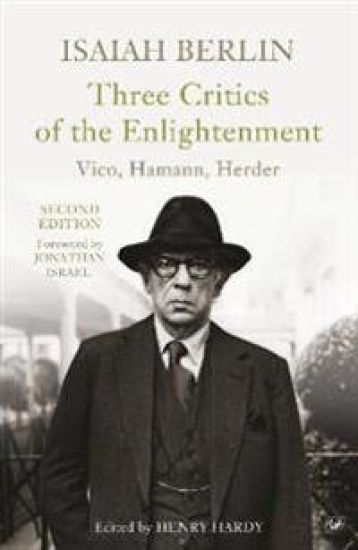
Three Critics of the Enlightenment
Isaiah Berlin; Henry (EDT) Hardy; Jonathan (FRW) Israel
Princeton University Press
2013
pokkari
Isaiah Berlin was deeply admired during his life, but his full contribution was perhaps underestimated because of his preference for the long essay form. The efforts of Henry Hardy to edit Berlin's work and reintroduce it to a broad, eager readership have gone far to remedy this. Now, Princeton is pleased to return to print, under one cover, Berlin's essays on these celebrated and captivating intellectual portraits: Vico, Hamann, and Herder. These essays on three relatively uncelebrated thinkers are not marginal ruminations, but rather among Berlin's most important studies in the history of ideas. They are integral to his central project: the critical recovery of the ideas of the Counter-Enlightenment and the explanation of its appeal and consequences--both positive and (often) tragic. Giambattista Vico was the anachronistic and impoverished Neapolitan philosopher sometimes credited with founding the human sciences. He opposed Enlightenment methods as cold and fallacious. J. G. Hamann was a pious, cranky dilettante in a peripheral German city. But he was brilliant enough to gain the audience of Kant, Goethe, and Moses Mendelssohn. In Hamann's chaotic and long-ignored writings, Berlin finds the first strong attack on Enlightenment rationalism and a wholly original source of the coming swell of romanticism. Johann Gottfried Herder, the progenitor of populism and European nationalism, rejected universalism and rationalism but championed cultural pluralism. Individually, these fascinating intellectual biographies reveal Berlin's own great intelligence, learning, and generosity, as well as the passionate genius of his subjects. Together, they constitute an arresting interpretation of romanticism's precursors. In Hamann's railings and the more considered writings of Vico and Herder, Berlin finds critics of the Enlightenment worthy of our careful attention. But he identifies much that is misguided in their rejection of universal values, rationalism, and science. With his customary emphasis on the frightening power of ideas, Berlin traces much of the next centuries' irrationalism and suffering to the historicism and particularism they advocated. What Berlin has to say about these long-dead thinkers--in appreciation and dissent--is remarkably timely in a day when Enlightenment beliefs are being challenged not just by academics but by politicians and by powerful nationalist and fundamentalist movements. The study of J. G. Hamann was originally published under the title The Magus of the North: J. G. Hamann and the Origins of Modern Irrationalism. The essays on Vico and Herder were originally published as Vico and Herder: Two Studies in the History of Ideas. Both are out of print. This new edition includes a number of previously uncollected pieces on Vico and Herder, two interesting passages excluded from the first edition of the essay on Hamann, and Berlin's thoughtful responses to two reviewers of that same edition.
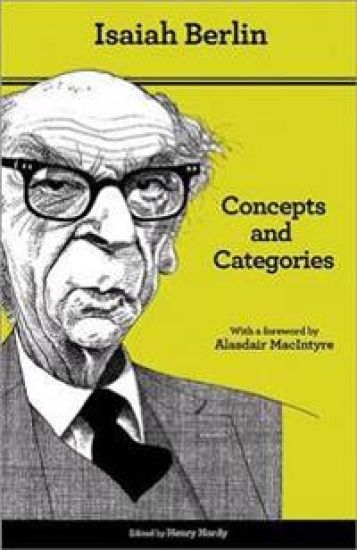
Concepts and Categories
Isaiah Berlin; Henry (EDT) Hardy; Bernard (INT) Williams
Princeton University Press
2013
pokkari
"The goal of philosophy is always the same, to assist men to understand themselves and thus to operate in the open, not wildly in the dark."--Isaiah Berlin This volume of Isaiah Berlin's essays presents the sweep of his contributions to philosophy from his early participation in the debates surrounding logical positivism to his later work, which more evidently reflects his life-long interest in political theory, the history of ideas, and the philosophy of history. Here Berlin describes his view of the nature of philosophy, and of its main task: to uncover the various models and presuppositions--the concepts and categories--that men bring to their existence and that help form that existence. Throughout, his writing is informed by his intense consciousness of the plurality of values, the nature of historical understanding, and of the fragility of human freedom in the face of rigid dogma. This new edition adds a number of previously uncollected pieces that throw further light on Berlin's central philosophical concerns, and a revealing exchange of letters with the editor and Bernard Williams about the genesis of the book.
'Out of the crooked timber of humanity, no straight thing was ever made.' Immanuel KantIsaiah Berlin was one of the most important philosophers of the twentieth century - an activist of the intellect who marshalled vast erudition and eloquence in defence of the endangered values of individual liberty and moral and political plurality.
Isaiah Berlin was one of the leading thinkers of the century, and one of the finest writers. This title selects some of the best of his essays. It encapsulates the principal movements that characterise the modern age: romanticism, historicism, Fascism, relativism, irrationalism and nationalism.
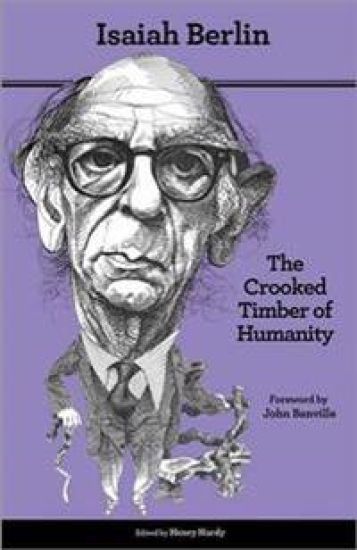
The Crooked Timber of Humanity
Isaiah Berlin; Henry (EDT) Hardy; John (FRW) Banville
Princeton University Press
2013
pokkari
"Out of the crooked timber of humanity, no straight thing was ever made."--Immanuel Kant Isaiah Berlin was one of the most important philosophers of the twentieth century--an activist of the intellect who marshaled vast erudition and eloquence in defense of the endangered values of individual liberty and moral and political plurality. In The Crooked Timber of Humanity he exposes the links between the ideas of the past and the social and political cataclysms of our own time: between the Platonic belief in absolute truth and the lure of authoritarianism; between the eighteenth-century reactionary ideologue Joseph de Maistre and twentieth-century Fascism; between the romanticism of Schiller and Byron and the militant--and sometimes genocidal--nationalism that convulses the modern world.This new edition features a revised text that supplants all previous versions, a new foreword in which award-winning novelist John Banville discusses Berlin's life and ideas, particularly his defense of pluralism, and a substantial new appendix that provides rich context, including letters by Berlin and previously uncollected writings, most notably his virtuoso review of Bertrand Russell's A History of Western Philosophy.
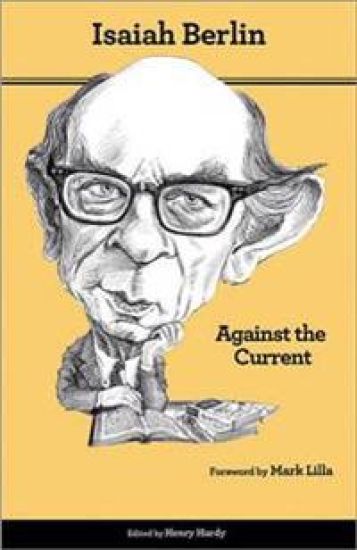
Against the Current
Isaiah Berlin; Henry (EDT) Hardy; Roger (INT) Hausheer
Princeton University Press
2013
pokkari
In this outstanding collection of essays, Isaiah Berlin, one of the great thinkers of the twentieth century, discusses the importance of dissenters in the history of ideas--among them Machiavelli, Vico, Montesquieu, Herzen, and Sorel. With his unusual powers of imaginative re-creation, Berlin brings to life original minds that swam against the current of their times--and still challenge conventional wisdom. In a new foreword to this corrected edition, which also includes a new appendix of letters in which Berlin discusses and further illuminates some of its topics, noted essayist Mark Lilla argues that Berlin's decision to give up a philosophy fellowship and become a historian of ideas represented not an abandonment of philosophy but a decision to do philosophy by other, perhaps better, means. "His instinct told him," Lilla writes, "that you learn more about an idea as an idea when you know something about its genesis and understand why certain people found it compelling and were spurred to action by it." This collection of fascinating intellectual portraits is a rich demonstration of that belief.