
Kirjailija
Ishmael Reed
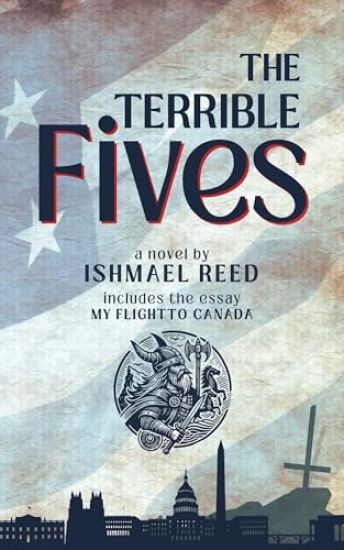
Kirjat ja teokset yhdessä paikassa: 29 kirjaa, julkaisuja vuosilta 1996-2026, suosituimpien joukossa The Terrible Fives. Vertaile teosten hintoja ja tarkista saatavuus suomalaisista kirjakaupoista.
29 kirjaa
Kirjojen julkaisuhaarukka 1996-2026.
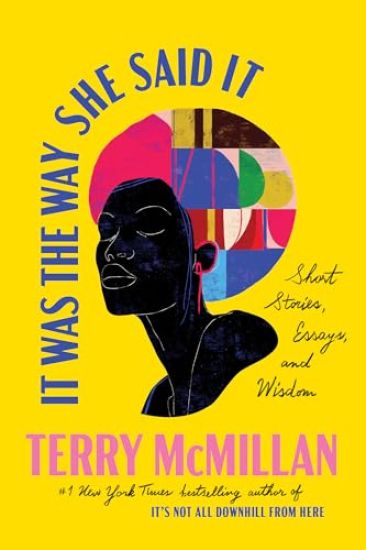
From the #1 New York Times bestselling author of How Stella Got Her Groove Back and Waiting to Exhale comes a remarkable, career-spanning collection of short fiction and essays about love, aging, culture and all the things in between. For the first time ever, renowned author Terry McMillan brings together her previously published short fiction and six nonfiction pieces, as well as never-before seen works in a single volume, from unpublished short stories to magazine articles, opinion pieces, a commencement speech, and contributions to literary journals and anthologies. Whether she's revealing life lessons, pontificating about aging, recalling her sources of inspiration, or laying bare the beginnings of her life as a writer, McMillan approaches every piece with enduring humor, wit, and fearlessness. Devoted fans and new readers will be delighted to discover these treasures spanning McMillan's long, groundbreaking career. With an introduction by MacArthur Fellow Ishmael Reed
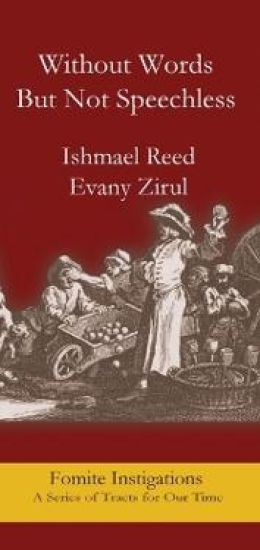
Evany Zirul is a retired surgeon and an accomplished artist. Working as a sculptor of metal and drawing and painting in a variety of medium, she sent Fomite Press a collection of cartoons/comics she composed during Donald Trump's first term after Ishmael Reed mentioned this project to her. Like Reed's drawings, the art is mostly wordless. Although focused on the person of Trump himself, the cartoons from Reed and Ziruly reveal an important truth: Donald Trump is both a personification of his authoritarian/fascist politics and a metaphor representing those in the US population whose white supremacist politics and the cruel manifestation of those politics is their essential identity. Ishmael Reed is one of the greatest US writers in the English language. His wit, imagination and critical understanding of US life and history shouts, whispers, entices, jokes and seduces the readers of his novels, poetry, criticism, commentary and journalism. In a manner that is not merely imaginative but damn right psychedelic at times, his tales of African-American life and lives (which by default are also tales of white American life) are tinged with tragedy told with a humor and sensibility that defies classification. In this tract, Mr. Reed has left words elsewhere, providing us instead with a few cartoons mostly drawn in the first act of the trumpian tragicomedy. These cartoons serve both to remind us that Trump and his minions never made any bones about their project. The fact that some residents of the USA still act surprised when the trumpists do what they said they would is a contrived naivete that either hides their agreement or shows their gullibility (or is it stupidity?)
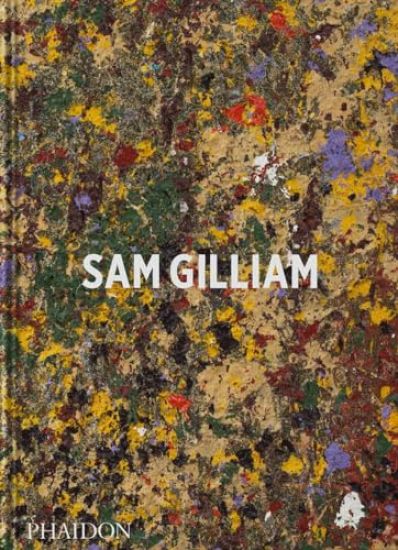
As featured in The Wall Street Journal’s 2024 Holiday Gift Books: Fine Art The definitive monograph of Sam Gilliam one of the great innovators in post-war American painting An African American artist in the nation’s capital at the height of the Civil Rights movement, Sam Gilliam blazed a trail with his singular artistic vision. Gilliam emerged from the Washington, DC art scene in the mid 1960s with works that disrupted established artistic norms and styles. Relentlessly experimental and inspired by the improvisatory ethos of jazz, Gilliam’s lyrical abstractions took on an increasing variety of forms, moods, and materials. This book, made in close collaboration with the Sam Gilliam Foundation, is the first to comprehensively survey the breadth of his extraordinary career, and features never-before-seen archival materials an insightful newly commissioned texts that shine light on the artist, his life, and his work, together with examples of Gilliam's work spanning five decades.
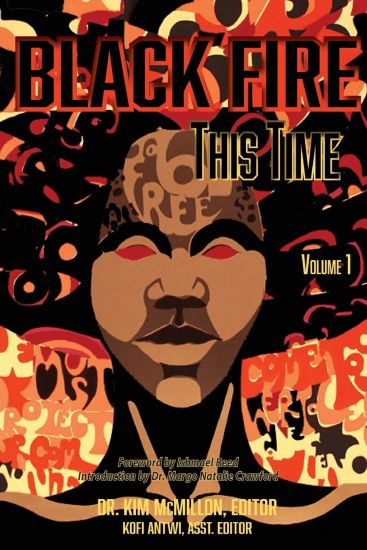
An anthology that explores all facets of the Black Arts Movement. Edited by Dr. Kim McMillon and Kofi Antwi. Foreword by Ishmael Reed. Introduction by Dr. Margo Natalie Crawford. This anthology, nearly 60 years in the making, features over 100 poets and writers on the theme of "Black is Beautiful, Black is Powerful, Black is Home." Exploring the past, present and future of Black writing, this collection bridges many of the founders of the Black Arts Movement-including Nikki Giovanni, Sonia Sanchez, Haki Madhubuti, Amiri Baraka, Wanda Coleman, Dudley Randall, Eugene B. Redmond and Askia Tour -with contemporary established writers in the tradition such as brian g. gilmore-to Ishmael Reed's "younger generation"-Karla Brundage, Allison E. Francis, Tongo Eisen-Martin and C. Liegh McInnis. Designed as an open conversation between generations bridging hearts and minds across decades, Black Fire-This Time's works are rooted in preservation, reverence and discovery. Several little-known works are included for the first time. New works-from established writers as well as emerging talent-share this historic debut. Black Fire-This Time also stands out for its inclusion of many voices that were underrepresented in previous anthologies, most notably Black Fire: an anthology of Afro-American Writing (1968) and its ancestor, The New Negro (1920). The works of writers such as Nikki Giovanni and James Baldwin provide a more complete view of the myriad perspectives on Black identity and writing.
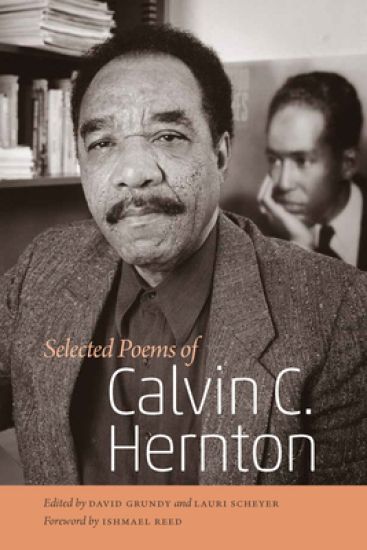
Selected Poems of Calvin C. Hernton
Calvin C Hernton; Ishmael Reed
WESLEYAN UNIVERSITY PRESS
2024
nidottu
The definitive guide to a major African American poet /> />This volume promises to be the definitive guide to Calvin C. Hernton's unparalleled poetic career, re-introducing readers to a major voice in American poetry. Hernton was a cofounder of the Umbra Poets Workshop; a participant in the Black Arts Movement, R. D. Laing's Kingsley Hall, and the Antiuniversity of London; and a teacher at Oberlin College who counted amongst his friends bell hooks, Toni Morrison, and Odetta. As a pioneer in the field of Black Studies, Hernton developed a theoretical and practical pedagogy with lasting impact on generations of students. He may be best known as an anti-sexist sociologist, following in the footsteps of W.E.B. Du Bois, but Hernton viewed himself, above all, as a poet. This volume includes a generous selection of Hernton's previously published poems, from classics like the often anthologized "The Distant Drum" to the visionary epic The Coming of Chronos to the House of Nightsong, reprinted in full for the first time since 1964, alongside uncollected and unpublished material from the Calvin C. Hernton papers at Ohio University, a new critical introduction, and detailed notes, chronology, and bibliography. /> />[sample poem] /> />The Distant Drum /> />I am not a metaphor or symbol. />This you hear is not the wind in the trees. />Nor a cat being maimed in the street. />I am being maimed in the street />It is I who weep, laugh, feel pain or joy. />Speak this because I exist. />This is my voice />These words are my words, my mouth />Speaks them, my hand writes. />I am a poet. />It is my fist you hear beating />Against your ear.
Selected Poems of Calvin C. Hernton
Calvin C Hernton; Ishmael Reed
WESLEYAN UNIVERSITY PRESS
2024
sidottu
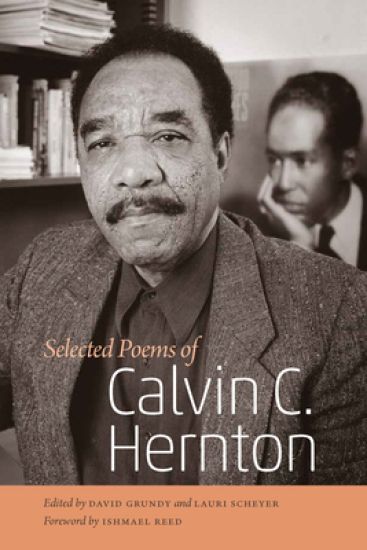
The definitive guide to a major African American poet. This volume promises to be the definitive guide to Calvin C. Hernton's unparalleled poetic career, re-introducing readers to a major voice in American poetry. Hernton was a cofounder of the Umbra Poets Workshop; a participant in the Black Arts Movement, R. D. Laing's Kingsley Hall, and the Antiuniversity of London; and a teacher at Oberlin College who counted amongst his friends bell hooks, Toni Morrison, and Odetta. As a pioneer in the field of Black Studies, Hernton developed a theoretical and practical pedagogy with lasting impact on generations of students. He may be best known as an anti-sexist sociologist, following in the footsteps of W.E.B. Du Bois, but Hernton viewed himself, above all, as a poet. This volume includes a generous selection of Hernton's previously published poems, from classics like the often anthologized "The Distant Drum" to the visionary epic The Coming of Chronos to the House of Nightsong, reprinted in full for the first time since 1964, alongside uncollected and unpublished material from the Calvin C. Hernton papers at Ohio University, a new critical introduction, and detailed notes, chronology, and bibliography. [sample poem] The Distant Drum I am not a metaphor or symbol. This you hear is not the wind in the trees. Nor a cat being maimed in the street. I am being maimed in the street It is I who weep, laugh, feel pain or joy. Speak this because I exist. This is my voice These words are my words, my mouth Speaks them, my hand writes. I am a poet. It is my fist you hear beating Against your ear.

Max Reddick, a novelist, journalist, and presidential speechwriter, has spent his career struggling against the riptide of race in America. Now terminally ill, he has nothing left to lose. An expat for many years, Max returns to Europe one last time to settle an old debt with his estranged Dutch wife, Margrit, and to attend the Paris funeral of his friend, rival, and mentor Harry Ames. Among Harry’s papers, Max uncovers explosive secret government documents outlining ‘King Alfred’, a plan to be implemented in the event of widespread racial unrest and aiming ‘to terminate, once and for all, the Minority threat to the whole of the American society’. Realizing that Harry has been assassinated, Max must risk everything to get the documents to the one man who can help. Greeted as a masterpiece when it was published in 1967, The Man Who Cried I Am stakes out a range of experience rarely seen in American fiction: from the life of a Black GI to the ferment of postcolonial Africa to an insider’s view of Washington politics in the era of segregation and the Civil Rights Movement. John A. Williams and his lost classic are overdue for rediscovery.
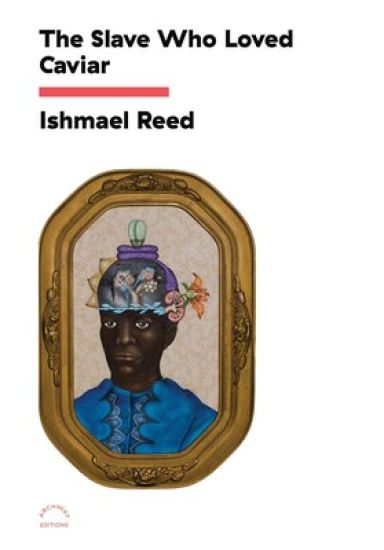
The greatest and most fearless living writer turns his unerring eye to the art world and the fraught relationship between Jean-Michel Basquiat and Andy Warhol. The relationship between Andy Warhol and Jean-Michel Basquiat is already one of the most iconic, intensely analyzed partnerships in the history of art. Ishmael Reed, perhaps America's greatest living writer, brings the same unsparing, deeply researched perspective as he did for the Archway Editions bestseller The Haunting of Lin-Manuel Miranda, for a captivating, illuminating final word on the famous duo. Already the subject of controversy during its original 2021-2022 run at the Theater for the New City in the East Village, Archway Editions is proud to bring you the unabridged text of The Slave Who Loved Caviar, Ishmael Reed's latest feat of research and drama, the tragedy as disturbingly real for today's artists as it was in the 1980's.

Mystic Parallax is the first major monograph by rising interdisciplinary artist Awol Erizku. Working across photography, film, video, painting, and installation, his work references and re-imagines African American and African visual culture, from hip hop vernacular to Nefertiti, while nodding to traditions of spirituality and Surrealism. This comprehensive monograph spans Erizku’s career, blending his studio practice with his work as an in-demand editorial photographer working regularly for the New Yorker, New York magazine, Time, and GQ, among others, and features his conceptual portraits of Black cultural icons, such as Solange, Amanda Gorman, and Michael B. Jordan. As Erizku recently told the New York Times, “It’s important for me to create confident, powerful, downright regal images of Black people.” Featuring essays by critically acclaimed author Ishmael Reed, curator Ashley James, and writer Doreen St. Félix, and interviews with the artist by Urs Fischer and Antwaun Sargent, Mystic Parallax is a luminous and arresting testament to the artist’s tremendous power and originality. Copublished by Aperture and The Momentary
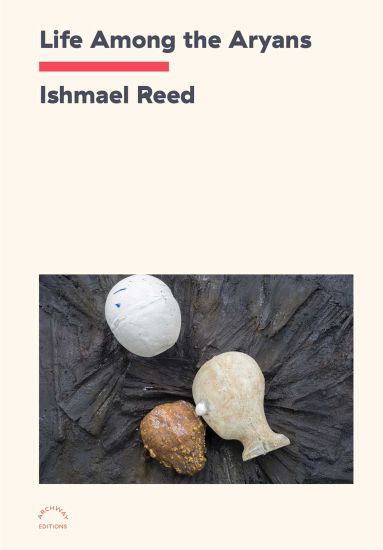
America's greatest living writer returns with a hilarious, scathing satire of the MAGA mindset. The controversial new play from Ishmael Reed, Life Among the Aryans follows John Shaw and Michael Mulvaney, two modern MAGA white supremacists as they leech off their wives, take orders from grifting Leader Matthews, and plot a unique way around the encroaching societal progress they fear will leave them in the dust. Full of page-turning dialogue, unexpected twists and hilarious asides, this is the latest urgent must-read from the greatest living American writer. Originally performed at the Nuyorican Poets Cafe, Life Among the Aryans has only grown in relevance, as the violence in Washington D.C. and state capitals around the country shines a light on the persistent unrest among a certain kind of American. A perfect counterpart to last year'sThe Haunting of Lin-Manuel Miranda, in which Reed investigated the darkness at the heart of Obama-era liberal piety, Life Among the Aryans is a searing, hopeful and above all joyous investigation of what it meant to live through the last four years (and what will come next).
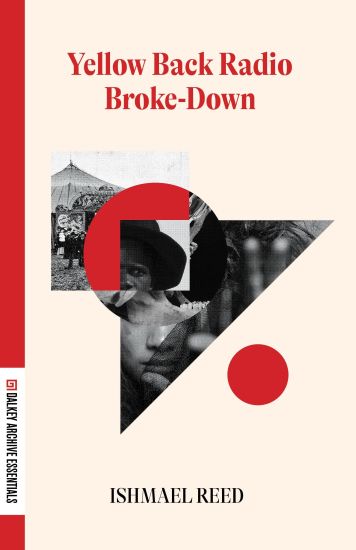
“Folks. This here is the story of the Loop Garoo Kid. A cowboy so bad he made a working posse of spells phone in sick. A bullwhacker so unfeeling he left the print of winged mice on hides of crawling women. A desperado so onery he made the Pope cry and the most powerful of cattlemen shed his head to the Executioner’s swine.” And so begins the HooDoo Western by Ishmael Reed, author of Mumbo Jumbo and one of America’s most innovative and celebrated writers. Reed demolishes white American history and folklore as well as Christian myth in this masterful satire of contemporary American life. In addition to the black, satanic Loop Garoo Kid, Yellow Back Radio Broke-Down features Drag Gibson (a rich, slovenly cattleman), Mustache Sal (his nymphomaniac mail-order bride), Thomas Jefferson and many others in a hilarious parody of the old Western.
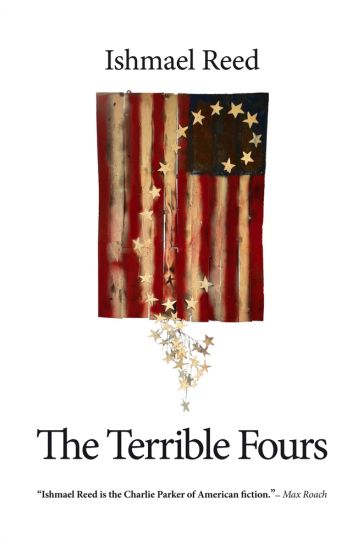
When Ishmael Reed wrote The Terrible Twos about the American infantile need for instant gratification, he could not have realized that during the week of June 29, 2020, journalist Nicole Wallace would be referring to a president as a 'toddler.' Part science fiction, part Washington Novel and part Christmas Novel, The Terrible Fours follows The Terrible Twos (1982) and The Terrible Threes (1989). Some characters have been dropped and some of the principals are back. St. Nicholas is here, but his sidekick Black Peter, who appeared in The Terrible Twos, has been shelved to the Epilog. In The Terrible Threes, former president Dean Clift, who was removed from office after a bizarre television address, disappeared with his entourage while en route to resume his presidency after Supreme Court justice, Nola Payne, casts the vote that declared his removal from office under the 25th Amendment unconstitutional. Televangelist Clement-Jones still runs the White House and continues to humiliate his hand-picked president Jesse Hatch whom he is blackmailing. 'The Rapture,' that Jones and figurehead president Jesse Hatch promised, hasn't arrived.

A new collection of poems from the American author, poet, and playwright Ishmael Reed.The poems in this new collection from Ishmael Reed were written between 2007 and 2020. They range from poems based on events that occurred around Reed's house to cataclysmic space events. Some of the poems were commissioned. "Moving Richmond" was part of a public art installation created by Mildred Howard. The poem, in huge letters forged into weathering steel billboards greets passengers who enter the new Bay Area mass transit hub in Richmond, California. Other poems were commissioned by musicians. "Hope Is The Thing With Feathers" was performed by Gregory Porter. "Red Summer, 2015" appeared in print first and then was set to music by David Murray. Reed writes, "The longest poem in the book, "Jazz Martyrs," was begun when Reed learned about the number of black Jazz greats who didn't live past the age of forty. "I have been fortunate to live beyond the age of 80," says Reed. "I've found out who my best friends are. The ones who got me there."

Ishmael Reed has devoted his life to uncovering the neglected cultural and historical record of the United States, no matter how ugly it might be. He uses a full-court press: fiction, poetry, plays, songs, films, interviews, essays, and more. With Why No Confederate Statues in Mexico, Reed is at his best: insightful, hard-hitting, eclectic, refreshing, caustic, entertaining, informative, and, yes, funny. The War of Rebellion still divides the United States. President Trump, and millions of southerners wish to maintain monuments to generals like Robert E. Lee. Yet those who actually fought under them ran away by the thousands. Some rebel generals, whom the famous pro-confederate propaganda film “Gone With The Wind” referred to as “Knights,” earned their massacre bona fides by murdering thousands of blacks, Mexicans, and Native Americans, who were often unarmed. The “Knight” Robert E. Lee fought children during the Battle of Buena Vista in 1847. The children, Los niños heroes (pictured on the cover), refused to surrender and were slaughtered. The subjects addressed in this book of essays are vast. They include white nationalism, Donald Trump, Quentin Tarantino and Django, the musical Hamilton, Ferguson, Missouri, Amiri Baraka/Leroi Jones, a different take on #metoo, the one-at-a-time tokenism of an elite, who chooses winners and losers among minority artists, the Alt-Right, the use of immigrants to shame black America, and much more. After The Complete Muhammad Ali, recognized by many as the “truly definitive book” on the champion, Ishmael Reed is back with another exciting book of essays that will stir up debate in the United States and abroad.
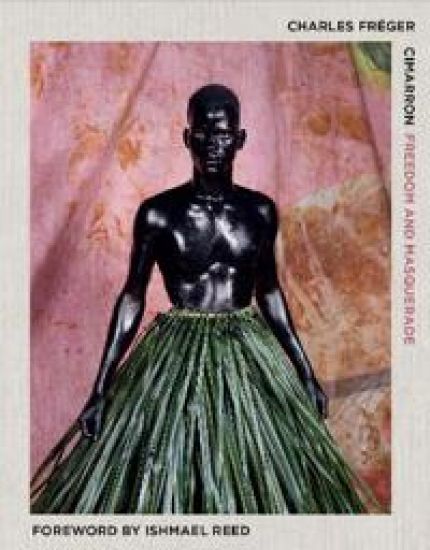
All across the Americas, from the 16th century onwards, enslaved Africans escaped their captors and struck out on their own. These runaways, having found their freedom, established their own communities or joined with indigenous peoples to forge new identities. Cimarron, borrowing a Spanish-American term for these fugitive former slaves, is a new series of photographic portraits of their descendants. From Brazil, Colombia, the Caribbean islands and Central America, as far as the southern United States, elaborate masquerades are staged that celebrate and keep alive the history and memory of African slaves and their creole or mixed-race descendants. Stock characters are portrayed in costume, or in grotesque or satirical representations. A huge variety of African tribal dress, wild ritual regalia and shimmering Mardi Gras outfits feature in breathtaking succession. Vividly coloured silks and cottons combine with woven fibres, leaves, feathers, and bodypaint; props include emblems of slavery and slavemasters – ropes, sticks, guns and machetes. These photographs record real people whose collective sense of memory, folk history and imagination dramatically challenges our expectations. Charles Fréger’s work has established a large and growing following among connoisseurs of contemporary photography, defining a new genre of documentary portraiture that extends and deepens our sense of the human past and the present.
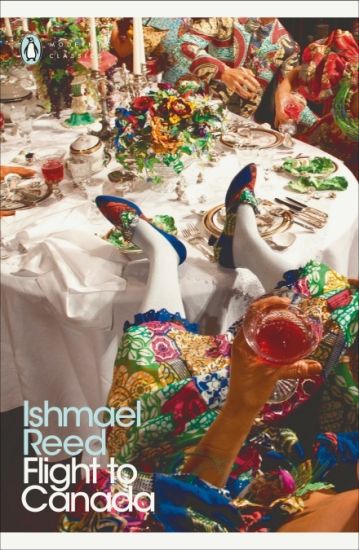
'Reinvents the particulars of slavery in America with a comic rage ... The book explodes. Reed's special grace is anger ... a muscular, luminous prose' The New York Times'It always was, and will always be the most fearlessly original, most viciously political, most rambunctiously funny epic of slavery ever written. America almost doesn't deserve it' - Marlon James (2015 Man Booker Prize Winner)'I loves it here ... We gets whipped with a velvet whip, and there's free dentalcare'Three slaves are on the run in the deep South, with their former master hot on their heels and the Civil War raging.One of them arms himself for a final showdown; one sells his body for pornographic movies; while the last, Raven Quickskill - hero, poet, heartbreaker - swigs champagne on a non-stop jumbo jet to Canada. Taking us on a wild ride through a nineteenth century littered with limousines, waterbeds and colour TVs, Flight to Canada is a surreal, madly funny satire on race in America.'A satirical "neo-slave narrative", the novel wittily conjoins the past of slavery to the present of America's bicentennial' New York Review of Books
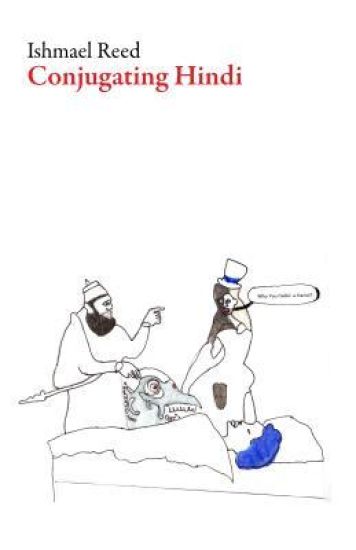
California is still the world's biggest hideout. The only thing more western is the Pacific Ocean, where, if the Big One happens, California might find a home at the bottom. One of those hiding out is Peter Bowman, a former army brat, and lecturer at Woodrow Wilson Community College, who is being hunted for a quality most men would crave. But for Bowman, nicknamed Boa, it has become burdensome. When an opportunity comes, he has to choose between becoming financially solvent or exposing himself to his pursuers. Along the way, he runs into some memorable characters both in reality and in his dreams, including Ishmael Reed. In Ishmael Reed's Conjugating Hindi, stories, histories and myths of different cultures are mixed and sampled. Modern issues like gentrification addressed. It is the closest that a fiction writer has gotten to the hip-hop form on the page. Once again, Ishmael Reed has pioneered a new form. If his first novel, The Free-Lance Pallbearers, was an early Afro-Futurist novel, Mumbo Jumbo recognized as “a graphic novel before we used the term” (according to Pulitzer Prize-winning critic Margo Jefferson), Yellow Back Radio Broke Down Blazing Saddles's “important precursor,” Flight To Canada his "Neo Slave Narrative," a concept that he coined–Conjugating Hindi is his global novel. One that crosses all borders.
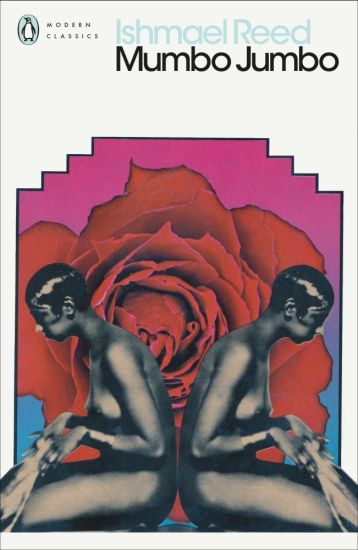
'A great writer' James Baldwin'Part vision, part satire, part farce ... a wholly original, unholy cross between the craft of fiction and witchcraft' The New York TimesA plague is spreading across 1920s America, racing from New Orleans to New York. It's an epidemic of free expression, carried by black artists, and its symptoms are an uncontrollable urge to dance, sing, laugh and jive. The state will stop at nothing to suppress the outbreak, but, deep in the heart of Harlem, private eye and Vodum priest Papa LaBas has other ideas - and, possibly, the key to everything. A freewheeling, explosive blend of jazz, ragtime, ancient myth, magic and conspiracy thriller, this anarchic postmodern classic is a satire for our times.