Kirjojen hintavertailu. Mukana 12 595 353 kirjaa ja 12 kauppaa.

Kirjailija

Israel Drori

Kirjat ja teokset yhdessä paikassa: 5 kirjaa, julkaisuja vuosilta 1995-2013, suosituimpien joukossa Vision and Change in Institutional Entrepreneurship. Vertaile teosten hintoja ja tarkista saatavuus suomalaisista kirjakaupoista.

5 kirjaa

Kirjojen julkaisuhaarukka 1995-2013.

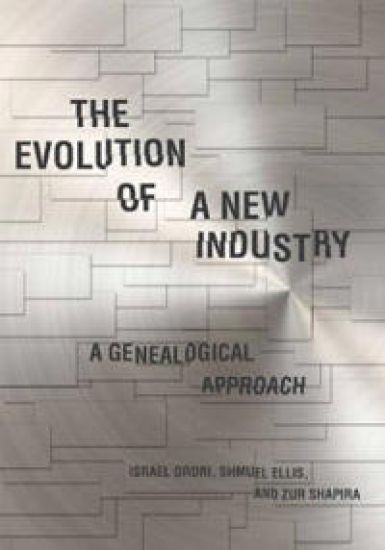
The Evolution of a New Industry

The Evolution of a New Industry

Israel Drori; Shmuel Ellis; Zur Shapira

Stanford University Press
2013
sidottu
The Evolution of a New Industry traces the emergence and growth of the Israeli hi-tech sector to provide a new understanding of industry evolution. In the case of Israel, the authors reveal how the hi-tech sector built an entrepreneurial culture with a capacity to disseminate intergenerational knowledge of how to found new ventures, as well as an intricate network of support for new firms. Following the evolution of this industry from embryonic to mature, Israel Drori, Shmuel Ellis, and Zur Shapira develop a genealogical approach that relies on looking at the sector in the way that one might consider a family tree. The principles of this genealogical analysis enable them to draw attention to the dynamics of industry evolution, while relating the effects of the parent companies' initial conditions to their respective corporate genealogies and imprinting potential. The text suggests that genealogical evolution is a key mechanism for understanding the rate and extent of founding new organizations, comparable to factors such as opportunity structures, capabilities, and geographic clusters.

Vision and Change in Institutional Entrepreneurship

Vision and Change in Institutional Entrepreneurship

Israel Drori; Dana Landau

Berghahn Books
2011
sidottu
Sheltered for a long time within the public sector environment with high job security and professional research autonomy, defense R&D organizations faced unprecedented challenges when government support was being withdrawn and closure threatening. They needed to be led by a suitable vision in order to implement comprehensive changes to their operations and remain viable. This study explores this constitution of vision as a mechanism of intentional change, a strategic tool to reach the desired future for the organization. Going beyond the current literature, the authors ask to what extent, and how, organizational members reconstruct vision in a way that it can support or detain change, a question of importance for management scholars as well as professional managers in both public and private organizations.
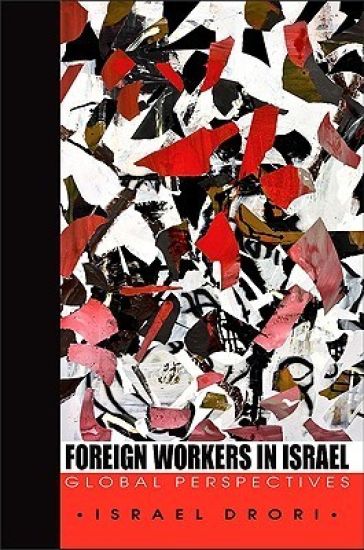
Foreign Workers in Israel

Foreign Workers in Israel

Israel Drori

State University of New York Press
2010
pokkari
Explores how the entry of migrant workers into Israel raises questions beyond just those of the labor market.In this account of a social experiment gone awry, Israel Drori exposes a little-known and recent phenomenon: the importation of foreign workers from Third World economies to Israel. Focusing on Romanian, Thai, and Filipina migrants brought to Israel for specified periods of employment, Drori examines the effect of migrants on Israeli society, particularly the issue of national identity. What began as a political corrective-avoiding the danger of hiring Palestinians to do work that Jewish Israelis would not-has developed into a social and economic problem the state does not know how to handle. In addition to examining the work experiences and social lives of these workers, Drori also situates the Israeli case within a global context, where many affluent nations have significant populations of marginalized, undocumented workers.
The Seam Line

The Seam Line

Israel Drori

Stanford University Press
2000
sidottu
Many Arab communities in Israel's Galilee region are home to export-oriented textile factories, owned by multinational corporations, whose Jewish managers employ local Arab and Druse women as seamstresses and low-level work supervisors. Based on five years of ethnographic research, this book explores how these managers and workers negotiate the terms and meanings of factory work, integrating work culture with the norms and values of the host towns in order for employment arrangements to succeed. The entrance of industrial corporations into developing areas of the world, particularly in those industries employing primarily women, has generated tension between traditional familial and social roles and the demands of industrial working life. In Israel these tensions are further complicated by the social and political dynamics of Arab-Jewish conflict, as well as the strictly demarcated roles of women and men in traditional Arab society. The resolution of these tensions on the shop floor shapes the social relations of production, the factories' management systems, family life in the industrial towns, and individual status and autonomy. The negotiation involves unequal power relations, manifested in a dual patriarchal structure: the Arab cultural practice of male domination of women as well as the formal management system of the textile concern, which dictates the nature of relationships between Jewish managers and Arab women workers. To meet their business goals, the managers must cooperate with the community that provides their workforce, adapting its norms and appropriating its worldview. The managers are constrained by the strict social rules of Arab and Druse society, and respond by attempting to harness and manipulate local family values to foster personal commitment, furthering production goals through paternal control. The consequence of this paternalism is a workforce that relates to the organization as family, identifies with its goals, and internalizes feelings of loyalty. However, the workforce also uses the plant as the arena for developing self-awareness and enhancing personal independence and status within the family. The seamstresses emerge as active shapers of the organizational culture, forcing the managers to adapt to and comply with their personal needs and perceptions of work.
Arab Industrialization in Israel

Arab Industrialization in Israel

Israel Drori; Izhak Schnell; Michael Sofer

Praeger Publishers Inc
1995
sidottu
Arab entrepreneurs in Israel form part of a traditional, yet peripheral, ethnic minority attempting to integrate into Israel's larger economy. This study, based on extensive fieldwork, focuses on the obstacles that these Arab entrepreneurs and new industrialists must overcome in their development towards industrialization. The research exposes a highly flexible entrepreneurial culture making use of a limited set of opportunities and resources. The work makes a strong contribution to comparative cross-cultural research and theoretical formulations on issues of ethnic entrepreneurship.