Kirjojen hintavertailu. Mukana 12 595 353 kirjaa ja 12 kauppaa.

Kirjailija

Istvan Czachesz

Kirjat ja teokset yhdessä paikassa: 4 kirjaa, julkaisuja vuosilta 2012-2017, suosituimpien joukossa Mind, Morality and Magic. Vertaile teosten hintoja ja tarkista saatavuus suomalaisista kirjakaupoista.

Mukana myös kirjoitusasut: István Czachesz

4 kirjaa

Kirjojen julkaisuhaarukka 2012-2017.

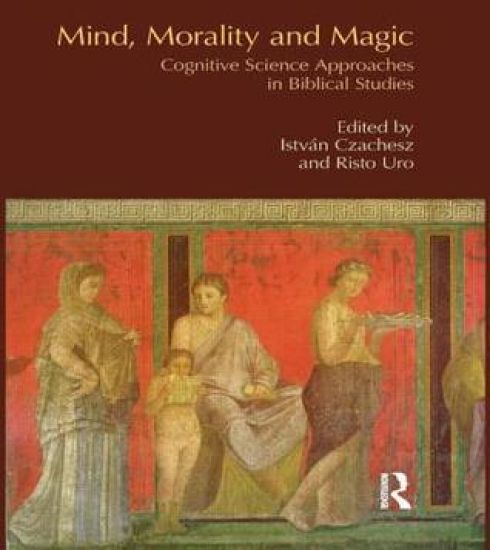
Mind, Morality and Magic

Mind, Morality and Magic

Istvan Czachesz; Risto Uro

Acumen Publishing Ltd
2013
sidottu
The cognitive science of religion that has emerged over the last twenty years is a multidisciplinary field that often challenges established theories in anthropology and comparative religion. This new approach raises many questions for biblical studies as well. What are the cross-cultural cognitive mechanisms which explain the transmission of biblical texts? How did the local and particular cultural traditions of ancient Israel and early Christianity develop? What does the embodied and socially embedded nature of the human mind imply for the exegesis of biblical texts? "Mind, Morality and Magic" draws on a range of approaches to the study of the human mind - including memory studies, computer modeling, cognitive theories of ritual, social cognition, evolutionary psychology, biology of emotions, and research on religious experience. The volume explores how cognitive approaches to religion can shed light on classical concerns in biblical scholarship - such as the transmission of traditions, ritual and magic, and ethics - as well as uncover new questions and offer new methodologies.
Cognitive Science and the New Testament

Cognitive Science and the New Testament

István Czachesz

Oxford University Press
2017
sidottu
Over the last few decades, our knowledge of how the human mind and brain works increased dramatically. The field of cognitive science enables us to understand religious traditions, rituals, and visionary experiences in novel ways. This has implications for the study of the New Testament and early Christianity. How people in the ancient Mediterranean world remembered sayings and stories, what they experienced when participating in rituals, how they thought about magic and miracle, and how they felt and reasoned about moral questions--all of that can be now better understood with the help of insights from cognitive science. István Czachesz argues that the field of New Testament Studies witnesses the beginning of a cognitive turn. He surveys relevant developments in the Cognitive Science of Religion and explores the field of cognitive and behavioral sciences in search of opportunities of gaining new insights about biblical materials. Czachesz presents some methodological tools and initial steps, together with a large number of examples of applying the cognitive approach to the New Testament and related ancient literature.
The Grotesque Body in Early Christian Discourse

The Grotesque Body in Early Christian Discourse

Istvan Czachesz

Equinox Publishing Ltd
2013
nidottu
Early Christian apocryphal and conical documents present us with grotesque images of the human body, often combining the playful and humorous with the repulsive, and fearful. First to third century Christian literature was shaped by the discourse around and imagery of the human body. This study analyses how the iconography of bodily cruelty and visceral morality was produced and refined from the very start of Christian history. The sources range across Greek comedy, Roman and Jewish demonology, and metamorphosis traditions. The study reveals how these images originated, were adopted, and were shaped to the service of a doctrinally and psychologically persuasive Christian message.
The Grotesque Body in Early Christian Discourse

The Grotesque Body in Early Christian Discourse

Istvan Czachesz

Equinox Publishing Ltd
2012
sidottu
Early Christian apocryphal and conical documents present us with grotesque images of the human body, often combining the playful and humorous with the repulsive, and fearful. First to third century Christian literature was shaped by the discourse around and imagery of the human body. This study analyses how the iconography of bodily cruelty and visceral morality was produced and refined from the very start of Christian history. The sources range across Greek comedy, Roman and Jewish demonology, and metamorphosis traditions. The study reveals how these images originated, were adopted, and were shaped to the service of a doctrinally and psychologically persuasive Christian message.