

Kirjailija
Itamar Rabinovich
Kirjat ja teokset yhdessä paikassa: 20 kirjaa, julkaisuja vuosilta 1977-2025, suosituimpien joukossa Yitzhak Rabin. Vertaile teosten hintoja ja tarkista saatavuus suomalaisista kirjakaupoista.
20 kirjaa
Kirjojen julkaisuhaarukka 1977-2025.
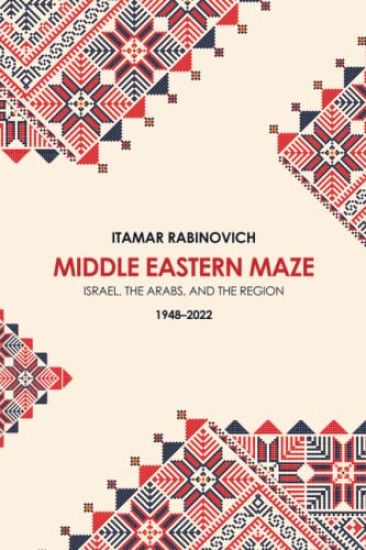
Middle East Maze: Israel, the Arabs, and the Region is an expanded and updated version of Itamar Rabinovich’s The Lingering Conflict, published by Brookings in 2012. This new book offers a unique narrative of the Arab-Israeli conflict and peace Pprocess by a senior academic historian who has served as Israel’s ambassador to the United States and as a peace negotiator with Syria. Rabinovich places the Arab-Israeli relationship in the larger context of Middle Eastern regional and international politics. He also examines Iran’s and Turkey’s new roles in the region. An equally important place is given to the U.S. policy in the Middle East and to the U.S. special relationship with Israel.This revised new edition covers the signing of the Abraham Accords, the new policies pursued by the Trump and Biden administrations, the full-fledged Syrian civil war, the heyday of the Islamic State, Russia’s military intervention in Syria, the Iranian nuclear drive, and the lengthy domestic political crisis in Israel.
Middle East Maze: Israel, the Arabs, and the Region is an expanded and updated version of Itamar Rabinovich’s The Lingering Conflict, published by Brookings in 2012. This new book offers a unique narrative of the Arab-Israeli conflict and peace Pprocess by a senior academic historian who has served as Israel’s ambassador to the United States and as a peace negotiator with Syria. Rabinovich places the Arab-Israeli relationship in the larger context of Middle Eastern regional and international politics. He also examines Iran’s and Turkey’s new roles in the region. An equally important place is given to the U.S. policy in the Middle East and to the U.S. special relationship with Israel.This revised new edition covers the signing of the Abraham Accords, the new policies pursued by the Trump and Biden administrations, the full-fledged Syrian civil war, the heyday of the Islamic State, Russia’s military intervention in Syria, the Iranian nuclear drive, and the lengthy domestic political crisis in Israel.
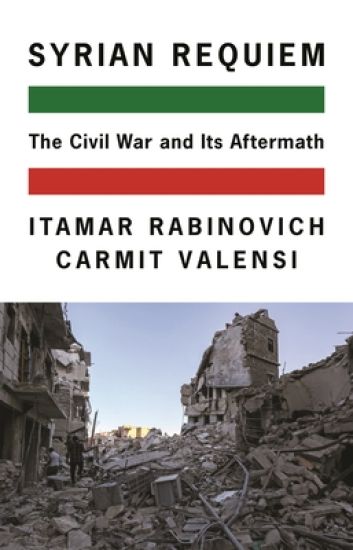
A compact, incisive history of a war that was an ominous prelude to Russia’s invasion of UkraineLeaving almost half a million dead and displacing an estimated twelve million people, the Syrian Civil War is a humanitarian catastrophe of unimaginable scale. Syrian Requiem analyzes the causes and course of this bitter conflict—from its first spark in a peaceful Arab Spring protest to the tenuous victory of the Asad dictatorship—and traces how the fighting has reduced Syria to a crisis-ridden vassal state with little prospect of political reform, national reconciliation, or economic reconstruction.Israel’s chief negotiator with Syria during the mid-1990s, Itamar Rabinovich brings unmatched expertise and insight to the politics of the Middle East. Drawing on more than two hundred specially conducted interviews with key players, Rabinovich and Carmit Valensi assess the roles of local, regional, and global interests in the war. Local sectarian divisions established the fault lines of the initial conflict, ultimately leading to the rise of the brutal Islamic State. However, Syria rapidly became the stage for proxy warfare between contending regional powers, including Israel, Turkey, and Iran. At the same time, while a war-weary United States attempted to reduce its military involvement in the Middle East, a resurgent Russia regained regional influence by supporting Syrian government forces. Telling the story of the war and its aftermath, Rabinovich and Valensi also examine the considerable potential for renewed conflict and the difficult policy choices facing the United States, Russia, and other powers.A compact and incisive history of one of the defining wars of our times, Syrian Requiem is a vivid and timely account of a conflict that continues to reverberate today.
Established in 1977, the Middle East Contemporary Survey (MECS), a unique annual record of political developments in the Middle East, is acknowledged as the standard reference work on events and trends in the region. Designed to be a continuing, up-to-date reference for scholars, researchers and analysts, policymakers, students and journalists, it examines in considerable detail the rapidly changing Middle Eastern scene in all its complexity. In each volume, the material is arranged in two parts. The first contains a series of essays on broad regional issues and on the overall relations of the region with other parts of the world. The second consists of country-by-country surveys of all the Arab states, as well as Turkey, Israel, and Iran. The accent in the second part is on elucidating the inner dynamics of each country's polity and society. In a work of this kind, the events of the past year inevitably dictate the major themes of each volume. The topics discussed in Volume XI, which covers the year 1987, include:
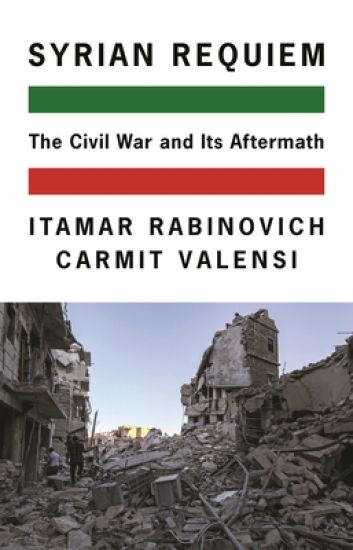
A compact, incisive history of a war that was an ominous prelude to Russia’s invasion of UkraineLeaving almost half a million dead and displacing an estimated twelve million people, the Syrian Civil War is a humanitarian catastrophe of unimaginable scale. Syrian Requiem analyzes the causes and course of this bitter conflict—from its first spark in a peaceful Arab Spring protest to the tenuous victory of the Asad dictatorship—and traces how the fighting has reduced Syria to a crisis-ridden vassal state with little prospect of political reform, national reconciliation, or economic reconstruction.Israel’s chief negotiator with Syria during the mid-1990s, Itamar Rabinovich brings unmatched expertise and insight to the politics of the Middle East. Drawing on more than two hundred specially conducted interviews with key players, Rabinovich and Carmit Valensi assess the roles of local, regional, and global interests in the war. Local sectarian divisions established the fault lines of the initial conflict, ultimately leading to the rise of the brutal Islamic State. However, Syria rapidly became the stage for proxy warfare between contending regional powers, including Israel, Turkey, and Iran. At the same time, while a war-weary United States attempted to reduce its military involvement in the Middle East, a resurgent Russia regained regional influence by supporting Syrian government forces. Telling the story of the war and its aftermath, Rabinovich and Valensi also examine the considerable potential for renewed conflict and the difficult policy choices facing the United States, Russia, and other powers.A compact and incisive history of one of the defining wars of our times, Syrian Requiem is a vivid and timely account of a conflict that continues to reverberate today.
Established in 1977, the Middle East Contemporary Survey (MECS), a unique annual record of political developments in the Middle East, is acknowledged as the standard reference work on events and trends in the region. Designed to be a continuing, up-to-date reference for scholars, researchers and analysts, policymakers, students and journalists, it examines in considerable detail the rapidly changing Middle Eastern scene in all its complexity. In each volume, the material is arranged in two parts. The first contains a series of essays on broad regional issues and on the overall relations of the region with other parts of the world. The second consists of country-by-country surveys of all the Arab states, as well as Turkey, Israel, and Iran. The accent in the second part is on elucidating the inner dynamics of each country's polity and society. In a work of this kind, the events of the past year inevitably dictate the major themes of each volume. The topics discussed in Volume XI, which covers the year 1987, include: The collapse of the Israeli-Jordanian "London agreement"; The outbreak of the Palestinian uprising; The complications of glasnost for the Middle East; The continuation of the Gulf War; The lingering stalemate in Lebanon. While surveying and analyzing these and other developments, this volume also explains why they did not amount and lead to substantive change in the patterns of Middle Eastern politics. Maps, tables and a detailed index accompany the text
Middle East Contemporary Survey is an annual record and analysis of political, economic, military, and international developments in the Middle East. Designed to be an up-to-date reference, it examines the rapidly changing Middle Eastern scene in all its complexity.
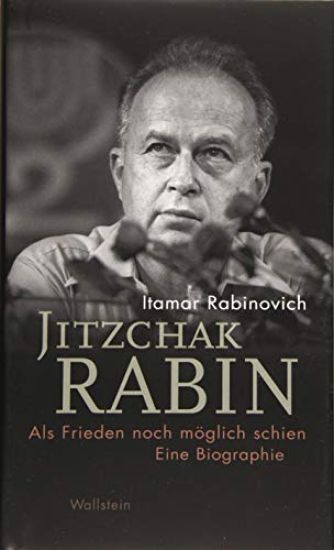
Established in 1977, the Middle East Contemporary Survey (MECS), a unique annual record of political developments in the Middle East, is acknowledged as the standard reference work on events and trends in the region. Designed to be a continuing, up-to-date reference for scholars, researchers and analysts, policymakers, students, and j
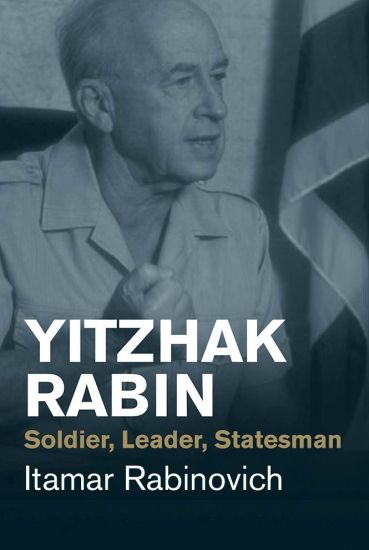
An insider’s perspective on the life and influence of Israel’s first native-born prime minister, his bold peace initiatives, and his tragic assassination More than two decades have passed since prime minister Yitzhak Rabin’s assassination in 1995, yet he remains an unusually intriguing and admired modern leader. A native-born Israeli, Rabin became an inextricable part of his nation’s pre-state history and subsequent evolution. This revealing account of his life, character, and contributions draws not only on original research but also on the author’s recollections as one of Rabin’s closest aides. An awkward politician who became a statesman, a soldier who became a peacemaker, Rabin is best remembered for his valiant efforts to resolve the Israeli-Palestinian conflict and for the Oslo Accords. Itamar Rabinovich provides extraordinary new insights into Rabin’s relationships with powerful leaders including Bill Clinton, Jordan’s King Hussein, and Henry Kissinger, his desire for an Israeli-Syrian peace plan, and the political developments that shaped his tenure. The author also assesses the repercussions of Rabin’s murder: Netanyahu’s ensuing election and the rise of Israel’s radical right wing.
The causes of the October War in Israel can be traced to the political, economic, and strategic processes that occurred in the Middle East between 1967 and 1973. The papers compiled in this book were presented in the aftermath of the October War at an international colloquium held at Tel Aviv University.The growth 'and power of Middle East oil-producing countries, changes in inter-Arab relations, domestic policies, foreign policies, and strategic changes in the Middle East arena are analyzed and evaluated by American and Israeli scholars. American foreign policy, Soviet military doctrine, and Arab war aims are dealt with as well. The introduction which summarizes the discussion reflects the perspective of December 1974 from which the events of the years 1967-1973 were seen and evaluated.Contents and Contributors:THE MIDDLE EAST AND THE GREAT POWERS William B. Quandt, Oded Eran, Rainer Biiren STRATEGIC ASPECTS Geoffrey Kemp, Yair Evron, Amnon Sela ECONOMIC ASPECTS Eliyahu Kanovsky, Eliezer Sheffer, Benjamin Shwadran SYRIA AND EGYPT Daniel Dishon, Shimon Shamir, Itamar Rabinovich THE PALESTINE PROBLEM Uriel Dann, Gabriel Ben Dor, Elie Rekhess, Asher Susser, Varda Ben Zvi PERIPHERAL STATES Haim Shaked, Esther Sourey Webman, Uriel Dann IRAN AND THE PERSIAN GULF Rouhollah J. Ramazani, Aryeh Shmuelevitz, Mordechai Abir

From the prizewinning Jewish Lives series, an insider’s perspective on the life and influence of Yitzhak Rabin, Israel’s first native-born prime minister "Even the warm esteem in which he holds Rabin does not prevent Mr. Rabinovich—a scholar with an abiding commitment to historical accuracy—from presenting a portrait of his friend in full."—Elliott Abrams, Wall Street Journal "Ties the arc of Rabin’s life to the course of Israel’s history from the pre-State period to the 1990s."—Dennis Ross, Jewish Review of Books Winner of the 2017 Washington Institute Book Prize Gold Medal More than two decades have passed since prime minister Yitzhak Rabin’s assassination in 1995, yet he remains an unusually intriguing and admired modern leader. A native-born Israeli, Rabin became an inextricable part of his nation’s pre-state history and subsequent evolution. This revealing account of his life, character, and contributions draws not only on original research but also on the author’s recollections as one of Rabin’s closest aides. An awkward politician who became a statesman, a soldier who became a peacemaker, Rabin is best remembered for his valiant efforts to resolve the Israeli-Palestinian conflict and for the Oslo Accords. Itamar Rabinovich provides extraordinary new insights into Rabin’s relationships with powerful leaders including Bill Clinton, Jordan’s King Hussein, and Henry Kissinger, his desire for an Israeli-Syrian peace plan, and the political developments that shaped his tenure. The author also assesses the repercussions of Rabin’s murder: Netanyahu’s ensuing election and the rise of Israel’s radical right wing. About Jewish Lives: Jewish Lives is a prizewinning series of interpretative biography designed to explore the many facets of Jewish identity. Individual volumes illuminate the imprint of Jewish figures upon literature, religion, philosophy, politics, cultural and economic life, and the arts and sciences. Subjects are paired with authors to elicit lively, deeply informed books that explore the range and depth of the Jewish experience from antiquity to the present. In 2014, the Jewish Book Council named Jewish Lives the winner of its Jewish Book of the Year Award, the first series ever to receive this award. More praise for Jewish Lives: "Excellent." –New York Times "Exemplary." –Wall Street Journal "Distinguished." –New Yorker "Superb." –The Guardian

"In The Lingering Conflict Itamar Rabinovich, a former chief negotiator for Israel, provides unique and authoritative insight into the prospects for genuine peace in the Middle East. His presentation includes a detailed insider account of the peace processes of 1992–96 and a frank dissection of the more dispiriting record since then.Rabinovich's firsthand experiences as a negotiator and as Israel's ambassador to the United States provide a valuable perspective from which to view the major players involved. Fresh analysis of ongoing situations in the region and the author's authoritative take on key figures such as Ehud Barak and Benjamin Netanyahu shed new light on the long and tumultuous history of Arab-Israeli relations. His book is a shrewd assessment of the past and current state of affairs in the Middle East, as well as a sober look at the prospects for a peaceful future.While Rabinovich explains the conflict between Israel and the Palestinians—a classic dispute between two national movements claiming the same land— The Lingering Conflict also considers the broader political, cultural, and increasingly religious conflict between the Jewish state and Arab nationalism. He approaches the troubled region in an international context, offering provocative analysis of America's evolving role and evaluation of its diplomatic performance.This book builds on the author's previous seminal work on geopolitics in the Middle East, particularly Waging Peace. As Rabinovich brings the Arab-Israeli conflict up to date, he widens the scope of his earlier insights into efforts to achieve normal, peaceful relations. And, of course, he takes full account of recent social and political tumult in the Middle East, discussing the Arab Spring uprisings—and the subsequent retaliation by dictators such as Syria's al-Asad and Libya's Qaddafi—in the context of Arab-Israeli relations."
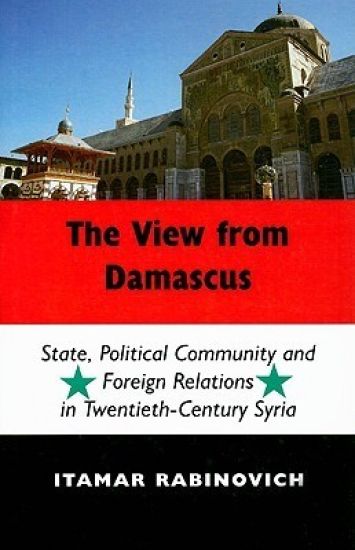
Sheds new light on the recent history and current politics and policies of this important Middle Eastern country. Throughout the last hundred years Syria has been a crucial hub of Middle Eastern events: the birth place and 'pulsating heart' of Arab nationalism, the object of colonial and regional ambitions, it has transformed into a regional power exerting influence over Lebanon and the Palestinians, Iran's closest ally and a thorn in the side of the Bush Administration. Itamar Rabinovich is uniquely qualified to take a panoramic view of Syria's modern history and contemporary politics. As a scholar, he spent thirty-five years studying Syria in diplomatic archives and through the range of sources available to current research. As a diplomat, he was Yitzhak Rabin's chief negotiator with Syria and Israel's ambassador to Washington, and thus a key participant in some of the events addressed in this volume. The twenty-one essays cover the century from the eve of the First World War to the Bush Administration's row with Bashar al-Asad. They are focused on three principal themes: the notion of a Syrian entity and its translation into a Syrian state in its current boundaries; the conflict between rival concepts of the political community that inhabits the Syrian state; and issues of foreign policy with a particular emphasis on the Syrian-Israeli conflict and peace process. The main themes of Syrian history and politics are picked up at their inception and followed through the course of the twentieth century to the present day.
Considerably expanded to include the impact of the 2003 war in Iraq and its aftermath, this new edition of Waging Peace provides a unique insight into the critical debate on the future of peace in the Middle East. A former chief negotiator for Israel, noted scholar-diplomat Itamar Rabinovich examines the complete history of Arab-Israeli relations beginning in 1948. He then gives a vivid account of the peace processes of 1992-1996 and the more dispiriting record since then. His updated analysis on Iraq, Ehud Barak, and Ariel Sharon--and on the expanding role of the United States in the Middle East--sheds new light on the long and tumultuous history between Arabs and Jews. As Rabinovich brings the conflict into this century, he widens the scope of his proposals for achieving normalized and peaceful Arab-Israeli relations. While he considers the conflict between Israel and the Palestinians--a classic dispute between two national movements claiming the same land--Rabinovich also studies the broader political, cultural, and increasingly religious conflict between Israel and Arab nationalism and discusses the region in an international context. Rabinovich's firsthand experiences as a negotiator and an ambassador provide an extraordinary perspective on the major players involved. The result is a shrewd assessment of the past and current state of affairs, as well as a hopeful look at the possibilities for a peaceful future.
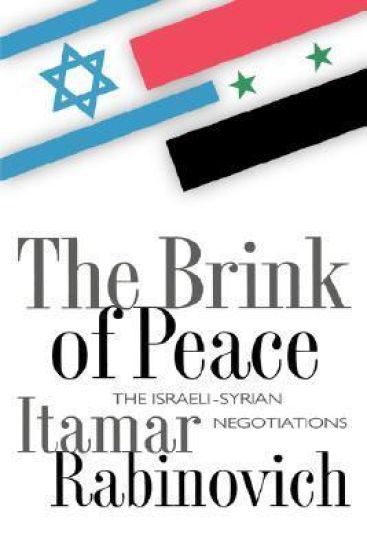
A major casualty of the assassin's bullet that struck down Israeli Prime Minister Yitzhak Rabin was a prospective peace accord between Syria and Israel. For the first time, a negotiator who had unique access to Rabin, as well as detailed knowledge of Syrian history and politics, tells the inside story of the failed negotiations. His account provides a key to understanding not only U.S. diplomacy in the Middle East but also the larger Arab-Israeli peace process. During the period from 1992 to 1996, Itamar Rabinovich was Israel's ambassador to Washington, and the chief negotiator with Syria. In this book, he looks back at the course of negotiations, terms of which were known to a surprisingly small group of American, Israeli, and Syrian officials. After Benjamin Netanyahu's election as Israel's prime minister in May 1996, a controversy developed. Even with Netanyahu's change of policy and harder line toward Damascus, Syria began claiming that both Rabin and his successor Peres had pledged full withdrawal from the Golan Heights. Rabinovich takes the reader through the maze of diplomatic subtleties to explain the differences between hypothetical discussion and actual commitment. "To the students of past history and contemporary politics," he writes, "nothing is more beguiling than the myriad threads that run across the invisible line which separates the two." The threads of this story include details of Rabin's negotiations and their impact through two subsequent Israeli administrations in less than a year, the American and Egyptian roles, and the ongoing debate between Syria and Israel on the factual and legal bases for resuming talks. The author portrays all sides and participants with remarkable flair and empathy, as only a privileged player in the events could do. In any assessment of future negotiations in the Middle East, Itamar Rabinovich's book will prove indispensable.
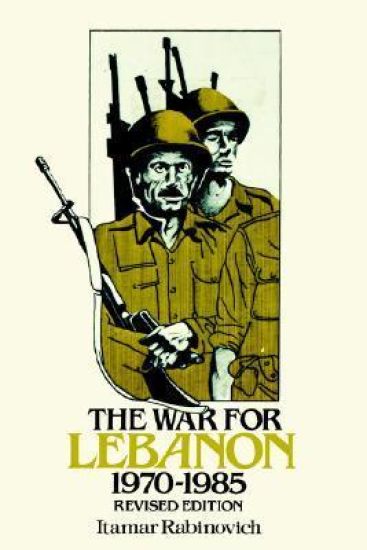
The war for Lebanon -- a conflict of domestic and external forces seeking to shape and control the Lebanese entity -- began long before 1970 and unfortunately did not end in 1983. But these years, the focus of this book, form a particularly significant phase in the history of both Lebanon and its immediate environment. The events of this period unfolded through 4 distinct stages: the collapse of the Lebanese political system between 1970 and 1975; the civil war of 1975-76; the lingering crisis of the years 1976-82; and the war of 1982. This book primarily explores the interplay between Lebanon's domestic politics and developments in the larger Middle East.
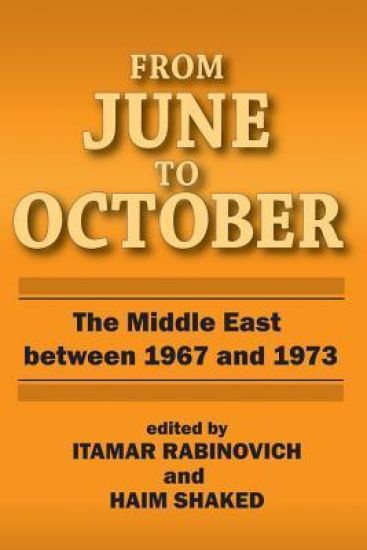
The causes of the October War in Israel can be traced to the political, economic, and strategic processes that occurred in the Middle East between 1967 and 1973. The papers compiled in this book were presented in the aftermath of the October War at an international colloquium held at Tel Aviv University.The growth 'and power of Middle East oil-producing countries, changes in inter-Arab relations, domestic policies, foreign policies, and strategic changes in the Middle East arena are analyzed and evaluated by American and Israeli scholars. American foreign policy, Soviet military doctrine, and Arab war aims are dealt with as well. The introduction which summarizes the discussion reflects the perspective of December 1974 from which the events of the years 1967-1973 were seen and evaluated.Contents and Contributors:THE MIDDLE EAST AND THE GREAT POWERS William B. Quandt, Oded Eran, Rainer Biiren STRATEGIC ASPECTS Geoffrey Kemp, Yair Evron, Amnon Sela ECONOMIC ASPECTS Eliyahu Kanovsky, Eliezer Sheffer, Benjamin Shwadran SYRIA AND EGYPT Daniel Dishon, Shimon Shamir, Itamar Rabinovich THE PALESTINE PROBLEM Uriel Dann, Gabriel Ben Dor, Elie Rekhess, Asher Susser, Varda Ben Zvi PERIPHERAL STATES Haim Shaked, Esther Sourey Webman, Uriel Dann IRAN AND THE PERSIAN GULF Rouhollah J. Ramazani, Aryeh Shmuelevitz, Mordechai Abir