Kirjojen hintavertailu. Mukana 12 595 353 kirjaa ja 12 kauppaa.

Kirjailija

Ivan Arreguín-Toft

Kirjat ja teokset yhdessä paikassa: 2 kirjaa, julkaisuja vuodelta 2005, suosituimpien joukossa How the Weak Win Wars. Vertaile teosten hintoja ja tarkista saatavuus suomalaisista kirjakaupoista.

2 kirjaa

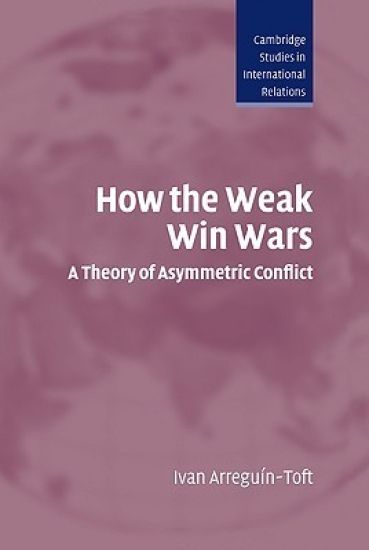
How the Weak Win Wars

How the Weak Win Wars

Ivan Arreguín-Toft

Cambridge University Press
2005
sidottu
How do the weak win wars? The likelihood of victory and defeat in asymmetric conflicts depends on the interaction of the strategies weak and strong actors use. Using statistical and in-depth historical analyses of conflicts spanning two hundred years, in this 2005 book Ivan Arregúin-Toft shows that, independent of regime type and weapons technology, the interaction of similar strategic approaches favors strong actors, while opposite strategic approaches favors the weak. This approach to understanding asymmetric conflicts allows us to makes sense of how the United States was able to win its war in Afghanistan (2002) in a few months, while the Soviet Union lost after a decade of brutal war (1979–89). Arreguín-Toft's strategic interaction theory has implications not only for international relations theory, but for policy makers grappling with interstate and civil wars, as well as terrorism.
How the Weak Win Wars

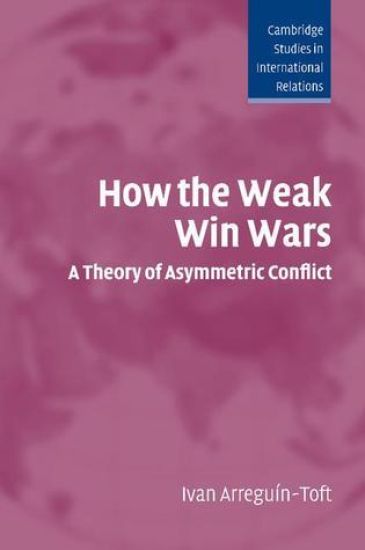
How the Weak Win Wars

Ivan Arreguín-Toft

Cambridge University Press
2005
pokkari
How do the weak win wars? The likelihood of victory and defeat in asymmetric conflicts depends on the interaction of the strategies weak and strong actors use. Using statistical and in-depth historical analyses of conflicts spanning two hundred years, in this 2005 book Ivan Arregúin-Toft shows that, independent of regime type and weapons technology, the interaction of similar strategic approaches favors strong actors, while opposite strategic approaches favors the weak. This approach to understanding asymmetric conflicts allows us to makes sense of how the United States was able to win its war in Afghanistan (2002) in a few months, while the Soviet Union lost after a decade of brutal war (1979–89). Arreguín-Toft's strategic interaction theory has implications not only for international relations theory, but for policy makers grappling with interstate and civil wars, as well as terrorism.