

Kirjailija
Ivan Kalmar
Kirjat ja teokset yhdessä paikassa: 5 kirjaa, julkaisuja vuosilta 2011-2026, suosituimpien joukossa Weiß, aber nicht ganz. Vertaile teosten hintoja ja tarkista saatavuus suomalaisista kirjakaupoista.
5 kirjaa
Kirjojen julkaisuhaarukka 2011-2026.
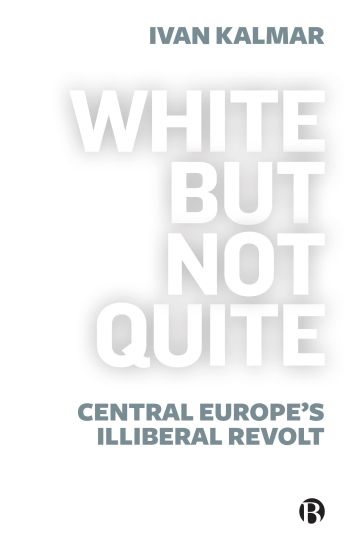
Since the ‘migration crisis’ of 2016, long-simmering tensions between the Western members of the European Union and its ‘new’ Eastern members – Poland, the Czech Republic, Slovakia, and Hungary – have proven to be fertile ground for rebellion against liberal values and policies. In this startling and original book Ivan Kalmar argues that Central European illiberalism is a misguided response to the devastating effects of global neoliberalism, which arose from the area’s brutal transition to capitalism in the 1990s. Kalmar argues that dismissive attitudes towards ‘Eastern Europeans’ are a form of racism and explores the close relation between racism towards Central Europeans and racism by Central Europeans: a people white but not quite.
Since the ‘migration crisis’ of 2016, long-simmering tensions between the Western members of the European Union and its ‘new’ Eastern members – Poland, the Czech Republic, Slovakia, and Hungary – have proven to be fertile ground for rebellion against liberal values and policies. In this startling and original book Ivan Kalmar argues that Central European illiberalism is a misguided response to the devastating effects of global neoliberalism, which arose from the area’s brutal transition to capitalism in the 1990s. Kalmar argues that dismissive attitudes towards ‘Eastern Europeans’ are a form of racism and explores the close relation between racism towards Central Europeans and racism by Central Europeans: a people white but not quite.
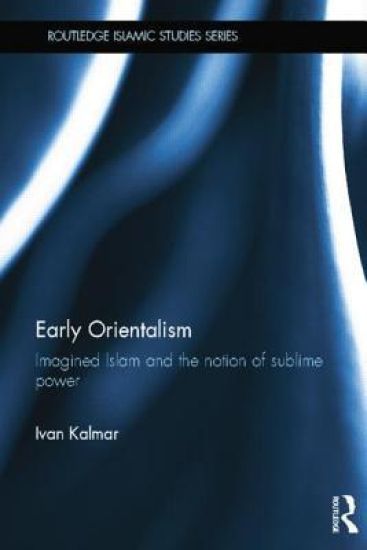
The history of western notions about Islam is of obvious scholarly as well as popular interest today. This book investigates Christian images of the Muslim Middle East, focusing on the period from the Renaissance to the Enlightenment, when the nature of divine as well as human power was under particularly intense debate in the West.Ivan Kalmar explores how the controversial notion of submission to ultimate authority has in the western world been discussed with reference to Islam’s alleged recommendation to obey, unquestioningly, a merciless Allah in heaven and a despotic government on earth. He discusses how Abrahamic faiths – Christianity and Judaism as much as Islam – demand devotion to a sublime power, with the faith that this power loves and cares for us, a concept that brings with it the fear that, on the contrary, this power only toys with us for its own enjoyment. For such a power, Kalmar borrows Slavoj Zizek’s term "obscene father". He discusses how this describes exactly the western image of the Oriental despot - Allah in heaven, and the various sultans, emirs and ayatollahs on earth – and how these despotic personalities of imagined Muslim society function as a projection, from the West on to the Muslim Orient, of an existential anxiety about sublime power.Making accessible academic debates on the history of Christian perceptions of Islam and on Islam and the West, this book is an important addition to the existing literature in the areas of Islamic studies, religious history and philosophy.
The history of western notions about Islam is of obvious scholarly as well as popular interest today. This book investigates Christian images of the Muslim Middle East, focusing on the period from the Renaissance to the Enlightenment, when the nature of divine as well as human power was under particularly intense debate in the West.Ivan Kalmar explores how the controversial notion of submission to ultimate authority has in the western world been discussed with reference to Islam’s alleged recommendation to obey, unquestioningly, a merciless Allah in heaven and a despotic government on earth. He discusses how Abrahamic faiths – Christianity and Judaism as much as Islam – demand devotion to a sublime power, with the faith that this power loves and cares for us, a concept that brings with it the fear that, on the contrary, this power only toys with us for its own enjoyment. For such a power, Kalmar borrows Slavoj Zizek’s term "obscene father". He discusses how this describes exactly the western image of the Oriental despot - Allah in heaven, and the various sultans, emirs and ayatollahs on earth – and how these despotic personalities of imagined Muslim society function as a projection, from the West on to the Muslim Orient, of an existential anxiety about sublime power.Making accessible academic debates on the history of Christian perceptions of Islam and on Islam and the West, this book is an important addition to the existing literature in the areas of Islamic studies, religious history and philosophy.