Kirjailija
Iver B. Neumann
Kirjat ja teokset yhdessä paikassa: 26 kirjaa, julkaisuja vuosilta 1998-2026, suosituimpien joukossa Diplomatic Practices. Vertaile teosten hintoja ja tarkista saatavuus suomalaisista kirjakaupoista.
26 kirjaa
Kirjojen julkaisuhaarukka 1998-2026.
Diplomacy is the lifeblood of the states system, shaping global interactions and maintaining order. In this book, Iver Neumann delves into the practices that define diplomacy, exploring how they evolve and vary across time and cultures. By combining historical analysis with observational insights, Neumann offers a groundbreaking approach to understanding the dynamic nature of diplomatic practices. From gift-giving to permanent representation, international law, and peacebuilding efforts, Neumann examines the core practices that have shaped diplomacy for centuries. He also investigates how diplomacy absorbs external practices, such as cultural depictions of the ‘Other,’ and institutionalizes them within its framework. With a unique focus on Norwegian diplomacy, Neumann provides a nuanced perspective while cautioning against overgeneralisation when applying findings to other contexts. The book explores how diplomacy is portrayed in fine arts and popular culture and concludes by highlighting the stability brought about by the uniformity of diplomatic services worldwide. This volume is an essential resource for students, scholars, and practitioners of diplomacy, offering fresh insights into the mechanisms that drive global relations.
The Social Evolution of World Politics
Mathias Albert; Hauke Brunkhorst; Iver B. Neumann; Stephan Stetter
TRANSCRIPT VERLAG
2023
nidottu
How can we understand long-term change in world politics better? Based on readings of thinkers as diverse as Habermas, Foucault and Luhmann, the authors of this book propose a framework for understanding such change in terms of social evolution. They show that processes of social learning and unlearning are key to understanding the long-term historical evolution of complex societies, and propose to approach these with the core concepts of autonomization, hierarchical complexity, and co-evolution. Three case studies illustrate this social evolutionary perspective to the study of world politics, examining the evolution of forms of organizing political authority, of conflicts, of diplomacy, of law as boundary condition.
Forskeren i forskningsprosessen
Iver B. Neumann; Cecilie Basberg Neumann
Cappelen Damm akademisk
2023
nidottu
Forskeren i forskningsprosessen tar opp spørsmålet: Hvordan bli en god forsker og hvordan skrive ut forskningsresultatene på en god måte?Det handler langt på vei om profesjonsidealer og forskerens etiske ansvar. Metodelitteratur og veiledere oppfordrer ofte studenter og forskere til å reflektere over dette, men gir sjelden konkrete råd om hva man kan gjøre i praksis. Det gjør denne boka.Forfatterne viser hvordan valg av teorier, forskningsspørsmål og skrivearbeidet styres av blant annet forskerens kjønn, klasse og erfaringer. Med utgangspunkt i gestalttradisjonen og dens opphav i fenomenologien, klargjør forfatterne hvordan forskeren situerer seg, eller plasserer seg selv i praksis. Sentrale spørsmål i boka:Hva snakker egentlig informantene om?Kan makt fjernes i forskningsrelasjoner?Hva er forskerens situasjon, rolle og dilemmaer i forskningsprosessen?Hvilken betydning har situeringen når forskeren skriver ut dataene?
INTERNASJONALE RELASJONER handler om statssystemets utvikling, dets konflikter og allianser, om maktpolitikk og samarbeidsinstitusjoner. Denne boken retter seg mot alle som ønsker å bedre forstå både begrepet, disiplinen og det som faktisk utspiller seg mellom stater og andre politiske enheter. HVORDAN FORSTÅ INTERNASJONALE RELASJONER introduserer og forklarer statssystemets nøkkelbegreper, og tar for seg både historiske og teoretiske forståelser. De femten kapitlene følger samme mal: Først en kort etymologisk del, så en drøfting av hvordan begrepet er blitt brukt historisk, og deretter en hoveddel om hvilken rolle begrepet spiller i dagens analytiske og politiske diskusjoner – med både klassiske og mer aktuelle eksempler. Målet er å gi leseren både noe å tenke med, men også noe å tenke på. stat * nasjonalstat * imperium * internasjonale, transnasjonale og subnasjonale organisasjoner * utenrikspolitikk * statssystem * nasjonalisme, postkolonialisme og eurosentrisme * internasjonalisering, globalisering og global styring * sikkerhet * stormakter og maktbalanse * diplomati * krig og fred * internasjonal rett og menneskerettigheter * makt og suverenitet * intervensjon Iver B. Neumann, Dphil in Politics (Oxford 1992) og dr.philos. i sosialantropologi (Oslo 2009), er direktør ved Fridtjof Nansens Institutt og professor II ved Kulturhistorisk museum, UiO.
Gjennom språk og handlinger har vi selv skapt – og skaper – de sosiale virkelighetene vi lever i. Diskursanalyse kan være en velegnet og spennende metode å bruke dersom man ønsker å undersøke og forstå hvordan dette skjer: på hvilke måter utsagn og praksiser konstituerer virkelighet og gir et bilde av sosiale relasjoner på ulike nivå. Denne boken diskuterer hvor diskursanalysen kommer fra, hva den kan brukes til, og hvordan den brukes. Neumann skriver lettfattelig, men viker ikke tilbake for å bruke tekniske definisjoner når det trengs. Hovedvekten ligger på identitets- og maktanalyse. Fremstillingen er rik på eksempler hentet både fra forfatterens og andres forskning på sosiale prosesser, internasjonal politikk og populærkultur. Boken retter seg særlig mot studenter og forskere i samfunnsvitenskapelige og humanistiske fag. Innføring i diskursanalyse er en revidert utgave av den populære læreboken Mening, makt, materialitet fra 2002. Den er gjennomgående oppdatert, og har mange nye eksempler, begrepsforklaringer og ny tekst om bl.a. multimodalitet, diskursanalysens inspirasjonskilder samt om forskjeller mellom ulike typer diskursanalyse. (29 min) Iver B. Neumann, D. Phil. (Politics, Oxford 1992), Dr. Philos. (Sosialantropologi, Oslo, 2009) er Direktør ved Fridtjof Nansens Institutt og Professor II ved Kulturhistorisk Museum, Universitetet i Oslo.
The Steppe Tradition in International Relations
Iver B. Neumann; Einar Wigen
Cambridge University Press
2020
pokkari
Neumann and Wigen counter Euro-centrism in the study of international relations by providing a full account of political organisation in the Eurasian steppe from the fourth millennium BCE up until the present day. Drawing on a wide range of archaeological and historical secondary sources, alongside social theory, they discuss the pre-history, history and effect of what they name the 'steppe tradition'. Writing from an International Relations perspective, the authors give a full treatment of the steppe tradition's role in early European state formation, as well as explaining how politics in states like Turkey and Russia can be understood as hybridising the steppe tradition with an increasingly dominant European tradition. They show how the steppe tradition's ideas of political leadership, legitimacy and concepts of succession politics can help us to understand the policies and behaviour of such leaders as Putin in Russia and Erdogan in Turkey.
Concepts of International Relations, for Students and Other Smarties
Iver B. Neumann
The University of Michigan Press
2019
nidottu
Concepts of International Relations, for Students and Other Smarties is not a stereotypical textbook, but an instructive, entertaining, and motivating introduction to the field of International Relations (IR). Rather than relying on figures or tables, this book piques the reader’s interest with a pithy narrative that presents apposite nutshell examples, stresses historical breaks, and throws in the odd pun. Based on Iver B. Neumann’s introductory lectures to his students at the London School of Economics, this book is proven for the classroom. In a relaxed style, Neumann introduces the long-term historical emergence of concepts such as state (European), state (global), empire, nonstate agents, foreign policy, state system, nationalism, globalization, security, international society, great powers, diplomacy, war and peace, balance of power, international law, power and sovereignty, intervention, gender, and class. He demonstrates how such phenomena have been understood in different ways over time. First, the reader learns how the use of concepts is an integral part of politics. Second, the reader sees how social change has worked in the past, and is working now. Third, the book demonstrates how historical and social context matters in ongoing international relations.
Concepts of International Relations, for Students and Other Smarties
Iver B. Neumann
The University of Michigan Press
2019
sidottu
Concepts of International Relations, for Students and Other Smarties is not a stereotypical textbook, but an instructive, entertaining, and motivating introduction to the field of International Relations (IR). Rather than relying on figures or tables, this book piques the reader’s interest with a pithy narrative that presents apposite nutshell examples, stresses historical breaks, and throws in the odd pun. Based on Iver B. Neumann’s introductory lectures to his students at the London School of Economics, this book is proven for the classroom. In a relaxed style, Neumann introduces the long-term historical emergence of concepts such as state (European), state (global), empire, nonstate agents, foreign policy, state system, nationalism, globalization, security, international society, great powers, diplomacy, war and peace, balance of power, international law, power and sovereignty, intervention, gender, and class. He demonstrates how such phenomena have been understood in different ways over time. First, the reader learns how the use of concepts is an integral part of politics. Second, the reader sees how social change has worked in the past, and is working now. Third, the book demonstrates how historical and social context matters in ongoing international relations.
Power, Culture and Situated Research Methodology
Cecilie Basberg Neumann; Iver B. Neumann
Springer International Publishing AG
2018
nidottu
This book explores the extent to which our lives become an important underlying context for data production. Drawing on insights from Gestalt psychology, feminism and post-structuralism, it discusses how to situate yourself in the different phases of research.
The Steppe Tradition in International Relations
Iver B. Neumann; Einar Wigen
Cambridge University Press
2018
sidottu
Neumann and Wigen counter Euro-centrism in the study of international relations by providing a full account of political organisation in the Eurasian steppe from the fourth millennium BCE up until the present day. Drawing on a wide range of archaeological and historical secondary sources, alongside social theory, they discuss the pre-history, history and effect of what they name the 'steppe tradition'. Writing from an International Relations perspective, the authors give a full treatment of the steppe tradition's role in early European state formation, as well as explaining how politics in states like Turkey and Russia can be understood as hybridising the steppe tradition with an increasingly dominant European tradition. They show how the steppe tradition's ideas of political leadership, legitimacy and concepts of succession politics can help us to understand the policies and behaviour of such leaders as Putin in Russia and Erdogan in Turkey.
Power, Culture and Situated Research Methodology
Cecilie Basberg Neumann; Iver B. Neumann
Springer International Publishing AG
2017
sidottu
This book explores the extent to which our lives become an important underlying context for data production. Drawing on insights from Gestalt psychology, feminism and post-structuralism, it discusses how to situate yourself in the different phases of research.
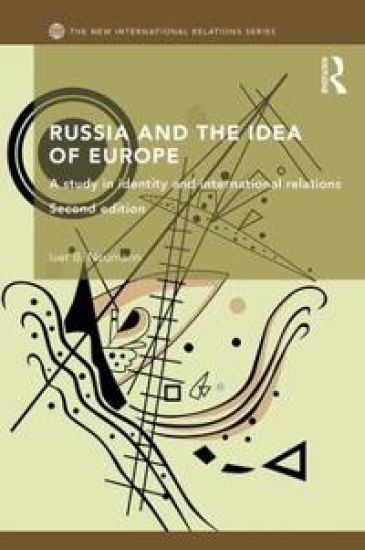
The end of the Soviet system and the transition to the market in Russia, coupled with the inexorable rise of nationalism, brought to the fore the centuries-old debate about Russia's relationship with Europe. In this revised and updated second edition of Russia and the Idea of Europe, Iver Neumann discusses whether the tensions between self-referencing nationalist views and Europe-orientated liberal views can ever be resolved. Drawing on a wide range of Russian sources, this book retains the broad historical focus of the previous edition and picks up from where the it off in the early 1990s, bringing the discussion fully up to date. Discussing theoretical and political developments, it relates the existing story of Russian identity formation to new foreign policy analysis and the developments in the study of nationalism. The book also offers an additional focus on post-Cold War developments. In particular it examines the year 2000, when Putin succeeded Yeltsin as president, and 2014, when Russian foreign policy turned from cooperation to confrontation.Bringing to life the various debates surrounding this complicated relationship in an accessible and clear manner, this book continues to be a unique and vital resource for both students and scholars of international relations.
Undertaking Discourse Analysis for Social Research
Kevin C. Dunn; Iver B. Neumann
The University of Michigan Press
2016
nidottu
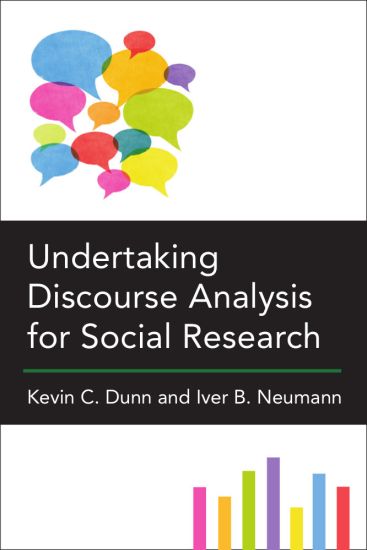
Kevin C. Dunn and Iver B. Neumann offer a concise, accessible introduction to discourse analysis in the social sciences. A vital resource for students and scholars alike, Undertaking Discourse Analysis for Social Research combines a theoretical and conceptual review with a “how-to” guide for using the method. In the first part of the book, the authors discuss the development of discourse analysis as a research method and identify the main theoretical elements and epistemological assumptions that have led to its emergence as one of the primary qualitative methods of analysis in contemporary scholarship. Then, drawing from a wide-range of examples of social science scholarship, Dunn and Neumann provide an indispensable guide to the variety of ways discourse analysis has been used. They delve into what is gained by using this approach and demonstrate how one actually applies it. They cover such important issues as research prerequisites, how one conceives of a research question, what “counts” as evidence, how one “reads” the data, and some common obstacles and pitfalls. The result is a clear and accessible manual for successfully implementing discourse analysis in social research.
Undertaking Discourse Analysis for Social Research
Kevin C. Dunn; Iver B. Neumann
The University of Michigan Press
2016
sidottu
Kevin C. Dunn and Iver B. Neumann offer a concise, accessible introduction to discourse analysis in the social sciences. A vital resource for students and scholars alike, Undertaking Discourse Analysis for Social Research combines a theoretical and conceptual review with a “how-to” guide for using the method. In the first part of the book, the authors discuss the development of discourse analysis as a research method and identify the main theoretical elements and epistemological assumptions that have led to its emergence as one of the primary qualitative methods of analysis in contemporary scholarship. Then, drawing from a wide-range of examples of social science scholarship, Dunn and Neumann provide an indispensable guide to the variety of ways discourse analysis has been used. They delve into what is gained by using this approach and demonstrate how one actually applies it. They cover such important issues as research prerequisites, how one conceives of a research question, what “counts” as evidence, how one “reads” the data, and some common obstacles and pitfalls. The result is a clear and accessible manual for successfully implementing discourse analysis in social research.
Although diplomacy increasingly takes place in non-traditional settings that are increasingly non-Western, our debates about diplomacy still focus on traditional points of contact such as the conference table, the ministerial office and the press conference. This book is framed as a discussion on whether increasing globalisation and the rise of powers such as China, India and Brazil will precipitate a crisis in diplomacy; it also tackles the problem of diplomatic Eurocentrism head on. The author, who has broad working experience of diplomacy, reflects on sites that range from the dining table - - a quotidian and elementary meeting place where all kinds of business is settled amid a variety of culturally specific but little-known practices - - via the civil-war interstices where diplomats from third parties try to facilitate and mediate conflict, to grand diplomatic extravaganzas, the object of which is to overwhelm the other party. In a media age, popular understanding of diplomacy is a force to be reckoned with, hence the book discusses how diplomacy is represented in an almost wholly overlooked space, namely that of popular culture. The author concludes that, far from being in crisis, diplomatic activity is increasingly in evidence in a variety of sites. Rather than being a dying art, in today's globalised world it positively thrives.
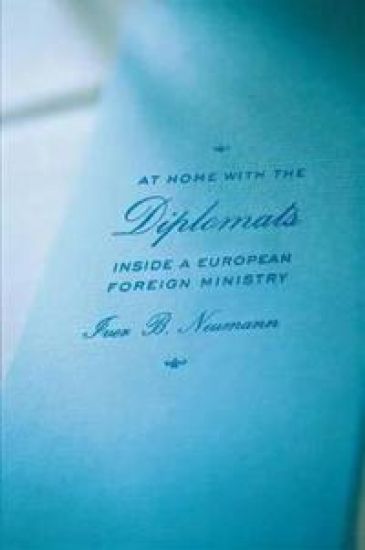
The 2010 WikiLeaks release of 250,000 U.S. diplomatic cables has made it eminently clear that there is a vast gulf between the public face of diplomacy and the opinions and actions that take place behind embassy doors. In At Home with the Diplomats, Iver B. Neumann offers unprecedented access to the inner workings of a foreign ministry. Neumann worked for several years at the Norwegian Ministry of Foreign Affairs, where he had an up-close view of how diplomats conduct their business and how they perceive their own practices. In this book he shows us how diplomacy is conducted on a day-to-day basis. Approaching contemporary diplomacy from an anthropological perspective, Neumann examines the various aspects of diplomatic work and practice, including immunity, permanent representation, diplomatic sociability, accreditation, and issues of gender equality. Neumann shows that the diplomat working abroad and the diplomat at home are engaged in two different modes of knowledge production. Diplomats in the field focus primarily on gathering and processing information. In contrast, the diplomat based in his or her home capital is caught up in the seemingly endless production of texts: reports, speeches, position papers, and the like. Neumann leaves the reader with a keen sense of the practices of diplomacy: relations with foreign ministries, mediating between other people's positions while integrating personal and professional into a cohesive whole, adherence to compulsory routines and agendas, and, above all, the generation of knowledge. Yet even as they come to master such quotidian tasks, diplomats are regularly called upon to do exceptional things, such as negotiating peace.
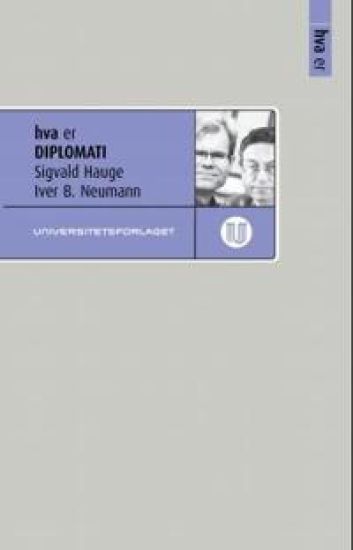
Der hvor grupper står mot hverandre, oppstår det behov for samordning og konfliktløsning. På statsnivå har det de siste fem hundre årene blitt utviklet bestemte praksiser som skal ta seg av dette. Felles er at disse enten utføres eller understøttes av diplomater - mennesker som er spesialister på å tilrettelegge og føre samtaler slik at bruken av tvangsmakt mellom stater kan begrenses til et minimum. Hva er det som skjer i diplomatiet, hva driver de med og hvor viktig er det de driver med? Hvor viktig er det at ikke vanlige folk skal få rede på hva dette maskineriet produserer? På hvilke måter er hemmelighetskremmeriet eventuelt problematisk? Diplomatiet reiser mange spørsmål, er litt eksotisk og kan virke litt frimureraktig. Forfatterne sporer diplomatiets historie fram til i dag, introduserer de viktigste diplomatiske praksisene og diskuterer diplomatenes dilemma mellom å fremføre statens politikk på den ene siden og å komme fram til en avtale på den andre.Diplomati er et tema med både konstant aktualitet og spennende historisk inngang, er litt eksotisk og kanskje også viktigere enn vi tror. Denne boka gir en lettfattelig introduksjon.