

Kirjailija
J. B. S. Haldane
Kirjat ja teokset yhdessä paikassa: 20 kirjaa, julkaisuja vuosilta 1956-2026, suosituimpien joukossa A R.P - Air Raid Precautions. Vertaile teosten hintoja ja tarkista saatavuus suomalaisista kirjakaupoista.
Mukana myös kirjoitusasut: J.B.S. Haldane, J B S Haldane
20 kirjaa
Kirjojen julkaisuhaarukka 1956-2026.



Histoire du Consulat et de lEmpire, Vol. 15 / 20 faisant suite à lHistoire de la Révolution Française (Edition1)
J B S Haldane
Alpha Editions
2024
nidottu

This work has been selected by scholars as being culturally important and is part of the knowledge base of civilization as we know it.This work is in the public domain in the United States of America, and possibly other nations. Within the United States, you may freely copy and distribute this work, as no entity (individual or corporate) has a copyright on the body of the work.Scholars believe, and we concur, that this work is important enough to be preserved, reproduced, and made generally available to the public. To ensure a quality reading experience, this work has been proofread and republished using a format that seamlessly blends the original graphical elements with text in an easy-to-read typeface.We appreciate your support of the preservation process, and thank you for being an important part of keeping this knowledge alive and relevant.
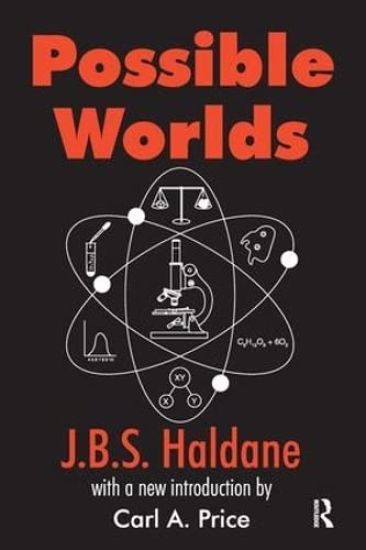
Haldane advanced genetics, population biology and evolutionary theory. This volume emphasizes important developments in natural sciences in the early-20th century. It describes Haldane's views on society, art, religion and economy as seen through the eyes of a politically alert major scientist.
In this collection, first published in 1951, the central theme is that everything has a history, and that we cannot fully understand anything without some knowledge of its history. Professor Haldane writes mainly on geology, astronomy and zoology, but includes a variety of other topics, including eugenics, Einstein, and C. S. Lewis. His outlines of zoology, of the geology of England, and of the evidence for astronomical theories, will be of great use to students and teachers.

This book, first published in 1938, is based upon the Muirhead lectures on political philosophy delivered in the University of Birmingham in January and February of 1938. This title was intended to be of interest to students and scientific workers in the belief that Marxism will prove valuable to them in their scientific work, as well as to a wider audience.
This book, first published in 1938, is based on the Muirhead Lectures given at Birmingham University in February and March of 1937. The first half of this book is mainly devoted to an exposition of the principles of genetics, whilst the second half deals with more controversial topics, with the text providing an insight into the ideology of the time. This title will be of interest to students of politics and history.
Scientific Progress
James Jeans; William Bragg; E.V. Appleton; E. Mellanby; J.B.S. Haldane; Julian S. Huxley
Routledge
2016
nidottu
First published in 1936, this volume contains six of the Halley Stewart Lectures – originally founded "For Research towards the Christian Ideal in All Social Life" – by some of the greatest of English scientists of the mid-20th century, each a leading authority in his respective field: cosmology, physics, meteorology, medicine and genetics. The final lecture considers the relationship between scientific knowledge and human ideals, commenting on the paradox that a century which produced such scientific advance also witnessed the most concentrated period of social, economic and political turmoil in world history.

This book offers an overview of a huge range of scientific achievements in the 20th century, specifically in the field of applied science. The majority of the essays originally appeared in papers and journals such as the Daily Worker, New Statesman and Nation, Science and Society and Nature. Insofar as one theme runs through them, it is the application of scientific knowledge for the benefit of human society. The author is unashamed to present his perspective on some of the topics discussed in the context of his commitment to Marxism. This collection of essays, first published in 1947, thus offers an intriguing glimpse of mid-20th century attitudes towards science, and specifically to the possibilities of a scientific approach to the full spectrum of human endeavour as they were perceived in the aftermath of the Second World War, at a time when the Soviet Union and its creed still seemed ascendant.
This book, first published in 1938, is based upon the Muirhead lectures on political philosophy delivered in the University of Birmingham in January and February of 1938. This title was intended to be of interest to students and scientific workers in the belief that Marxism will prove valuable to them in their scientific work, as well as to a wider audience.
This book, first published in 1938, is based on the Muirhead Lectures given at Birmingham University in February and March of 1937. The first half of this book is mainly devoted to an exposition of the principles of genetics, whilst the second half deals with more controversial topics, with the text providing an insight into the ideology of the time. This title will be of interest to students of politics and history.
In this collection, first published in 1951, the central theme is that everything has a history, and that we cannot fully understand anything without some knowledge of its history. Professor Haldane writes mainly on geology, astronomy and zoology, but includes a variety of other topics, including eugenics, Einstein, and C. S. Lewis. His outlines of zoology, of the geology of England, and of the evidence for astronomical theories, will be of great use to students and teachers.
Scientific Progress
James Jeans; William Bragg; E.V. Appleton; E. Mellanby; J.B.S. Haldane; Julian S. Huxley
Routledge
2014
sidottu
First published in 1936, this volume contains six of the Halley Stewart Lectures – originally founded "For Research towards the Christian Ideal in All Social Life" – by some of the greatest of English scientists of the mid-20th century, each a leading authority in his respective field: cosmology, physics, meteorology, medicine and genetics. The final lecture considers the relationship between scientific knowledge and human ideals, commenting on the paradox that a century which produced such scientific advance also witnessed the most concentrated period of social, economic and political turmoil in world history.
This book offers an overview of a huge range of scientific achievements in the 20th century, specifically in the field of applied science. The majority of the essays originally appeared in papers and journals such as the Daily Worker, New Statesman and Nation, Science and Society and Nature. Insofar as one theme runs through them, it is the application of scientific knowledge for the benefit of human society. The author is unashamed to present his perspective on some of the topics discussed in the context of his commitment to Marxism. This collection of essays, first published in 1947, thus offers an intriguing glimpse of mid-20th century attitudes towards science, and specifically to the possibilities of a scientific approach to the full spectrum of human endeavour as they were perceived in the aftermath of the Second World War, at a time when the Soviet Union and its creed still seemed ascendant.
Haldane advanced genetics, population biology and evolutionary theory. This volume emphasizes important developments in natural sciences in the early-20th century. It describes Haldane's views on society, art, religion and economy as seen through the eyes of a politically alert major scientist.
J.B.S. Haldane will be long remembered for his many contributions to man's knowledge of his world and of himself. Some of the most valuable of these contributions are contained in this classic work on the chemistry of enzymes, originally published in 1930. The book sheds new light on research possibilities that have heightened relevance today. In the preface to this edition, written just a few months before his death, the author has pointed out the importance of the modern enzymologist's awareness of what was known about his subject in the recent past. He describes briefly the major advances in enzymology in the last thirty years and has urged continued and intensified research in specific areas. The result is a fascinating historical work by a great scientist with specific relevance for those in the field today.

Vergleichende Biochemische Fragen
L. Roka; W. Kossel; Marcel Florkin; D. Ackermann; H. M. Rauen; J. B. S. Haldane
Springer-Verlag Berlin and Heidelberg GmbH Co. K
1956
nidottu