Kirjojen hintavertailu. Mukana 12 497 463 kirjaa ja 12 kauppaa.

Kirjailija

J. Barry Cullingworth

Kirjat ja teokset yhdessä paikassa: 8 kirjaa, julkaisuja vuosilta 1989-2023, suosituimpien joukossa Planning in the USA. Vertaile teosten hintoja ja tarkista saatavuus suomalaisista kirjakaupoista.

Mukana myös kirjoitusasut: J Barry Cullingworth

8 kirjaa

Kirjojen julkaisuhaarukka 1989-2023.

Planning in the USA

Planning in the USA

Roger W. Caves; J. Barry Cullingworth

TAYLOR FRANCIS LTD
2023
sidottu
Extensively revised and updated, Planning in the USA, fifth edition, continues to provide a comprehensive introduction to the policies, theory, and practice of planning.Outlining land use, urban planning, and environmental protection policies, this fully illustrated book explains the nature of the planning process and the way in which policy issues are identified, defined, and approached. The new edition incorporates new planning legislation and regulations at the state and federal layers of government and examples of local ordinances in a variety of planning areas. New material includes discussions ofeducation and equity in planningthe City Beautiful MovementDaniel Burnham’s plan for ChicagosegregationKnick v. Township of Scottreforming single-family zoning and regulatory challenges in zoning and land useDaniel Parolek’s ‘Missing Middle Housing’climate change, mitigation, adaptation, and resiliencythe drinking water crisis in Flint, Michigansharing programs for cars, bicycles, and scootershybrid electric and autonomous vehiclesVision ZeroCOVID-19 relief for housingInnovation Districts, Promise Zones, and Opportunity Zonesthe sharing, gig, and creative economiesscenic views and vistas, monuments, statues, and remembering the past; andhealthy cities, Health Impact Assessment, and active livingThis detailed account of urbanization in the United States reveals the problematic nature and limitations of the planning process, the fallibility of experts, and the difficulties facing policy-makers in their search for solutions. Planning in the USA, fifth edition, is an essential book for students of urban planning, urban politics, environmental geography, and environment politics. It will be a valuable resource for planners and all who are concerned with the nature of contemporary urban and environmental problems.
Planning in the USA

Planning in the USA

Roger W. Caves; J. Barry Cullingworth

TAYLOR FRANCIS LTD
2023
nidottu
Extensively revised and updated, Planning in the USA, fifth edition, continues to provide a comprehensive introduction to the policies, theory, and practice of planning.Outlining land use, urban planning, and environmental protection policies, this fully illustrated book explains the nature of the planning process and the way in which policy issues are identified, defined, and approached. The new edition incorporates new planning legislation and regulations at the state and federal layers of government and examples of local ordinances in a variety of planning areas. New material includes discussions ofeducation and equity in planningthe City Beautiful MovementDaniel Burnham’s plan for ChicagosegregationKnick v. Township of Scottreforming single-family zoning and regulatory challenges in zoning and land useDaniel Parolek’s ‘Missing Middle Housing’climate change, mitigation, adaptation, and resiliencythe drinking water crisis in Flint, Michigansharing programs for cars, bicycles, and scootershybrid electric and autonomous vehiclesVision ZeroCOVID-19 relief for housingInnovation Districts, Promise Zones, and Opportunity Zonesthe sharing, gig, and creative economiesscenic views and vistas, monuments, statues, and remembering the past; andhealthy cities, Health Impact Assessment, and active livingThis detailed account of urbanization in the United States reveals the problematic nature and limitations of the planning process, the fallibility of experts, and the difficulties facing policy-makers in their search for solutions. Planning in the USA, fifth edition, is an essential book for students of urban planning, urban politics, environmental geography, and environment politics. It will be a valuable resource for planners and all who are concerned with the nature of contemporary urban and environmental problems.
Energy, Land and Public Policy

Energy, Land and Public Policy

J. Barry Cullingworth

Routledge
2017
sidottu
The development of alternative forms of energy supply since the mid-1970s has brought with it a range of new issues and concerns, ranging from nuclear waste disposal to land use planning for energy efficiency. This latest volume in the acclaimed Energy Policy Studies series brings together an interdisciplinary group of researchers to examine the relationship between energy and planning policy, with emphasis on urban and regional impacts.Like other volumes in the series, the articles included focus on the social, political, and economic dimensions of energy technology, resources, and use. The emphasis on issues of technological scale, resource allocation, environmental impact and quality, and urban and regional studies makes this a unique contribution to the literature.Contents: "Creating Land-Energy Transitions," by Andrew F. Huston, U.S. Department of Housing and Urban Development; "Land Use Planning for Energy Efficiency," by Susan E. Owens, Cambridge University; "Nuclear Waste Landscapes," by Barry Solomon, U.S. Energy Information Administration; "Economic Development, Growth and Land Use Planning in Oil and Gas Producing Regions," by Robert L. Mansell, University of Calgary; "The Land Use Focus of Energy Impacts," by M. J. Pasqualetti, Arizona State University; "Energy Use and Land Use," by Stephen Lonergan, McMaster University; and a concluding essay by J. Barry Cullingworth, University of Delaware.
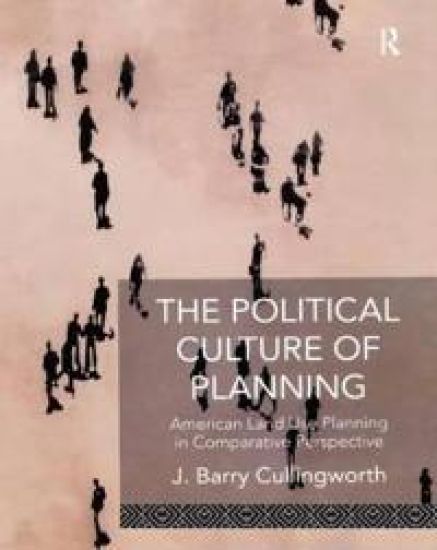
The Political Culture of Planning

The Political Culture of Planning

J Barry Cullingworth; J. Barry Cullingworth

Routledge
2016
nidottu
The Political Culture of Planning is written for two quite distinct readerships. The main body of the book synthesizes a mass of information to provide an overview of a complex and amorphous field. This material is designed to meet the needs of students who require a succinct account of the American system of land use planning. These readers can ignore the notes. For those who are embarking upon a much wider and deeper study of land use planning in the US the notes are crucial: they provide the guideposts to an immensely rich literature. The first four parts of the text present the main issues of land use planning in the US. Part 1 assesses the US zoning system. The introductory chapter discusses the meaning of zoning (and its difference from planning), the primacy of local governments, the constitutional framework and the role of the courts. Chapter two provides the historical background to zoning and an outline of the classic Euclid case. Chapter three discusses the objectives and nature of zoning and the use which local governments have made of its inherently inflexible character. Chapter four acts as a corrective to this view, describing how lawyers and planners have shown remarkable ingenuity in adapting zoning to the demands of a changing society. Part 2 deals with the perennial issues of discrimination, financing infrastructure for new development and the process for negotiating zoning matters. Part 3 presents a discussion of two overlapping issues of increasing significance - aesthetics and historic preservation. Part 4 focusses on the main issue facing land use planners: attempting to channel the forces of development into spatial forms held to be socially desirable. Part 5 consists of a series of broad-ranging essays which discuss land use planning in the US, its institutional and cultural framework and the reasons for its particular character. Part 6 discusses the limited possibilities for land use reform in the US - drawing on the author's considerable experience in both Britain and Canada - in order to interpret the limitations and potentialities of land use planning in the US.
Housing Needs and Planning Policy

Housing Needs and Planning Policy

J Barry Cullingworth; J.B. Cullingworth

Routledge
2016
nidottu
In seeking to understand society sociologists in the Public Policy, Welfare and Scoial Work set of the International Library of Sociology consider the policy and planning implications of attempts to respond to and meet social needs by the Church, Civil Service, Industry and Voluntary Organizations.
Housing Needs and Planning Policy

Housing Needs and Planning Policy

J Barry Cullingworth; J.B. Cullingworth

Routledge
1998
sidottu
In seeking to understand society sociologists in the Public Policy, Welfare and Scoial Work set of the International Library of Sociology consider the policy and planning implications of attempts to respond to and meet social needs by the Church, Civil Service, Industry and Voluntary Organizations.
The Political Culture of Planning

The Political Culture of Planning

J Barry Cullingworth; J. Barry Cullingworth

Routledge
1993
sidottu
The Political Culture of Planning is written for two quite distinct readerships. The main body of the book synthesizes a mass of information to provide an overview of a complex and amorphous field. This material is designed to meet the needs of students who require a succinct account of the American system of land use planning. These readers can ignore the notes. For those who are embarking upon a much wider and deeper study of land use planning in the US the notes are crucial: they provide the guideposts to an immensely rich literature. The first four parts of the text present the main issues of land use planning in the US. Part 1 assesses the US zoning system. The introductory chapter discusses the meaning of zoning (and its difference from planning), the primacy of local governments, the constitutional framework and the role of the courts. Chapter two provides the historical background to zoning and an outline of the classic Euclid case. Chapter three discusses the objectives and nature of zoning and the use which local governments have made of its inherently inflexible character. Chapter four acts as a corrective to this view, describing how lawyers and planners have shown remarkable ingenuity in adapting zoning to the demands of a changing society. Part 2 deals with the perennial issues of discrimination, financing infrastructure for new development and the process for negotiating zoning matters. Part 3 presents a discussion of two overlapping issues of increasing significance - aesthetics and historic preservation. Part 4 focusses on the main issue facing land use planners: attempting to channel the forces of development into spatial forms held to be socially desirable. Part 5 consists of a series of broad-ranging essays which discuss land use planning in the US, its institutional and cultural framework and the reasons for its particular character. Part 6 discusses the limited possibilities for land use reform in the US - drawing on the author's considerable experience in both Britain and Canada - in order to interpret the limitations and potentialities of land use planning in the US.
Energy, Land and Public Policy

Energy, Land and Public Policy

J. Barry Cullingworth

Transaction Publishers
1989
nidottu
The development of alternative forms of energy supply since the mid-1970s has brought with it a range of new issues and concerns, ranging from nuclear waste disposal to land use planning for energy efficiency. This latest volume in the acclaimed Energy Policy Studies series brings together an interdisciplinary group of researchers to examine the relationship between energy and planning policy, with emphasis on urban and regional impacts.Like other volumes in the series, the articles included focus on the social, political, and economic dimensions of energy technology, resources, and use. The emphasis on issues of technological scale, resource allocation, environmental impact and quality, and urban and regional studies makes this a unique contribution to the literature.Contents: "Creating Land-Energy Transitions," by Andrew F. Huston, U.S. Department of Housing and Urban Development; "Land Use Planning for Energy Efficiency," by Susan E. Owens, Cambridge University; "Nuclear Waste Landscapes," by Barry Solomon, U.S. Energy Information Administration; "Economic Development, Growth and Land Use Planning in Oil and Gas Producing Regions," by Robert L. Mansell, University of Calgary; "The Land Use Focus of Energy Impacts," by M. J. Pasqualetti, Arizona State University; "Energy Use and Land Use," by Stephen Lonergan, McMaster University; and a concluding essay by J. Barry Cullingworth, University of Delaware.