

Kirjailija
J. Brewer
Kirjat ja teokset yhdessä paikassa: 13 kirjaa, julkaisuja vuosilta 1998-2025, suosituimpien joukossa The Athanasian Creed Vindicated. Vertaile teosten hintoja ja tarkista saatavuus suomalaisista kirjakaupoista.
Mukana myös kirjoitusasut: J Brewer
13 kirjaa
Kirjojen julkaisuhaarukka 1998-2025.

Reprint of the original, first published in 1872.
Reprint of the original, first published in 1872.

Facing the Enemy: Short Stories of War
J. Brewer
Createspace Independent Publishing Platform
2015
nidottu
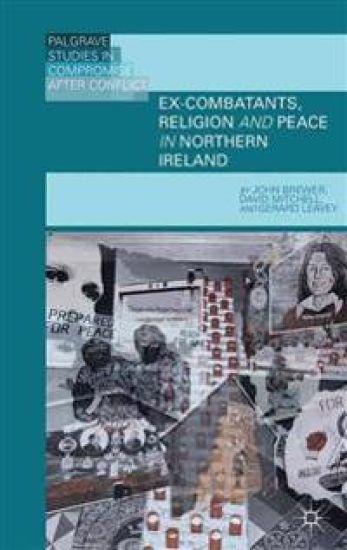
Ex-Combatants, Religion, and Peace in Northern Ireland
J. Brewer; D. Mitchell; G. Leavey
Palgrave Macmillan
2013
sidottu
Studies of Northern Ireland's ex-combatants ignore religion, while advocates of religious interventions in transitional justice exaggerate its influence. Using interview data with ex-combatants, this book explores religious influences upon violence and peace, and develops a model for evaluating the role of religion in transitional justice.
Ex-Combatants, Religion, and Peace in Northern Ireland
J. Brewer; D. Mitchell; G. Leavey
Palgrave Macmillan
2013
nidottu
Studies of Northern Ireland's ex-combatants ignore religion, while advocates of religious interventions in transitional justice exaggerate its influence. Using interview data with ex-combatants, this book explores religious influences upon violence and peace, and develops a model for evaluating the role of religion in transitional justice.

This book has two aims: to clarify the meaning of C. Wright Mills's depiction of the sociological imagination; and to use this to develop a sociological framework that assists in understanding the process by which communal violence has ended in Northern Ireland and South Africa. The contrast between these two societies is a familiar one, but the book is novel by developing an explanatory framework based on Mills's 'sociological imagination'. This model merges developments in the two countries at the individual, social structural and political arenas in order to account for the emergence of their peace processes.

This book has two aims: to clarify the meaning of C. Wright Mills's depiction of the sociological imagination; and to use this to develop a sociological framework that assists in understanding the process by which communal violence has ended in Northern Ireland and South Africa. The contrast between these two societies is a familiar one, but the book is novel by developing an explanatory framework based on Mills's 'sociological imagination'. This model merges developments in the two countries at the individual, social structural and political arenas in order to account for the emergence of their peace processes.
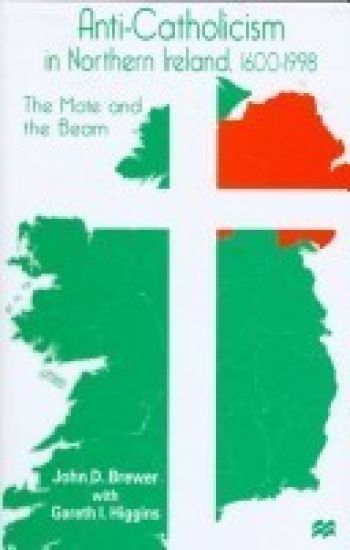
Anti-Catholicism in Northern Ireland, 1600–1998
J. Brewer; G. Higgins
Palgrave Macmillan
1998
nidottu
Anti-Catholicism forms part of the dynamics to Northern Ireland's conflict and is critical to the self-defining identity of certain Protestants. However, anti-Catholicism is as much a sociology process as a theological dispute. It was given a Scriptural underpinning in the history of Protestant-Catholic relations in Ireland, and wider British-Irish relations, in order to reinforce social divisions between the religious communities and to offer a deterministic belief system to justify them. The book examines the socio-economic and political processes that have led to theology being used in social closure and stratification between the seventeenth century and the present day.
Anti-Catholicism in Northern Ireland, 1600–1998
J. Brewer; G. Higgins
Palgrave Macmillan
1998
sidottu
Anti-Catholicism forms part of the dynamics to Northern Ireland's conflict and is critical to the self-defining identity of certain Protestants. However, anti-Catholicism is as much a sociology process as a theological dispute. It was given a Scriptural underpinning in the history of Protestant-Catholic relations in Ireland, and wider British-Irish relations, in order to reinforce social divisions between the religious communities and to offer a deterministic belief system to justify them. The book examines the socio-economic and political processes that have led to theology being used in social closure and stratification between the seventeenth century and the present day.