Kirjojen hintavertailu. Mukana 12 595 353 kirjaa ja 12 kauppaa.

Kirjailija

J.C. Simo

Kirjat ja teokset yhdessä paikassa: 2 kirjaa, julkaisuja vuosilta 1998-2013, suosituimpien joukossa Computational Inelasticity. Vertaile teosten hintoja ja tarkista saatavuus suomalaisista kirjakaupoista.

2 kirjaa

Kirjojen julkaisuhaarukka 1998-2013.

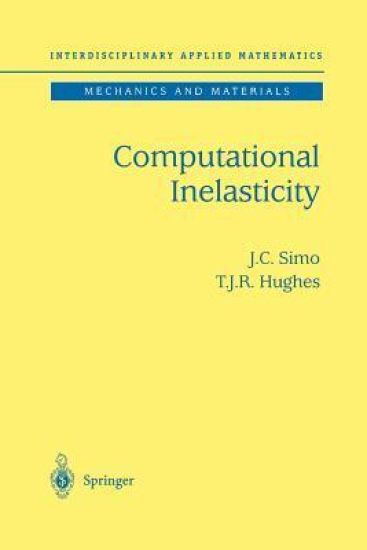
Computational Inelasticity

Computational Inelasticity

J.C. Simo; T.J.R. Hughes

Springer-Verlag New York Inc.
2013
nidottu
This book goes back a long way. There is a tradition of research and teaching in inelasticity at Stanford that goes back at least to Wilhelm Flugge ¨ and Erastus Lee. I joined the faculty in 1980, and shortly thereafter the Chairman of the Applied Mechanics Division, George Herrmann, asked me to present a course in plasticity. I decided to develop a new two-quarter sequence entitled “Theoretical and C- putational Plasticity” which combined the basic theory I had learned as a graduate student at the University of California at Berkeley from David Bogy, James Kelly, Jacob Lubliner, and Paul Naghdi with new computational techniques from the ?nite-element literature and my personal research. I taught the course a couple of times and developed a set of notes that I passed on to Juan Simo when he joined thefacultyin1985. IwasChairmanatthattimeandIaskedJuantofurtherdevelop the course into a full year covering inelasticity from a more comprehensive p- spective. Juan embarked on this path creating what was to become his signature course. He eventually renamed it “Computational and Theoretical Inelasticity” and it covered much of the material that was the basis of his research in material modeling and simulation for which he achieved international recognition. At the outset we decided to write a book that would cover the material in the course.
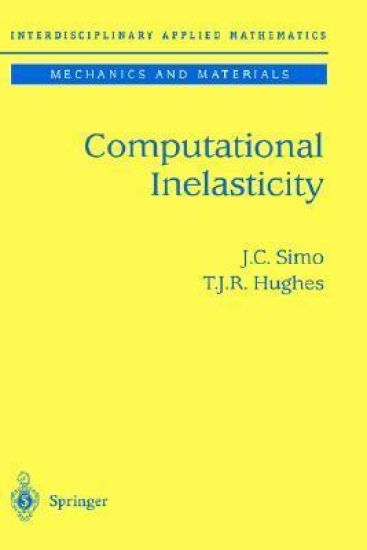
Computational Inelasticity

Computational Inelasticity

J.C. Simo; T.J.R. Hughes

Springer-Verlag New York Inc.
1998
sidottu
This book goes back a long way. There is a tradition of research and teaching in inelasticity at Stanford that goes back at least to Wilhelm Flugge ¨ and Erastus Lee. I joined the faculty in 1980, and shortly thereafter the Chairman of the Applied Mechanics Division, George Herrmann, asked me to present a course in plasticity. I decided to develop a new two-quarter sequence entitled “Theoretical and C- putational Plasticity” which combined the basic theory I had learned as a graduate student at the University of California at Berkeley from David Bogy, James Kelly, Jacob Lubliner, and Paul Naghdi with new computational techniques from the ?nite-element literature and my personal research. I taught the course a couple of times and developed a set of notes that I passed on to Juan Simo when he joined thefacultyin1985. IwasChairmanatthattimeandIaskedJuantofurtherdevelop the course into a full year covering inelasticity from a more comprehensive p- spective. Juan embarked on this path creating what was to become his signature course. He eventually renamed it “Computational and Theoretical Inelasticity” and it covered much of the material that was the basis of his research in material modeling and simulation for which he achieved international recognition. At the outset we decided to write a book that would cover the material in the course.