Kirjojen hintavertailu. Mukana 12 390 323 kirjaa ja 12 kauppaa.

Kirjailija

J. D. McClatchy

Kirjat ja teokset yhdessä paikassa: 9 kirjaa, julkaisuja vuosilta 1998-2017, suosituimpien joukossa Division of Spoils. Vertaile teosten hintoja ja tarkista saatavuus suomalaisista kirjakaupoista.

9 kirjaa

Kirjojen julkaisuhaarukka 1998-2017.

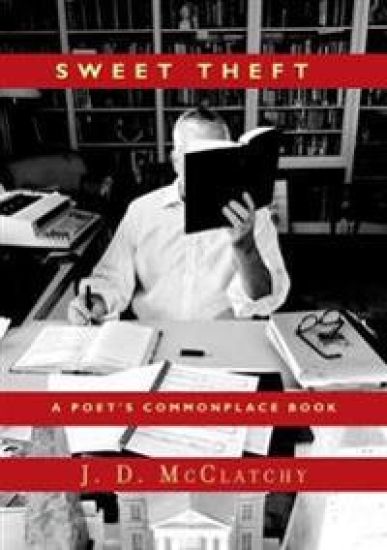
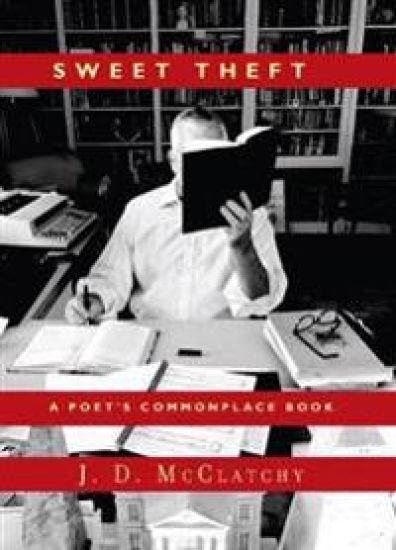
Sweet Theft

Sweet Theft

J. D. Mcclatchy

Counterpoint
2017
nidottu
Centuries ago, when books were rare, those who owned them would lend them to friends, who in turn would copy out passages they especially liked before returning the precious book to its owner. These anthologies came to be known as Commonplace Books, and modern writers as different as W. H. Auden and Alec Guinness have kept them as well, recording phrases or passages that struck them as wise or witty or quirky. The result is as much the self-portrait of a sensibility as it is a collection of miscellaneous delights. Renowned poet J. D. McClatchy has been keeping such a book for three decades now. This selection from it offers a unique look into what strange facts, what turns of mind or phrase, what glorious feats of language and nature can attract the attention of a poet.The great and the obscure are gathered around the same table, exchanging remarkable opinions. Henry James is speaking of Venice:  The deposed, the defeated, the disenchanted, the wounded, or even only the bored, have seemed to find there something that no other place could give." At the other end of the table, Groucho Marx is playing drama critic:  I didn't like the play, but then I saw it under adverse circumstances the curtain was up." Nietzsche and Flaubert, Dizzy Gillespie and Marianne Moore dozens of unexpected and timeless aphorisms and anecdotes that pierce and provoke. Many of McClatchy's own observations about the art and prowess of writing are included as well.This is a book meant to be sipped, not gulped; meant to be read at leisure and pondered on at length.
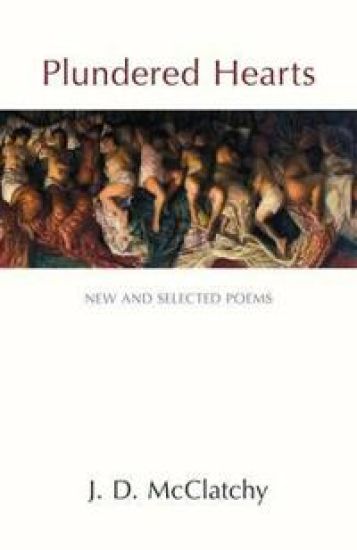
Sweet Theft

Sweet Theft

J. D. Mcclatchy

Counterpoint
2016
sidottu
Centuries ago, when books were rare, those who owned them would lend them to friends, who in turn would copy out passages they especially liked before returning the precious book to its owner. These anthologies came to be known as Commonplace Books, and modern writers as different as W. H. Auden and Alec Guinness have kept them as well, recording phrases or passages that struck them as wise or witty or quirky. The result is as much the self-portrait of a sensibility as it is a collection of miscellaneous delights. Renowned poet J. D. McClatchy has been keeping such a book for three decades now. This selection from it offers a unique look into what strange facts, what turns of mind or phrase, what glorious feats of language and nature can attract the attention of a poet. The great and the obscure are gathered around the same table, exchanging remarkable opinions. Henry James is speaking of Venice:  The deposed, the defeated, the disenchanted, the wounded, or even only the bored, have seemed to find there something that no other place could give." At the other end of the table, Groucho Marx is playing drama critic:  I didn't like the play, but then I saw it under adverse circumstances the curtain was up." Nietzsche and Flaubert, Dizzy Gillespie and Marianne Moore dozens of unexpected and timeless aphorisms and anecdotes that pierce and provoke. Many of McClatchy's own observations about the art and prowess of writing are included as well. This is a book meant to be sipped, not gulped; meant to be read at leisure and pondered on at length.
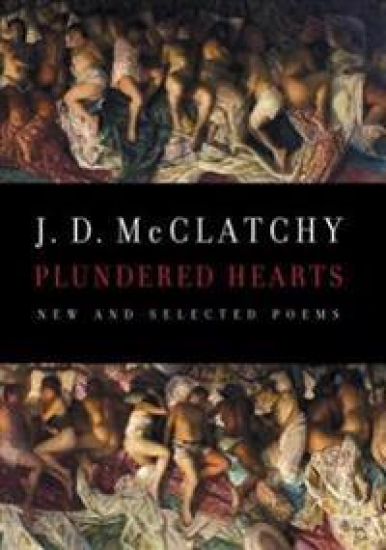
Plundered Hearts: New and Selected Poems

Plundered Hearts: New and Selected Poems

J. D. McClatchy

Knopf Doubleday Publishing Group
2016
nidottu
A definitive selection of the elegant work by a poet at the forefront of American poetry for more than three decades. With his first several books, J. D. McClatchy established himself as a poet of urbanity, intellect, and prismatic emotion, in the tradition of James Merrill, W. H. Auden, and Elizabeth Bishop--one who balances an exploration of the underworld of desire with a mastery of poetic form, and whose artistry reveals the riches and ruins of our "plundered hearts." Now, opening with exquisite new poems--including the stunning "My Hand Collection," a catalogue of art objects that steals up on the complexity of human touch, and a witty and profound poem entitled "My Robotic Prostatectomy"--this selection is a glorious full tour of McClatchy's career. It includes excerpts from the powerful book-length sequence Ten Commandments (1998) and his more recent works Hazmat (2002) and Mercury Dressing (2009)--books that explored the body's melodrama, as well as the heart's treacheries, grievances, and boundless capacities. All of his poems present a sumptuous weave of impassioned thought and clear-sighted feeling. He has been rightly hailed as a poet of "ferocious alertness," one who elicits (says The New Leader) "the kind of wonder and joy we experience when the curtain comes down on a dazzling performance."
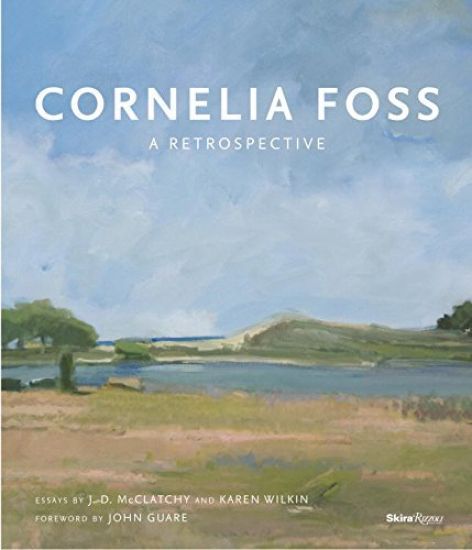
Cornelia Foss

Cornelia Foss

J. D. McClatchy; Karen Wilkin; Guare John

Skira Rizzoli
2015
sidottu
The first comprehensive survey of Cornelia Foss’s landscapes, still lifes, and portraits, an artist in the style and tradition of Fairfield Porter. ?The American artist Cornelia Foss is part of a loosely knit group of artists commonly described as “painterly realists,” many of whom are associated with Long Island’s scenic Hamptons region, including Eric Fischl and Fairfield Porter. This is the first such survey of this artist’s work to be published. Long considered a quintessential Long Island artist, Foss has painted Wainscott Pond for over half a century.Foss’s work mirrors her protected environment—pastel drawings of her own garden and nearby ponds; oil portraits of her granddaughters and pets; landscapes featuring beach scenes and still-life paintings showing flowers on a windowsill. Thus, the art conveys a nurturing perspective that also acknowledges the outside world. Beautifully designed, this volume provides deep insight into the breadth and range of the artist’s practice over the past fifty years.
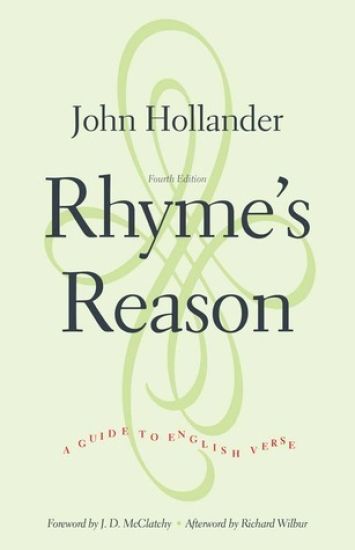
Rhyme's Reason

Rhyme's Reason

John Hollander; J. D. McClatchy; Richard Wilbur

Yale University Press
2015
pokkari
In this classic text, the distinguished poet and critic John Hollander surveys the schemes, patterns, and forms of English verse, illustrating each variation with an original and witty self-descriptive example. In new essays for this revised edition, J. D. McClatchy and Richard Wilbur each offer a personal take on why Rhymes’s Reason has played an integral role in the education of young poets and student scholars. “[Hollander] put everything he knew about the structures of poetry—those fabled magic tricks—into a sort of guidebook for those starting out on the trail up Mount Parnassus. . . . There are astonishments on every page.”—from the Foreword by J. D. McClatchy “This book’s wit and inventive spirit, its self-describing embodiments of form, now offer the beginning poet a happy chance to discover the technician in himself.”—from the Afterword by Richard Wilbur “How lucky the young poet who discovers this wisest and most lighthearted of manuals.”—James Merrill “What the E. B. White–William Strunk The Elements of Style is to the writing of prose, Rhyme’s Reason could very easily become to the writing of verse. . . . Marvelously comprehensive, clarifying and useful, [and] a delight to read.”—John Reardon, Los Angeles Times Review of Books “A virtuoso performance and a mandatory text for poetry readers and practitioners alike.”—ALA Booklist
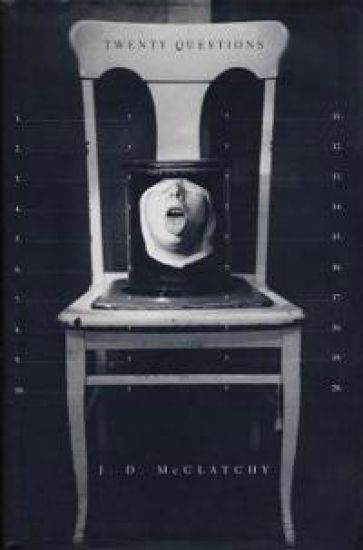
Twenty Questions

Twenty Questions

J. D. McClatchy

Columbia University Press
1999
pokkari
In Twenty Questions, one of America's finest poet-critics leads readers into the mysteries of poetry: how it draws on our lives, and how it leads us back into them. In a series of linked essays progressing from the autobiographical to the critical-and closing with a remarkable translation of Horace's Ars Poetica unavailable elsewhere-J. D. McClatchy's latest book offers an intimate and illuminating look into the poetic mind. McClatchy begins with a portrait of his development as a poet and as a man, and provides vibrant details about some of those who helped shape his sensibility-from Anne Sexton in her final days, to Harold Bloom, his enigmatic teacher at Yale, to James Merrill, a wise and witty mentor. All of these glimpses into McClatchy's personal history enhance our understanding of a coming of age from ingenious reader to accomplished poet-critic. Later sections range through poetry past and present-from Emily Dickinson to Seamus Heaney and W. S. Merwin-with incisive criticism generously interspersed with vivid anecdotes about McClatchy's encounters with other poets' lives and work. A critical unpacking of Alexander Pope's "Epistle to Miss Blount" is interwoven with compassionate psychological portrait of a brilliant poet plagued by both romantic longings and debilitating physical deformities. There are surprising takes on the literary imagination as well: a look at Elizabeth Bishop through her letters, and a tribute to the Broadway lyrics of Stephen Sondheim and the tradition of light verse. The questions McClatchy poses of poems prompt a fresh look and the last word. Free of scholarly pretension, elegantly and movingly written, Twenty Questions is a bright, open window onto a public and private experience of poetry, to be appreciated by poets, readers, and critics alike.
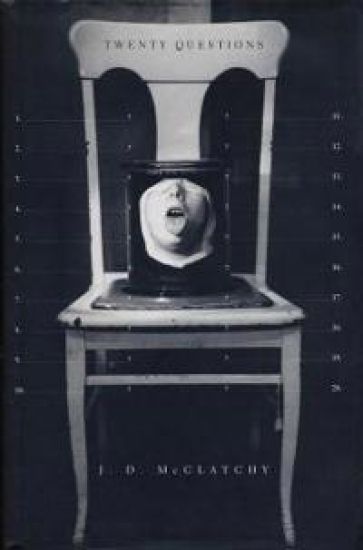
Twenty Questions

Twenty Questions

J. D. McClatchy

Columbia University Press
1998
sidottu
In Twenty Questions, one of America's finest poet-critics leads readers into the mysteries of poetry: how it draws on our lives, and how it leads us back into them. In a series of linked essays progressing from the autobiographical to the critical-and closing with a remarkable translation of Horace's Ars Poetica unavailable elsewhere-J. D. McClatchy's latest book offers an intimate and illuminating look into the poetic mind. McClatchy begins with a portrait of his development as a poet and as a man, and provides vibrant details about some of those who helped shape his sensibility-from Anne Sexton in her final days, to Harold Bloom, his enigmatic teacher at Yale, to James Merrill, a wise and witty mentor. All of these glimpses into McClatchy's personal history enhance our understanding of a coming of age from ingenious reader to accomplished poet-critic. Later sections range through poetry past and present-from Emily Dickinson to Seamus Heaney and W. S. Merwin-with incisive criticism generously interspersed with vivid anecdotes about McClatchy's encounters with other poets' lives and work. A critical unpacking of Alexander Pope's "Epistle to Miss Blount" is interwoven with compassionate psychological portrait of a brilliant poet plagued by both romantic longings and debilitating physical deformities. There are surprising takes on the literary imagination as well: a look at Elizabeth Bishop through her letters, and a tribute to the Broadway lyrics of Stephen Sondheim and the tradition of light verse. The questions McClatchy poses of poems prompt a fresh look and the last word. Free of scholarly pretension, elegantly and movingly written, Twenty Questions is a bright, open window onto a public and private experience of poetry, to be appreciated by poets, readers, and critics alike.