Kirjojen hintavertailu. Mukana 12 262 046 kirjaa ja 12 kauppaa.

Kirjailija

J. Edward Chamberlin

Kirjat ja teokset yhdessä paikassa: 5 kirjaa, julkaisuja vuosilta 2007-2023, suosituimpien joukossa Come Back to Me My Language. Vertaile teosten hintoja ja tarkista saatavuus suomalaisista kirjakaupoista.

Mukana myös kirjoitusasut: J Edward Chamberlin

5 kirjaa

Kirjojen julkaisuhaarukka 2007-2023.

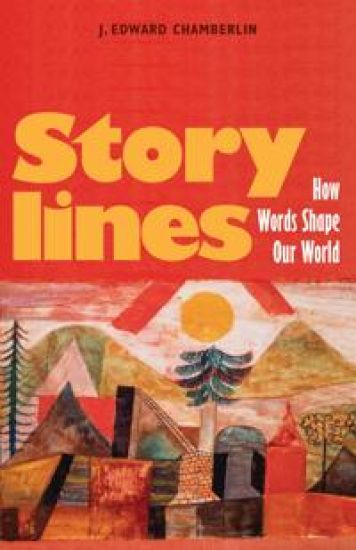
Storylines

Storylines

J. Edward Chamberlin

Douglas McIntyre
2023
pokkari
A brilliant and timely exploration of the power of stories and songs--from both the distant past and today's news--counters despair and disillusionment with hope and possibility. Stories are our first and last survival strategy. For tens of thousands of years, they have told humanity what we know and what we don't know, what to wonder about and what to watch out for. We draw comfort from our great myths, and from the storytelling of our contemporaries (including members of our families). Storytelling holds us together. And sometimes it keeps us apart.From the stories we tell children, to literary works, to pop music, stories take many forms and give shape and substance to things we believe, perpetuating ideals and identities and provoke controversy and conflict. They include explanations of the origin and purpose of things, of causes and effects and sequences of events, and of our relationships to the forces that surround us. They also shape the institutions we establish, the ways in which we constitute ourselves as communities, and the covenants we enter into with secular as well as spiritual powers. Stories that celebrate growth and development and "civilized" progress can be a hazard when we use them to destroy Indigenous homelands and heritages and the environment.Stories can also provide a form of resistance to the overpowering realities of the everyday, empowering our imaginations to create a sense of possibility. It is within storytelling, and by understanding how stories work, that we can find a way to bring sympathy and judgment back into the centre of our conversations about what we can--and what we must--do. Stories and songs, ours and those of others, can help us. They can save us.

Come Back to Me My Language

Come Back to Me My Language

J. Edward Chamberlin

Peepal Tree Press Ltd
2019
pokkari
Come Back to Me My Language remains the authoritative study of the remarkable flourishing of West Indian poetry which emerged in the latter half of the 20th century. Writing with clarity and vigour, J. Edward Chamberlin discusses the work of more than thirty poets and writes with insight on poems by John Agard, Edward Baugh, Louise Bennett, Bongo Jerry, Dionne Brand, Kamau Brathwaite, Aimé Césaire, Merle Collins, Fred D’Aguiar, Lorna Goodison, Linton Kwesi Johnson, Claude McKay, Anthony McNeill, Mervyn Morris, Mutabaruka, Grace Nichols, Victor Questel, Eric Roach, Dennis Scott, Olive Senior, Philip Sherlock, Michael (Mikey) Smith, Bruce St. John, and Derek Walcott.
The Banker and the Blackfoot: An Untold Story of Friendship, Trust, and Broken Promises in the Old West
During the last decades of the nineteenth century in the Old West, cowboys and Indians, lawmen and outlaws, ranchers and farmers shared the border between Canada and the United States--and mostly ignored it. American traders and cowboys with their cattle came north to the territory that later became Alberta, and the Blackfoot traveled south to Montana to visit their kinfolk there. Bull trains regularly carried supplies from Fort Benton, on the Missouri River, across the border to Fort Macleod, a small ramshackle town in the foothills of the Rockies. The Banker and the Blackfoot conjures up vividly the never-before-told story of Fort Macleod, the surrounding Blackfoot territory, and the foothills during roughly two decades, 1885 to 1905, when the people living there--First Nations and M tis, rancher and farmer--respectfully set out to accommodate Blackfoot sovereignty and new settlement--before the Canadian government broke its Treaty promises to the Indians. There were many friendships in this time and place, both among town residents and foothills settlers and the police, and between many of them and the Blackfoot. It was here that the self-made banker John Cowdry--J. Edward Chamberlin's grandfather--met Crop Eared Wolf, the legendary Blackfoot warrior and brilliant horseman, and their friendship and trust formed a lasting bond. Cowdry later became the town's first mayor, and Crop Eared Wolf succeeded his father, the great statesman Red Crow, as head chief of the Blood tribe. Fort Macleod embraced it all--Sun Dances and social dances, bibles and medicine bundles, drums and piano recitals, horse races and polo matches, and rodeos to celebrate both the horse culture of the Blackfoot and the skills of the cattle range. The town was full of great characters, including Madame Kanouse (Natawista), admired for both her influential intelligence and her stunning fashion sense; Kamoose Taylor, hospitable patron of the Macleod Hotel--where Francis Dickens, son of the great novelist Charles Dickens, and the Sundance Kid himself were found at the bar; Colonel James Macleod, commander of the North-West Mounted Police; the taciturn Jerry Potts, unequaled M tis guide and interpreter; John Ware, a successful black cowboy and rancher; and the renowned Peigan chief Big Swan. Full of wisdom, passion, and insight, The Banker and the Blackfoot compellingly portrays a time when many people in that part of the Old West looked for ways of getting along with each other and getting on with the things that mattered to them all. Their remarkable story offers hope for all of us today.
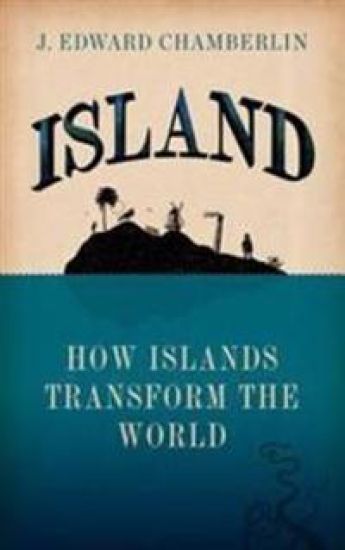
Island

Island

J. Edward Chamberlin

Elliott Thompson Limited
2013
sidottu
Ever since the dawn of human history, islands have been at the heart of our desires - and our fears. Drawing on anthropology, literature, biology, art, philosophy and earth science, Island tells the groundbreaking story of humans and islands throughout history, and celebrates islands as a central part of the world we live in. With a unique cross-disciplinary approach, encompassing everything from the wonder of an island's flora and fauna, to the geological roots of island formations, via references to popular culture, poetry and literature (including Prospero, Gulliver, Robinson Crusoe and the Count of Monte Cristo), Chamberlin tells the vivid and absorbing story of how islands have shaped human history, society and culture. Island celebrates islands for all their worth, whether real or invented, literal or fictitious, as a central part of the human narrative. A marvellously ambitious book, Chamberlin's book provides a fascinating counterpoint to Judith Schalansky's Atlas of Remote Islands (total UK sales over 20,000 to date).
Horse

Horse

J Edward Chamberlin

Signal Books Ltd
2007
nidottu
Full of wisdom, passion and wonder, "Horse" is the utterly fascinating and enlightening story of horses and humans from the beginning of time to the present. Ever since the dawn of human history, horses have held a mystical sway over our imagination: we respect and revere them like no other animal. We have conceived of them as both domesticated and free, both belonging to our civilisation and to the wild. At first, ours was an encounter of death, as prehistoric humans hunted horses all across the steppes of Asia, and throughout Europe. But they also painted horses full of grace and beauty on the walls of their caves, and gave them a central place in their songs and sacred rituals. Long before the invention of writing and the wheel, horses began to shape the way humans lived. Drawing on archaeology, biology, art, literature and ethnography, "Horse" illuminates the relationship between humans and horses throughout history - from Alexander the Great to Genghis Khan, from the Moors in Spain and the knights in France to the great horse cultures of native America. From the Ice Age to the Industrial Age, horses have provided sustenance, transportation, status, companionship and the ability to establish and expand empires. Included are stories of horses at work, at war and at play, both wild horses and famous horses, in paintings, books and movies. "Horse" looks at the ancient traditions of horse trading and horse stealing, horse racing and games with horses, and at rodeos and circuses, jumping and dressage. It compares techniques of training and traditions of breeding, from the Persians to the Nez Perce, from Lippizaners to Percherons, and ponders the intelligence of horses, their skill and strength as well as their grace and beauty.