Kirjailija
J Henri Fabre
Kirjat ja teokset yhdessä paikassa: 30 kirjaa, julkaisuja vuosilta 2005-2025, suosituimpien joukossa Bramble-bees and Others. Vertaile teosten hintoja ja tarkista saatavuus suomalaisista kirjakaupoista.
Mukana myös kirjoitusasut: J. Henri Fabre
30 kirjaa
Kirjojen julkaisuhaarukka 2005-2025.
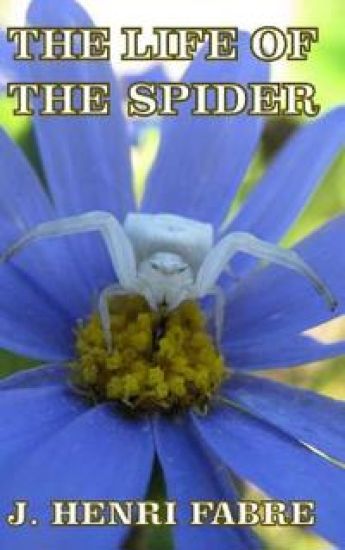
Translated by Alexander Teixeira de Mattos, Fellow of the Zoological Society of London, and with a preface by Maurice Maeterlinck. Written by the founding father of the science of modern entomology, this work remains one of the standard studies of the lifestyle, habits, mating ceremonies, and astonishing technical abilities of the spider family. Jean-Henri Fabre, famous for his detailed and painstaking methods of study which became the measure by which all present-day scientific fieldwork is conducted, produced a ten-volume study of insects and arachnids known as the Souvenirs Entomologiques. This book consists of essays from that larger work, and deals specifically with his extensive observation and experimentation with a variety of spiders, from tarantulas to house spiders. The author was the first to document many hitherto unknown aspects of his arachnid subjects, including their manner of breeding, caring for their young, hunting, and web-spinning. His enduring popularity is due to his marvelous teaching ability and his manner of writing about the lives of insects in biographical form, which he preferred to a clinically detached, journalistic mode of recording. A highly readable text, delightfully devoid of the complicated language which so often blights natural science books, and simultaneously personal, with accounts of his children participating in some of his experiments. This is a superb overview of spiders which is guaranteed to hold the reader's interest. By the last page, the reader will never be able to look at spiders in the same light again. About the author: Jean-Henri Casimir Fabre (1823-1915) was a French entomologist and author. An autodidact trained as a teacher, physicist, chemist and botanist, he is best known for his ground-breaking studies of insects. His works represent fifty years of observation, study and experiment.
Jean-Henri Casimir Fabre (21 December 1823 - 11 October 1915) was a French naturalist, entomologist, and author known for the lively style of his popular books on the lives of insects. Fabre was a popular teacher, physicist, chemist and botanist. However, he is probably best known for his findings in the field of entomology, the study of insects, and is considered by many to be the father of modern entomology. Much of his enduring popularity is due to his marvellous teaching ability and his manner of writing about the lives of insects in biographical form, which he preferred to a clinically detached, journalistic mode of recording.
Reproduction of the original: The Glow-Worm and Other Beetles by J. Henri Fabre
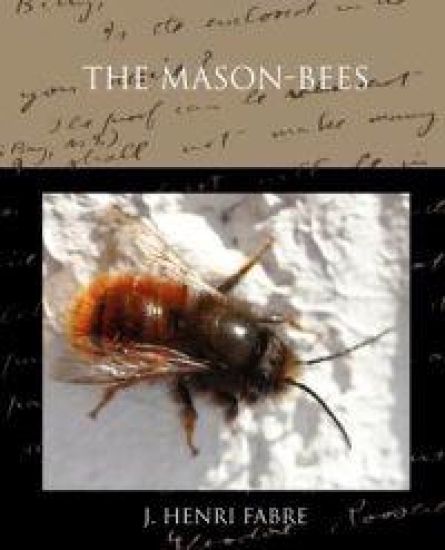
This zoology study contains all the essays on the Chalicodomae, or Mason bees proper, which so greatly enhance the interest of the early volumes of the "Souvenirs entomologiques." I have also included an essay on the author's Cats and one on Red Ants--the only study of Ants comprised in the "Souvenirs"--both of which bear upon the sense of direction possessed by the Bees. Mason bee is a name now commonly used for species of bees in the genus Osmia, of the family Megachilidae. Mason bees are named for their habit of using mud or other "masonry" products in constructing their nests, which are made in naturally occurring gaps such as between cracks in stones or other small dark cavities; when available some species preferentially use hollow stems or holes in wood made by wood-boring insects. 1] Species of the genus include the orchard mason bee Osmia lignaria, the blueberry bee O. ribifloris, and the hornfaced bee O. cornifrons. The former two are native to the Americas and the latter to Japan, although O. lignaria and O. cornifrons have been moved from their native ranges for commercial purposes. The red mason bee, Osmia bicornis, is found across the European continent. Over 300 species are found across the Northern Hemisphere. Most occur in temperate habitats within the Palearctic and Neartic zones, and are active from spring through late summer. 2] Osmia species are frequently metallic green or blue, though many are blackish and at least one rust-red. Most have black ventral scopae which are difficult to notice unless laden with pollen. They have arolia between their claws, unlike Megachile or Anthidium species. Historically, the term mason bee has also been used to refer to bees from a number of other genera under Megachilidae such as Chalicodoma, most notably in "The Mason-Bees" by Jean-Henri Fabre and his translator Alexander Teixeira de Mattos in 1914. Solitary bees produce neither honey nor beeswax. They are immune from acarine and Varroa mites, but have their own unique parasites, pests, and diseases. The nesting habits of many Osmia lend themselves to easy cultivation, and a number of Osmia are commercially propagated in different parts of the world to improve pollination in fruit and nut production. 9] Commercial pollinators include O. lignaria, O. bicornis, O. cornuta, O. cornifrons, O. ribifloris, and O. californica. They are used both as an alternative to and as an augmentation for European honey bees. Mason bees used for orchard and other agricultural applications are all readily attracted to nesting holes - reeds, paper tubes, nesting trays, or drilled blocks of wood; in their dormant season they can be transported as intact nests (tubes, blocks, etc.), or as loose cocoons. 10] As is characteristic of solitary bees, Osmia are very docile and rarely sting when handled (only under distress such as when wet or squeezed), their sting is small and not painful, and their stinger is unbarbed.
The Life of the Caterpillar
J. Henri Fabre; Alexander Texeira De Mattos
Literary Licensing, LLC
2013
nidottu
THE LIFE OF THE CATERPILLAR
J. HENRI FABRE; Alexander Texeira (TRN) De Mattos; Jean-Henri Fabre
UNKNOWN
2007
sidottu